
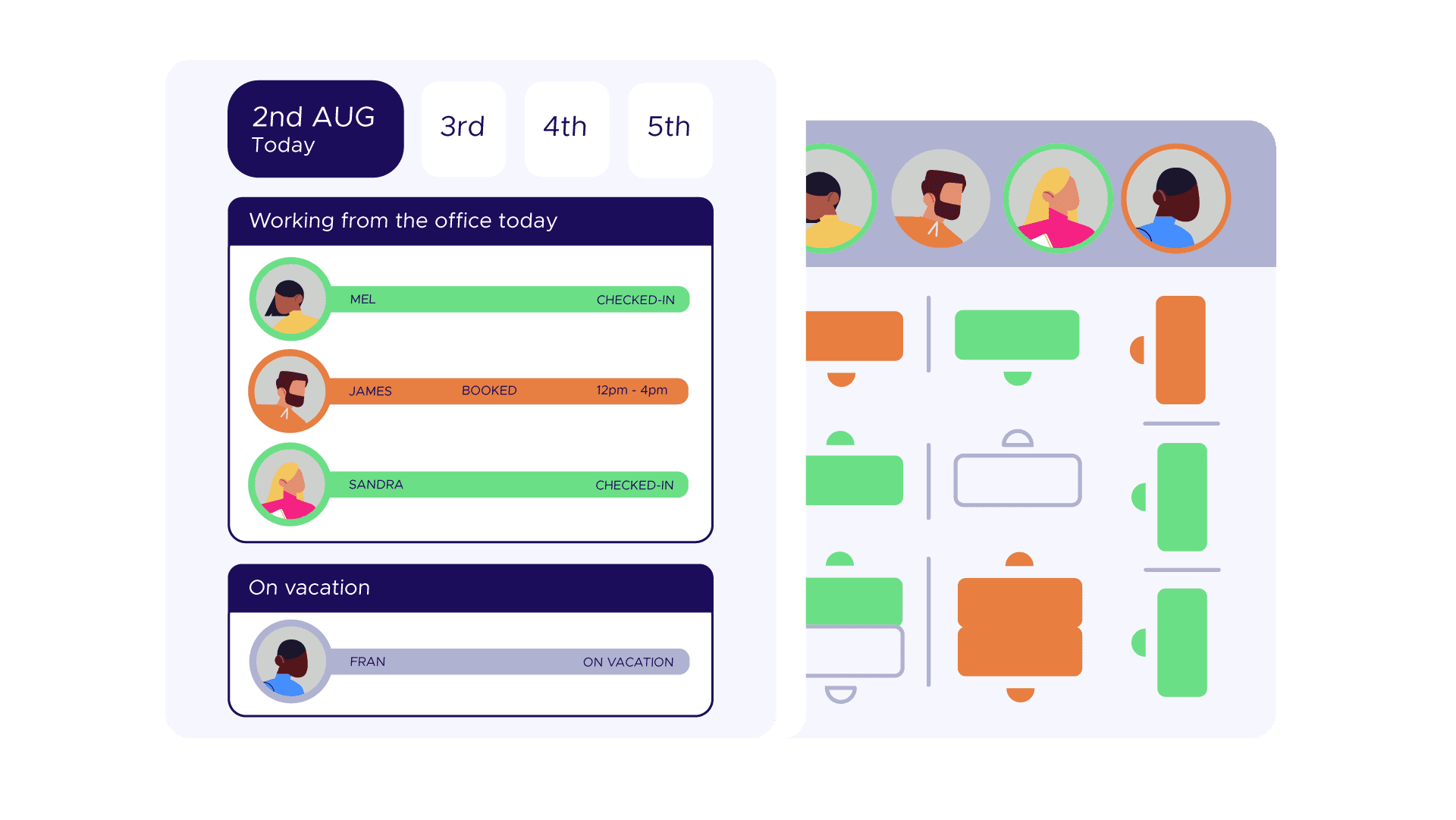
Workplace neighborhoods, also called office neighborhoods, are areas of the office set aside for particular teams or groups. They stop a hybrid office from becoming a first-come, first-served free-for-all, where teams cannot find space near each other. In March 2022, Kadence released improvements to its Office Neighborhoods feature that gave admins more control over who could use each area and when.
The update came as companies were bringing people back to the office in large numbers and finding it hard to manage their spaces. Without coordination, teams struggle to find time and space together, and an open hot desking setup can leave people unable to sit with the colleagues they came in to see. The details below describe the release as it shipped in 2022. For how neighborhoods fit into wider workplace design, see the guide to flexible office models.
What changed in the March 2022 Office Neighborhoods update?
The update added three things. Admins could make each neighborhood public, open to anyone in the company, or private, restricted to chosen teams. They could assign specific teams to specific neighborhoods on specific days of the week. And employees could now see why a space was unavailable instead of simply being unable to book it.
How did public and private neighborhoods work?
For the first time, admins could set a neighborhood to public, so anyone in the company could use it, or to private, so only chosen teams could. That made spaces more flexible and gave admins better control over how they were used.
How could teams be assigned to neighborhoods on set days?
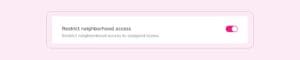
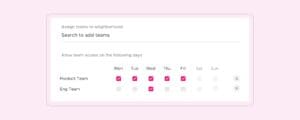
Admins could give specific teams access to specific neighborhoods on specific days. In effect, each team got its own office area without walls on the days it came in. To set it up, an admin turned on Restrict neighborhood access, searched for the teams to add, and chose the days of the week for each.
What did users see when a space was unavailable?
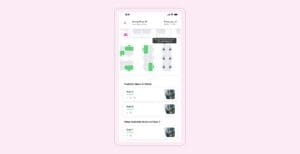
The update also improved an existing feature. When a user could not book a space in a restricted neighborhood, Kadence now told them which neighborhood it belonged to and why it was unavailable, rather than leaving them guessing.
How did admins set up a neighborhood in 2022?
In the Kadence mobile app or desktop platform, admins worked from the Buildings tab in the left menu.
To create a neighborhood: open the Buildings tab, click Add on the far right and select Neighborhood, then name it and search for the desks to include.
To edit a neighborhood: open the Buildings tab, choose the building and floor, then click the three-dot menu next to the neighborhood in the list of spaces and select Edit neighborhood.
To make it public or private: on the edit screen, toggle public or private. For a private neighborhood, select each day of the week and assign the teams that can use it on that day.
For a fuller look at why neighborhoods help hybrid teams, read 5 reasons office neighborhoods improve workplace experience.