Most organisations face the same constraint. They want more interaction between teams, but they cannot change the building. Floors are leased. Cores are fixed. Vertical separation is inherited rather than designed.
Kadence SpaceOps addresses this problem operationally. It allows organisations to model how teams move through space, test how different layouts affect interaction, and adjust placement without redesigning the office.
Bloomberg solved the same office problem physically.
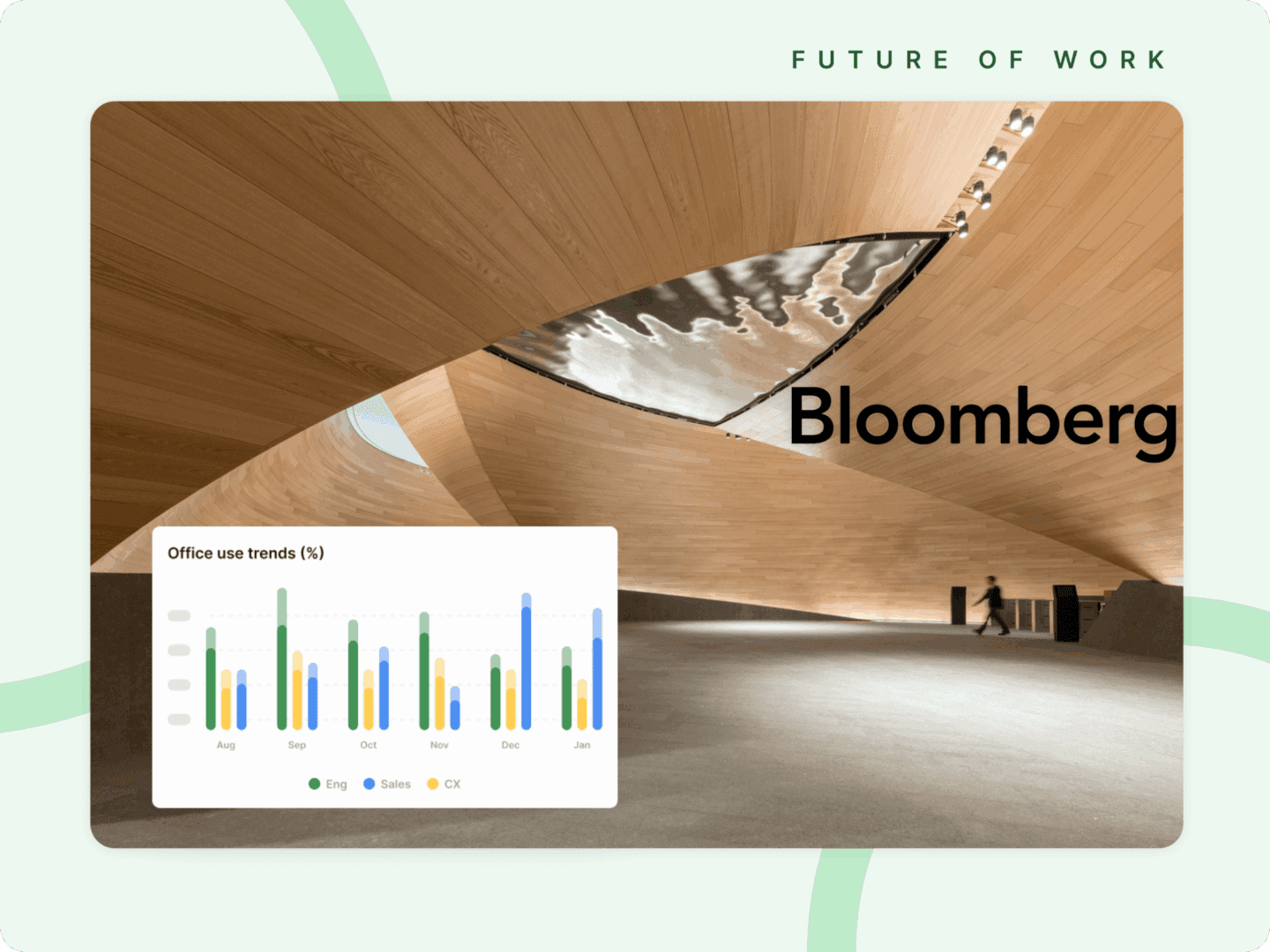
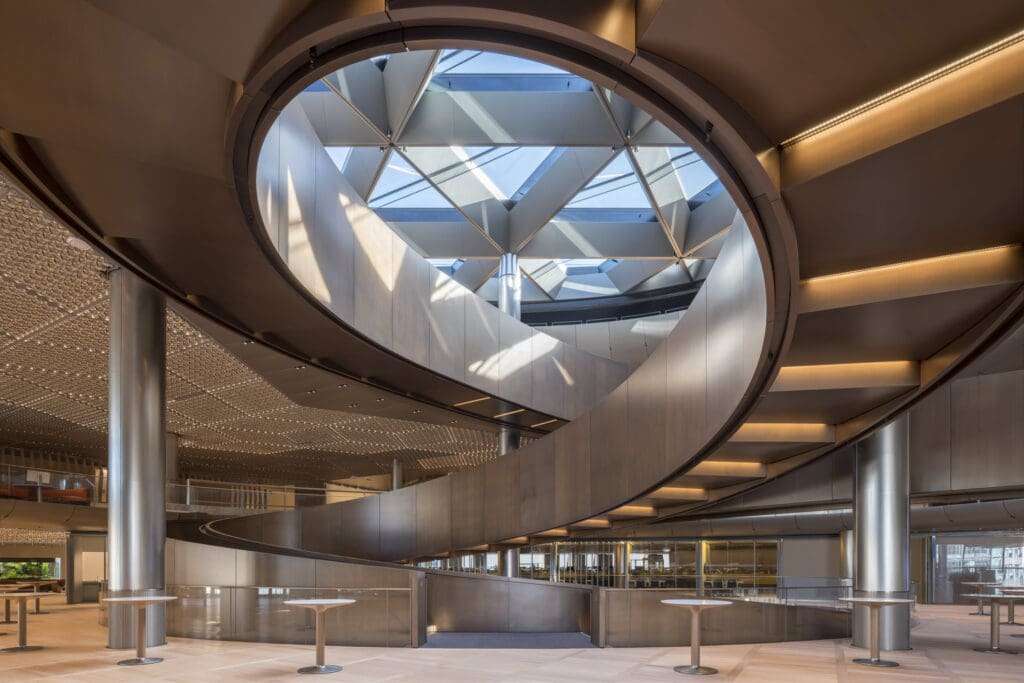
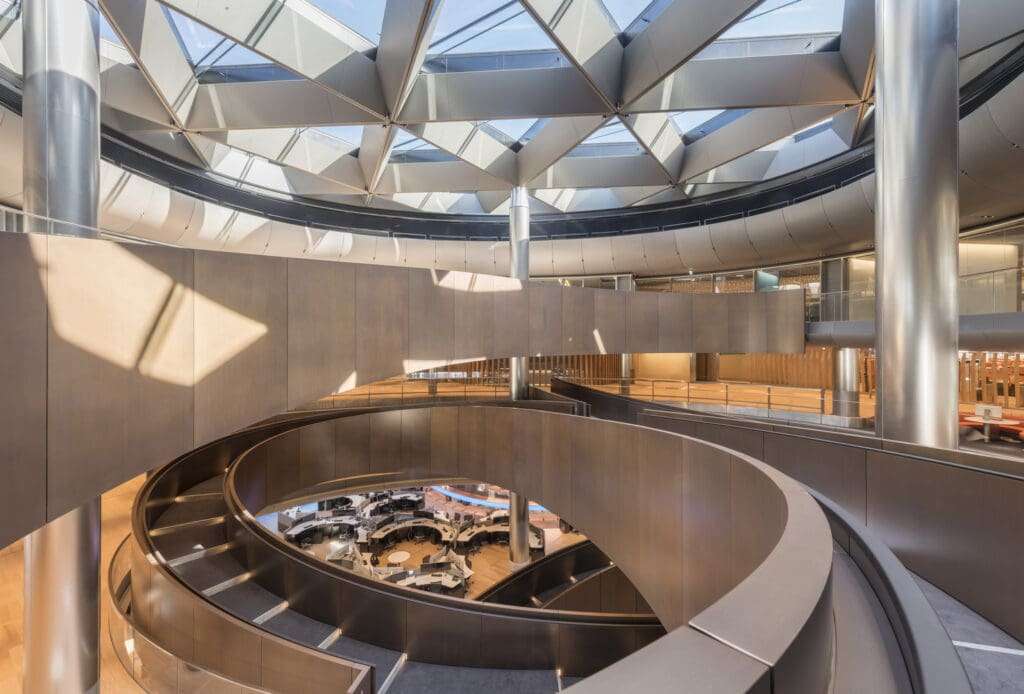
Its European headquarters in London, designed by Foster + Partners, is organised around movement rather than desk placement. Instead of separating floors through lifts and stairwells, the building uses a continuous internal ramp that connects levels through a central atrium. Employees moving between adjacent floors share a single circulation path rather than travelling in isolation.
This changes how often people encounter each other during normal movement.
The Architectural Decisions Bloomberg Made
Bloomberg’s headquarters includes several deliberate design choices that directly affect interaction.
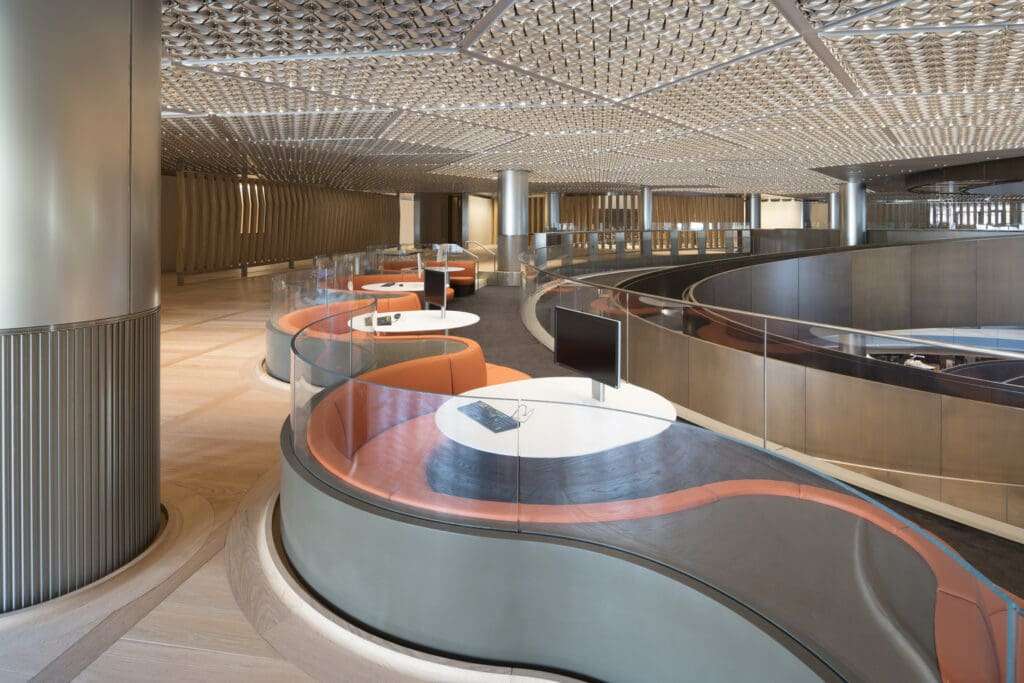
The building uses a six-storey internal ramp that replaces short elevator trips between floors. The ramp is wide enough to support two-way movement and pausing without blocking circulation, making it practical for everyday use rather than symbolic.
Lifts remain available, but they are not the default for short journeys. Employees moving one or two floors are more likely to walk, reducing vertical movement that happens out of sight.
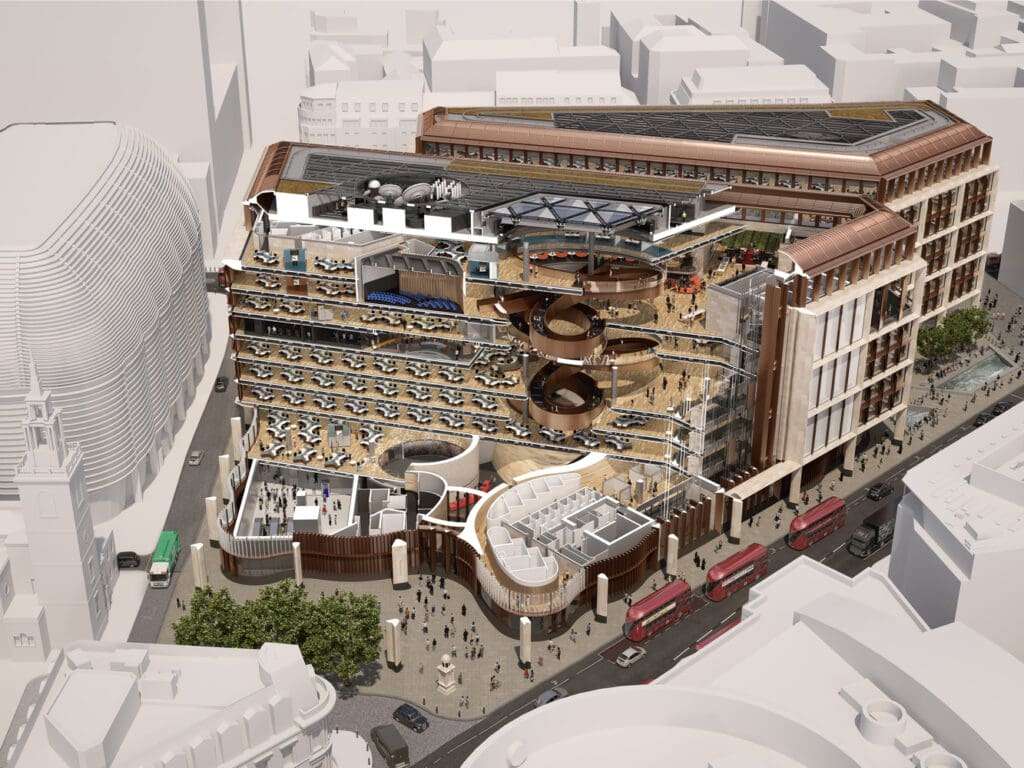
Floors are arranged around a large open atrium. Sightlines extend across levels rather than stopping at floor edges, limiting visual isolation between teams.
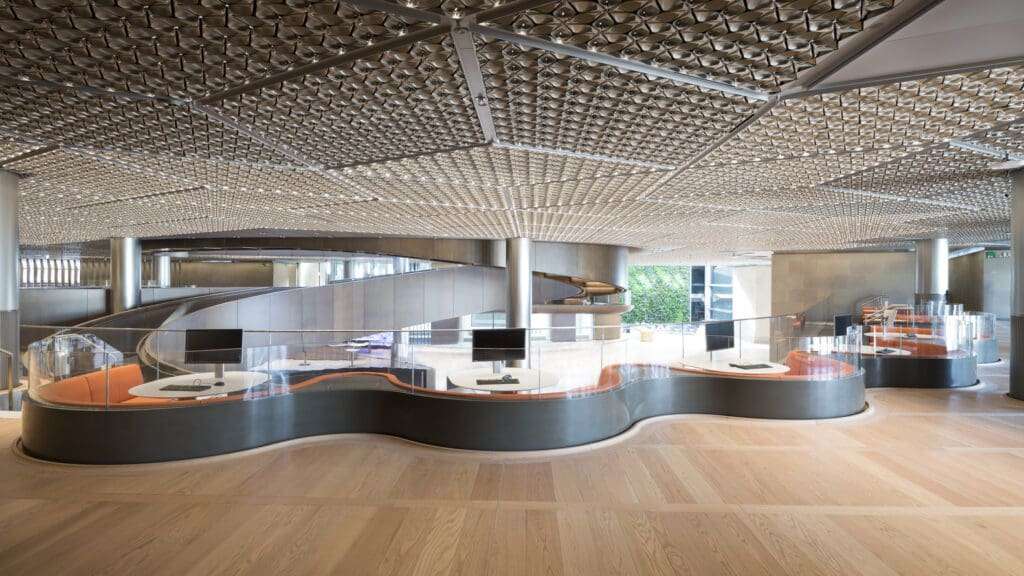
Shared amenities such as pantries, informal seating, and meeting areas are positioned directly along the ramp and atrium edge. These spaces intercept people who are already moving through the building instead of requiring deliberate detours.
Departmental boundaries are kept shallow. As people move through the building, they pass multiple teams rather than remaining within a single functional zone.
Each decision increases the number of unplanned encounters during routine movement.
What These Decisions Achieve
Together, these choices change how interaction happens.
Employees moving between desks, meetings, or amenities are more likely to pass colleagues from other teams. Vertical separation is reduced. Informal conversations occur during movement rather than being confined to scheduled meetings.
The building does not force collaboration. It increases the frequency with which collaboration becomes possible.
This is achieved through shared circulation, not adjacency alone.
Why This Is Hard to Replicate
Most organisations cannot reproduce these outcomes architecturally.
Central ramps cannot be added to leased buildings. Lift cores cannot be removed. Atriums cannot be reconfigured without structural change. In multi-building portfolios, separation is often unavoidable.
As a result, many organisations accept fragmentation as inevitable. Teams are stacked based on availability rather than interaction. Movement patterns emerge accidentally rather than intentionally.
The constraint is not awareness. It is the lack of planning tools.
Designing Movement Without Changing the Building
Bloomberg centralised movement through office architecture. Most organisations have to do it through planning.
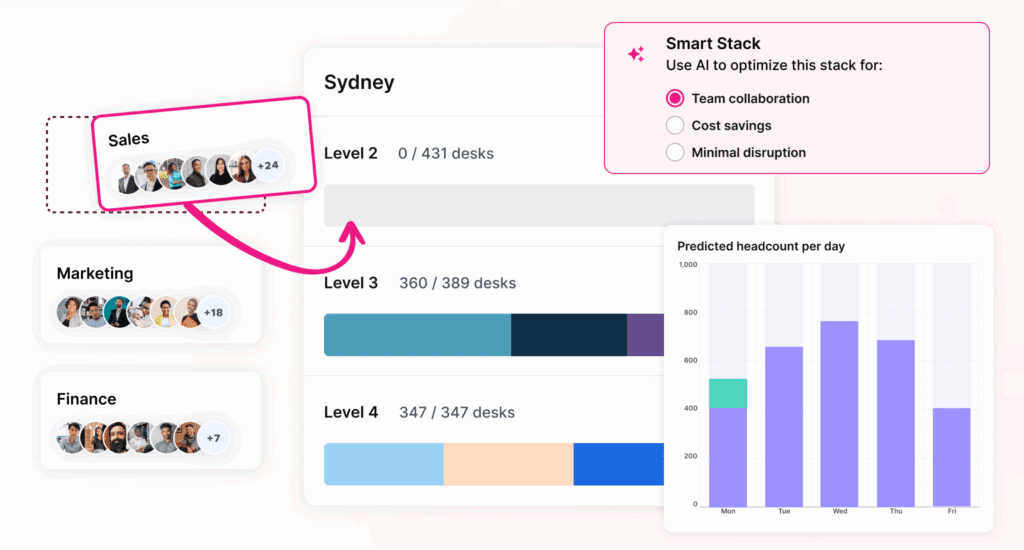
Kadence SpaceOps allows leaders to model how team placement affects movement and interaction before changes are made. Instead of treating floor assignments as static, organisations can test how different configurations alter circulation pressure and cross-team exposure.
For example, SpaceOps can show how placing two interdependent teams on adjacent floors increases shared movement through common paths, or how separating them vertically reduces incidental contact. Leaders can identify where congestion forms and where isolation increases under different scenarios.
Movement becomes a variable rather than a by-product.
From Static Stack Plans to Movement-Aware Planning
Traditional stack planning answers one question: where does each team fit?
The Bloomberg office answers a different one: how do people encounter each other during the workday?
SpaceOps brings that second question into workplace planning. Teams can be positioned based not only on capacity, but on how their placement affects circulation, exposure, and interaction across the building.
This shifts planning from static allocation to operational intent. Layouts can be evaluated before execution, reducing the risk of configurations that fit on paper but fragment in practice.
Why This Matters in 2026
In 2026, the challenge is no longer getting people into the office. It is whether being there improves coordination.
Hybrid schedules, vertical separation, and portfolio sprawl all reduce the likelihood of unplanned interaction. Co-locating teams is often insufficient.
Bloomberg’s headquarters demonstrates that interaction depends on how people move, not just where they sit. SpaceOps makes it possible to plan for that reality without rebuilding offices or making irreversible changes.

What Bloomberg Ultimately Shows
The London Bloomberg office is often described as innovative architecture. Its more important contribution is operational.
By deliberately shaping movement, the building increases interaction without relying on policy or enforcement. The same principle can be applied through planning tools rather than construction.
With SpaceOps, organisations can model movement, test assumptions, and design layouts that increase exposure between teams without changing the building.
The office does not need to look different to work differently. It needs to be planned with intent.
Book a demo with our workplace operations experts to see how Kadence SpaceOps helps organisations plan offices around movement, interaction, and coordination without redesigning their space.