
Microsoft designs its offices with a clear understanding of scale. Not just scale in terms of headcount, but scale in complexity, interdependence, and the pace at which teams and priorities evolve.
As a global organization operating across products, regions, and time zones, Microsoft is in a constant state of change. Teams expand, reorganize, and form around new initiatives. At that level of dynamism, the challenge is not how to encourage collaboration, but how to preserve it as the organization grows and shifts.
The redesign of the Microsoft Redmond campus reflects this reality. It is a workplace designed to support continuous evolution, ensuring that teams can scale without losing the proximity and coordination that make them effective.
What Microsoft Designed
Microsoft’s refreshed Redmond campus is organized around team based neighborhoods that anticipate growth rather than react to it.
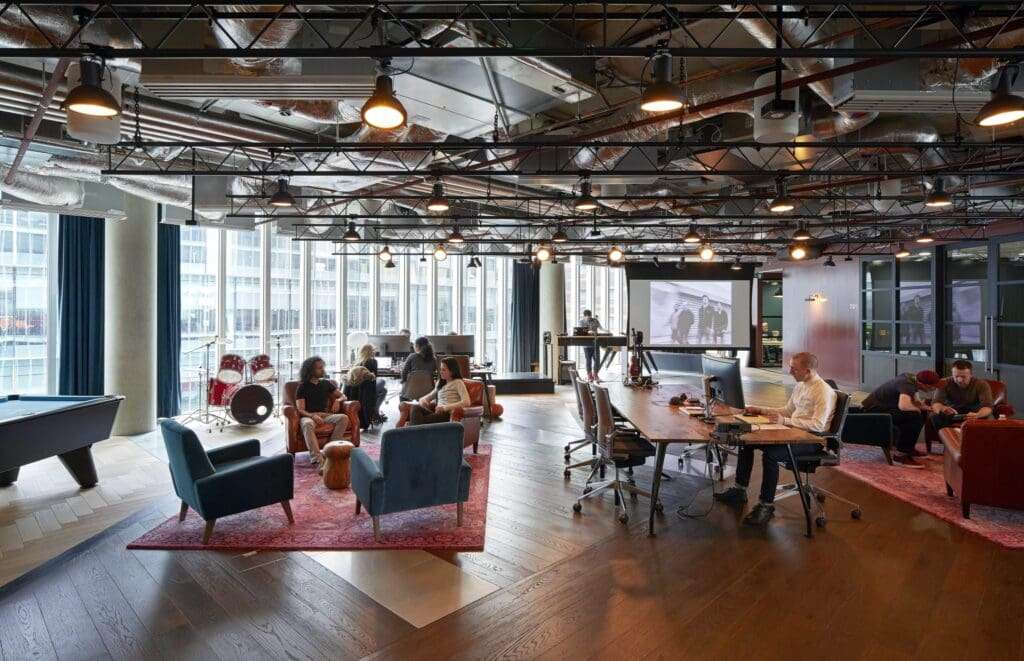
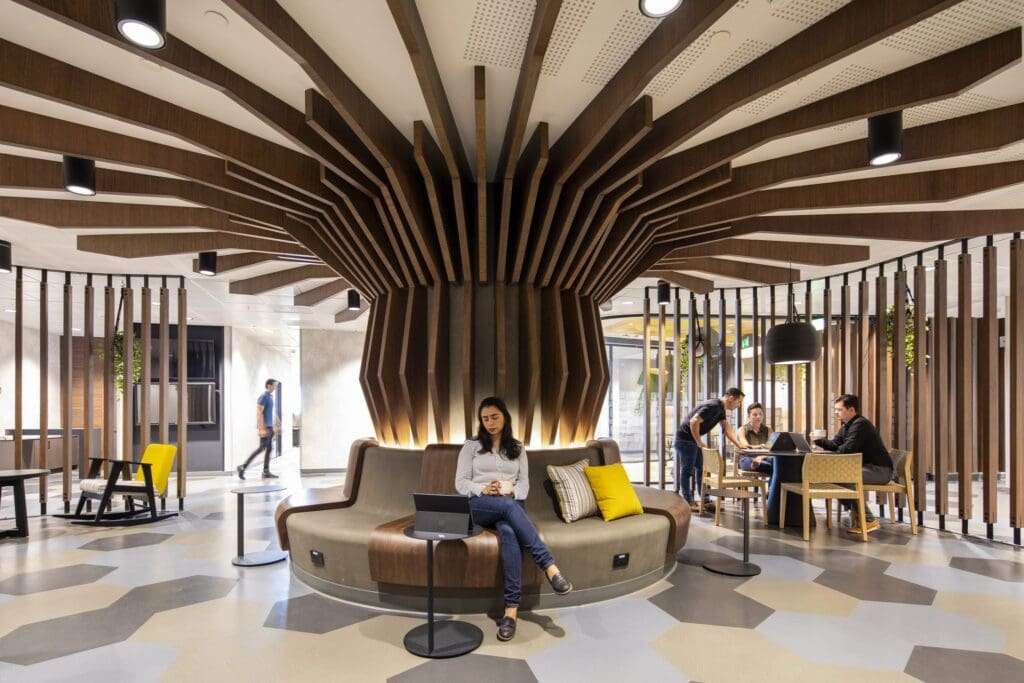
Instead of optimizing every building for maximum density, Microsoft designed neighborhoods in their offices with deliberate capacity for expansion. Teams are grouped into defined zones, supported by adjacent spaces that allow headcount to increase without forcing relocation across the campus. Shared areas, outdoor workspaces, and flexible collaboration zones provide additional elasticity, absorbing change while keeping teams connected.
Even less conventional environments such as garden workspaces and treehouses play a role in this system. They offer alternative settings and overflow capacity without fragmenting teams or breaking adjacency. The result is a campus that can adapt as the organization evolves, maintaining continuity even as roles, projects, and priorities change.
Preserving Proximity as Teams Grow
The thinking behind Microsoft’s approach is grounded in how work actually unfolds at scale.
In many organizations, growth gradually erodes proximity. Teams that once sat together are separated over time as space fills up. Dependencies stretch across floors or buildings, and coordination becomes more effortful without any single moment where things obviously break.
Microsoft designed its offices to counter that drift. By planning for expansion within neighborhoods, teams can grow alongside the people they rely on rather than being displaced when space becomes constrained. Informal interactions remain intact, context is preserved, and decision making stays fluid even as complexity increases.
At scale, small increases in distance compound quickly. Protecting proximity is one of the most effective ways to sustain speed as organizations grow.

Team Neighborhoods as an Operational Framework
Microsoft addressed this challenge through architecture. Kadence applies the same logic through workplace operations.
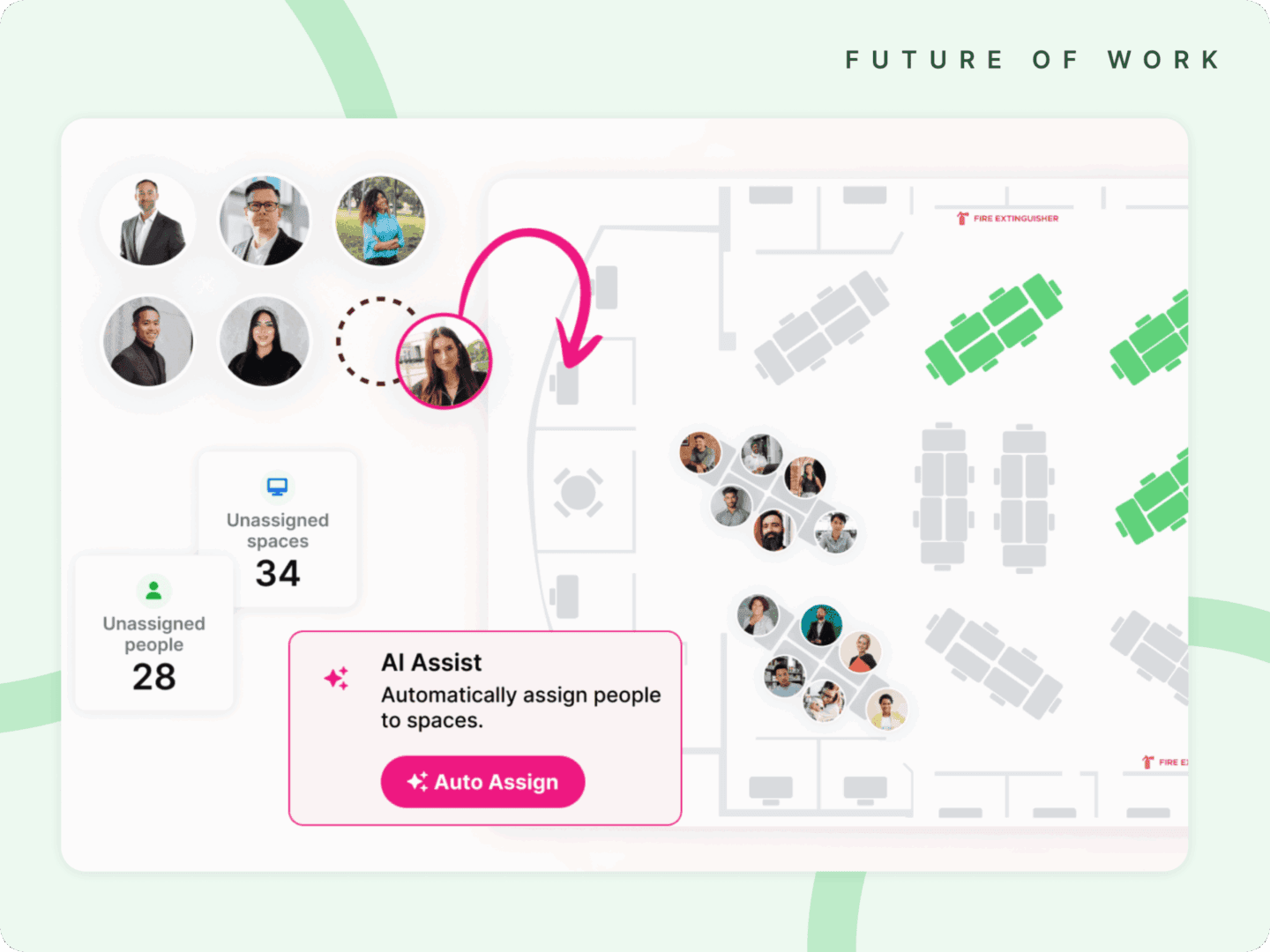
With Team Neighborhoods, organizations can define which teams need to remain close as they grow and which relationships are more flexible. Neighborhoods can be sized intentionally, with capacity buffers built into the system rather than fixed into the physical layout.
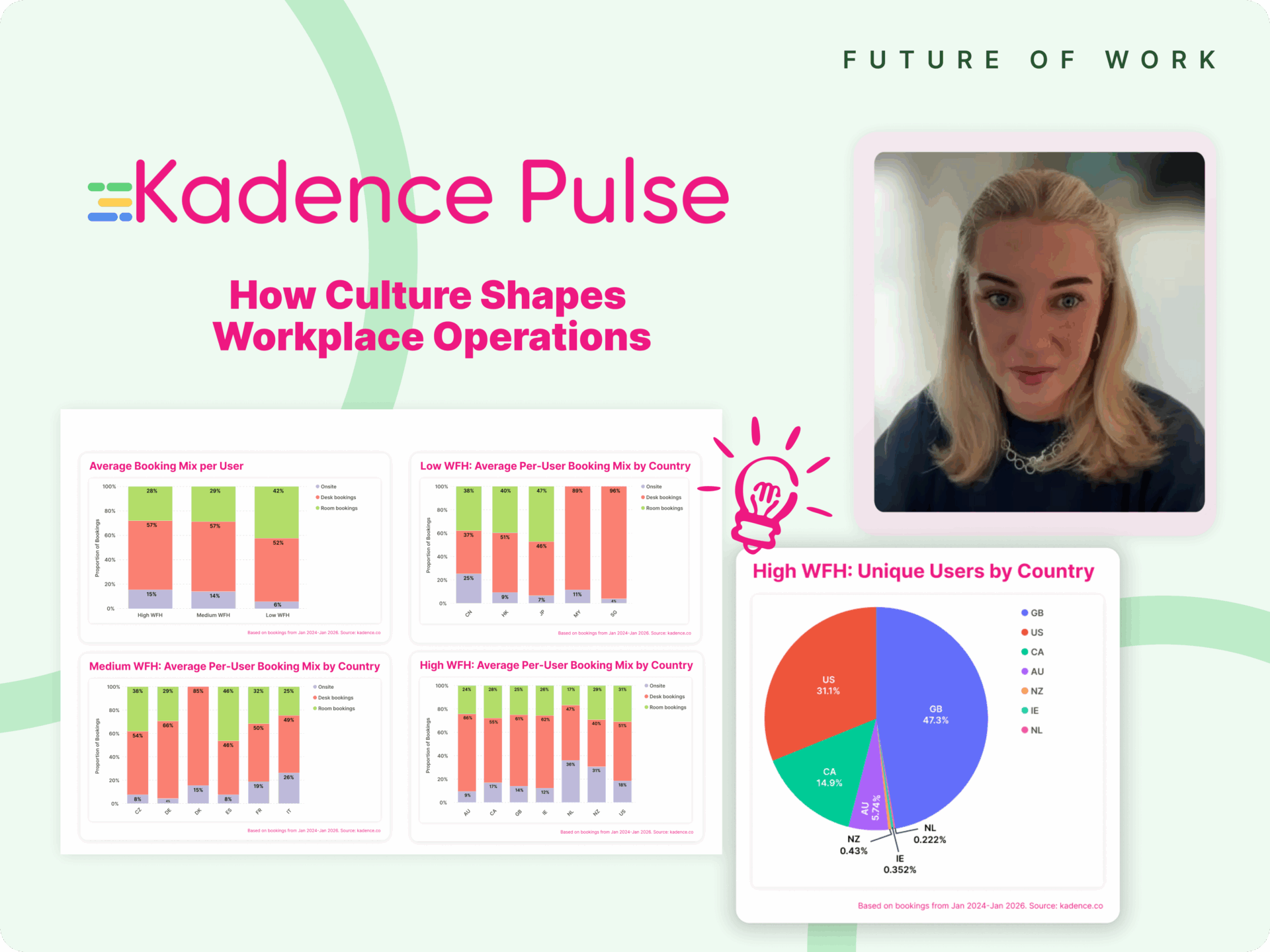
Because neighborhoods can also be aligned to specific in office days, growth does not automatically translate into congestion. Office traffic can be distributed more evenly across the week, shared resources can be planned with greater accuracy, and teams can continue to work alongside the people they depend on even as headcount changes.
This allows organizations to preserve adjacency over time without relying on disruptive office resets every time the business evolves.
Planning for Change With Scenario Modeling
Designing for growth requires more than flexible space. It requires the ability to understand how change will play out before it happens.
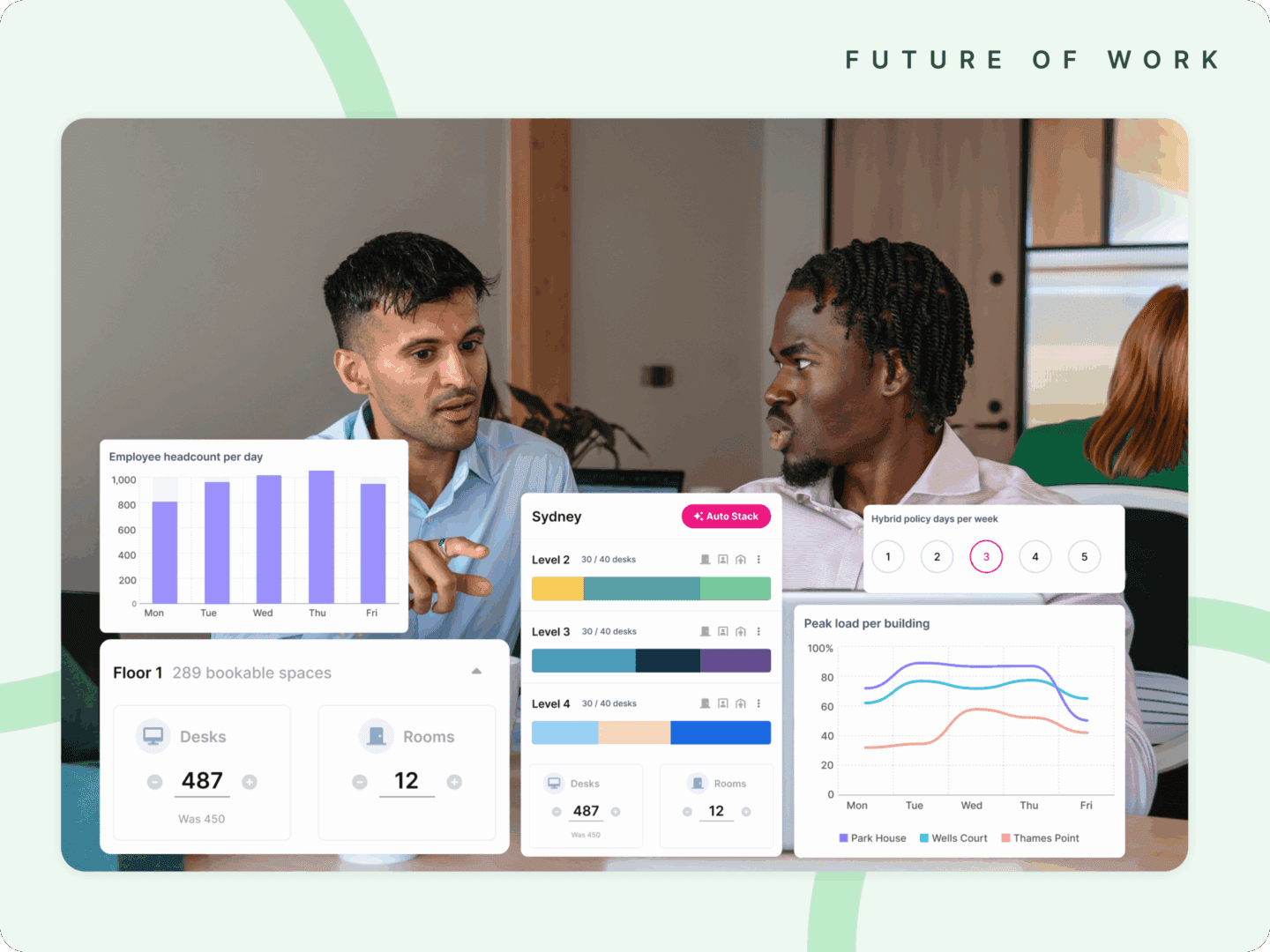
This is where Kadence SpaceOps becomes critical. Through AI powered scenario planning, leaders can model a range of potential futures and evaluate how each would affect space utilization, cost, and team coordination.
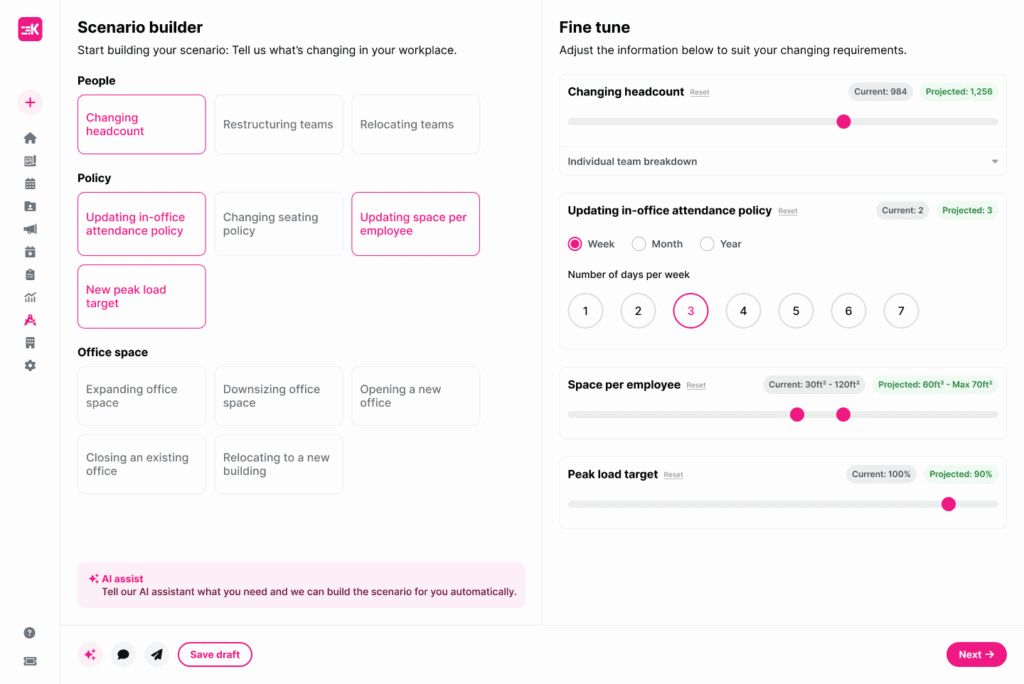
Organizations can explore the impact of headcount growth or contraction, test different neighborhood allocations, and identify underused areas that could be reallocated more effectively. Lease constraints and policy shifts can be factored into decisions early, reducing the need for reactive moves later.
Microsoft invested heavily in designing offices that anticipate change. SpaceOps brings that same foresight into day to day workplace operations, allowing leaders to make informed decisions before space becomes a constraint.
Why This Matters in 2026
In 2026, organizational change is continuous rather than episodic.
Teams form around initiatives rather than functions. Projects ramp up and wind down quickly. Hybrid attendance patterns shift as work intensifies or becomes more distributed. As a result, space is rarely used in the same way for long.
Offices that are designed for fixed occupancy struggle to keep up with this reality. Some areas become overcrowded while others sit underused. Moves become reactive, and team proximity erodes gradually as the organization adapts around a static layout.
Microsoft’s approach reflects a more realistic view of modern work. By designing for evolution rather than stability, the workplace remains aligned with how teams actually operate. Proximity is preserved even as roles change, and the office continues to support coordination rather than becoming a source of friction.
For enterprise leaders, the question is no longer how much space is needed, but how quickly that space can adapt without disrupting the flow of work.
What Microsoft Teaches Us About Effective Workplace Operations
The lesson from Microsoft is straightforward. Effective offices are built to evolve.
They assume that teams will grow, reorganize, and change how they use space over time. They protect proximity as those changes occur and provide the flexibility needed to respond without disruption.
Microsoft embedded this thinking into the physical design of its campus. Kadence brings the same logic into workplace operations.
By combining Team Neighborhoods with AI powered scenario planning, organizations can scale with confidence, preserve team adjacency, and keep their workplace aligned with how the business actually works.
Book a demo with our workplace operations experts to see how Kadence helps you plan for growth, anticipate change, and scale your workplace without slowing teams down.