Welcome to Kadence Pulse. In this edition, we look at how team meetings are evolving and what that shift tells us about modern workplace operations.
Hybrid work has moved past the phase of chaos. For Kadence customers, it has settled into a predictable, midweek, team-first operating rhythm. The data from 2024 and 2025 shows a workplace that is far more intentional, structured, and coordinated than it was even a year ago.
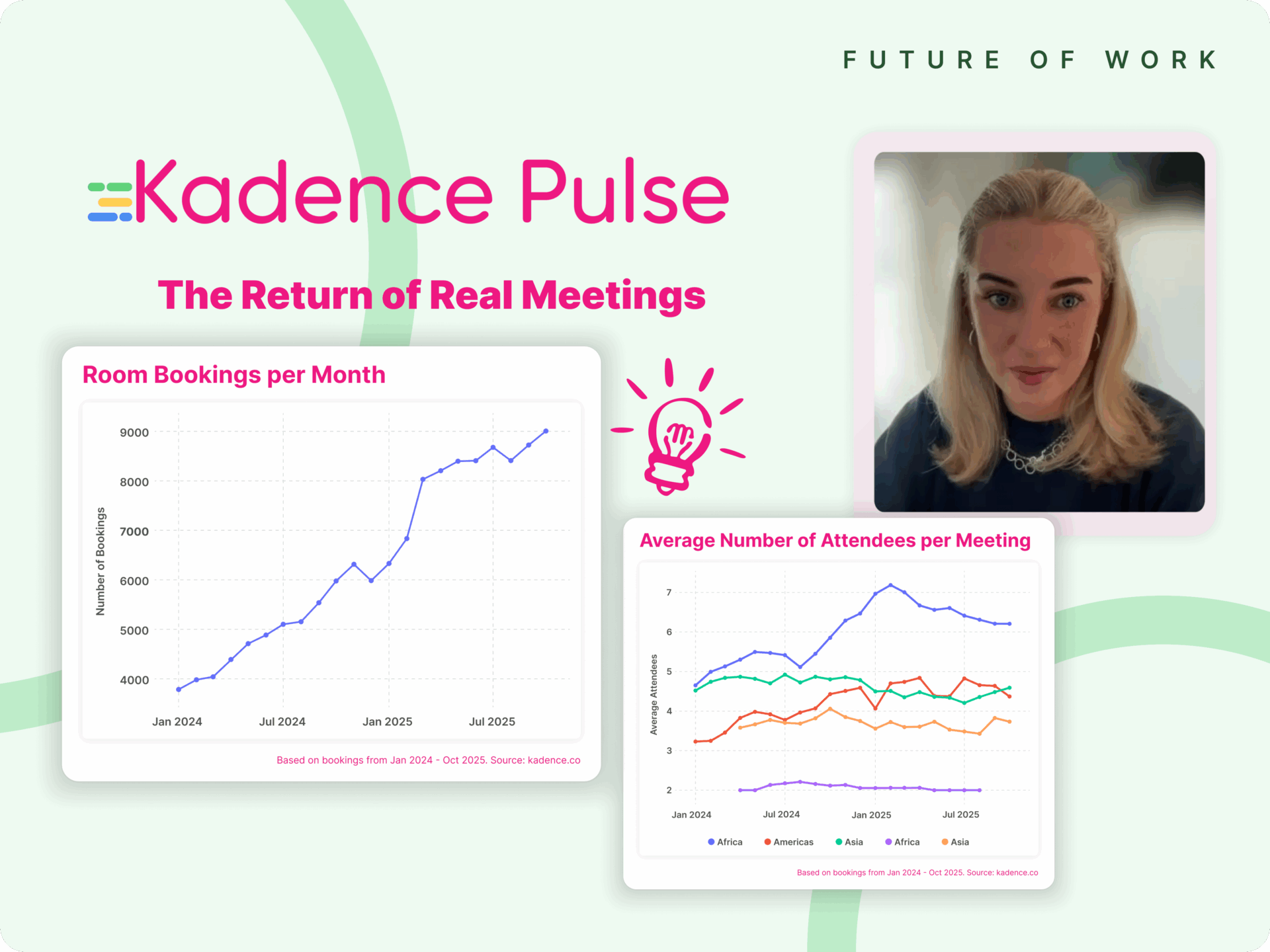
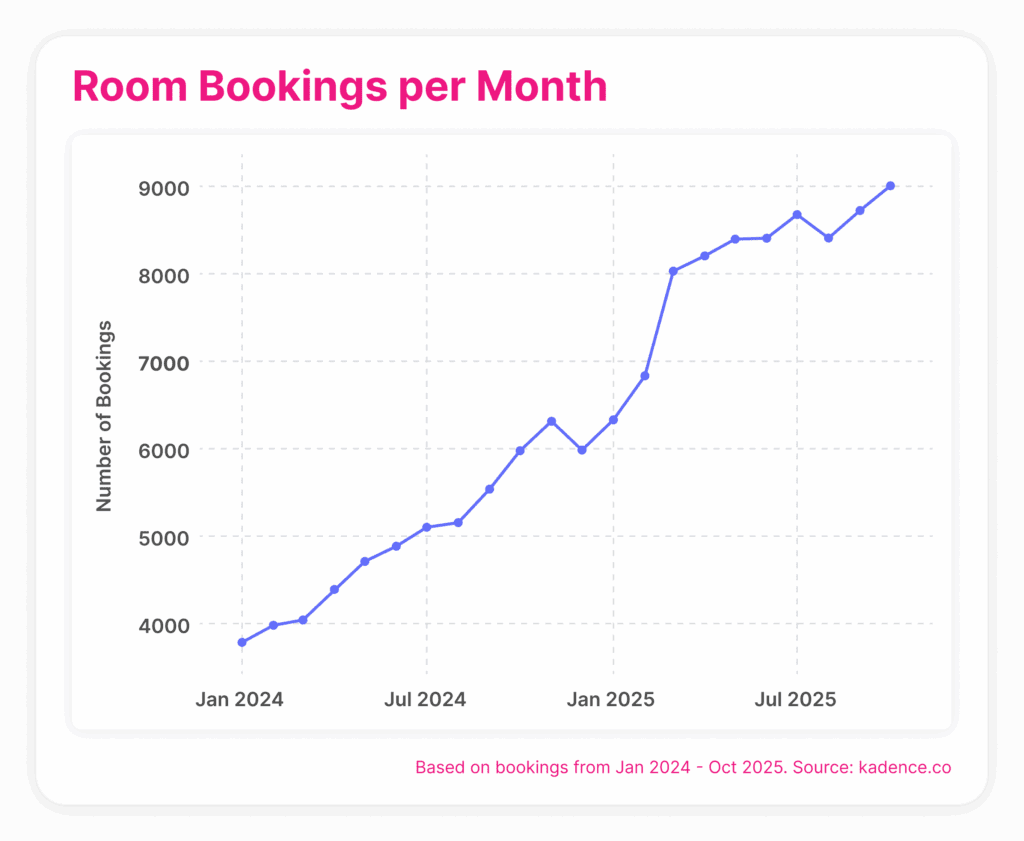
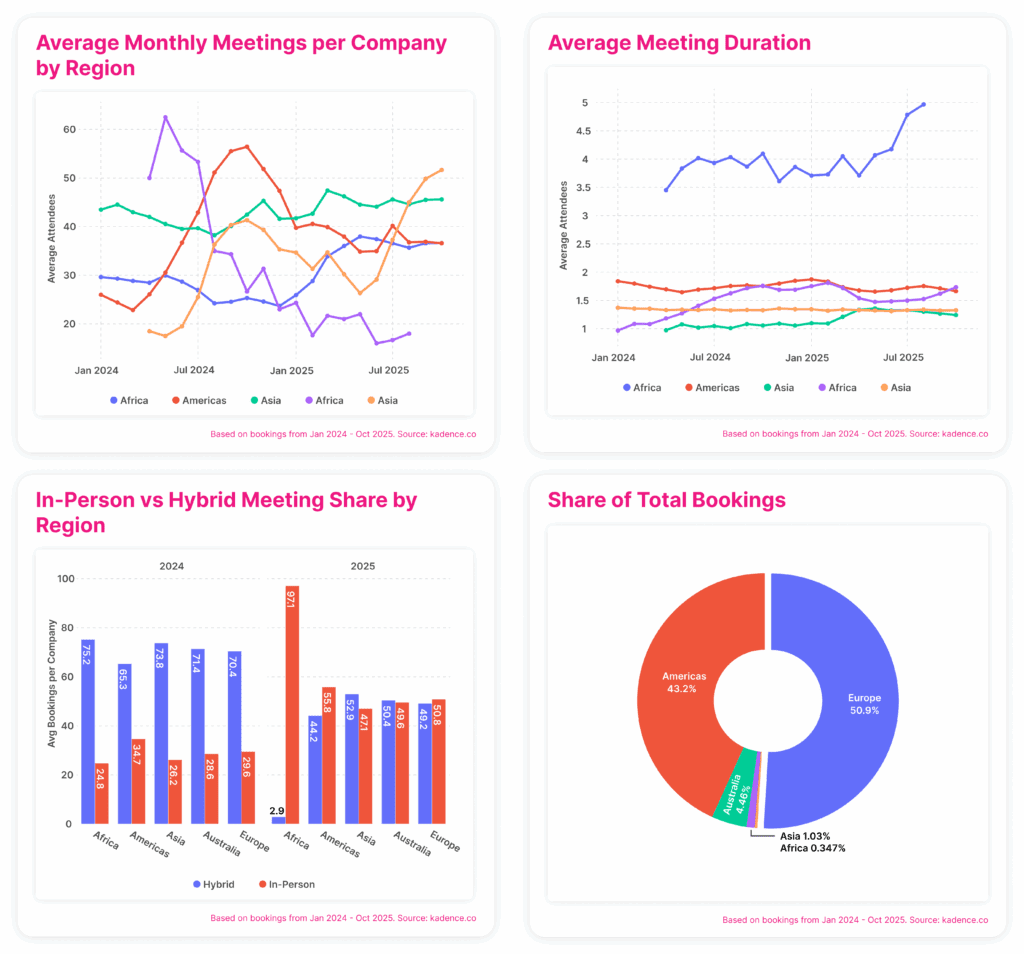
Across all customers, meeting volume has been rising steadily since early 2024. The average company now holds around forty meetings a month. This is not an unplanned return to the office. It is a sign that work has stabilised into a rhythm where people, time, and space are more deliberately aligned.
Enterprise Is Leading Hybrid Maturity
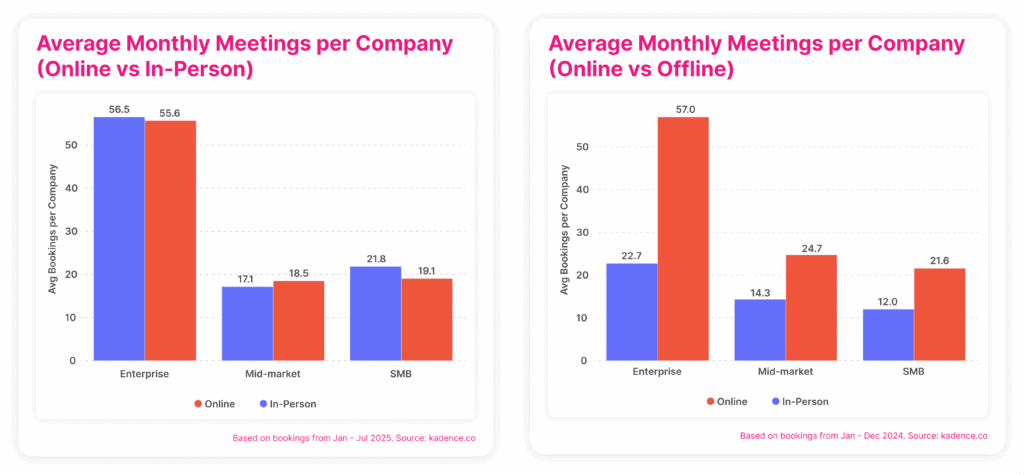
Meeting patterns also reveal something about operational maturity. When we look at meetings per person, enterprise organisations stand out. They hold the highest number of meetings per capita, and they continue to increase that number through 2025. Their meetings are shorter on average, and their cancellation rates are declining. These are all indicators of more structured planning and more reliable workplace operations.
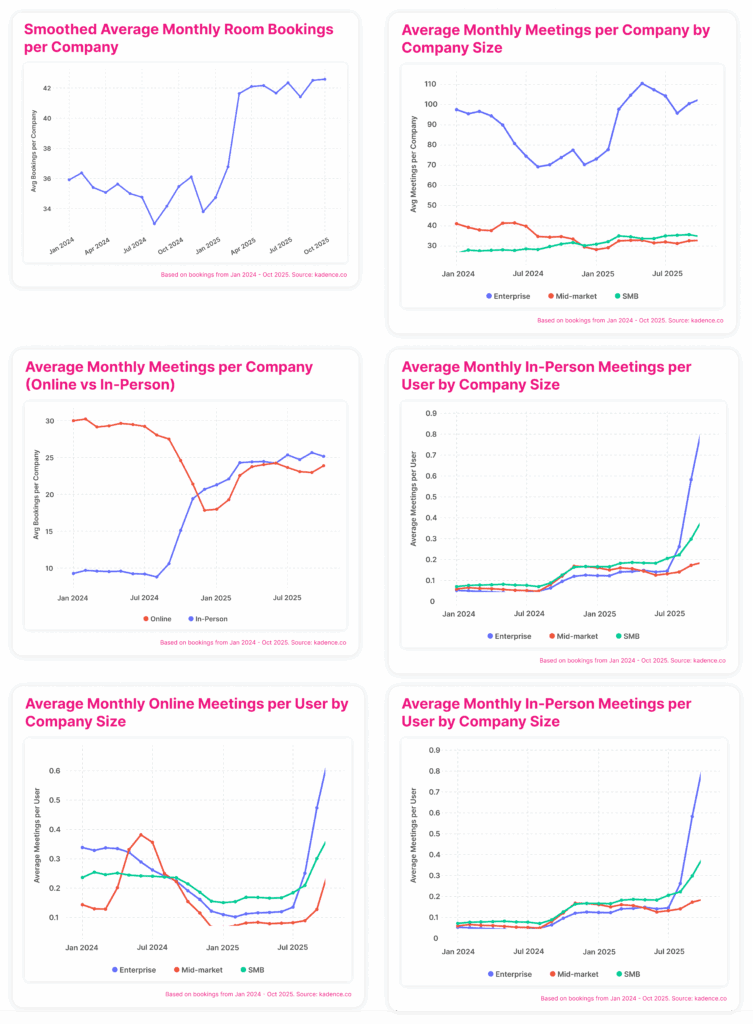
Kadence supports this shift by helping organisations understand how their hybrid operations compare with broader benchmarks. Instead of relying on assumptions or personal perception, workplace teams can see how their patterns line up against thousands of similar companies. This provides a clearer picture of where coordination is strong and where time or space may be getting lost.
The Midweek Collaboration Engine
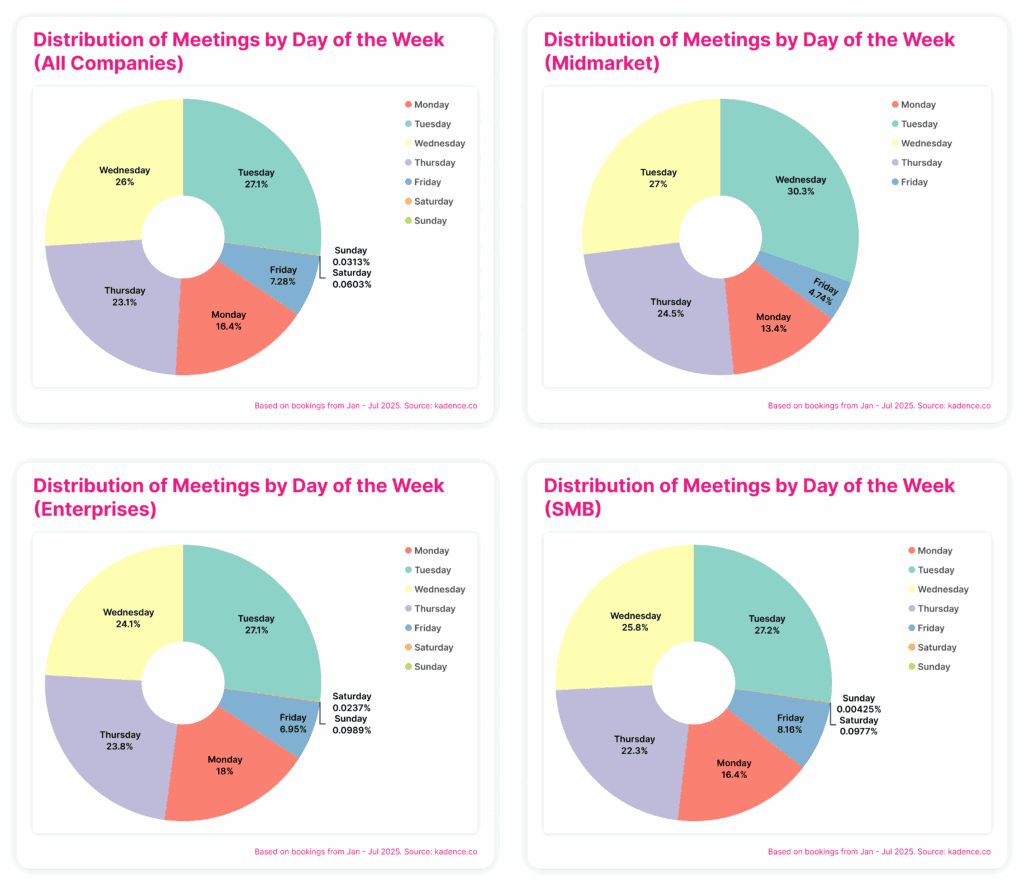
At a weekly level, the collaboration pattern is just as clear. Across every company size, Tuesdays and Wednesdays have become the engine of the week, with the highest number of meetings and the greatest coordination between teams. Mondays and Fridays remain consistently quieter, suggesting that teams are now aligning most of their collaborative work around the middle of the week rather than spreading it evenly.
Kadence helps organisations make these anchor days explicit so they become predictable moments for teams to come together. Instead of every team creating its own rhythm, companies can set clear midweek days for collaborative work. Kadence then reinforces that pattern by guiding bookings into the right windows and helping teams avoid unintentionally clustering on the same day.
Collaboration Is Becoming Denser
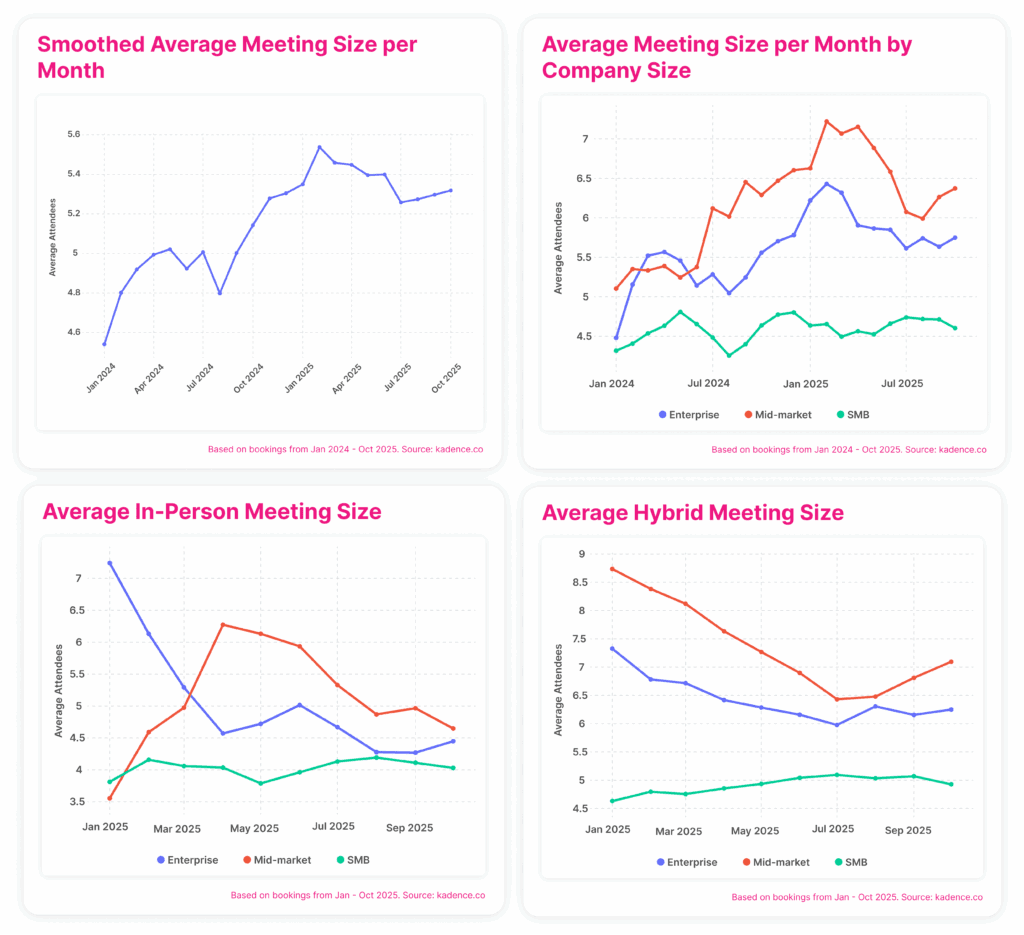
The data also shows that collaboration is changing inside the room. When we remove single-person bookings, the average meeting size rises to around six people. That number has been growing steadily since mid-2024. Mid-market companies currently host the largest meetings at around seven people, while enterprise organisations average around six and SMBs around five.
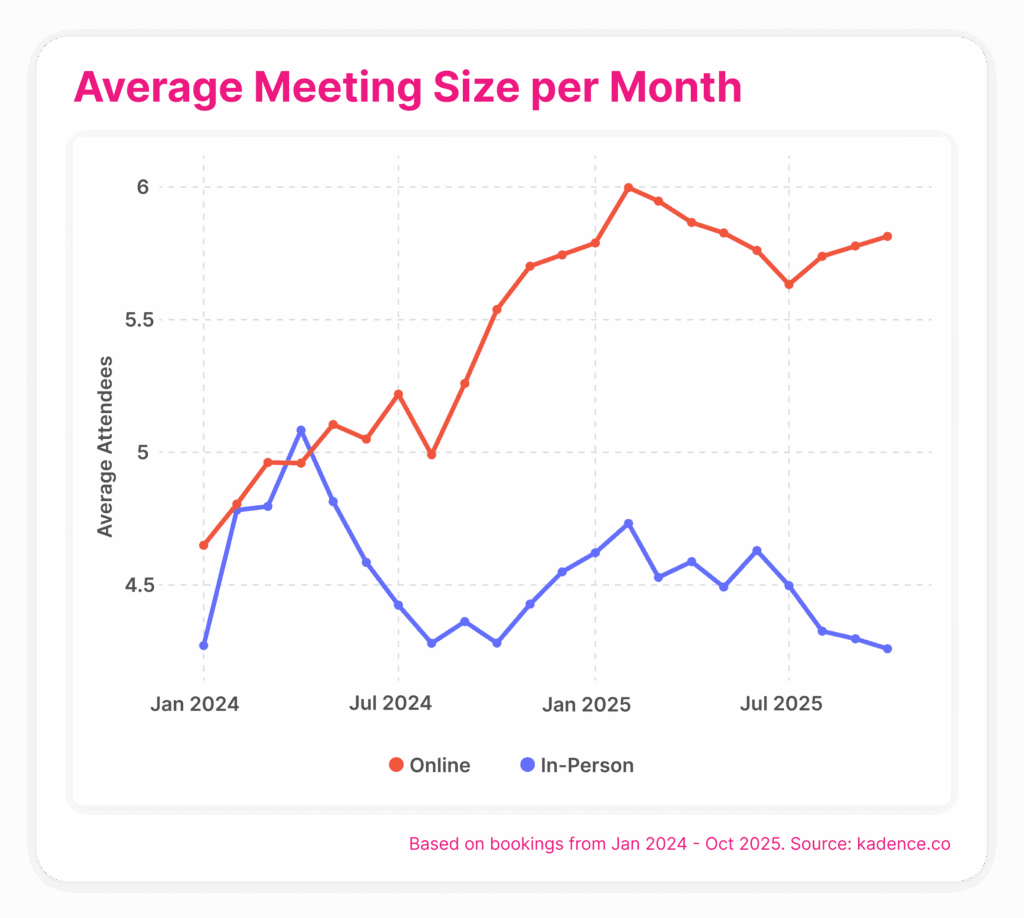
This rise in group size suggests that people are not coming into the office to work alone. They are coming in for alignment, discussion, and problem solving. The modern office is becoming a collaboration engine rather than a quiet default. If your space is still dominated by small rooms designed for one or two people, it may no longer match the way your teams actually work. Kadence makes it easier to see these patterns and build a strong business case for rebalancing the mix of rooms without increasing your overall footprint.
Workplace Reliability Is Improving
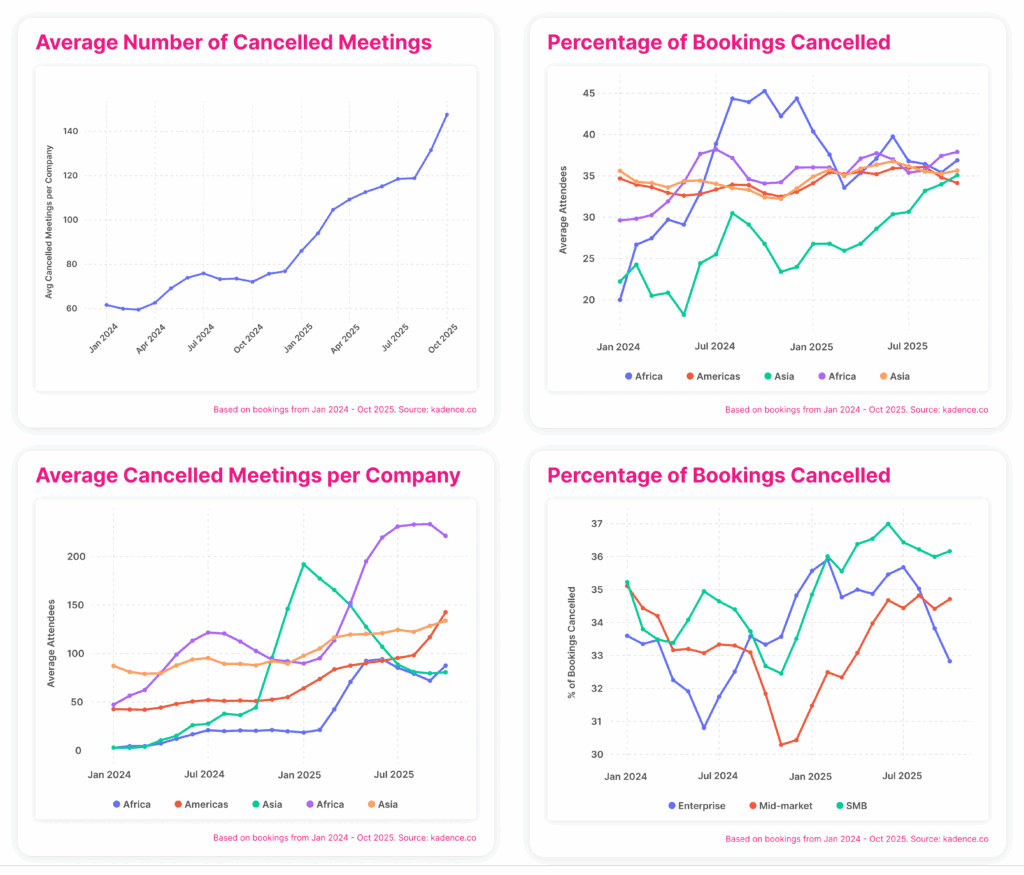
Reliability is improving too. Across the customer base, cancellation rates sit around thirty to thirty five percent, but for enterprise organisations they are declining month after month. This improvement suggests stronger coordination and greater confidence in the time people spend together.
Cancellations are more than a scheduling problem. They represent wasted space, wasted commutes, and unnecessary drag on operations. Kadence helps reduce no-shows and cancellations so the workplace becomes a dependable system that teams can trust.
Regional Patterns Are Converging
The regional data shows that collaboration patterns are becoming more consistent across global teams. Europe and the Americas now account for the majority of team meetings, and both regions follow a similar rhythm with steadily rising meeting volumes and a clear shift toward more in-person collaboration in 2025. Asia follows the same general direction at a slightly lower intensity, while Africa’s fluctuations reflect a much smaller sample size.
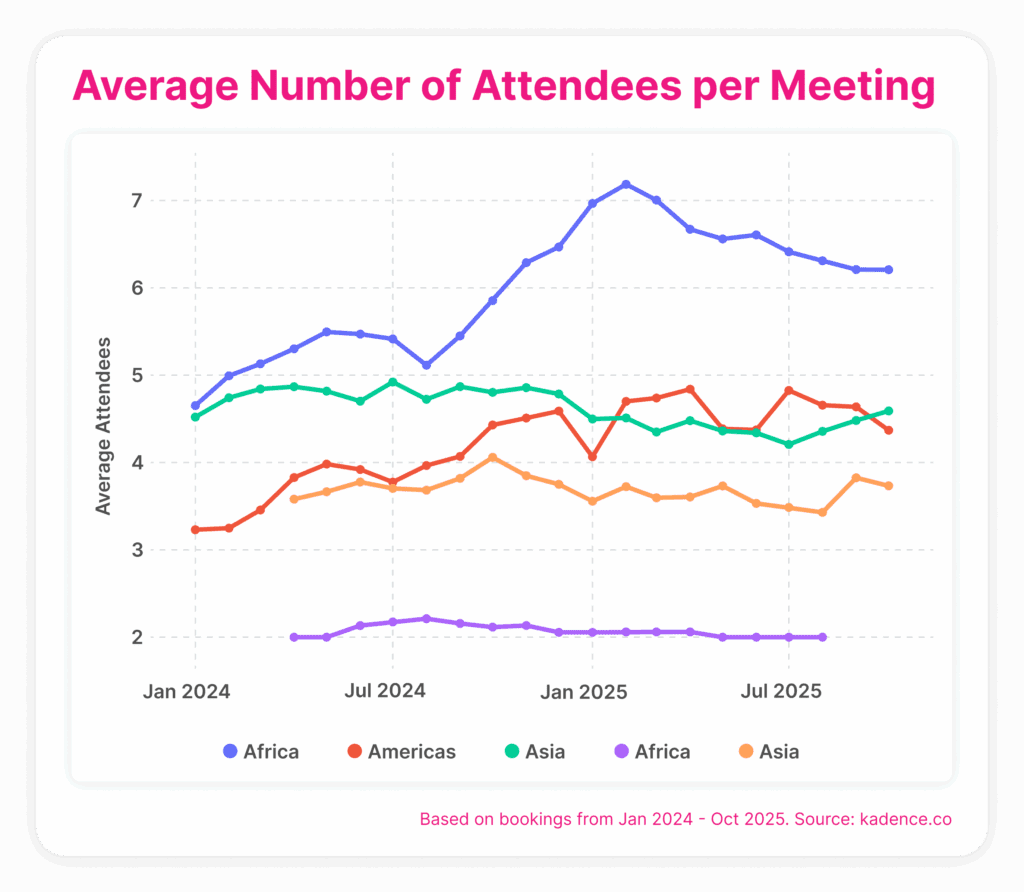
Across all major regions, the average meeting now brings together groups of four to six people, and that number has been increasing over time. Although meeting durations vary by region, the overall pattern remains consistent: teams are gathering more predictably, using their time together more deliberately, and treating in-person collaboration as a valuable moment rather than a default.
These converging patterns make global workplace operations easier to manage. Instead of building separate meeting strategies for each region, organisations can establish a unified operational model and tune it with local data. This reduces complexity for global HR, workplace, and real estate teams and strengthens the reliability of team meetings across the entire organisation.
Practical Steps for Workplace Leaders
Benchmark your current workplace patterns
- Reviewing your meetings per person, average meeting size, cancellation rate, and meeting duration helps you understand how your organisation compares with the wider Kadence customer base.
- When these numbers sit noticeably outside typical ranges, it usually signals that time, space, or coordination is not operating as effectively as it could.
Make your collaboration days explicit
- Many companies still struggle with inconsistent overlap because their anchor days are implied rather than agreed.
- Setting clear midweek collaboration days creates predictable moments for teamwork, and Kadence reinforces these patterns by guiding bookings into the right windows and preventing teams from unintentionally clustering on the same day.
Adjust your room mix to match how people collaborate
- Most meetings across the Kadence customer base now involve five to seven people, yet many offices still rely on layouts designed for smaller sessions.
- Booking data often shows that one and two person rooms are over-supplied while mid-sized rooms are in higher demand, which makes a strong case for rebalancing space without increasing the overall footprint.
Treat cancellation rates as an operational signal
- A cancellation rate above roughly thirty five percent is usually a planning reliability issue rather than a cultural one.
- Introducing check-ins, auto-release rules, and clearer expectations around booking behaviour helps reduce cancellations and makes workplace operations feel more dependable.
Improve meeting quality through stronger structure
- Shorter, more frequent meetings tend to indicate healthier coordination because they prevent work from accumulating between sessions.
- When meetings are long and infrequent, teams often carry unresolved work for longer than necessary, and improving meeting structure can create a smoother, more predictable rhythm.
The New Shape of Workplace Operations
Work has stabilised. The real opportunity now is improving how organisations operate within it. The data shows that when companies coordinate their anchor days, right-size their spaces, and improve the reliability of their bookings, the workplace becomes a system that supports focused, purposeful collaboration.
Kadence helps organisations build this precision into their workplace operations. With clearer benchmarks, stronger planning, and better coordination, the office becomes an asset again.
See how Kadence helps organisations run better workplace operations. Book a demo with our workplace operations experts.