Every office already controls entry. People arrive, identify themselves, and are allowed to move through the space. That boundary exists whether it has been intentionally designed or simply inherited.
In most organisations, visitor management has evolved through a series of local decisions. A reception process set up years ago. A tool added to solve a narrow problem in one building. A workaround introduced when volumes increased or staffing changed. Over time, those choices harden into something that feels permanent, even as the organisation itself grows more distributed and expectations around security, compliance, and experience increase.
What’s missing is not effort, but intent. The workplace border is relied on every day, yet rarely examined as a system. And systems that evolve by accumulation rather than design tend to show their limits when scale, scrutiny, or change is introduced.
Entry Is No Longer Predictable
For a long time, workplace entry followed a familiar rhythm. The same people arrived at roughly the same times, through the same doors, most days of the week.
That rhythm has broken down. Offices now host a wider mix of people for more varied reasons, arriving in less predictable patterns. Employees come in selectively. Candidates arrive for interviews. Partners and clients move between sites. Some locations handle steady foot traffic, others see sharp peaks tied to specific events or moments.
Processes designed around routine struggle in this environment. Manual steps become bottlenecks. Visibility becomes partial. Local workarounds multiply. What once felt manageable at a single site becomes fragile when repeated across dozens or hundreds of locations.
The front door still functions, but it does so under increasing strain.
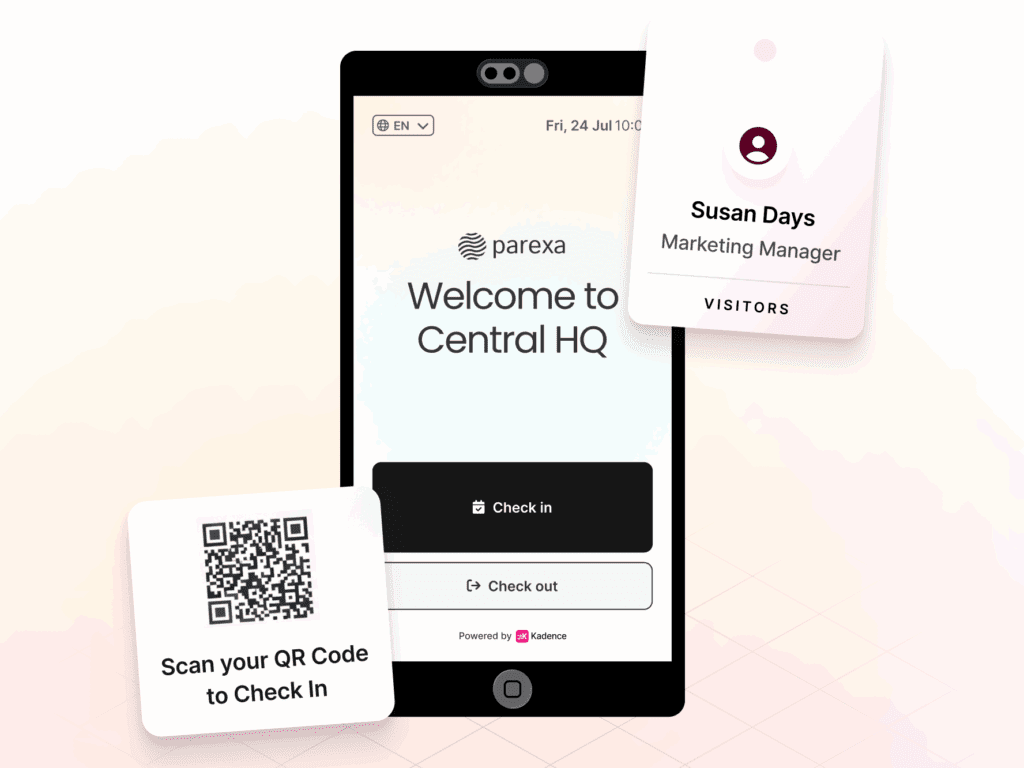
Visitor Management Sits Between Hospitality, Security, and Work
Visitor management is often discussed as an experience problem. Faster check-ins. Better first impressions. A smoother arrival.
Security teams look at the same moment very differently. They need confidence that identity is verified, policies are enforced, and records can stand up to audit. Employees have another perspective again. They want a process that helps them invite people in without adding friction or creating uncertainty about what they’re responsible for.
Most visitor systems struggle because they optimise for one of these groups at the expense of the others. A welcoming experience that security doesn’t fully trust. A tightly controlled process that employees avoid. A compliant system that feels cold and transactional to visitors.
The harder and more interesting challenge is finding the balance point. Where arrival feels like hospitality to the visitor, security teams can rely on the data and audit trails, and employees experience the process as helpful rather than another thing to manage.
That balance is where visitor management stops being a source of friction and starts becoming part of how the workplace works.
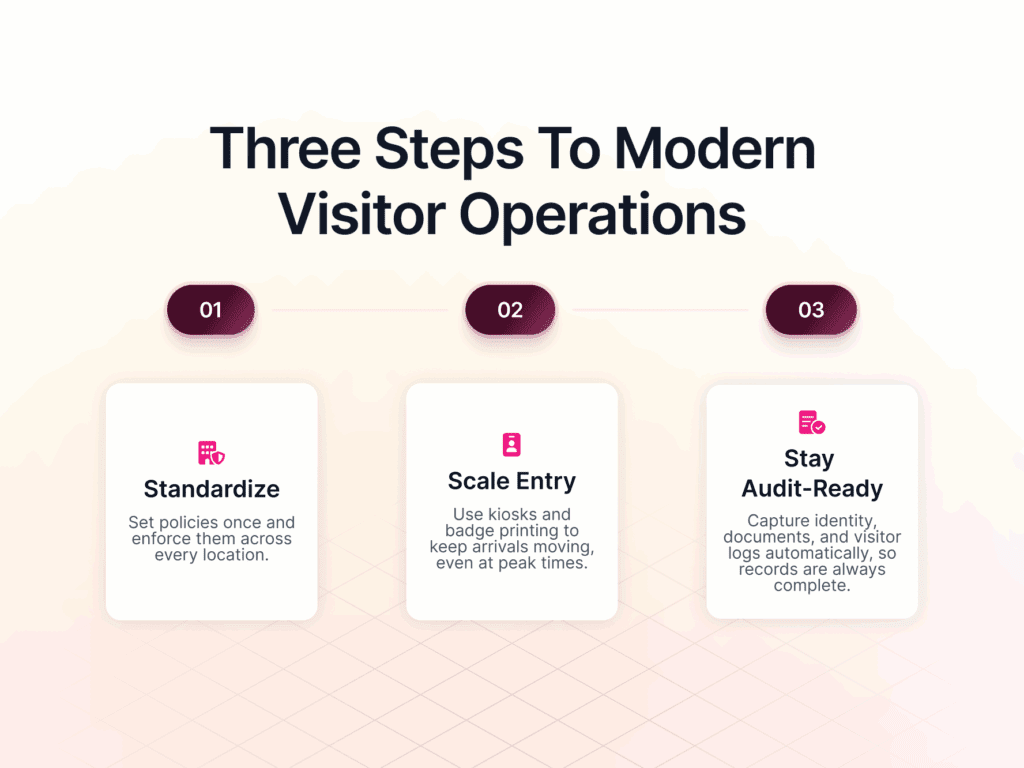
Visitor Data Is a Missing Workplace Signal
Visitor records are usually treated as something to retain rather than something to understand. Logs are kept for compliance or incident response, then largely ignored.
Yet visitor activity reflects how the workplace is actually being used in ways employee data alone cannot. It shows when teams choose to gather in person, where external collaboration concentrates, and which sites act as real hubs rather than nominal ones. It often explains why people come into the office, not just whether they comply with an attendance expectation.
When visitor data is fragmented across sites or systems, those signals disappear. Leaders are left interpreting space usage, experience, and risk without a clear view of what is happening at the boundary where the workplace meets the outside world.
That blind spot matters more as offices take on a more deliberate role as places for connection, collaboration, and engagement rather than default work locations.
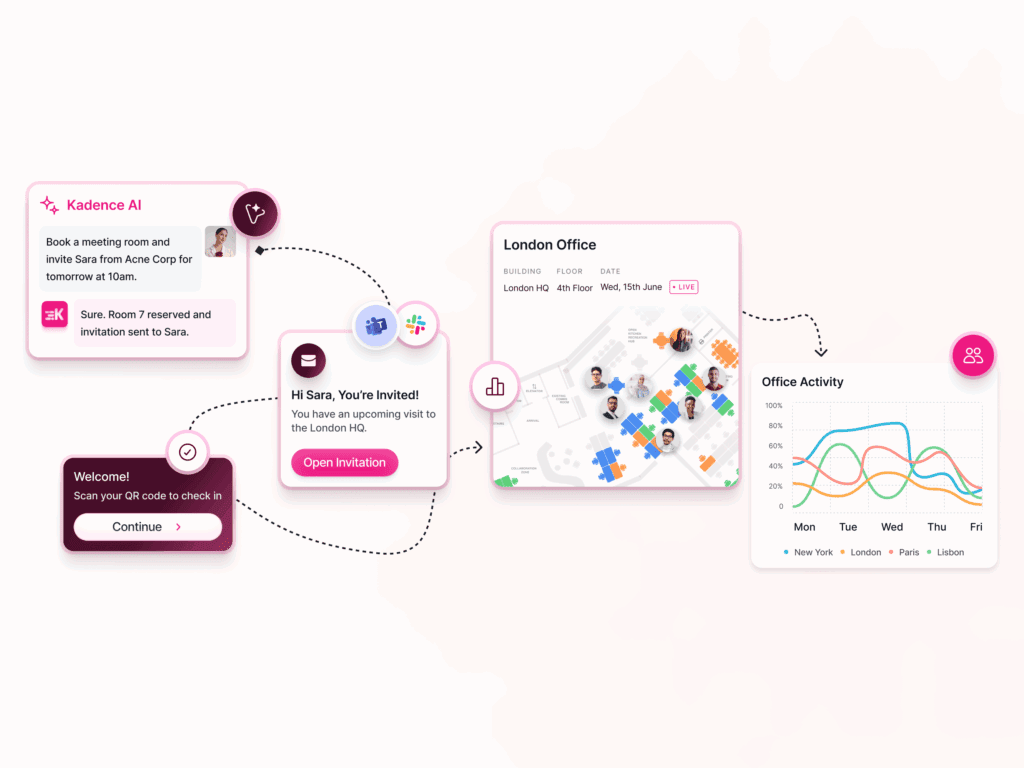
Why Standardisation Determines Whether Governance Works
At enterprise scale, inconsistency is rarely accidental. It is usually the result of systems that were never designed to be shared.
Visitor processes often appear sufficient when viewed site by site. Each office has something in place. Each team believes it is following the rules. But when those processes differ, even slightly, the organisation loses the ability to reason about them as a whole.
That’s when governance starts to fail quietly. Policies exist, but they are interpreted differently. Documentation is captured in some locations and missed in others. Visitor records can be produced, but not with confidence or speed. During audits or incidents, the question shifts from what happened to which version of the process applied.
Standardisation is not about removing autonomy. It creates a shared baseline that makes local variation safe. Without that baseline, risk is managed locally and hoped to add up globally. At scale, it rarely does.
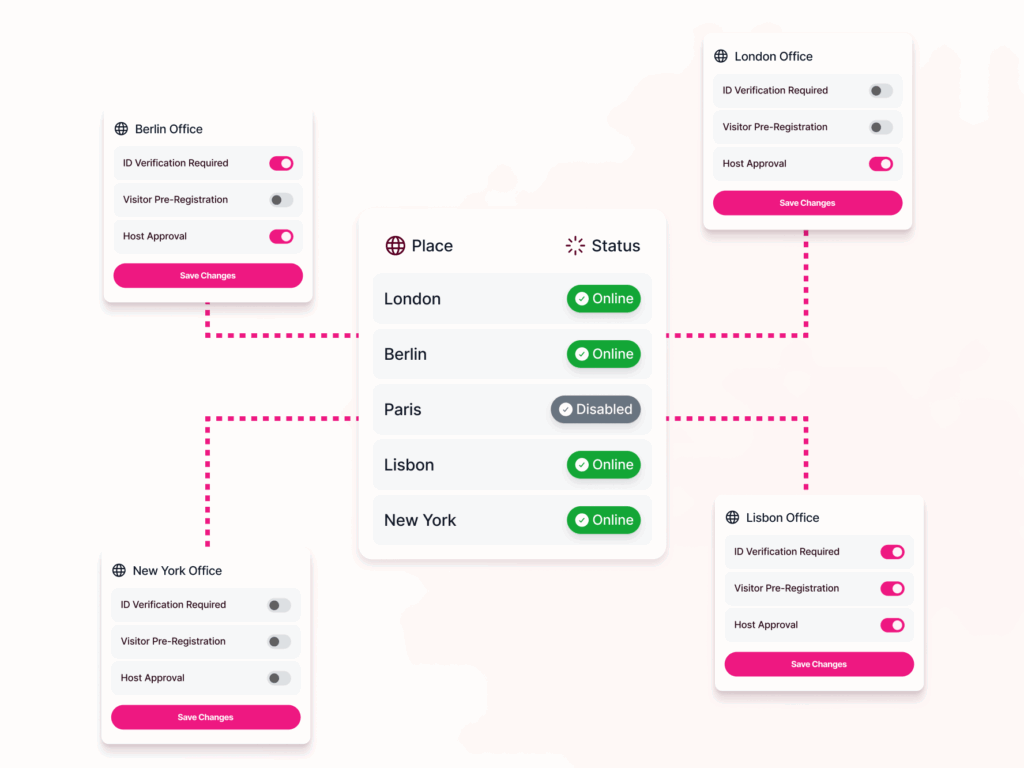
The Front Door Becomes Operational Infrastructure
As these pressures build, the front door begins to look less like a function and more like infrastructure.
High-volume entry requires automation to avoid bottlenecks. Unmanned or lightly staffed reception models depend on self-service workflows that still enforce policy. Compliance relies on consistent document capture and audit-ready records. Visibility depends on real-time data that spans locations.
Taken together, these requirements point to a shift. Entry can no longer be treated as a collection of tasks handled through people and ad hoc process. It needs to operate as a governed system that delivers consistency without introducing friction.
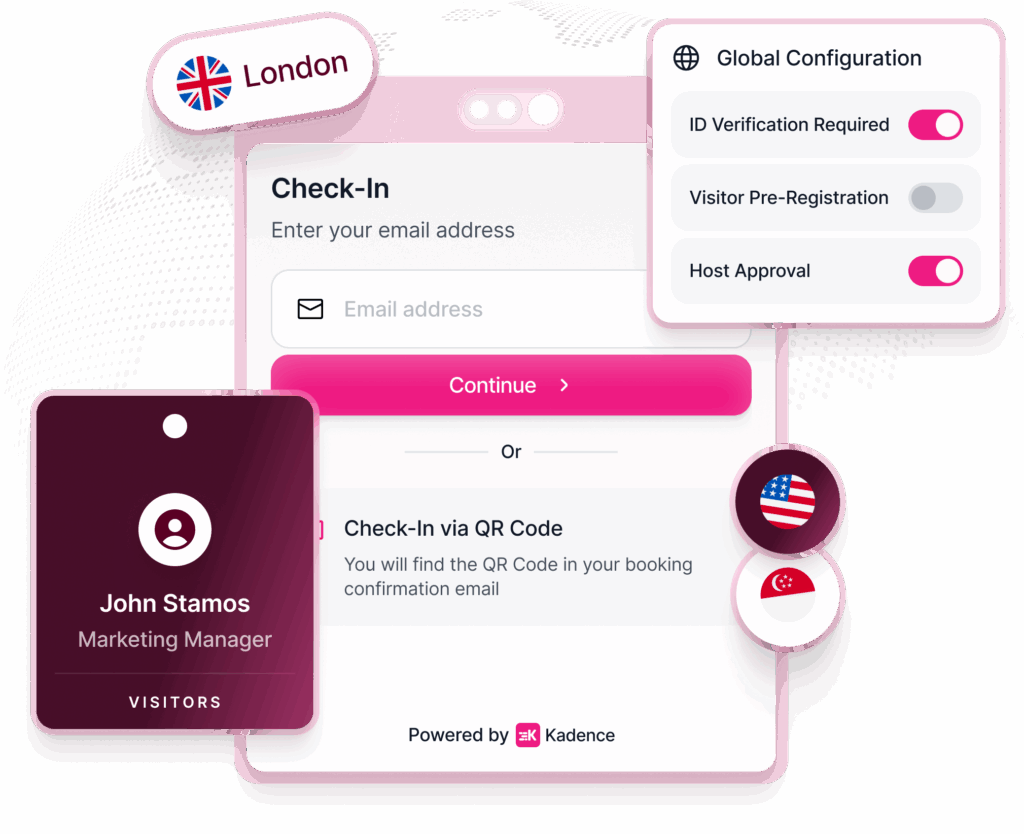
How Kadence Approaches Visitor Management
Kadence approaches visitor management by making it easier for people to do the right thing.
Because Kadence is the system employees already use to manage their workplace, inviting a visitor does not mean switching tools or learning a separate process. Visitor registration sits alongside desks, rooms, and everyday workplace activity, making compliance part of normal work rather than an extra step.
That matters because most governance failures are not intentional. They happen when processes feel inconvenient, unclear, or disconnected from how people actually work. Kadence removes that friction by embedding visitor management into the same platform teams already rely on.
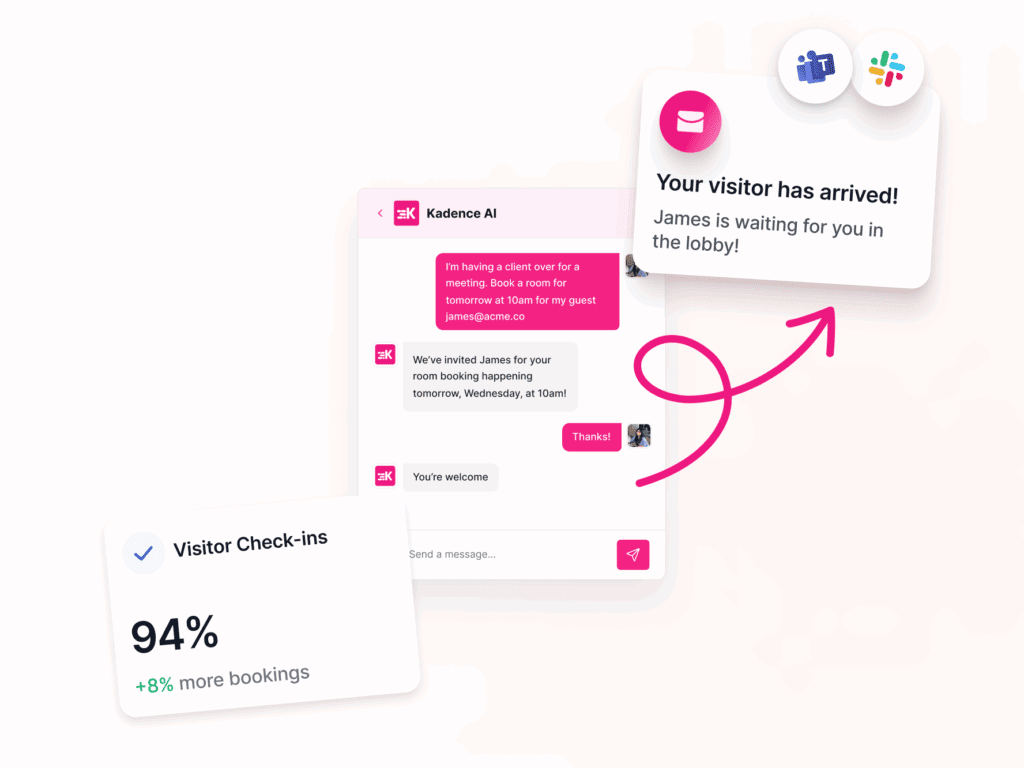
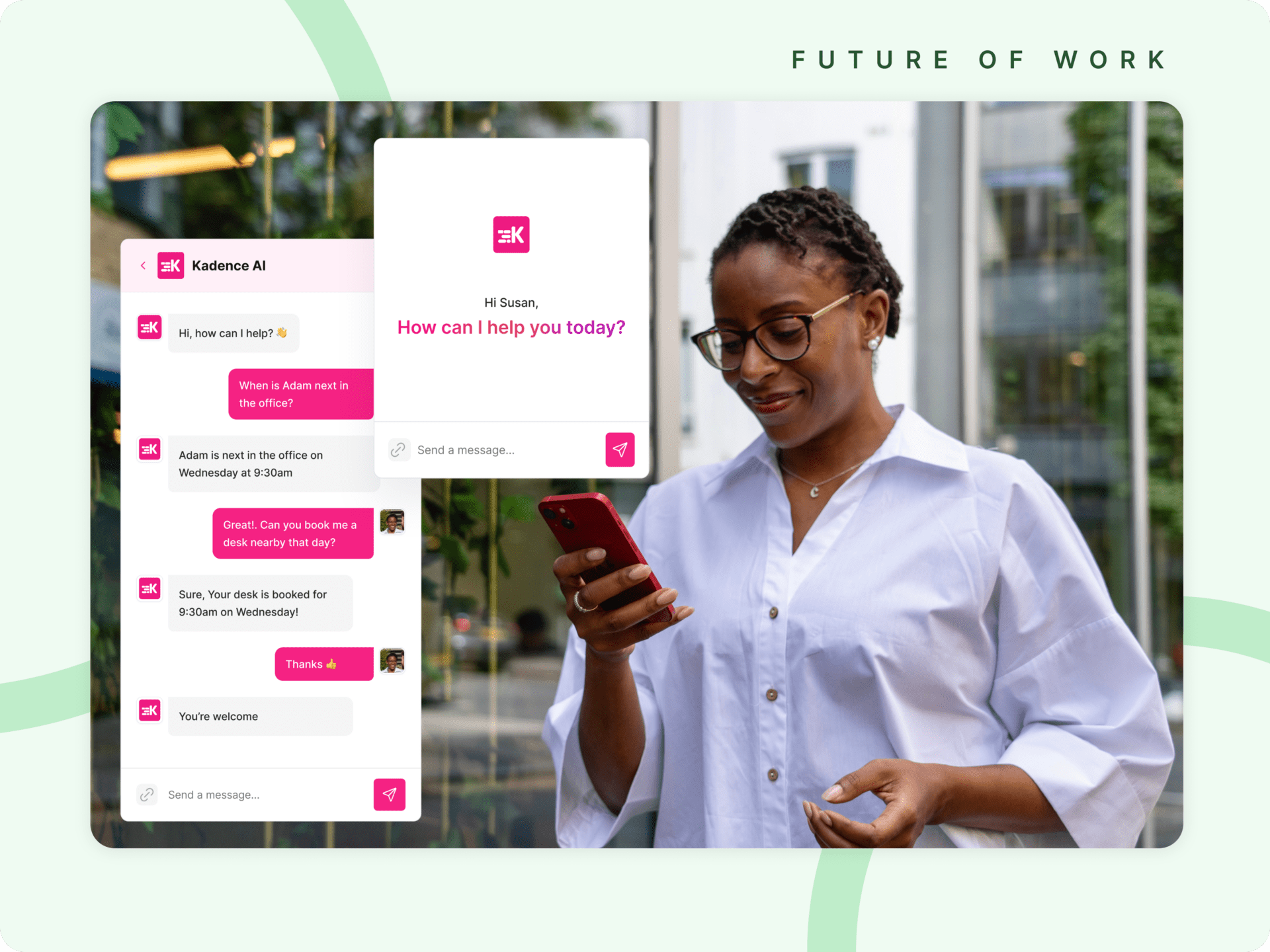
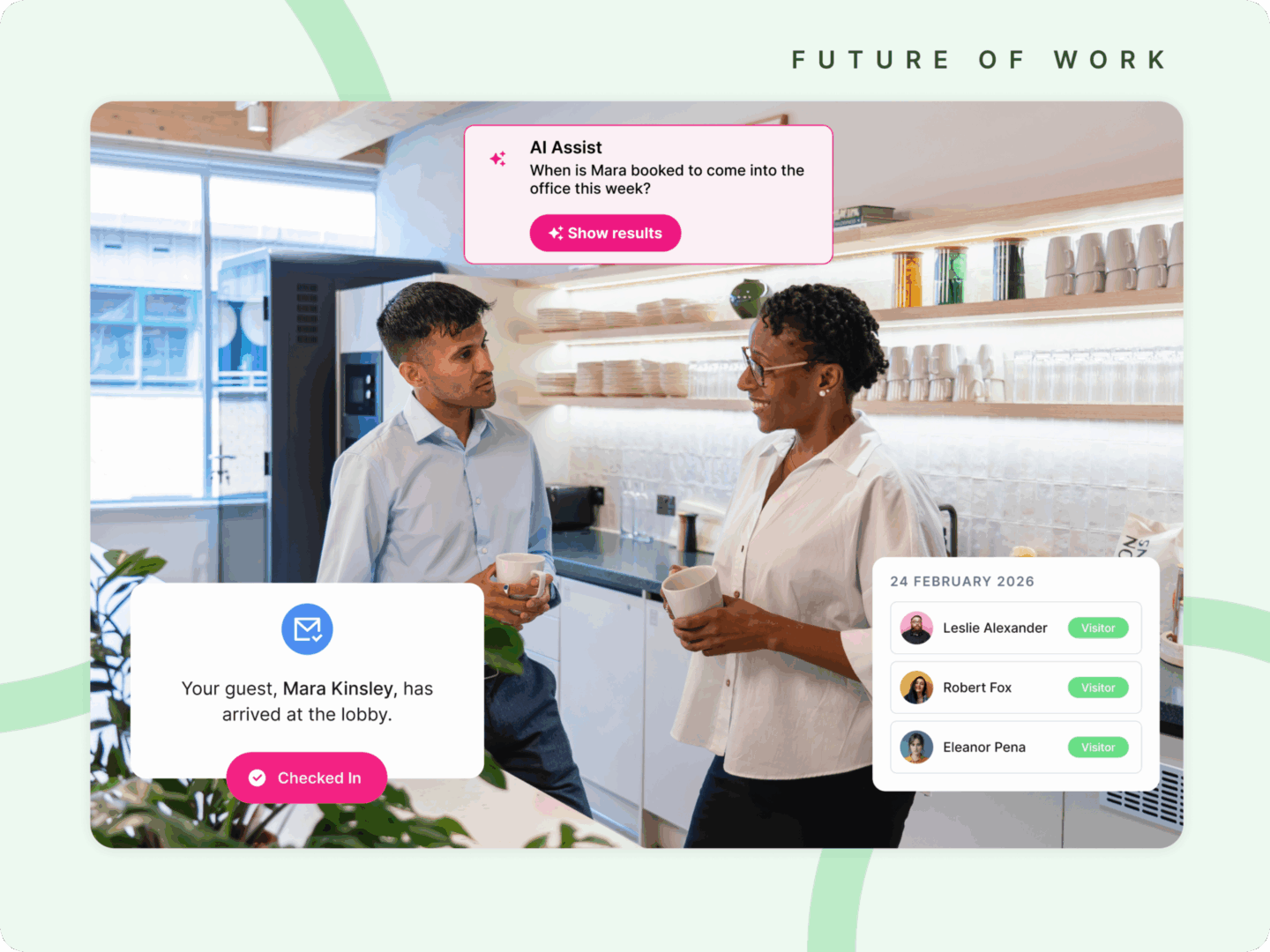
That includes unplanned moments. Visitors can be added on the fly, including through Kadence AI, allowing employees to register a guest quickly while ensuring the right information and documentation are captured automatically. Policies are enforced in the background, without slowing people down.
Behind the scenes, visitor activity is logged centrally, records are audit-ready by default, and workplace and security teams gain real-time visibility across every location. The experience feels simple, but the system underneath is doing the work.
Once you accept that your office already has a border, governance stops being about adding more checks at the front door. It becomes about designing entry as infrastructure that can scale, adapt, and be trusted.
If you want to see how visitor management fits into a modern workplace operating system, book a demo with our workplace operations experts.