
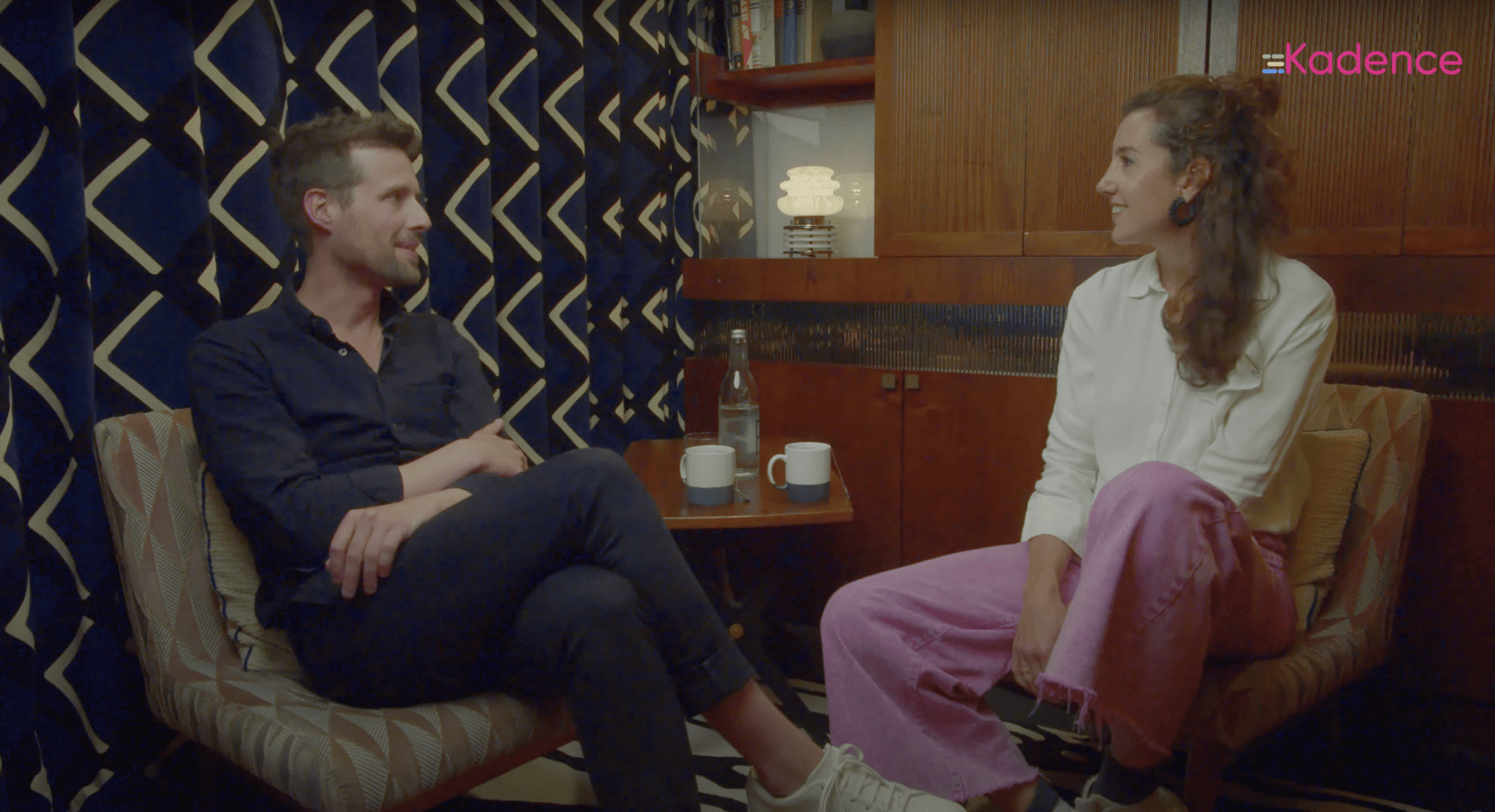
When Dave Cairns and I finally met in person, it was a moment that truly mattered. Like many colleagues in distributed teams, we had been working together for months without ever being in the same room. When we met at a Kadence event in London, everything clicked into place.
That meeting was more than an introduction. It showed how much our work dynamics have shifted since before COVID, and why the moments we spend together now need more intention than they used to.
What did Dave Cairns and Helen Attia discuss?
In this August 2024 conversation, Dave Cairns and I talked about how work changed after COVID and what distributed teams lose when every interaction happens on a screen. We covered why in-person moments build trust, why they are harder to create now, and how events and technology can help teams create them on purpose.
How have workplace dynamics changed since COVID?
Before COVID, work had clear boundaries: the office was the office and home was home. The pandemic moved offices into living rooms, turned colleagues into faces on a screen and blurred professional and personal life. Virtual meetings work, but they cannot replace everything that happens when people share a room.
When I met Dave in person, I realized how different things are now. There is something irreplaceable about face-to-face interactions. The little moments, the spontaneous conversations and the energy of being in the same room are things that Zoom just can’t replicate. As much as I advocate for flexible, distributed work, I have come to appreciate the value of these in-person moments even more.
What are moments that matter at work?
Moments that matter are the interactions that build and maintain trust within a team: a first in-person meeting, a well-run onboarding, an unplanned conversation that resolves a problem. At Kadence we talk about them a lot. They are not corporate buzzwords. In a world without daily office interactions, they are the glue that holds teams together.
A distributed team is a team whose members work from different locations, often across offices, homes and time zones, for most of their working week.
Dave and I discussed how hard it can be to create these moments in a distributed work environment. Onboarding new team members, fostering trust and building a cohesive team dynamic are all harder when your main interaction happens through a screen. It is easy to miss the nuances, the body language and the unspoken cues that are so vital to human connection.
Can distributed teams still create moments that matter?
Yes. These moments are not impossible to create in a distributed team. They just require more intention. A well-planned event, a thoughtful team-building exercise or protected time for unstructured conversation can all create the connections a healthy, thriving team depends on. The difference is that someone has to plan for them.
For workplace and HR leaders, this changes the job. Connection used to be a side effect of shared office days. Now it has to be designed, scheduled and supported, in the same way as any other part of workplace operations. The guide to bringing teams together covers how to plan for it.
How should companies rethink team events?
Companies should design events around connection, not only business goals. At Kadence, we have moved away from the traditional offsite where the agenda was all business. Our events now aim to create experiences where people engage on a personal level and build the trust and understanding that distributed work depends on.
One lesson stands out: not every event works for every team. Different teams have different needs and cultures, so events should be tailored accordingly. Our engineering team might value deep technical discussions, while our commercial team might prioritize networking opportunities. The key is to understand what is meaningful to each team and create moments that resonate with them.
Team event here means any planned in-person gathering, from a quarterly offsite to a single team day, whose main purpose is connection rather than routine work.
What role does technology play in connecting teams?
Technology keeps distributed teams connected between in-person moments. The right tools make regular, effective communication routine, so important conversations are not lost in the daily grind and relationships keep growing when people are miles apart. The pandemic accelerated this shift, and the move toward integrated tools for hybrid working is still only beginning.
At Kadence, we have developed tools that support that kind of regular communication. Many workplaces still run on legacy systems, but there is a growing movement toward more integrated and flexible tools that support hybrid working. It is clear that organizations that fail to adapt risk being left behind.
How does Kadence help teams create moments that matter?
Kadence is designed to support communication, collaboration and connection, helping teams create meaningful moments whether they work together in person or remotely. Creating those moments is not just a nice idea. It is a critical part of modern workplace culture, and it works best when the tools fit how each team actually works.
With Kadence, teams can tailor their interactions to their own needs. That might mean scheduling regular check-ins, planning team-building events, or coordinating who is in the office and when. Where the traditional office is no longer the default, these tools help teams stay engaged, connected and aligned with the organization’s goals.
What did the conversation leave us with?
Reflecting on my conversation with Dave, it is clear that the way we work has changed for good. That change is not something to fear. It is an opportunity to rethink how we connect with our teams, how we build trust, and how we create a workplace that is not only productive but meaningful.
The world has changed, and so have we. By focusing on creating moments that matter and using the right tools, we can build stronger, more resilient teams that are ready for whatever comes next. Dave explores the idea further in For The Moments That Matter.
Frequently asked questions
Why do in-person moments matter for distributed teams?
They carry the nuance that screens lose: body language, unspoken cues and spontaneous conversation. Those moments build the trust that onboarding, collaboration and team cohesion depend on.
How do you create moments that matter in a hybrid team?
Plan them. Use well-designed events, thoughtful team-building and protected time for unstructured conversation, and tailor each to what the team actually values.
Should every team have the same kind of event?
No. Different teams have different needs and cultures. An engineering team might value deep technical discussion, while a commercial team might prioritize networking.