
In December 2022, Kadence, a hybrid working software company, announced a $10M Seed funding round. Kickstart Fund led the round, with major participation from Manta Ray, Hambro Perks and Vectr7 Investment Partners, as well as Shadow Ventures and Forward VC.
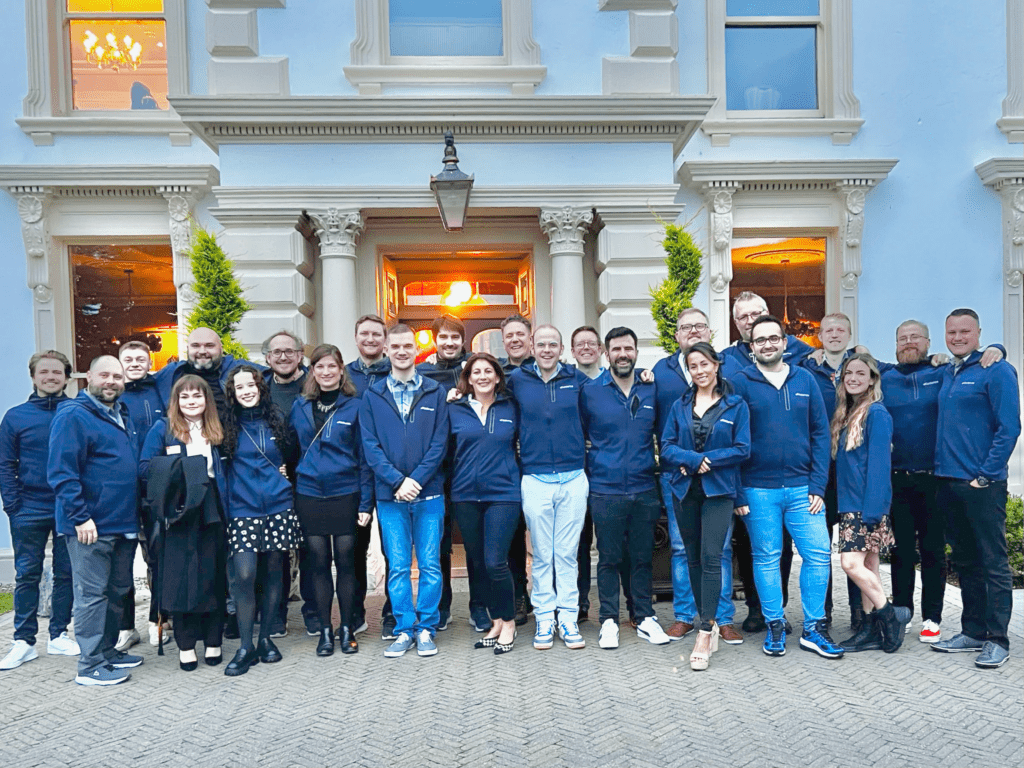
Who invested in Kadence’s Seed round?
Kickstart Fund led the $10M Seed round, joined by Manta Ray, Hambro Perks, Vectr7 Investment Partners, Shadow Ventures and Forward VC. Kadence also attracted well-known future of work angel investors: Cal Henderson, then co-founder and CTO at Slack; Shaun Ritchie, then CEO and founder of Teem; and Nick Bloom, Stanford professor, research leader and authority on remote work.
“Companies around the world are reimagining the way they work,” said Cal Henderson. “And as the world goes hybrid, it’s important that teams find a rhythm for meeting in person for collaboration and creativity.”
“Never before in history have humans changed how they work at such a scale and in such a short space,” said Nick Bloom. “Their focus on the coordination of people is where the market is heading.”
What did Kadence do in 2022?
In 2022, Kadence coordinated people, places and projects to help employees be in the right place at the right time with the right people. Its product gave people the power to choose when they work, where they work and who they work with.
By December 2022, Kadence had grown from 0 to 300 customers in 18 months, from governments to fast-growing tech companies like Collibra and Starling Bank. Kadence had helped companies reduce expensive office space by 68% while increasing the number of employees coming into the office to collaborate by 25% month over month.
“The last 12 months of hybrid have all been about creating order out of chaos,” said Dan Bladen, CEO and founder of Kadence. “Companies are now trying to figure out how to move from ‘order’ to ‘optimization’ and make the ‘way’ they work a competitive advantage.”
What was Chargifi, and how did it become Kadence?
Chargifi was the company’s original name. It built software and products for managing wireless charging networks in offices. Dan Bladen moved his family from the UK to California in late 2019 to grow Chargifi. When the pandemic froze the market and customers began canceling orders, Dan had to reinvent the business.
“Four months after we moved to Silicon Valley, our world changed forever,” Dan said. “We had been building Chargifi for seven years, but when the pandemic hit, demand completely dried up and it wasn’t clear when or if it would ever come back.”
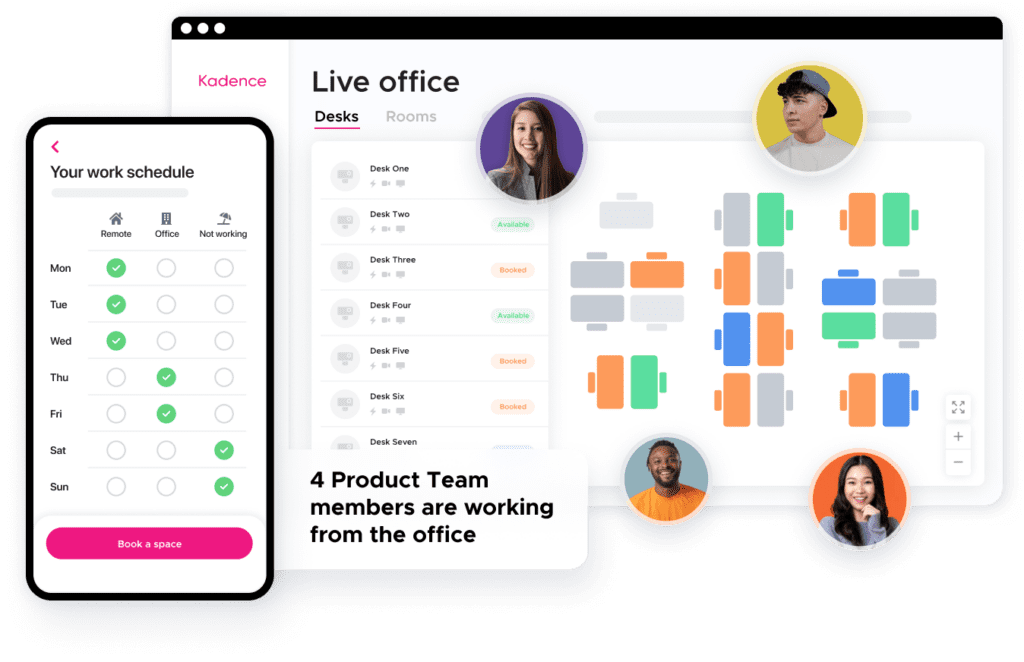
Hybrid work was still new when the team decided to repurpose the software and products they had already built. They turned them into a tool for hot-desk management. By the end of 2020, Chargifi had launched the first version of Kadence.
What did customers and investors say?
Jeff Gwinnett, Senior Director of Workplace and Sustainability at Softchoice, a Kadence customer, said: “Our team loves Kadence. It’s simple and intuitive to use and is powering our hybrid strategy nationwide.” Read more in the Softchoice customer story.
Kat, the newest General Partner at lead investor Kickstart Fund, made Kadence her first venture investment. “Having the opportunity to back companies like Kadence is why I got into venture capital,” she said. “They’re building something of true significance.”
What was the funding for?
Kadence said the new round would let it serve more customers and develop new tools to power the future of work. Its vision, carried over from its time as Chargifi, was to empower human flourishing at work and at home by improving the coordination of people, time and space, so teams feel trusted to choose how, when and where they do their best work.
Watch the announcement, learn more about why companies choose Kadence, or visit the Kadence newsroom for later company news.