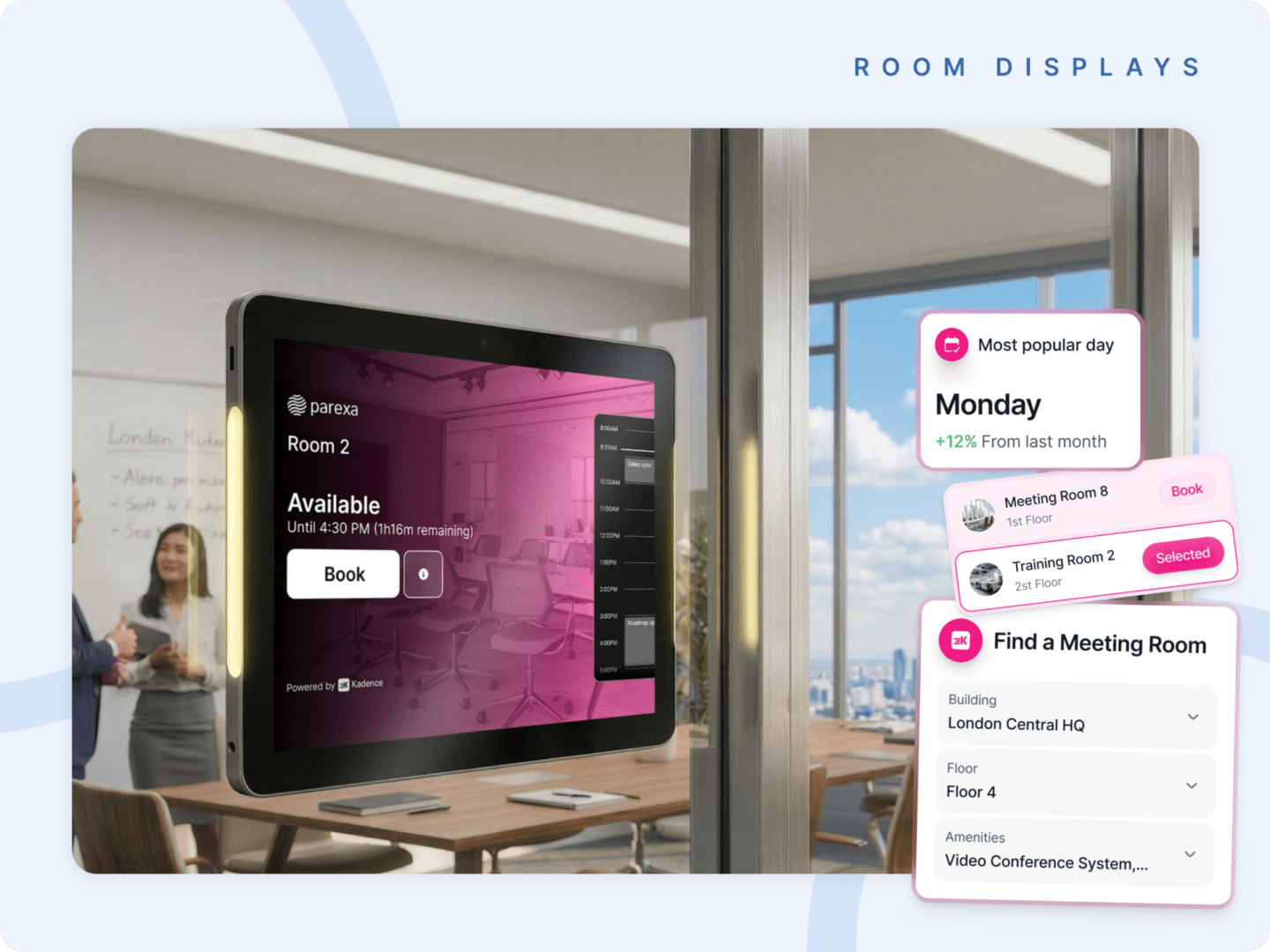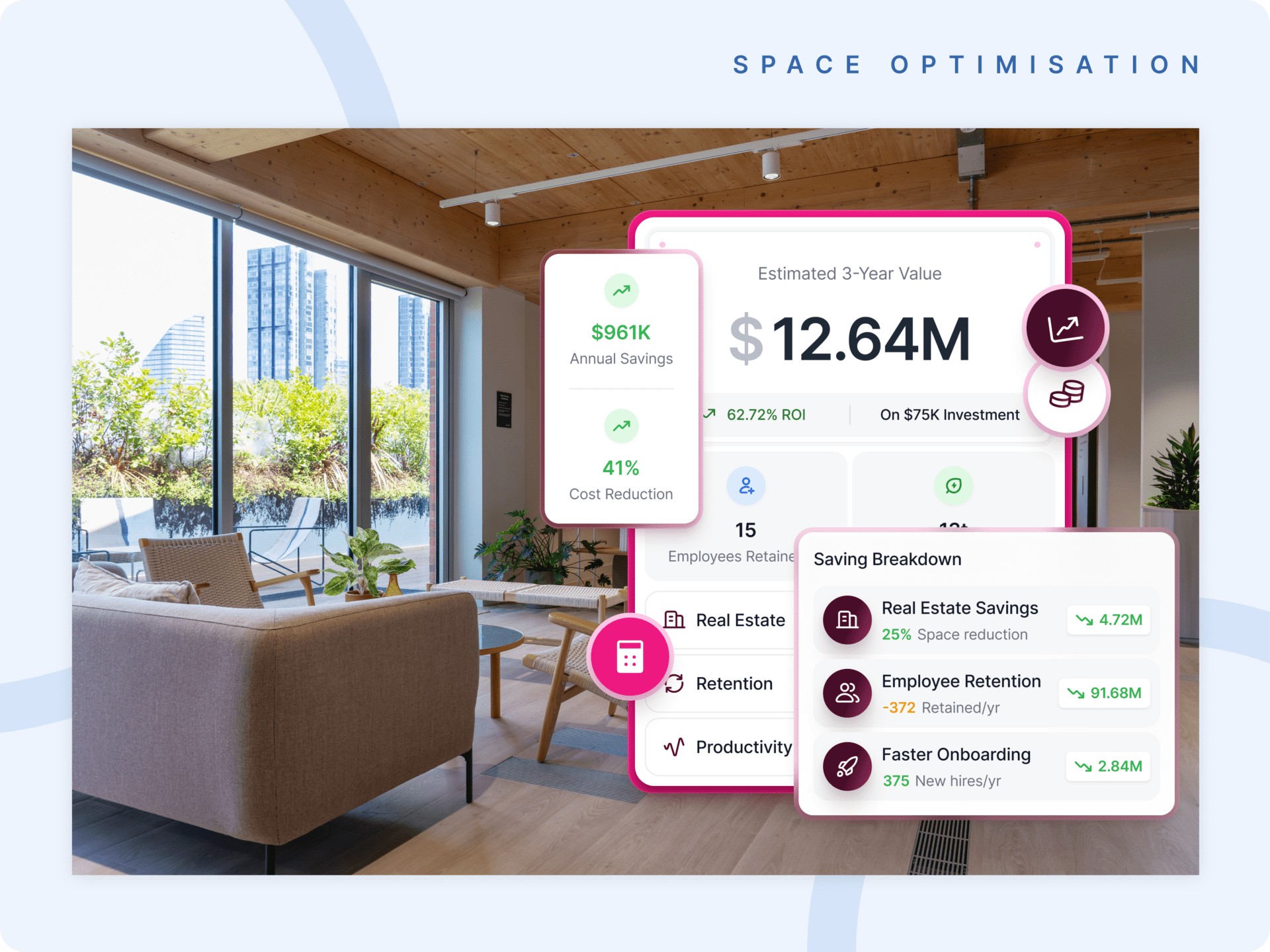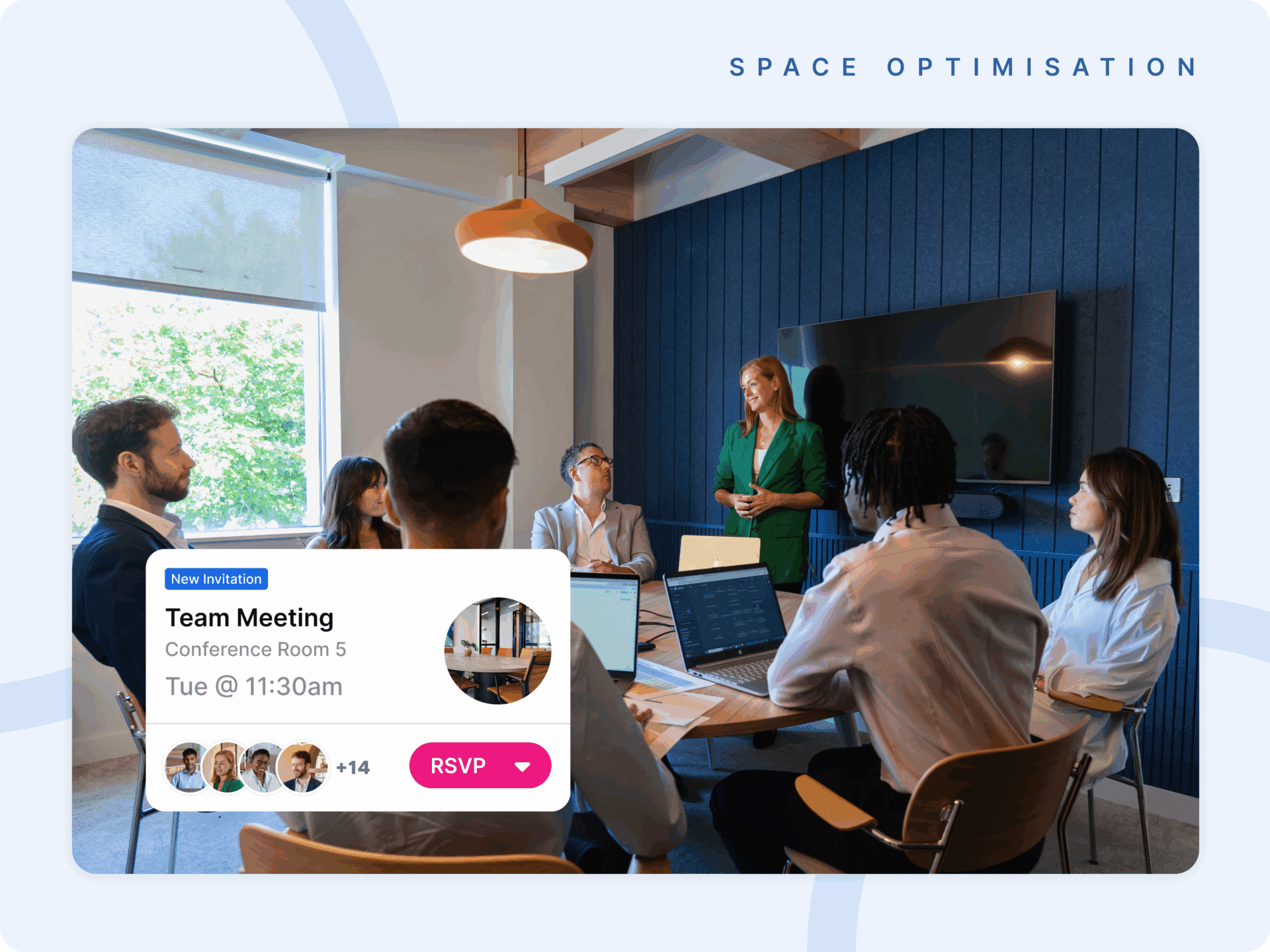

Every enterprise portfolio has a rhythm. Some hub locations pulse with activity. Others sit unexpectedly quiet. Certain floors are under constant pressure while others rarely reach capacity. Meeting rooms disappear from the booking grid even when the rest of the building feels half empty. In many organizations, gaps appear because occupancy signals are disconnected from the monitoring tools meant to interpret them.
Facilities and real estate teams feel these issues long before they show up in board reports or lease decisions. Many organizations struggle because their occupancy data is fragmented across tools that were never designed for modern monitoring needs.
The gap is simple: you cannot optimise what you cannot see.
This is why interest in workplace systems that combine occupancy insight with space monitoring continues to grow across global portfolios. Real estate leaders increasingly question whether their monitoring approach gives a realistic view of occupancy across high-value floors. Executives want clarity on cost and risk. Facilities teams want evidence to inform redesigns and consolidation. Local workplace teams want better office occupancy data to align space with how people actually work.
Yet most occupancy solutions were never designed for today’s enterprise environment, where flexibility, distributed teams, and real-time insight matter more than static systems.
Modern space monitoring is not about surveillance. It is about diagnosing workplace performance, improving the employee experience, and making multimillion dollar decisions with reliable data instead of assumptions.
Understanding What Space Monitoring Really Means
Space monitoring refers to the practice of understanding how physical spaces perform across your workplace portfolio. It reveals which areas are thriving, which are struggling, and how real patterns differ from policy, design intent, or workplace strategy. Real estate teams often rely on outdated occupancy assumptions because their monitoring systems cannot keep pace with constant workplace change.
You can think of it as the operational heartbeat of the enterprise workplace. It helps answer the questions your facilities and real estate teams already ask every month:
• Why is this floor always empty?
• Why is that meeting room always full?
• Why do our teams struggle to coordinate attendance on the same days?
• Why does one neighborhood feel overcrowded while another stays quiet?
At enterprise scale, these questions shape lease renewals, hub strategies, capital allocation, and long-term workplace decisions.
When teams understand the pattern instead of the symptom, they can finally fix the problem. Without trustworthy occupancy insights, even the best monitoring dashboards can mislead leaders.
Effective space monitoring shows what is happening across your workplace today, and what that means for tomorrow’s portfolio and investment decisions.
Where Traditional Approaches Fall Short
Most large organizations still rely on hardware-heavy approaches. Sensors, infrared counters, Bluetooth beacons, and badge systems were built for static environments, not hybrid ones. Many traditional tools offer occupancy snapshots, but their monitoring intervals are too slow for dynamic teams and fluctuating attendance patterns.
These systems are costly, slow to scale, difficult to maintain across regions, and disconnected from the workplace rhythm. They reveal what happened last week, not what is likely to happen next Wednesday in your busiest hub.
Because they rely on physical hardware, they rarely adapt as fast as business needs evolve. Facilities teams tell us they lack the occupancy clarity required for long-term planning, especially when monitoring tools break down across multiple sites.
The result is fragmented data and strategic decisions based on outdated or incomplete insights. When occupancy varies widely between neighborhoods, accurate monitoring is required to understand real demand.
Why Space Monitoring Matters More In 2026
Enterprises need visibility for two reasons.
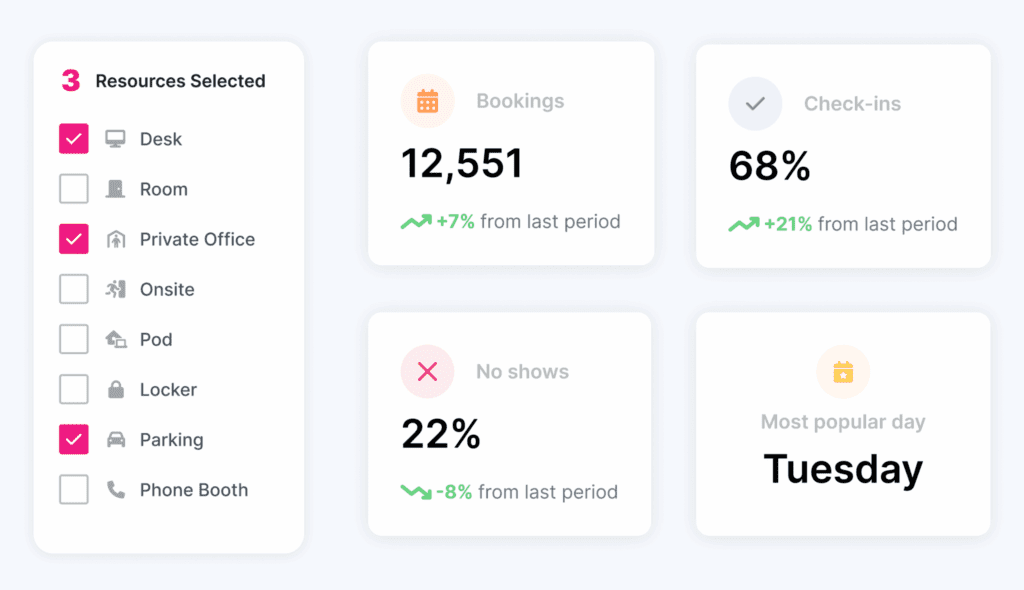
The first is financial clarity. Real estate and facilities programs represent some of the largest costs on the balance sheet. Decisions about floors, hubs, and consolidation must be grounded in accurate occupancy insights, especially when utilization still fluctuates between 20 and 40 percent in many global offices.
The second is employee experience at scale. Space issues show up as friction. Rooms that are always booked. Neighborhoods that feel overcrowded. Entire wings that sit underused. As companies redesign their offices, occupancy insight plays a critical role in monitoring which space types actually support collaboration and focused work.
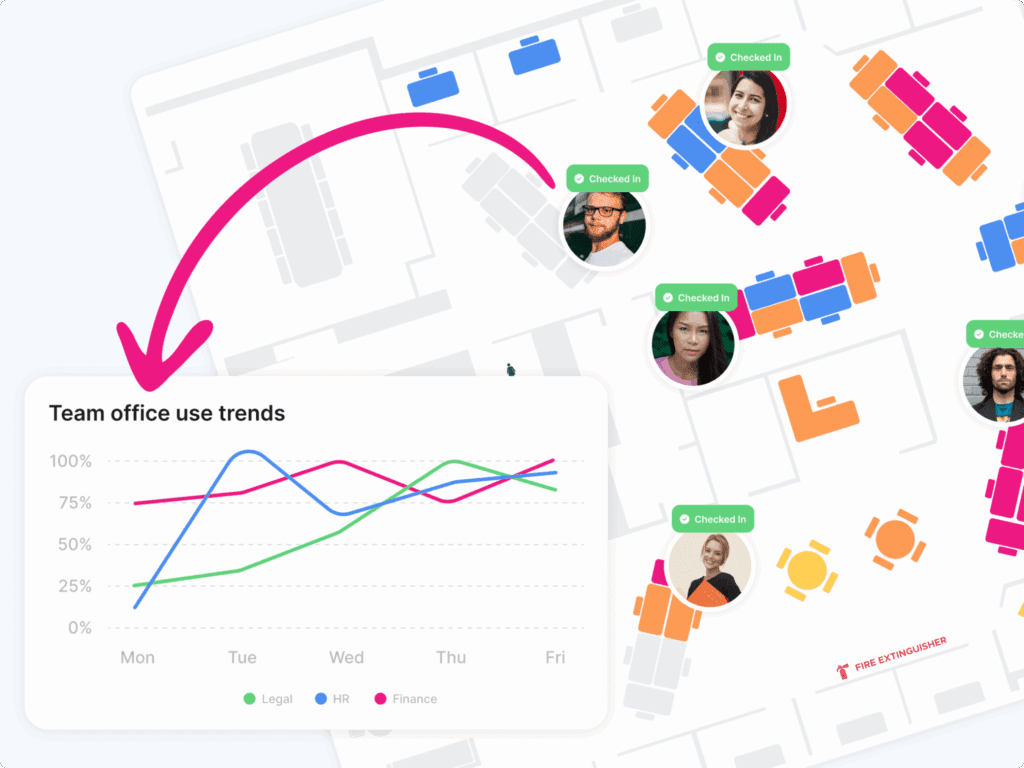
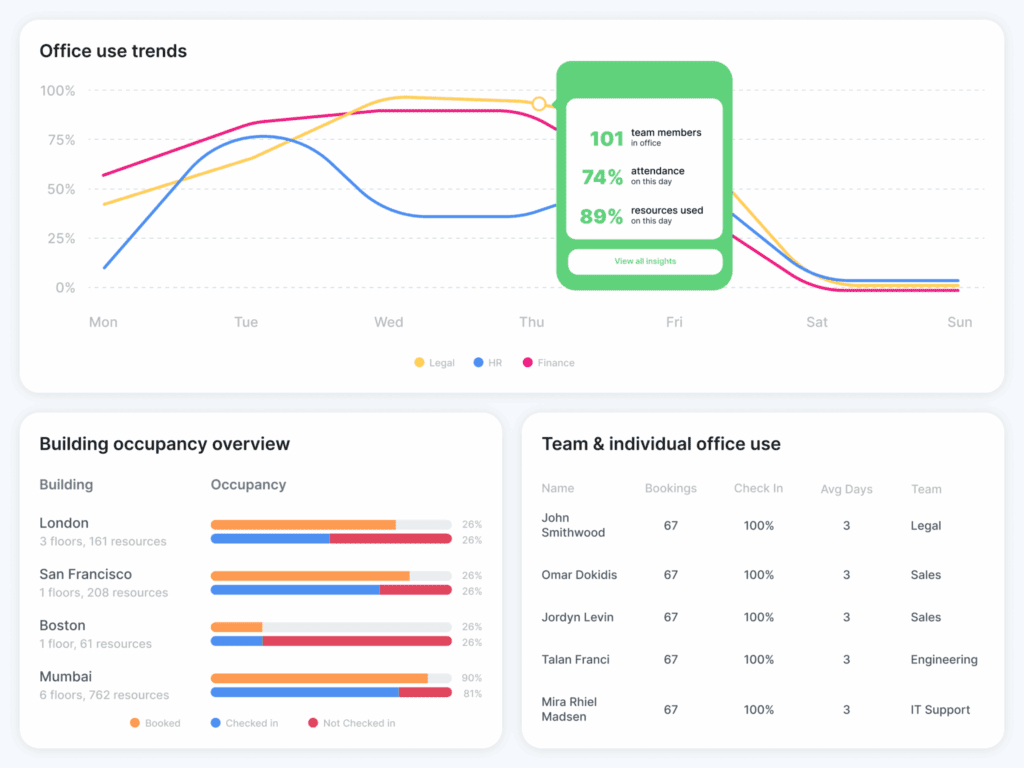
Space monitoring reveals how each office, floor, and zone is used in real time. It shows which areas are under pressure and which can be redesigned, repurposed, or consolidated. It helps leaders match capacity with demand across multiple locations and avoid decisions based on anecdotal evidence.
This is where the traditional model stops working and where a more adaptive approach becomes essential.
Kadence Sense: Modern Space Intelligence Without Hardware
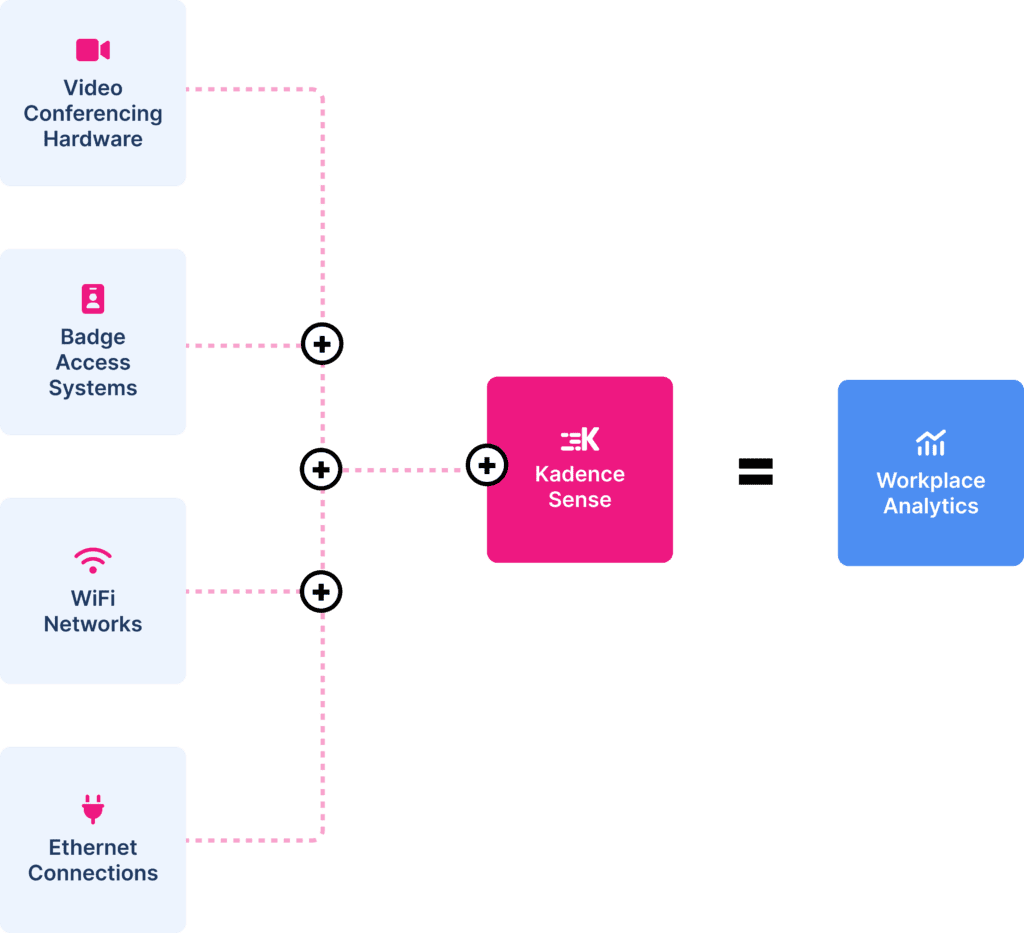
Kadence Sense gives enterprise organizations a new model for space monitoring by eliminating the need for sensors. Instead of relying on hardware, it uses the digital signals your workplace already produces, such as Wi-Fi, Ethernet, badge systems, and collaboration tools. These digital touchpoints reveal occupancy patterns while allowing monitoring to happen seamlessly in the background.
Attendance is verified the moment someone connects to the network. Rooms and spaces populate with live usage information. Insights flow directly into Kadence Workplace Analytics, offering a unified and accurate picture of utilization across the entire portfolio.
Kadence Sense delivers:
• Real-time occupancy visibility without installing sensors
• A frictionless employee experience with automatic presence verification
• Scalable portfolio-wide deployment managed centrally by IT
This gives workplace teams the occupancy understanding they need while replacing monitoring systems that slow portfolio decisions.
How Kadence Sense Supports Enterprise Workplace Decisions
Kadence Sense does not just show what is happening. It supports better decisions across people, space, and cost.
Space and facilities teams can identify underused zones, pressured neighborhoods, and opportunities for reconfiguration. Organizations are realizing that accurate occupancy signals reduce the need for intrusive monitoring practices. Finance leaders gain reliable utilization patterns for consolidation and lease strategies. People teams gain visibility into how hybrid strategies function in practice. IT gains a system that deploys in minutes rather than months.
With all signals feeding into Kadence Workplace Analytics, leaders can examine real-time occupancy, track evolving patterns, and align space with business intent instead of historical assumptions.
This creates the foundation for dynamic workplace operations across an entire enterprise portfolio.
A Better Way To Monitor Space Without Monitoring People
Space monitoring should empower organizations and protect trust. Kadence Sense uses a privacy-first model that measures how spaces are used, not who is using them.
Employees do not need to check in manually or install anything. They simply work, and the workplace reflects reality.
The goal is to improve the environment, not observe individuals.
FAQ: Understanding Space Monitoring In Modern Workplaces
What is space monitoring?
Space monitoring is the practice of understanding how workplace areas are used in real time. It helps organizations measure occupancy, identify underused zones, and improve the experience across offices and facilities.
Is space monitoring the same as occupancy analysis?
They overlap. Occupancy shows how many people are in a space. Monitoring reveals how spaces perform over time and how those patterns shape workplace strategy.
Does space monitoring track employees?
No. Kadence Sense identifies occupancy patterns at the space level using privacy-safe digital signals such as Wi-Fi and badge systems.
Do I need sensors to monitor space effectively?
Not anymore. Kadence Sense captures real-time occupancy insights without any hardware, making it faster and more cost-effective to scale across global portfolios.
How does space monitoring support hybrid work?
It shows how hybrid strategies translate into real attendance. Leaders can see which days peak, which zones are under pressure, and where redesigns can support collaboration.
Final Thought
Visibility is the foundation of every effective workplace decision, especially when managing large, complex portfolios.
When organizations understand how their spaces are used, they can design workplaces that support comfort, collaboration, and cost efficiency across every location.
Kadence Sense provides a modern way to achieve this clarity without sensors or disruption. It gives leaders the portfolio-wide intelligence they need for confident decisions today and long-term planning tomorrow.
If you want to see how Sense works inside your own environment, book a demo with our workplace operations experts.