By 2026, uneven office attendance is no longer surprising. What surprises leaders is how persistent it is.
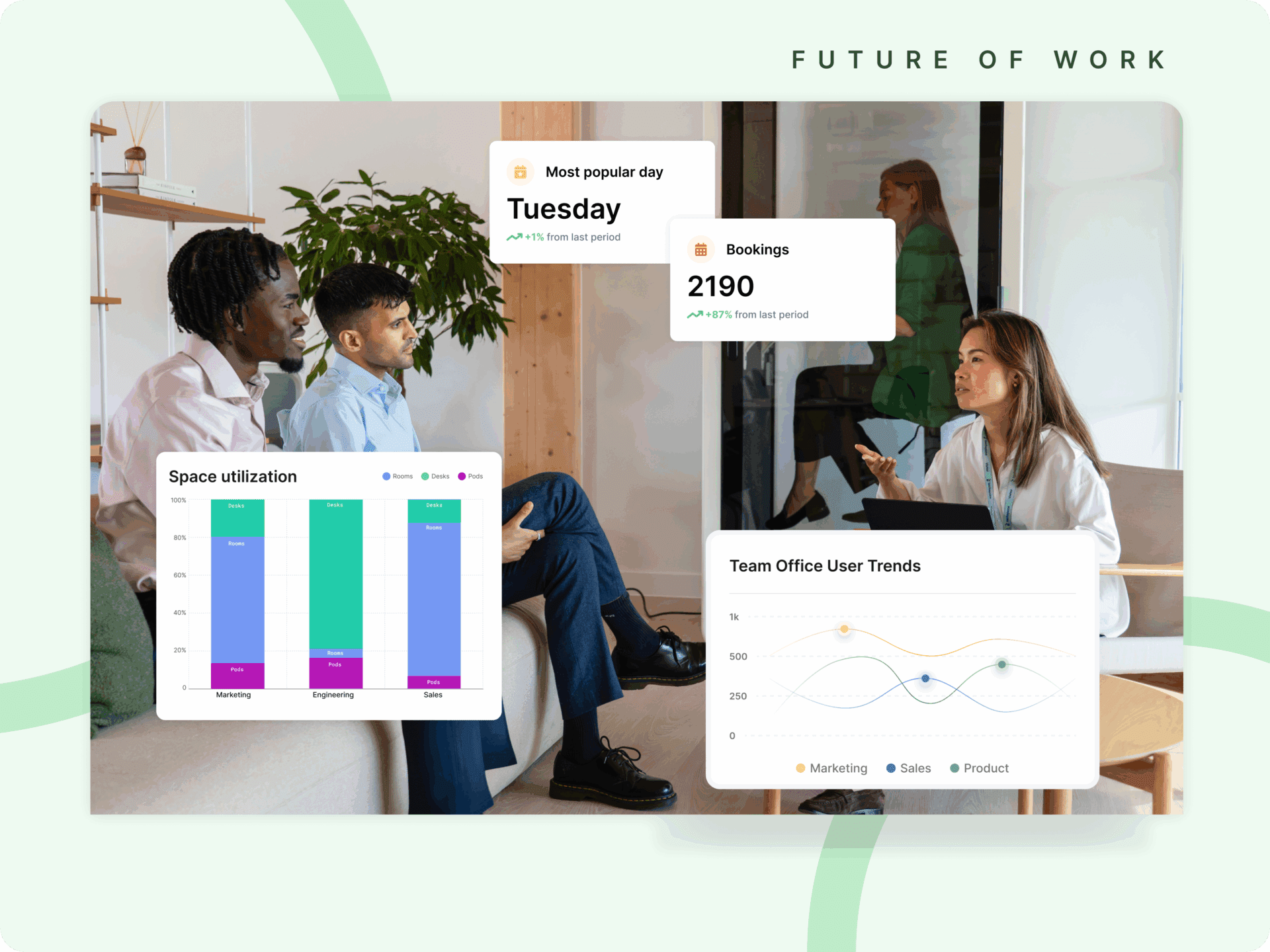
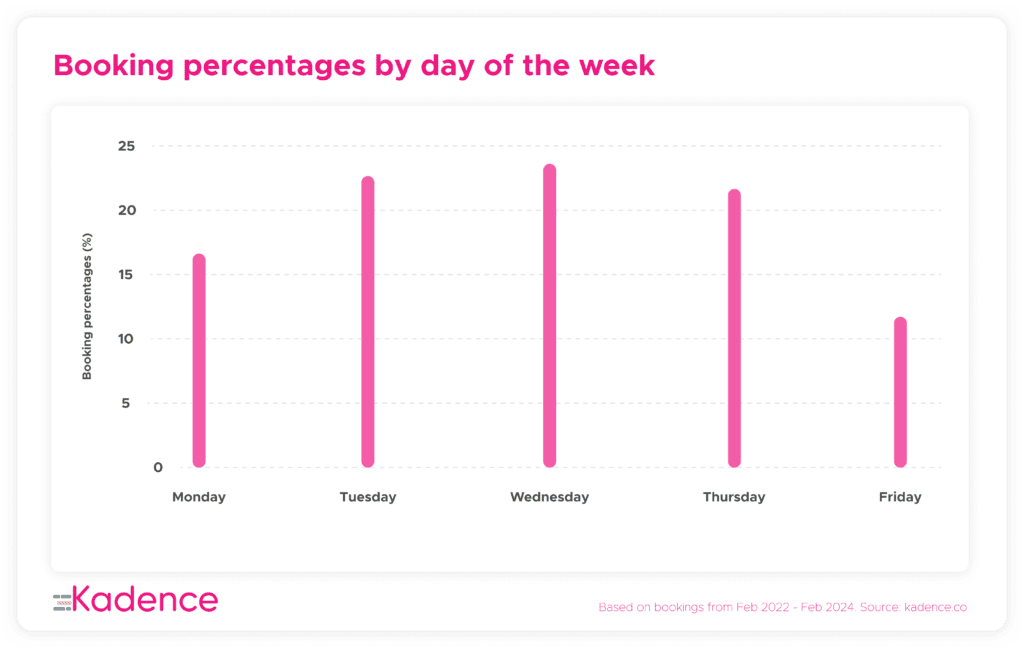
Tuesdays and Wednesdays are crowded. Mondays and Fridays remain quiet, even in organizations with clear in-office expectations. This pattern appears across sectors, geographies, and workplace strategies. Yet it is still often discussed as an employee behavior issue rather than what it actually is: a workplace operations problem.
The imbalance is not accidental. It is the predictable outcome of how offices are planned, coordinated, and operated.
Midweek Crowding Is a Rational Outcome
When leaders look at attendance data, they often describe it as inconsistent or difficult to predict. In reality, it is highly logical.
Teams cluster their in-office time around collaboration. Being in the office only delivers value if the right people are there at the same time. Tuesdays and Wednesdays maximise overlap, decision-making, and momentum. Employees are not resisting flexibility or ignoring expectations. They are optimising for how work actually gets done.
The mistake many organizations make is continuing to operate the workplace as if demand were evenly distributed across the week.
Employees feel the consequences immediately. Peak days are busy, noisy, and difficult to navigate. Quieter days feel under-supported. The issue is not that people are choosing the wrong days. It is that the workplace has not been operated for the days that matter most.
The Return of Real Meetings Is Intensifying the Pattern
This clustering has become more pronounced as organizations place greater emphasis on in-person collaboration.
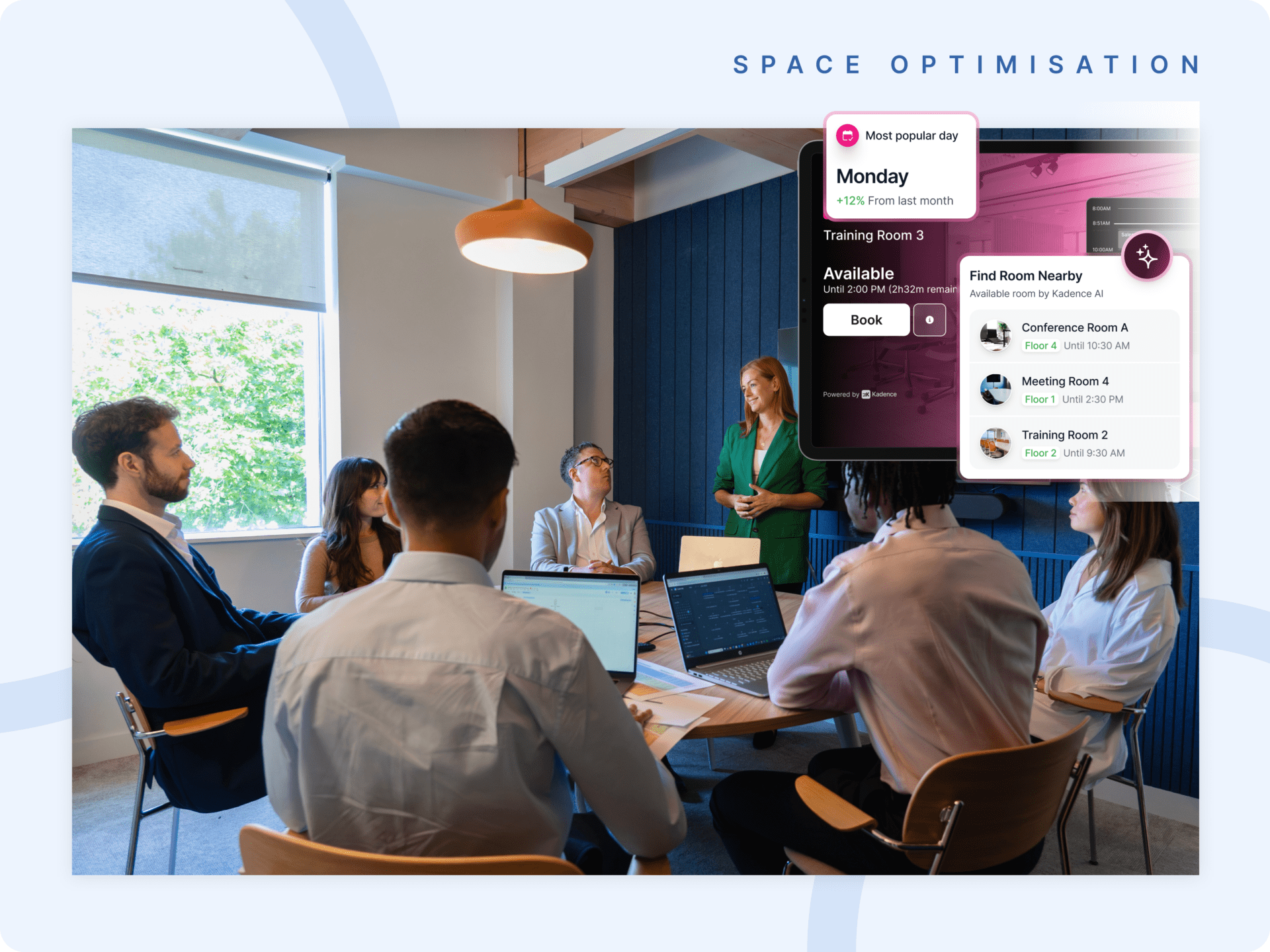
Kadence Pulse data shows that the average company using Kadence now holds around 40 meetings per month, and those meetings are highly concentrated midweek. Tuesdays and Wednesdays consistently see the highest volume of meetings across customers. When single-person bookings are excluded, the average meeting size rises to around six people, and that number has been increasing since mid-2024.

At the same time, cancellation rates sit around 30 to 35 percent, but are declining among enterprise organizations. That suggests teams are planning in-office time more deliberately and committing to being present together.
Midweek crowding is not incidental. It reflects a shift toward fewer, higher-value, in-person moments that require real presence and coordination.
Planning for Averages Fails on Peak Days
Most offices are still planned around averages. Average occupancy. Average desk demand. Average meeting room usage.
But employees do not experience averages. They experience Tuesdays.
When space is sized and managed for a hypothetical typical day, it breaks down under real conditions. Meeting rooms are oversubscribed. Desks run out. Teams spend time navigating logistics instead of collaborating. Meanwhile, large parts of the office sit empty on quieter days, reinforcing the perception that space is being wasted.
This creates two problems at once. Employees lose confidence that coming into the office will be worth the effort. Workplace teams lack the evidence needed to make confident decisions and remain stuck reacting to issues rather than planning ahead.
What Real Data Reveals About Demand
This dynamic becomes clear when organizations move from assumption to evidence.
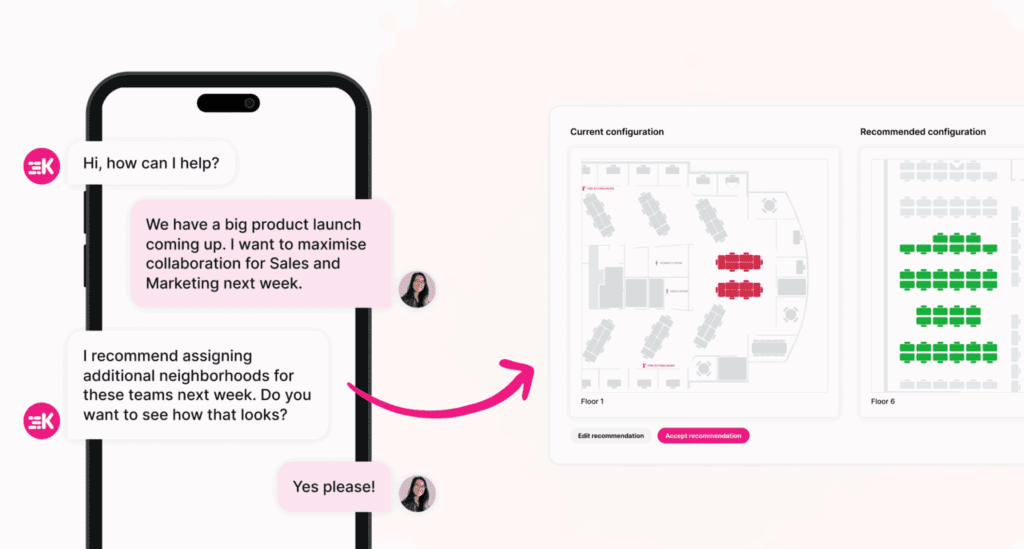
At MOO, the global design and print company, leaders wanted to understand how their office was actually being used rather than relying on anecdotal feedback. By analysing booking behavior and attendance patterns with Kadence, they uncovered clear midweek clustering and repeatable rhythms in how teams used the space.
Instead of trying to flatten attendance across the week, MOO used this insight to operate the workplace more intentionally. Office utilization increased to around 70 percent, with employees using the space more deliberately for collaboration and focused work. The workplace became something people planned around, not something they navigated reactively.
The shift was not about forcing attendance. It was about operational clarity.
Why Spreading Attendance Rarely Works
When midweek overcrowding becomes visible, many organizations try to smooth demand by encouraging people to attend on quieter days. On paper, this looks efficient. In practice, it rarely changes outcomes.
Attendance is driven by coordination, not preference. Teams come in when collaboration has the highest value. Asking individuals to attend on quieter days without changing how teams coordinate simply creates low-value office days, not better balance.
Empty Fridays are not necessarily a failure. They are a signal. They show where space is consistently underused and where real estate assumptions no longer reflect reality.
With visibility into real usage patterns, organizations can act on that signal. Some reduce their real estate footprint without compromising collaboration. Others reconfigure space to support different types of work on quieter days. In many cases, the answer is not to force demand where it does not exist, but to right-size the workplace around how it is actually used.
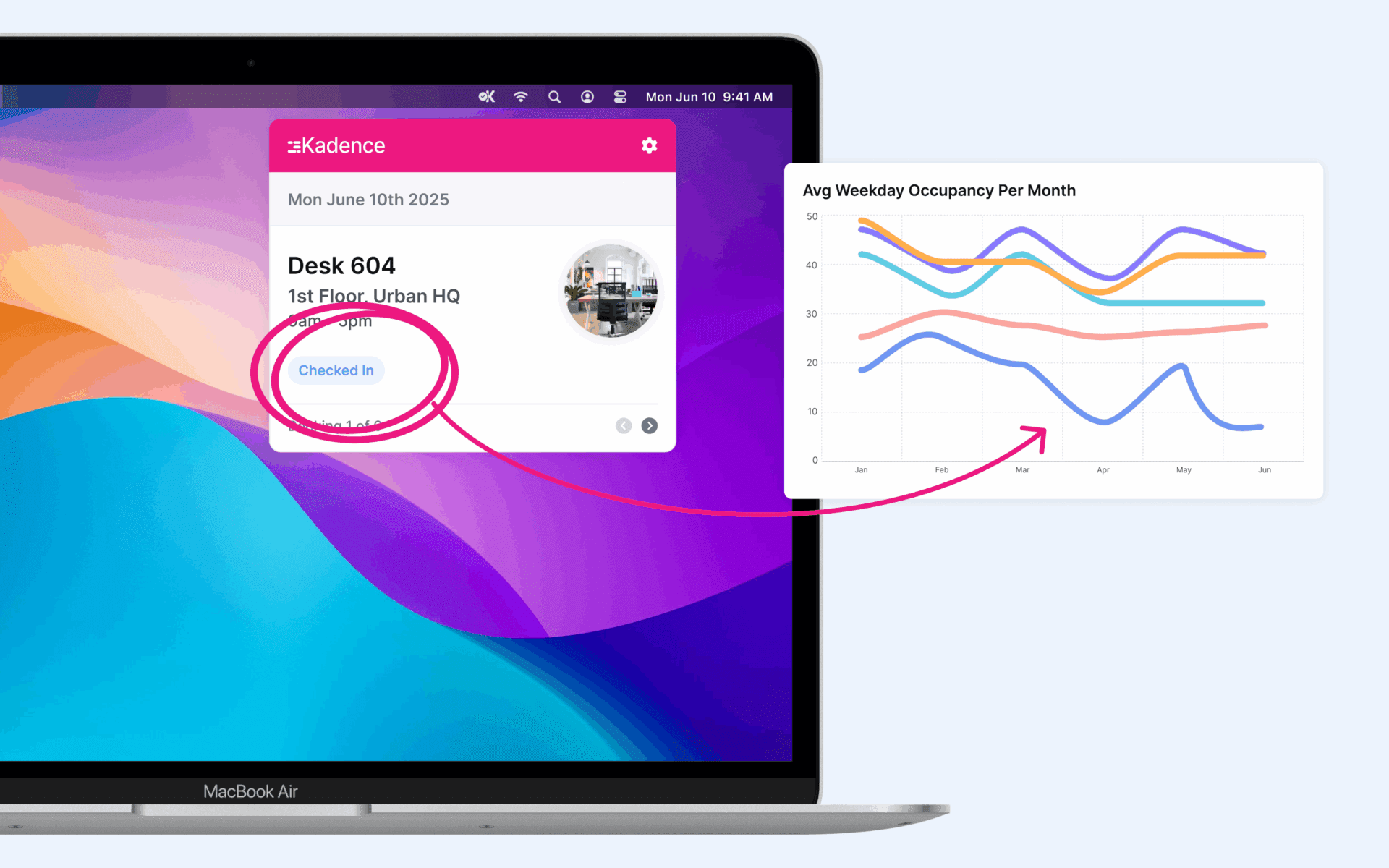
Kadence enables this shift by turning attendance patterns into operational insight. Leaders stop trying to fix behavior and start making structural decisions that reduce waste and improve experience.
What Tuesday Is Really Telling You
A busy Tuesday is not a failure of policy or commitment. It is feedback.
It tells you when collaboration matters most. It shows you where your workplace is under the greatest strain. It reveals how well your operations align with how teams actually work.
By 2026, the challenge is no longer how to force people into the office on quieter days. It is how to operate the workplace so peak days work well and every square metre delivers value.
If you want to understand what your attendance patterns are telling you and how to run your workplace around real demand, book a demo with our workplace operations experts.