By 2026, collaboration is one of the most cited reasons organizations want people in the office. It is also one of the least well measured.
Most leaders say collaboration matters. Far fewer can explain whether it is improving, declining, or simply changing shape. Surveys suggest sentiment. Anecdotes fill the gaps. But neither shows how collaboration actually happens day to day.
The issue is not that collaboration is intangible. It is that organizations have been measuring the wrong things.
Why Collaboration Has Been So Hard to Measure
For years, collaboration has been treated as a cultural outcome rather than an operational one. Leaders ask people how collaborative they feel, then infer success or failure from the answers.
By 2026, the limits of that approach are clear.
Surveys capture perception, not behavior. They cannot show whether teams are actually spending time together, whether collaboration happens across functions, or whether the office is supporting meaningful interaction. They are also retrospective. By the time results are analyzed, patterns have already changed.
Measuring collaboration at work requires observing what people do, not just how they describe it.
Collaboration Shows Up in Behavior
In practice, collaboration leaves clear signals.
It shows up in when teams choose to be in the office, how often people meet in person, and whether those meetings bring the right groups together. It shows up in overlap, coordination, and repeated patterns over time.
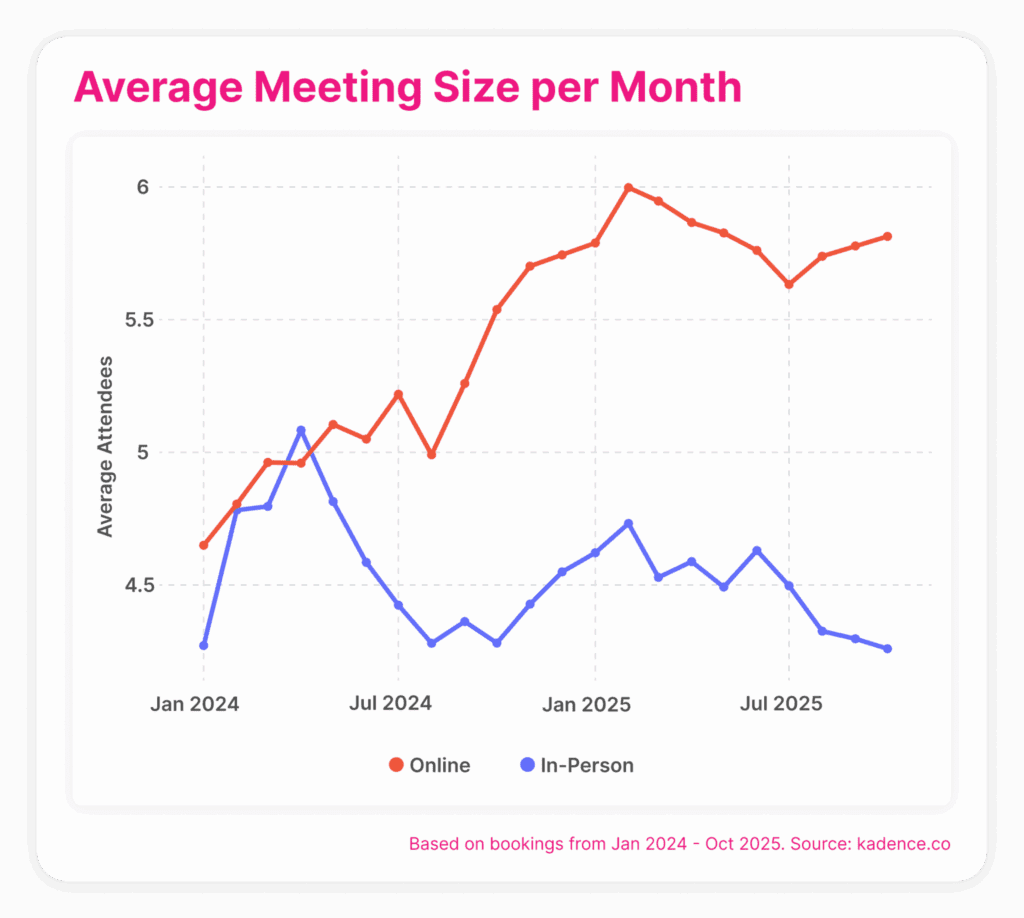
Kadence Pulse data highlights this shift. Across organizations using Kadence, the average company now holds around 40 meetings per month, with activity concentrated midweek. When single-person bookings are excluded, the average meeting size rises to around six people, and this has been increasing since mid-2024. Cancellation rates sit between 30 and 35 percent, but are declining among enterprise organizations, indicating more deliberate planning and confidence in shared presence.
These patterns show collaboration becoming more intentional, not more frequent.
Coordinated Presence Is a Leading Indicator of Collaboration
One of the strongest signals of collaboration health is coordinated presence.
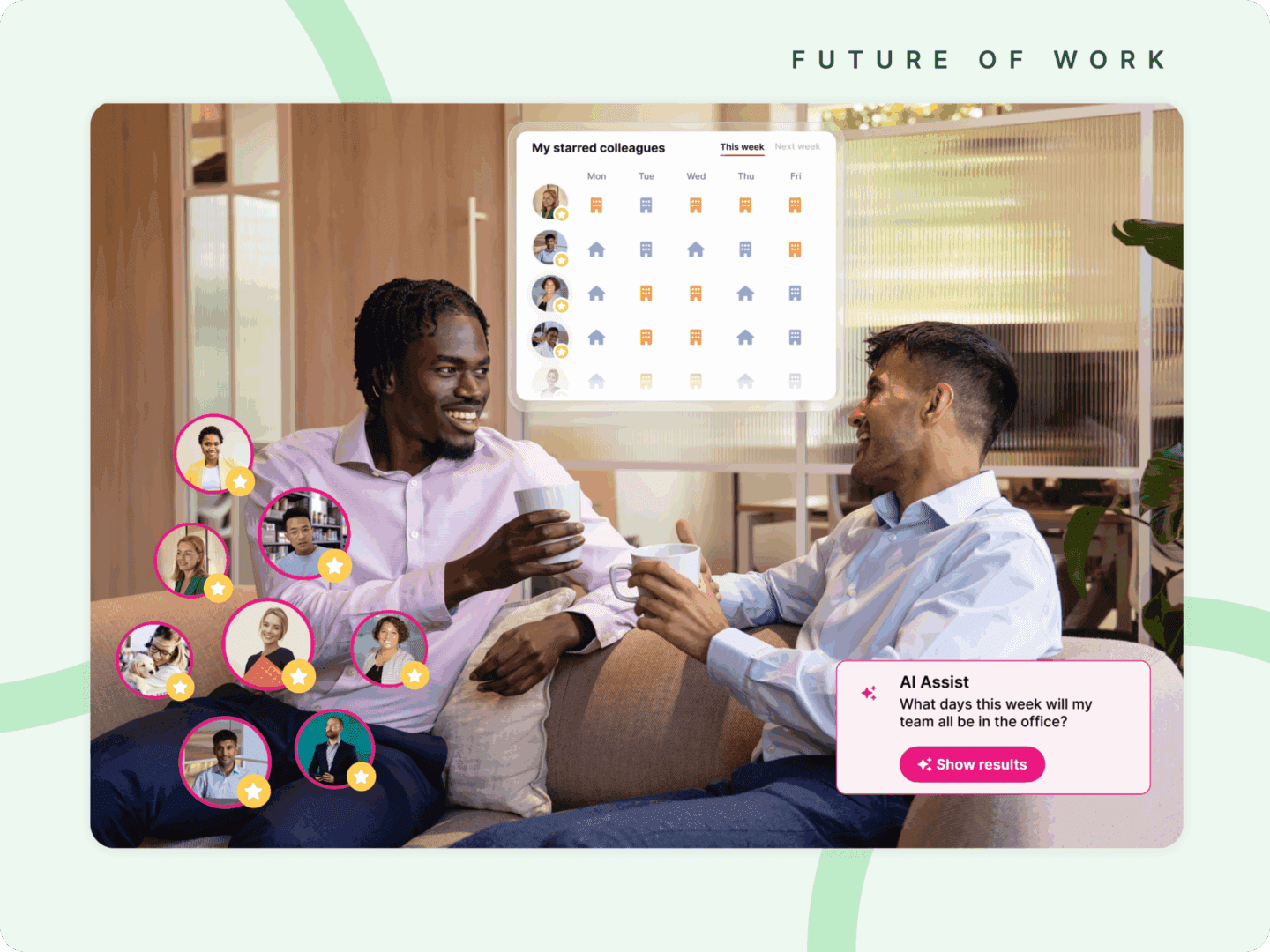
When teams can see when colleagues will be in, collaboration becomes easier to plan. When that visibility is missing, collaboration becomes opportunistic or avoided altogether.
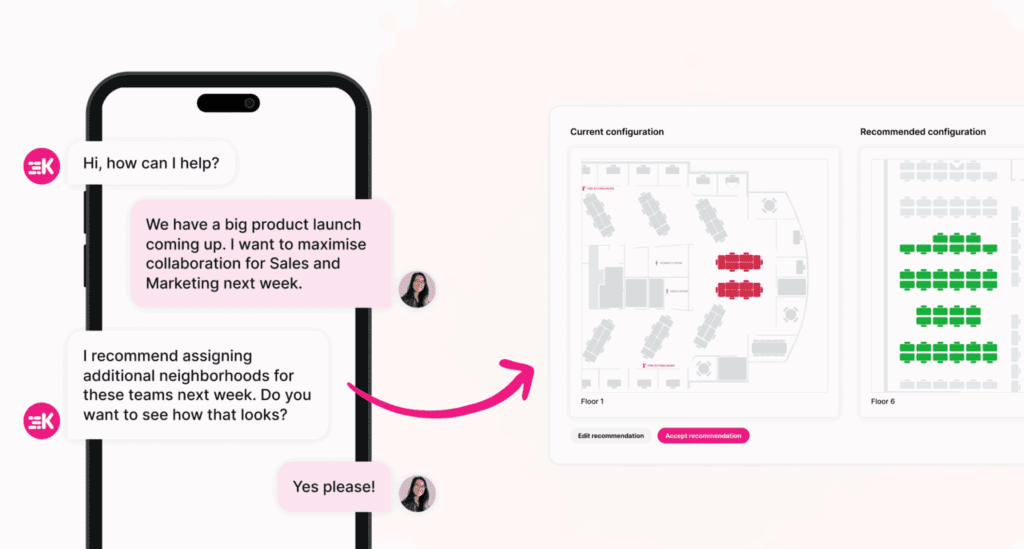
At the Mayor’s Office for Policing and Crime (MOPAC), improving coordination across teams was essential. Before adopting Kadence, in-office collaboration depended heavily on informal knowledge and manual planning. After implementation, MOPAC achieved 83 percent user adoption, driven by clearer visibility into attendance and easier coordination across teams.
This was not about measuring individuals. It was about making patterns visible so teams could align their presence more effectively. Collaboration improved because coordination improved.
Collaboration Does Not Only Happen in Headquarters
A common assumption is that collaboration measurement only works in corporate office environments. Our work with RSPB challenges that view.
As an organization with distributed teams and varied roles, RSPB needed to support collaboration across locations without imposing rigid attendance rules. By using workplace data to understand presence patterns, RSPB was able to see when and where teams naturally came together and how space supported those moments.
The insight was not about forcing alignment. It was about recognizing existing rhythms and supporting them operationally. Collaboration improved because teams had clearer signals about when in-person time would be most valuable.
This matters in 2026, when many organizations operate across multiple locations and work styles. Collaboration measurement must work wherever work happens.
What Leaders Should Measure in 2026
By 2026, measuring collaboration at work means tracking a small number of behavioral indicators consistently.
These include:
- how often teams overlap in person
- whether meetings align with in-office presence
- how collaboration clusters by day and location
- whether space supports or constrains interaction
None of these metrics require surveillance. They rely on aggregated patterns, not individual monitoring.
This distinction is critical. Responsible collaboration measurement builds trust because it focuses on systems, not people.
How Workplace Operations Makes Collaboration Measurable
Workplace operations is the layer that turns these signals into insight.
By connecting attendance patterns, booking behavior, and space usage, organizations can see whether collaboration is being enabled or blocked. Leaders can identify where coordination breaks down, where space is misaligned, and where small changes would have outsized impact.
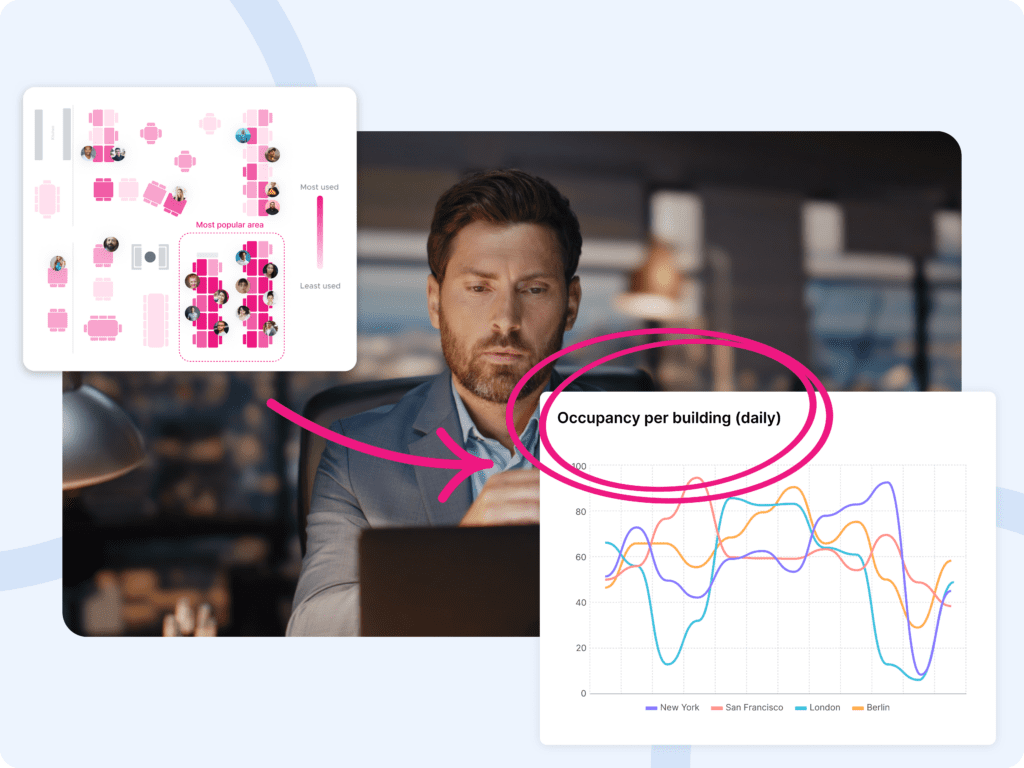
Kadence provides this operational visibility without turning collaboration into a scorecard. It allows leaders to understand patterns over time and make informed decisions about space, scheduling, and expectations.
Collaboration improves not because it is measured for its own sake, but because the workplace is adjusted to support it.
Measuring Collaboration Changes Decisions
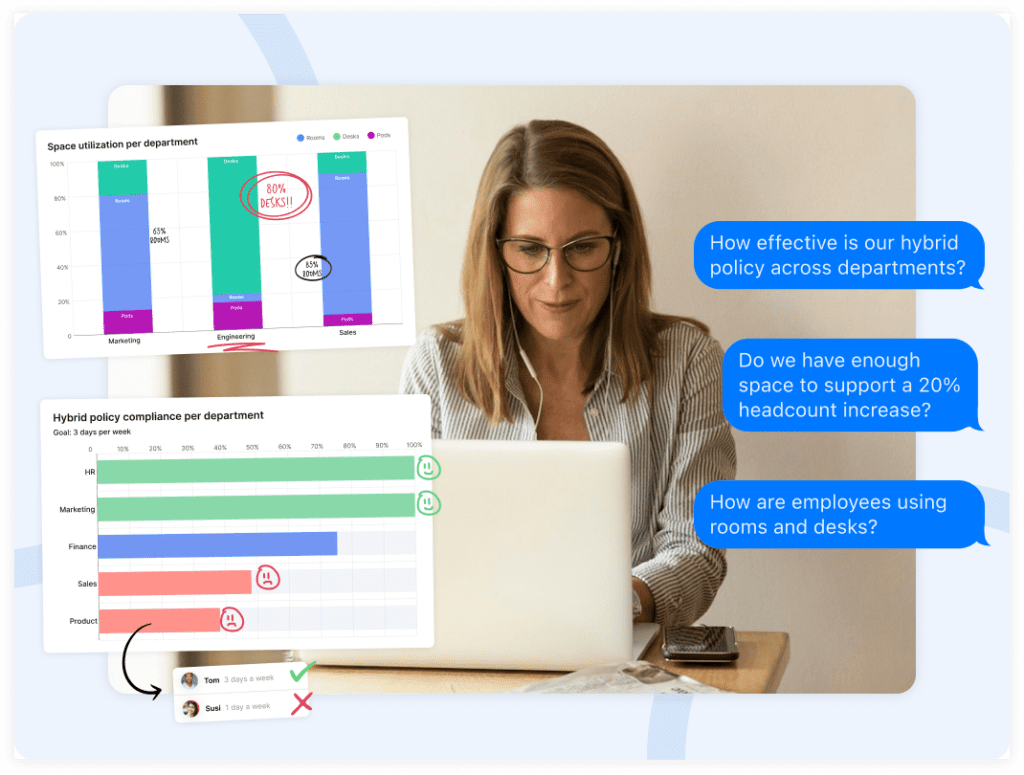
The purpose of measuring collaboration is not to produce another dashboard. It is to change decisions.
When leaders can see how collaboration actually happens, they stop relying on blunt policies and assumptions. They design offices around real behavior. They support teams where coordination matters most. They invest in the conditions that make collaboration easier.
By 2026, the organizations that measure collaboration well are not asking people to be more collaborative. They are operating workplaces that make collaboration easier to do.
If you want to understand how collaboration really happens in your organization and how to measure it in a way that leads to better decisions, book a demo with our workplace operations experts.