By 2026, most enterprise leaders already suspect they have more office space than they need. What they lack is confidence in how much less they can operate with, and where the real limits are.
After several years of fluctuating attendance, hybrid strategies, and changing work patterns, real estate decisions have become harder, not easier. Offices are busy on some days and quiet on others. Utilization data looks volatile. And long-term lease commitments feel increasingly risky.
The question many CFOs and workplace leaders are asking now is straightforward but difficult to answer: how much office space do we actually need?
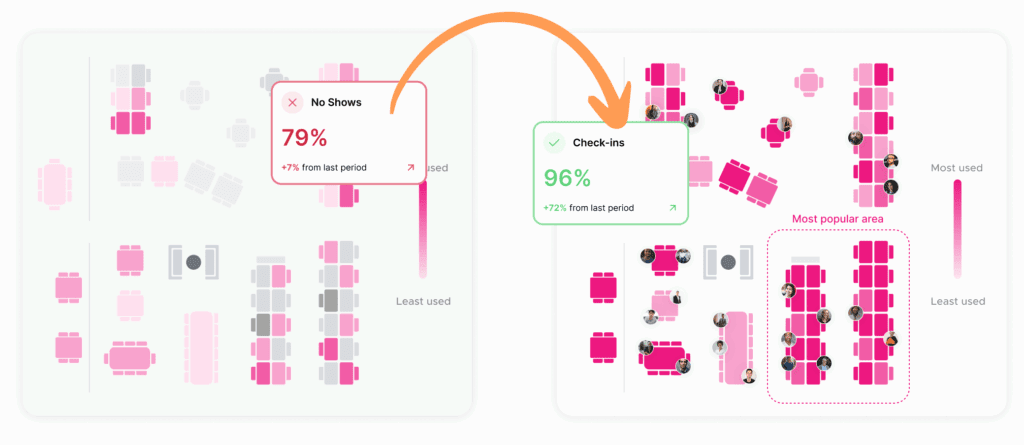
Static Space Planning No Longer Works
For decades, office space planning followed a familiar logic. Headcount forecasts drove square footage. Growth meant expansion. Efficiency came from density.
That model breaks down in a world where demand varies by day, team, and purpose.
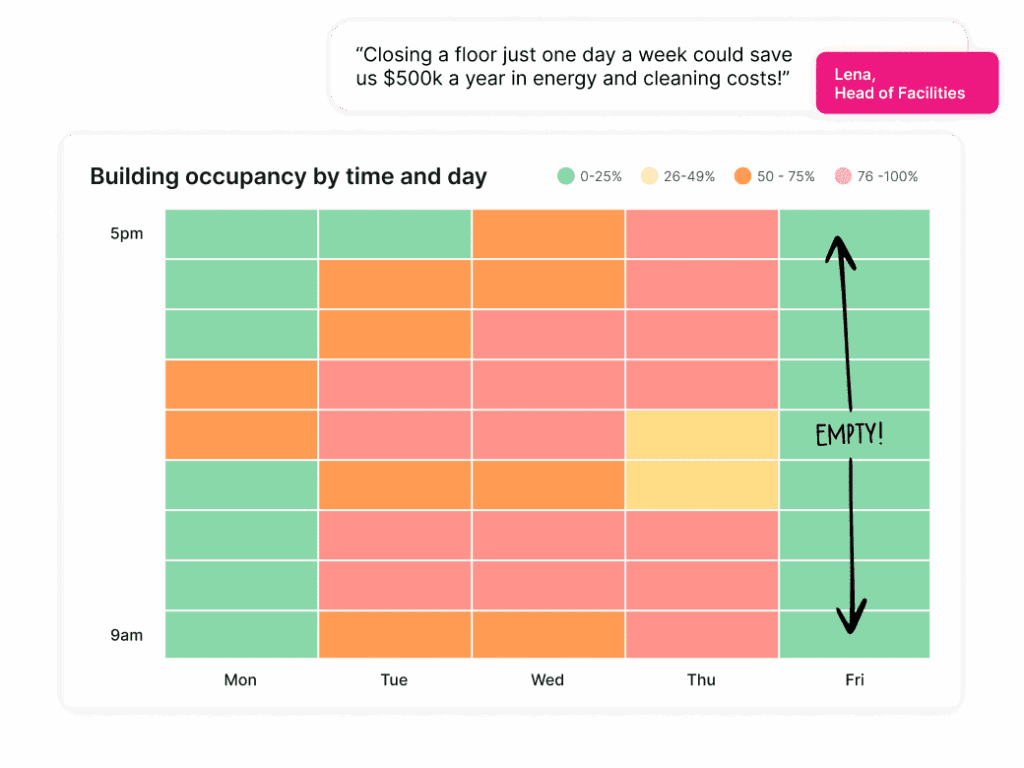
In most organizations, peak days place genuine strain on space, while quieter days leave large areas underused. Planning around averages creates offices that fail when demand is highest and feel wasteful when demand is lowest. Employees feel this in overcrowded collaboration spaces. Finance teams feel it in underutilised leases.
By 2026, the organizations making confident real estate decisions are not relying on static models. They are treating space as something that needs to be actively operated.
Why Utilization Alone Does Not Answer the Question
When leaders ask how much office space do we need, the first instinct is often to look at utilization. But utilization alone rarely provides a safe answer.
High utilization on peak days does not automatically mean the office is too small. Low utilization on Fridays does not automatically mean it is too large. What matters is how space supports the moments that justify being in the office in the first place.
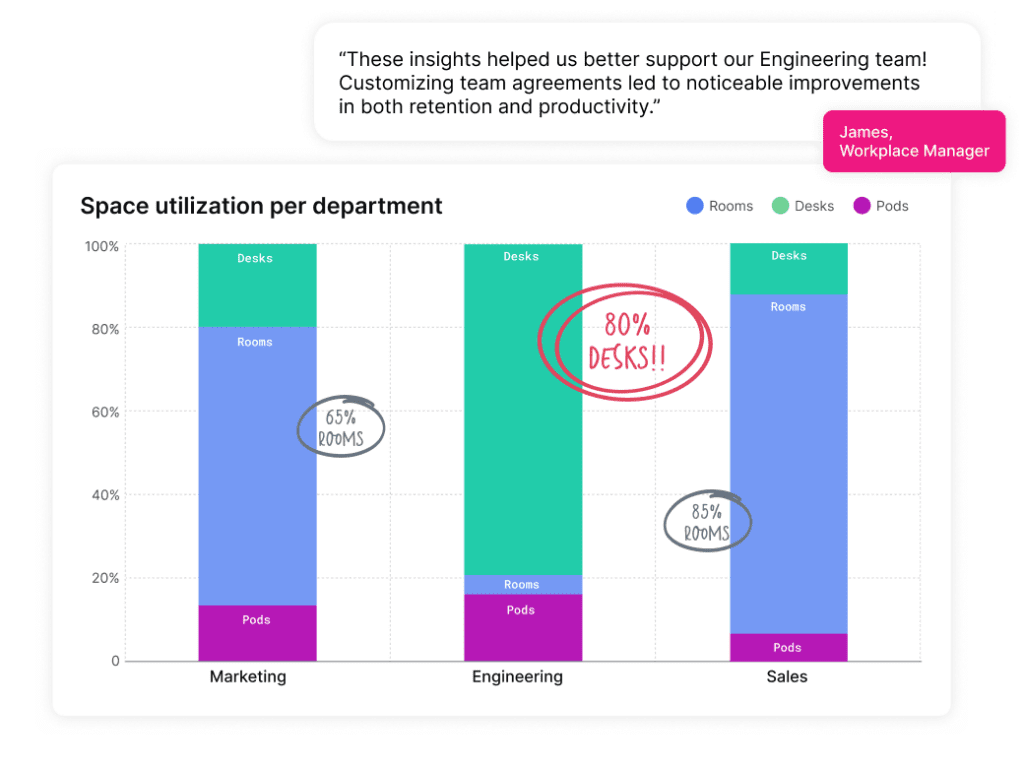
This is where many right-sizing efforts stall. Without understanding who is using space, when they are using it, and for what type of work, utilization metrics create uncertainty rather than clarity.
CFOs are left with an uncomfortable choice: act on incomplete data or delay decisions and absorb ongoing cost.
What Changes When Decisions Are Based on Real Usage
The picture changes when organizations move from static metrics to behavioral insight.
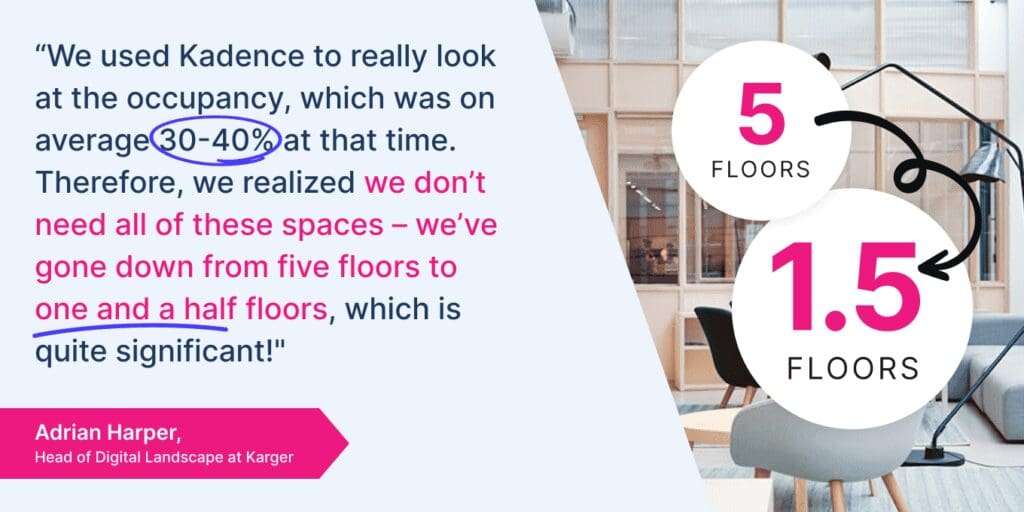
At Karger, a global publishing company, leaders wanted to reassess their office footprint without undermining how teams collaborated. By analysing real occupancy and booking data with Kadence, Karger could see which spaces were consistently underused and which moments truly mattered. That insight gave them the confidence to reduce their office space by 80 percent while continuing to support flexible and collaborative ways of working.
The decision was not driven by arbitrary targets. It was driven by evidence that aligned space with actual demand.
Denbighshire County Council saw a similar shift. Long-held assumptions about peak usage and space pressure did not hold up when examined against real occupancy data. With clearer visibility, the council was able to plan space more effectively and avoid unnecessary expansion.
In both cases, workplace operations connected data to decision-making. Leaders could act because they understood patterns, not just averages.
Right-Sizing Is an Operational Discipline
One of the biggest misconceptions about right-sizing is that it is a one-off real estate exercise. In reality, it is an ongoing operational decision.
Space demand changes as teams evolve, meeting behavior shifts, and organizational priorities change. Without continuous insight, organizations either overcorrect or delay decisions until cost pressures force their hand.
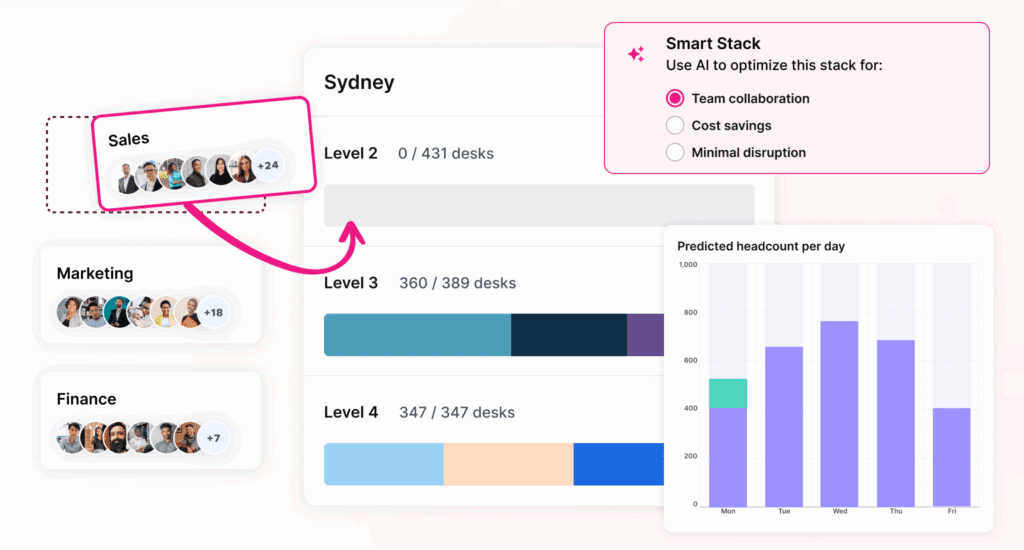
Strong workplace operations allows leaders to adjust incrementally. They can reduce space where it is consistently underused, protect capacity on peak collaboration days, and reconfigure layouts to support the work people actually come in to do.
Employees experience this as better days in the office. Finance teams experience it as reduced waste and improved confidence.
What CFOs Need to See in 2026
By 2026, CFOs are less interested in theoretical capacity and more focused on operational resilience.
They want to know:
- where space is consistently underused and safe to reduce
- which locations and days drive the most value
- how changes in behavior affect long-term portfolio decisions
- whether future leases can be negotiated with confidence
Answering how much office space do we need now requires visibility across time, not snapshots.
How Kadence Enables Confident Space Decisions
Kadence supports this shift by turning everyday workplace activity into operational insight.
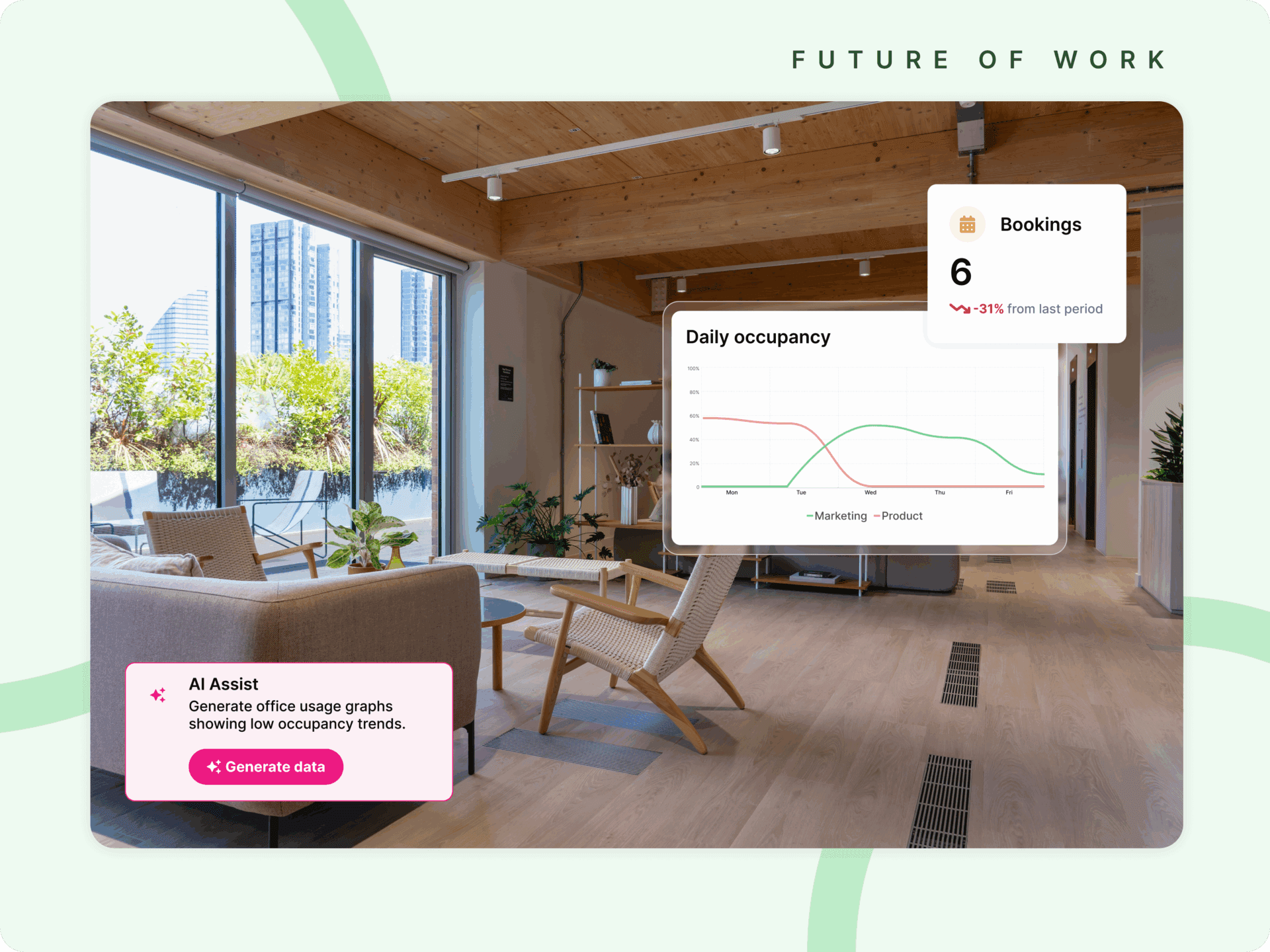
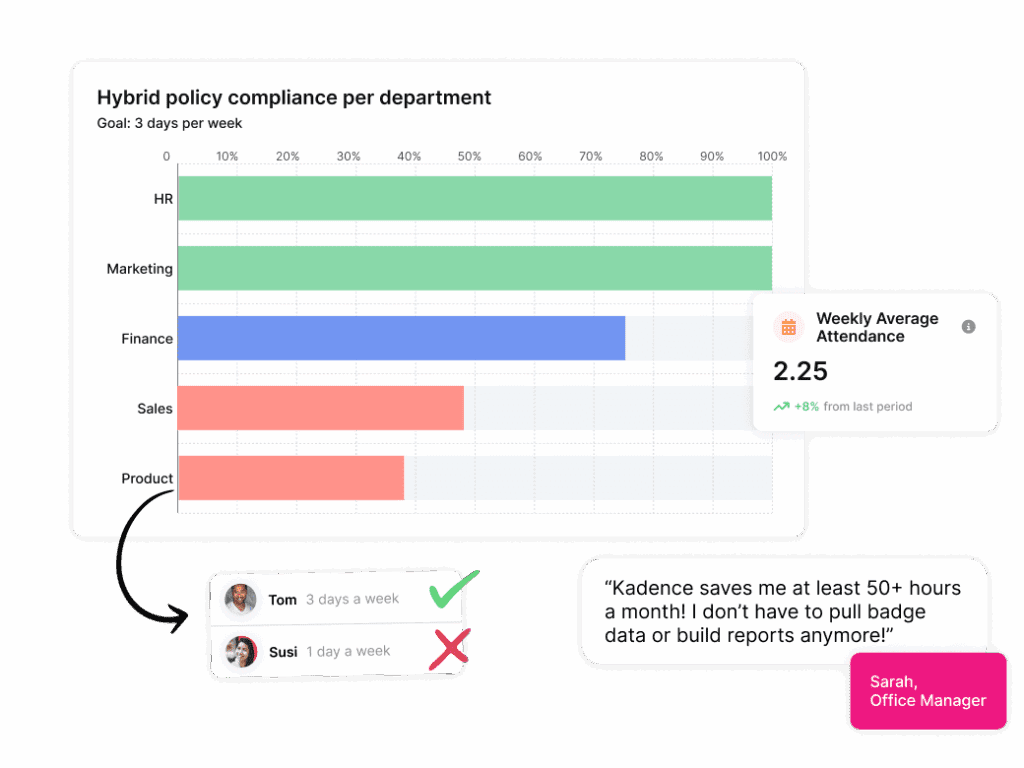
By combining attendance signals, desk and room bookings, and real usage patterns, Kadence helps organizations understand how space is actually being used across days, teams, and locations. Leaders can see peak demand, identify persistent underuse, and track how patterns change over time.
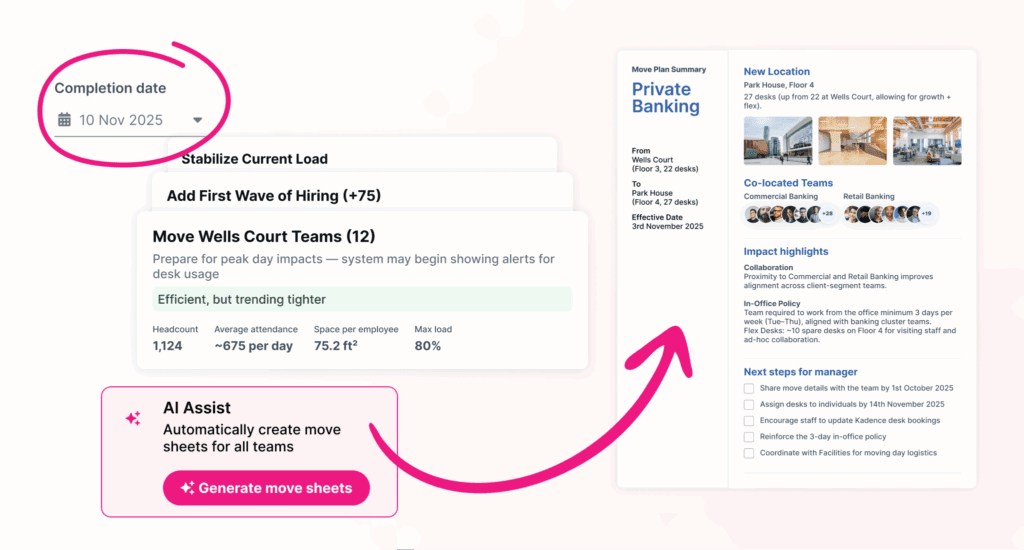
This makes it possible to model scenarios before making irreversible decisions. Organizations can test reductions, validate assumptions, and right-size portfolios based on evidence rather than instinct.
The result is not just lower cost. It is greater confidence that the space retained genuinely supports how work happens.
Making the Space Question Answerable
By 2026, asking how much office space do we need is no longer a strategic exercise carried out once every few years. It is an operational question that needs continuous input.
The organizations getting this right are not chasing perfect utilization. They are aligning space with real demand and making deliberate trade-offs.
If you want to understand how much office space your organization actually needs and how workplace operations can support confident, evidence-based decisions, book a demo with our workplace operations experts.