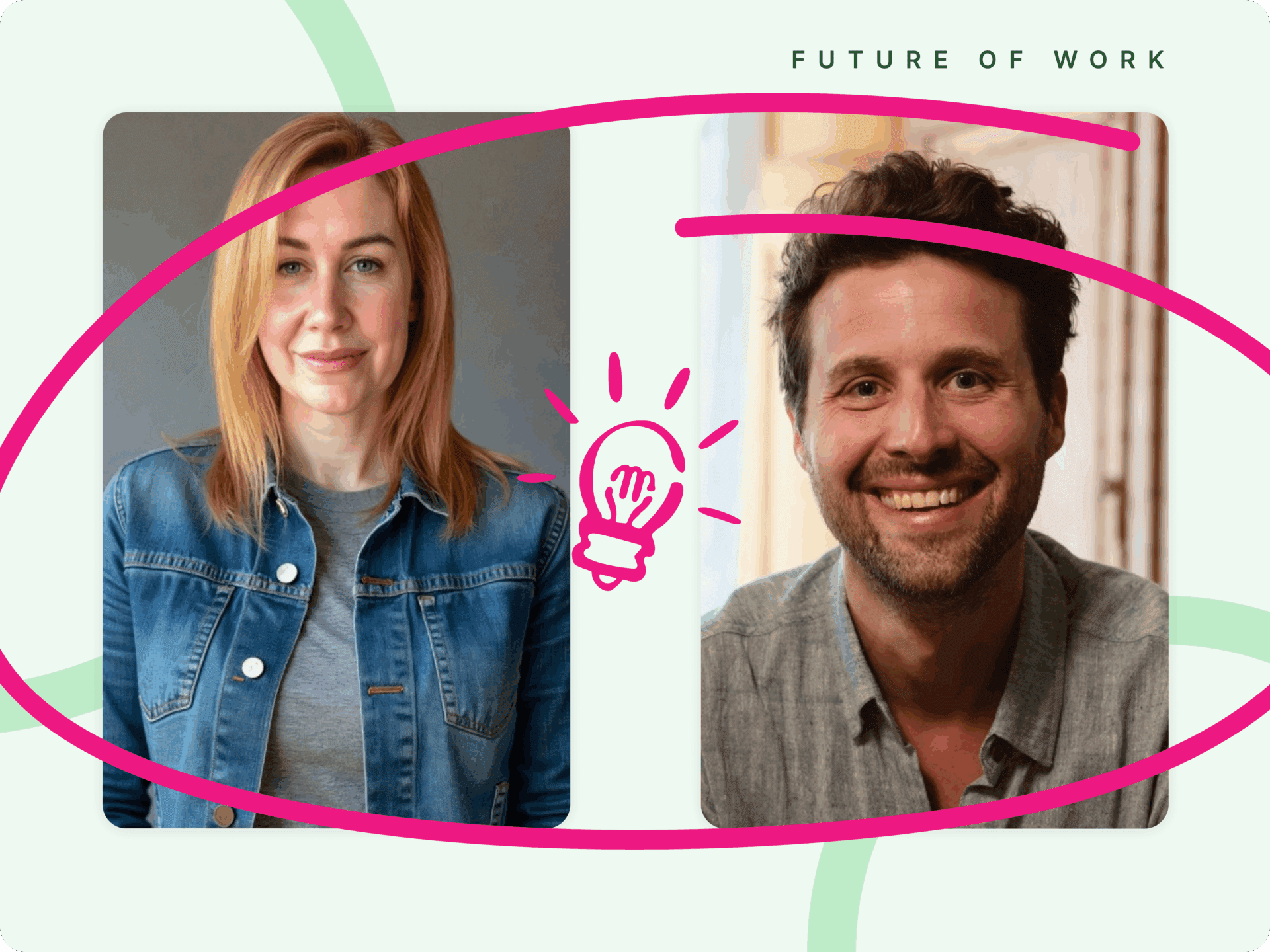
When you sit down with someone like Tracy Hawkins, VP of Real Estate and Workplace at OpenAI, you don’t talk about office space. You talk about humanity. About what happens when technology gets so powerful it begins to shape how our kids think, how we learn, and how we connect.
I’ve known Tracy for years. Mostly over LinkedIn. She’s one of those people who will kindly but directly challenge your assumptions. So when we finally sat down in person at the OpenAI HQ in San Francisco, I knew the conversation would be about much more than AI. It would be about what it means to be human in the age of it.
The Most San Francisco Moment Ever
Before our chat, I had what might be the most San Francisco experience of my life. I was standing on a street corner, waiting for a Waymo, and I pulled out ChatGPT to prep for the interview.
I typed, “I’m going to be interviewing the global head of real estate for the company that created you.”
ChatGPT replied, “Oh, that’s pretty meta and cool. I’m definitely here to help you prep.”
You can’t make this stuff up.
It struck me how surreal it is that a tool we created has become both our collaborator and our counselor. My daughter doesn’t say “Google it.” She says, “Ask AI.” That shift says everything about where we’re headed.
Raising Kids in the Age of AI
When I asked Tracy what it’s like to be her, to wake up and walk into OpenAI every morning, she talked about her daughter too.
She said she wanted to be part of something that will shape her child’s world.
One of my favorite moments was when she told me her daughter thought ChatGPT’s name was “Jack GPT” like it was a friend who knew everything. That made us laugh, but it also revealed something profound. Kids don’t see AI as a search engine. They see it as a being. A helper. Someone, or something, they can talk to.
And that means parents, not schools, will play a huge role in shaping how kids understand and use AI. Tracy said she encourages her daughter to use it to learn how to think, not just to find answers. To ask, “How should I approach this?” instead of “What’s the answer?”
That feels like a blueprint for how we all should use AI.
The Office as a Human Connector
Eventually, we turned to the question everyone asks: what’s the future of the office in an AI-driven world?
Tracy doesn’t believe AI will replace the need for people to gather. “There’s still so much nuance that happens only when humans come together,” she said. “I think there’s still room for that human discussion, that magic aspect of collaboration.”
At OpenAI, occupancy is high because the mission is magnetic. People want to be there. They’re drawn by the energy of building something that matters.
As someone who’s walked dozens of offices since joining Kadence, I can confirm: very few feel like that. The difference isn’t policy or perks. It’s purpose. When the mission is clear, presence becomes voluntary.
Designing for Choice, Not Control
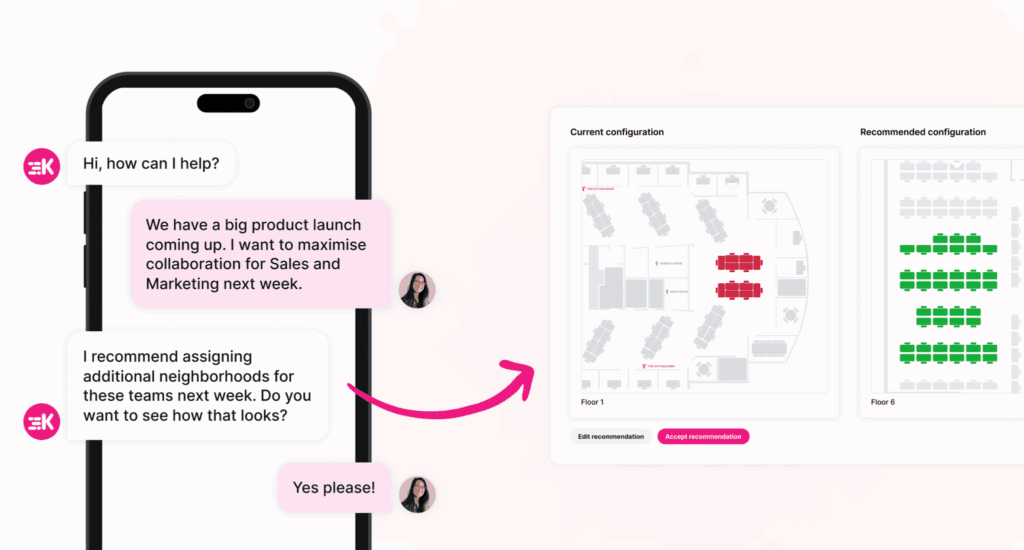
Tracy also talked about how workplace design must evolve as AI changes the way we work. Flexibility is key. Spaces should support different types of people and different modes of work, from heads-down focus to collaborative bursts.
She’s thinking deeply about neurodiversity, data, and how space can adapt over time as needs shift. It’s not about enforcing one way of working. It’s about providing choice. That’s true at OpenAI too.
And that, to me, is the biggest shift of all.
Build. Measure. Learn.
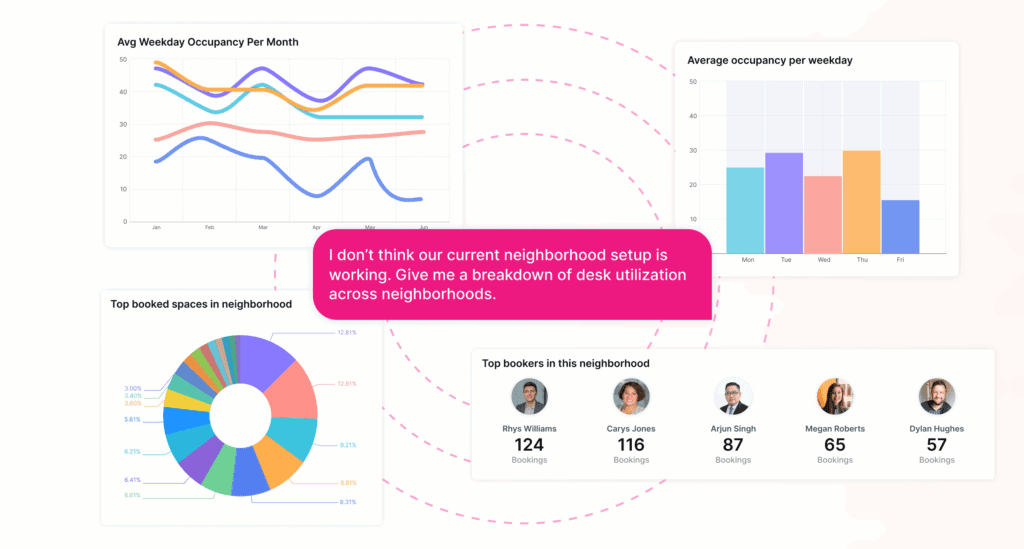
When I reflected her ideas back to her, I said, “The office used to live by the rule if you build it, they will come. Now it’s build, measure, and learn.” She agreed.
It’s the same principle we apply at Kadence: understanding how people use space, what creates friction, and how to design workplaces that remove it.
Tracy added that technology partners like us have a huge opportunity, and responsibility, to eliminate friction for employees the moment they walk through the door. To make it seamless to find the right desk, connect with the right teammate, and get data that helps leaders make better space decisions.
That’s what we’re building toward: workplaces that don’t just function, but flow.
What I Took Away
At the end of our chat, I asked Tracy what belief about the workplace she’s recently let go of. She paused and said something that felt refreshingly honest.
She used to think we all needed to be in the office all the time to do our best work. Now, she said, it’s not about being there. It’s about why you’re there.
That hit home.
Like Tracy, I’ve shed my hard-line opinions about where work should happen. I’ve realized it’s about intention and seasonality. The right rhythm at the right time for the right team.
And if there’s one thing our conversation reaffirmed for me, it’s that the future of work isn’t about AI or office real estate. It’s about agency, mission, and meaning.
Because when we design work that helps people connect with purpose, technology doesn’t replace humanity. It amplifies it.
Curious how Kadence is helping workplace leaders design smarter, more human workplace operations Book a demo with our workplace experts.