
Return to office mandates reached Sonos in December 2024. The company announced a return-to-office policy for its product teams, requiring them to be on-site two or more days per week. For a company long seen as a pioneer of flexible work, it was a notable shift from remote to hybrid.
For years, Sonos worked by the mantra “impact, not location,” which resonated with employees and job seekers alike. But challenges during 2024, including a crisis around its app and broader industry struggles, pushed the audio company to rethink its approach.
What is Sonos’ return-to-office policy?
In December 2024, Sonos told its product teams to work on-site two or more days per week. The policy mainly affects employees near its US offices in Santa Barbara, Boston, Seattle and San Francisco, and leaves the rest of the workforce largely unaffected. Sonos said flexibility remains a core value while it studies in-person collaboration.
A return-to-office mandate is a company rule that requires employees to work from the office on a minimum number of days. At Sonos, the rule applies to one group, product teams, rather than to the whole company.
Spokesperson Olivia Singer said: “Flexibility is not going away… we are evaluating the impact that in-person collaboration has on the effectiveness of our teams and our culture.”
Why did Sonos change its approach to hybrid work?
Sonos changed course after a difficult 2024. A crisis around its app and broader industry struggles put pressure on the business. Product teams often benefit from hands-on testing and face-to-face problem-solving, which makes them a natural focus for more in-person time. The policy reflects a wider debate in tech about flexibility and in-person collaboration.
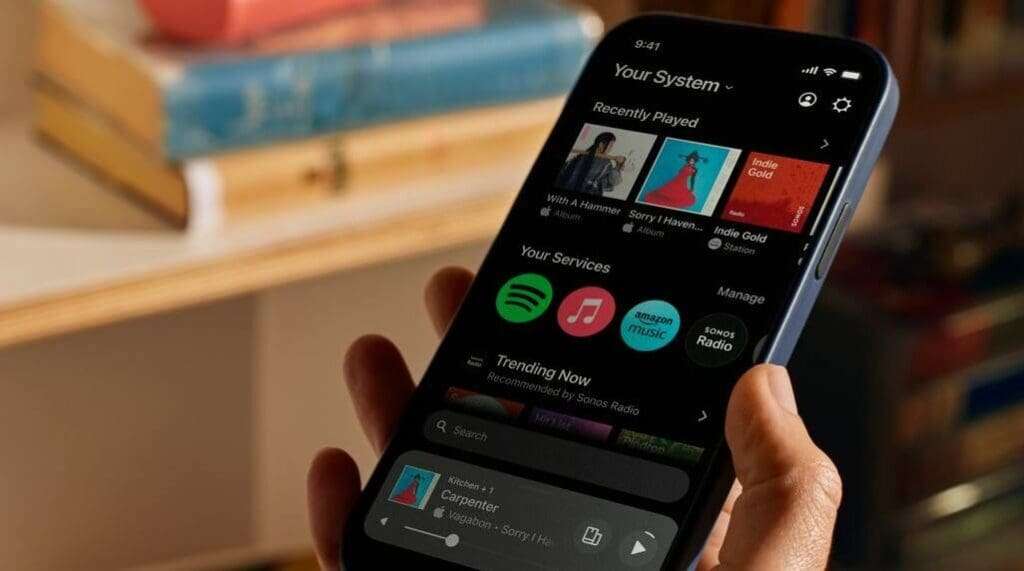
The timing matters. Employee morale reportedly stayed low after the app controversy, layoffs earlier in 2024 and tighter budgets. In that environment, even a limited mandate can deepen existing concerns.
Do return to office mandates solve the underlying problem?
Return to office mandates rarely fix the problems behind them on their own. The question for Sonos was whether requiring office days would address the challenges it faced, or alienate employees at a time when morale was already low. Research on hybrid work suggests rigid requirements often come with unintended consequences.
Sonos was far from alone in December 2024. Amazon had led the charge by mandating five-day office weeks, and Dell had faced backlash for similar policies.
Stanford economist Nicholas Bloom, an expert on remote work, has found that hybrid work models consistently outperform fully in-office setups, with employees reporting higher productivity, engagement and job satisfaction.
What does office space cost when attendance changes?
Office space is a cost that attendance decisions directly affect. Hybrid work is not only about employee wellbeing; it is also a financial strategy. By using office space well and cutting unnecessary real estate costs, organizations can reinvest the savings in product innovation, customer experience and employee development.
For companies in Sonos’ position, the practical question is how much space the new policy actually needs. Space management and workplace analytics show how offices are used on each day, so real estate decisions follow real attendance rather than the policy on paper.
What is the path forward for Sonos and hybrid work?
Sonos’ decision shows the tension between collaboration and flexibility. The policy aims to meet operational needs, but it matters that the company keeps its commitment to flexibility, the value that defined its culture and reputation. Transparency and employee input will decide whether the change works.
Hybrid work is about more than balancing remote and office days. It is about systems that put results first, empower teams and support the changing needs of the workforce. For Sonos, the challenge is not only getting people back to the office. It is making sure the change creates real value for the business and its people.
The true test of the policy will not be how many employees badge in. It will be how well the company balances collaboration with the flexibility its workforce has come to expect. Kadence’s guide to hybrid work strategy covers how to strike that balance.
Frequently asked questions
When did Sonos announce its return-to-office policy?
Sonos announced the policy in December 2024. It requires product teams to be on-site two or more days per week.
Which Sonos employees does the policy affect?
It mainly affects product team employees near Sonos’ US offices in Santa Barbara, Boston, Seattle and San Francisco. The rest of the workforce is largely unaffected.
Is Sonos ending flexible work?
Sonos said no. Spokesperson Olivia Singer said flexibility is not going away and that the company is evaluating how in-person collaboration affects its teams and culture.