
Here’s the take. The UK government has shifted the focus from managing absence to designing conditions where more people can work, contribute, and grow. Its official response to Pathways to Work, led by the Department for Work and Pensions, gathered 47,983 submissions between March and June. It is one of the largest consultations of its kind, and the message is clear. Build a safe ramp to try work. Make support human and skilled. Enable employers to adapt quickly as people’s needs change so work becomes something people can enter, stay in, and progress through.
For UK readers, this marks a reset in how the country thinks about work. For U.S. readers, it shows how another major economy is redesigning its workforce system for long-term resilience and productivity. The question is no longer where people work. It is how well work is run.
As governments rethink the operating rules of work, Kadence already gives organisations the operational layer that turns these ideas into practice. Coordinated schedules. Quick adjustments. Evidence leaders can act on.
What The Document Is And Why Now
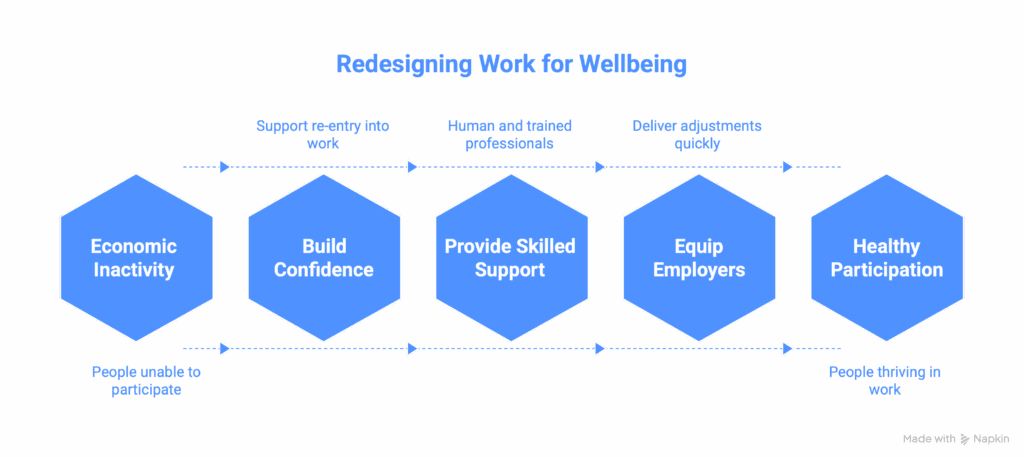
This paper is not about pushing people into offices. It is about expanding access to meaningful work by redesigning the system around it. It calls on employers to build confidence into re entry, to make support conversations feel like real support, and to deliver workplace adjustments fast enough to matter.
And the timing makes sense. The world of work today is not the world of 2019. The pandemic did more than disrupt routines. It rewired expectations around health, autonomy, and belonging. Demographics are tightening supply. Organisations are under pressure to deliver more value without increasing footprint. Productivity gains will come not from bigger offices, but from better-run operations.
Kadence sees this shift every day. Leaders are not asking how to bring people back. They are asking how to run their workplace as a system. How to coordinate well. How to make adjustments without friction. How to understand what time together produces. This is the operating clarity the government is moving employers toward.
What The Government Is Really Saying
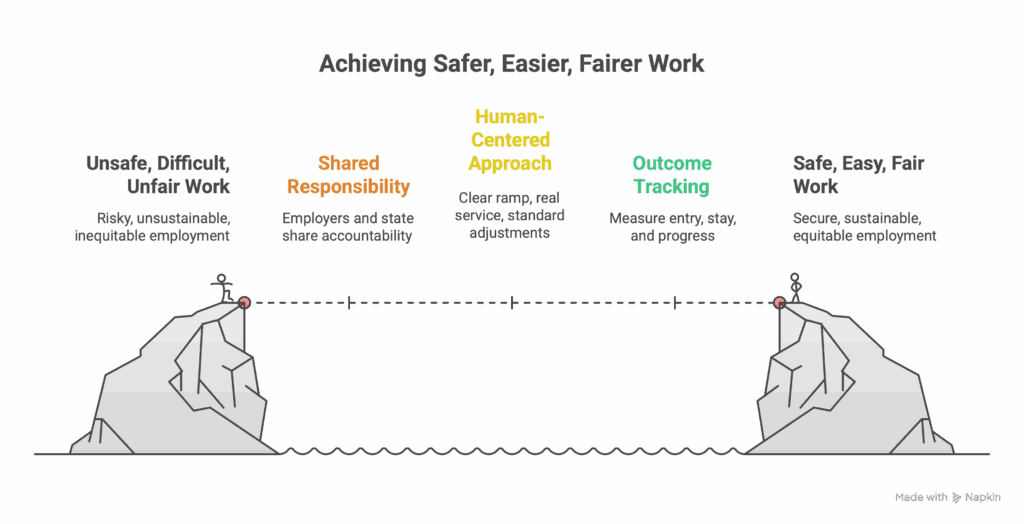
Make work safer to try. Give people structured routes back into work that do not jeopardise their stability. Offer simple, human support with trained people, plain language, and multiple ways to engage. Treat adjustments as standard practice with predictable steps and timelines any employer can follow.
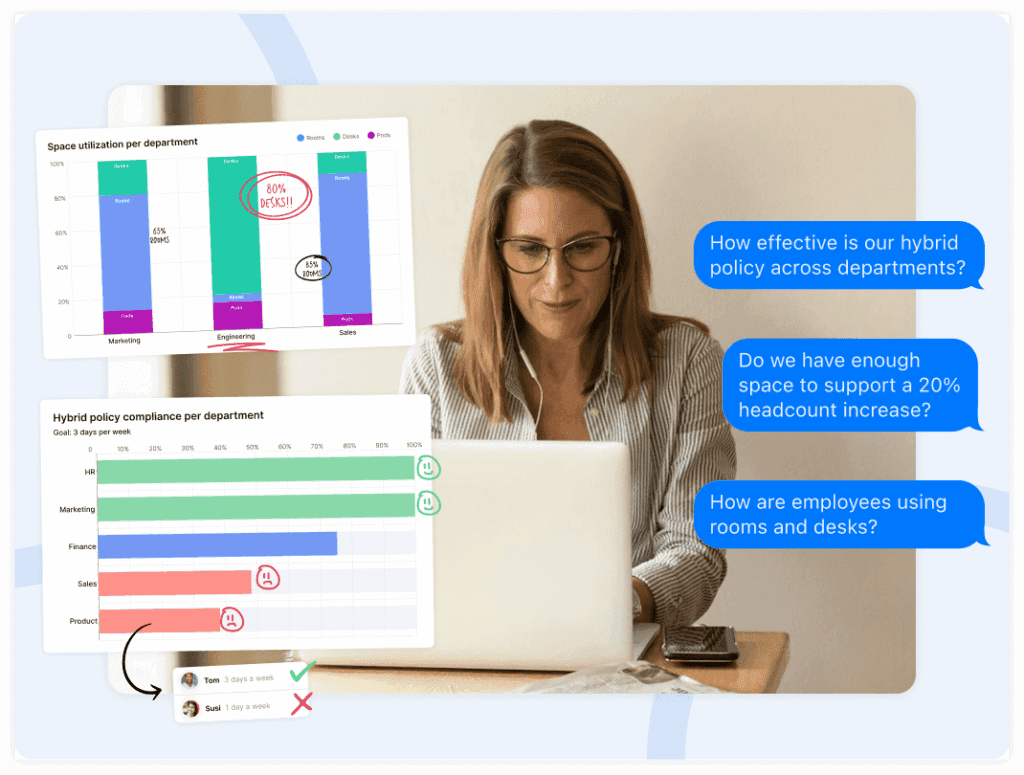
Then build a system that learns. Instead of adding bureaucracy, the government is pushing leaders to run work with clearer operations. Track how quickly adjustments are fulfilled. Track how re entry routes perform. Track whether time together produces the value it should. Workplaces that adjust based on evidence outperform those driven by attendance targets or guesswork.
This is the kind of operational clarity SpaceOps supports. SpaceOps is Kadence’s framework for coordinating people, spaces, and schedules in one operational layer. It helps organisations respond quickly, keep teams aligned, and change patterns when the data shows something is not working.
Why This Matters In Britain And Why Americans Should Care
The United States is seeing the same forces. In Manhattan, new leasing in the first half of 2025 hit 21.1 million sq ft, the strongest start since 2014, and vacancy dropped to 14.7 percent in Q2. At a national level, office visits were up 10.7 percent in July 2025 compared with July 2024. Leaders are no longer asking whether people come in. They are asking whether the workplace performs when they do.
The UK’s approach offers a blueprint for economies trying to increase participation, lower friction, and strengthen productivity. It supports employers by giving them clarity and confidence to design systems that work. More capability. Less confusion. More performance. Less churn.
The Employer Translation
This is a moment for leadership, not administration. The government has set a direction, but employers will determine how well the system works in practice.
Leaders need a workplace that runs with purpose and clarity. That starts by defining what in-person time is for and coordinating people and resources around that purpose. When teams can see who is working where and why, managers can plan work with confidence and support people through re entry without losing coverage or momentum.
Adjustments should operate like infrastructure. Standardise the common needs, route changes through a single flow, and fulfil requests quickly enough that people stay focused and teams avoid unnecessary churn.
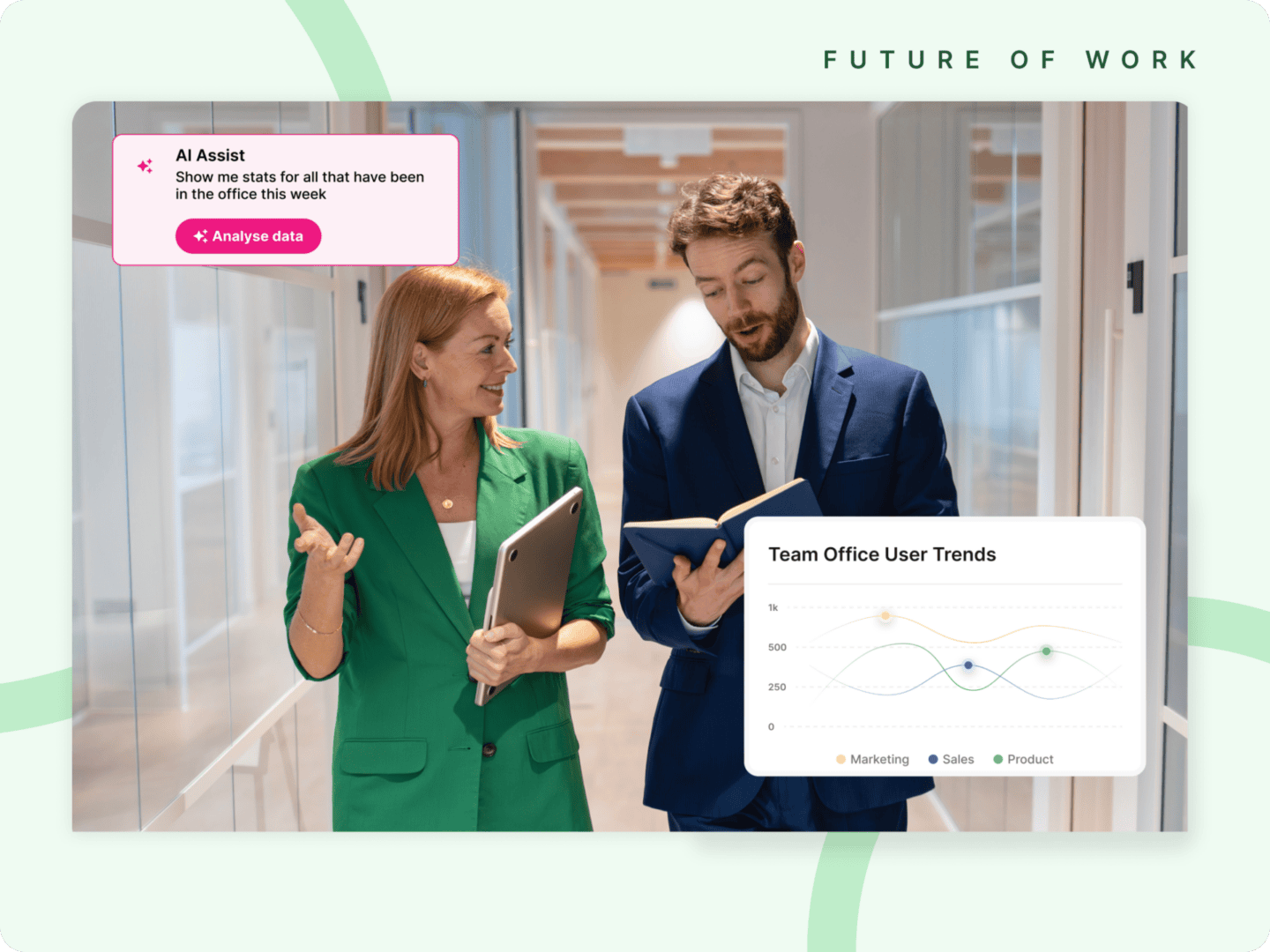
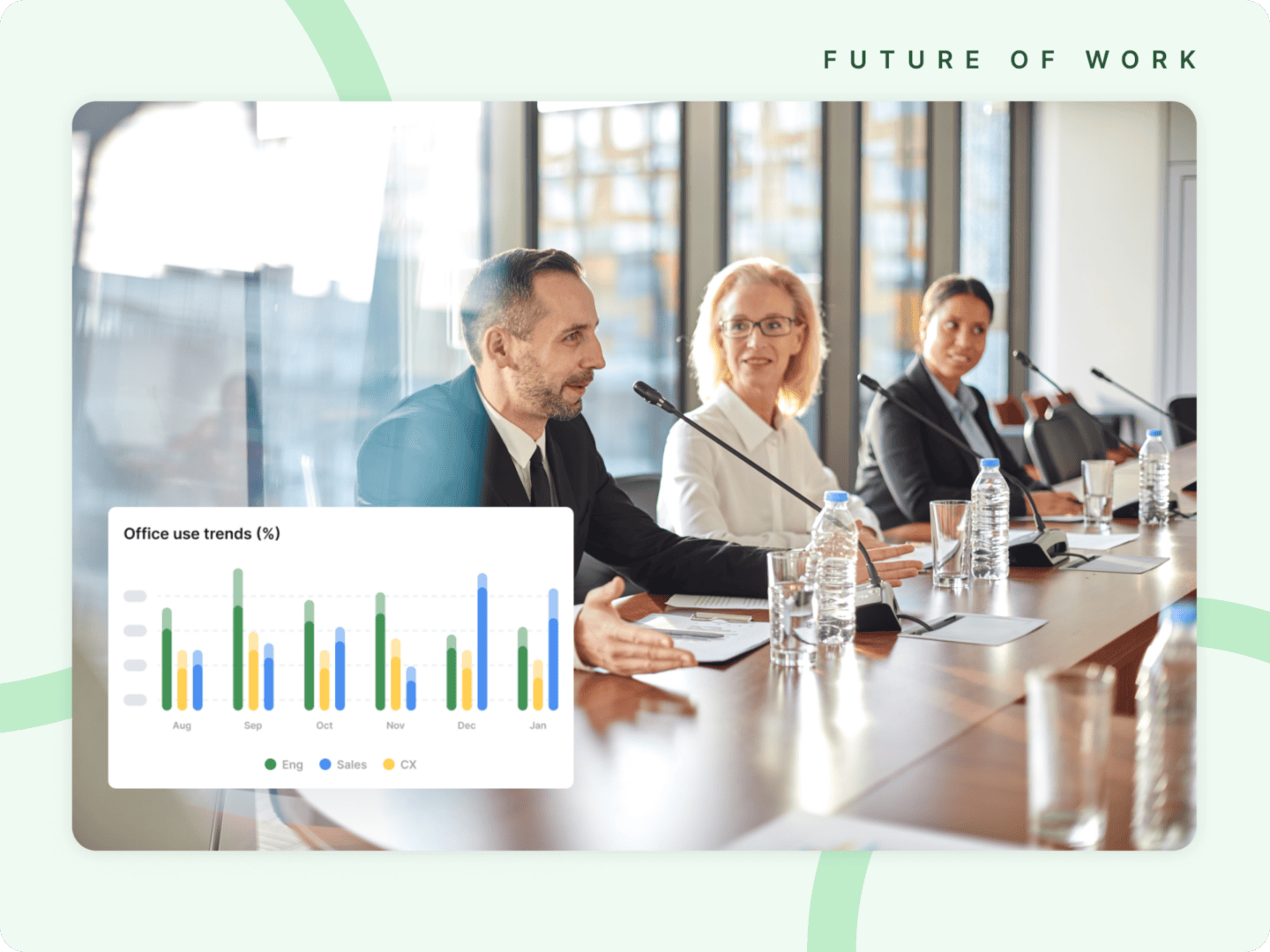
Support then becomes a rhythm rather than a reaction. Managers hold simple check-ins to understand what is working, and Kadence’s Insights Plus feature shows how teams use space, how often planned overlaps happen, and where coordination needs to improve. Leaders get weekly evidence they can act on, not annual surprises. Workplaces that learn continuously always run better.
What This Looks Like On The Ground
A sales team aligns its in-person time around real customer preparation. Rooms, screens, and specialists are ready because the plan is visible ahead of time. An engineering group builds a dependable rhythm for deep work, then meets for design reviews in spaces that match the work. A support team phases colleagues back in around treatment schedules or caregiving responsibilities while keeping coverage steady through clear coordination.
Then you operationalise it. Name the purpose of each in-person day. Assign ownership. Prepare the space, tools, and adjustments before people arrive. Set boundaries so only the right people are in the room. Run the day. Hold a short retro the next morning to capture what worked. Publish three numbers each week: the time to fulfil a standard adjustment, the share of people who worked on the named goal, and next week’s overlaps. If something slips, adjust the system, not the standard, so performance improves without burning people out.
This is workplace operations done well. Designed. Visible. Repeatable.
The Bottom Line
Britain is not trying to rewind work. It is trying to run it better. The smart response is to see this as an operational challenge with economic upside. Build the ramp that lets people try work safely. Make adjustments fast enough to matter. Design conversations people trust. Prove that time together creates better work. That is the new standard.
Work is changing by design, not accident. The organisations that win will treat this moment as an engineering challenge for performance and culture. Kadence gives leaders the operational layer to make that shift real, simple, measurable, and human.
Book a demo today with our workplace operations experts to see it in action.