
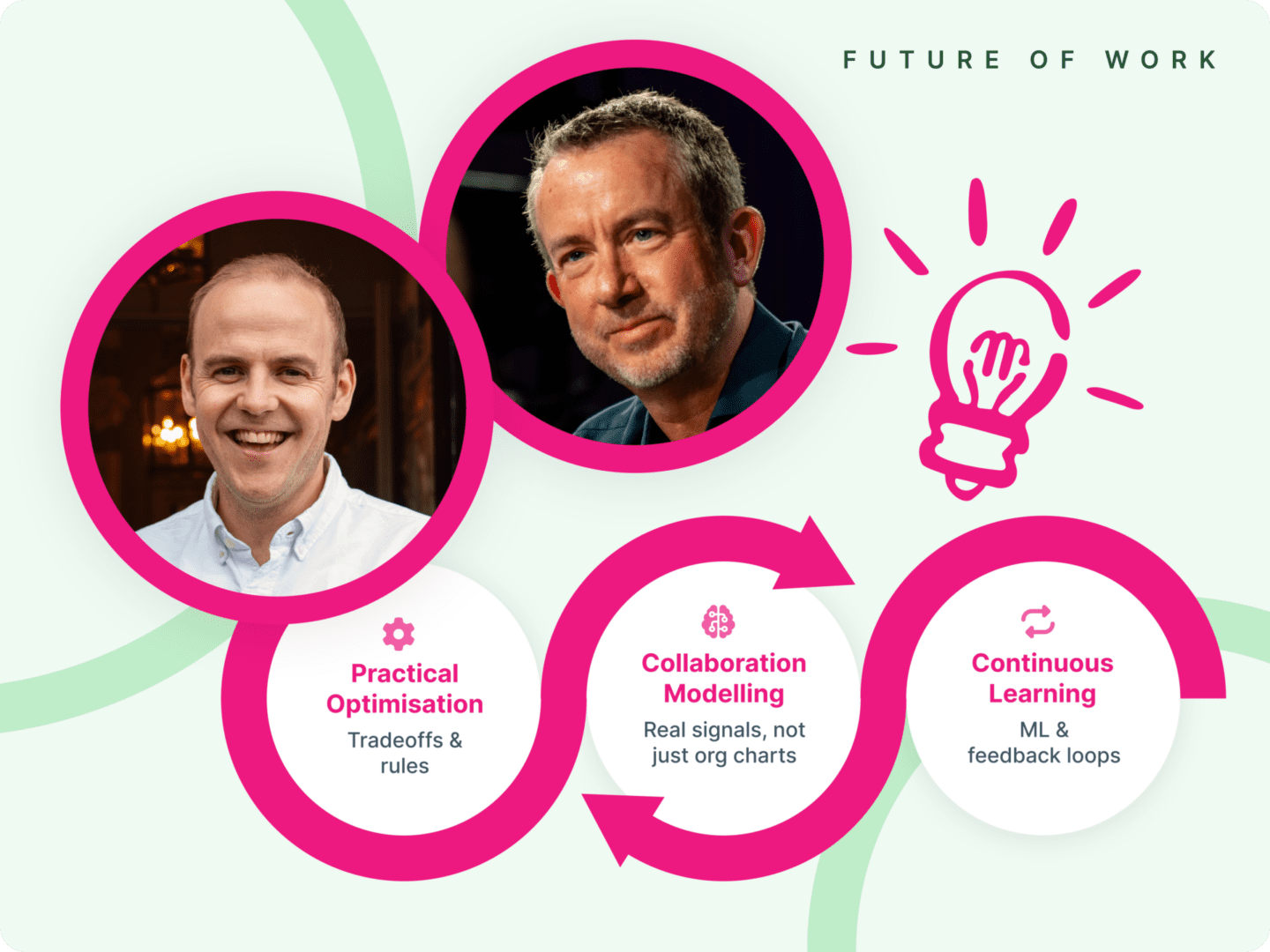
At IFMA, Brian Elliott and I kept coming back to the same tension. AI is accelerating the speed of business, but workplace strategy is still too often built on assumptions from a more stable era. Companies want faster answers on growth, attendance, capacity, and cost, while workplace leaders are still dealing with leases, layouts, infrastructure, and patterns of use that can change quarter to quarter.
That gap is getting harder to ignore. The question is no longer whether AI will change work. It already is. The more pressing question is what that means for the people responsible for planning space, supporting teams, and making portfolio decisions in an environment that no longer sits still.
For a long time, workplace planning could operate on broad assumptions and still produce a workable answer. Forecasts were imperfect, but usable. Portfolio plans were updated periodically. Utilization data gave some signal, even if it was incomplete. Today, that is no longer enough. Headcount shifts faster, attendance remains uneven, business units operate differently, and executive pressure on cost continues to rise. In that environment, static planning is not just inefficient. It is increasingly hard to defend.
AI Is Changing Work, Not Eliminating The Office
One of the most useful parts of the conversation was getting past the lazy version of the AI debate. This is not simply a story about fewer people, less space, and the office fading into irrelevance. Brian and I agreed that major technology shifts rarely play out that neatly. New tools change what organizations expect from their teams. They expand what companies believe they can deliver. In practice, that often creates more complexity before it creates simplicity.
That is one reason the office is not disappearing from the picture. In fact, many of the companies building the AI economy are also taking significant amounts of office space. During the session, we discussed the expansion of AI firms in San Francisco and the way companies like OpenAI are continuing to grow. The point was not that every company should expand its footprint. It was that the future is not as simple as AI replacing the office.
What is changing is the role of the workplace itself. It is becoming more dynamic, more scrutinized, and more tightly connected to business performance. That raises the bar for workplace AI strategy.
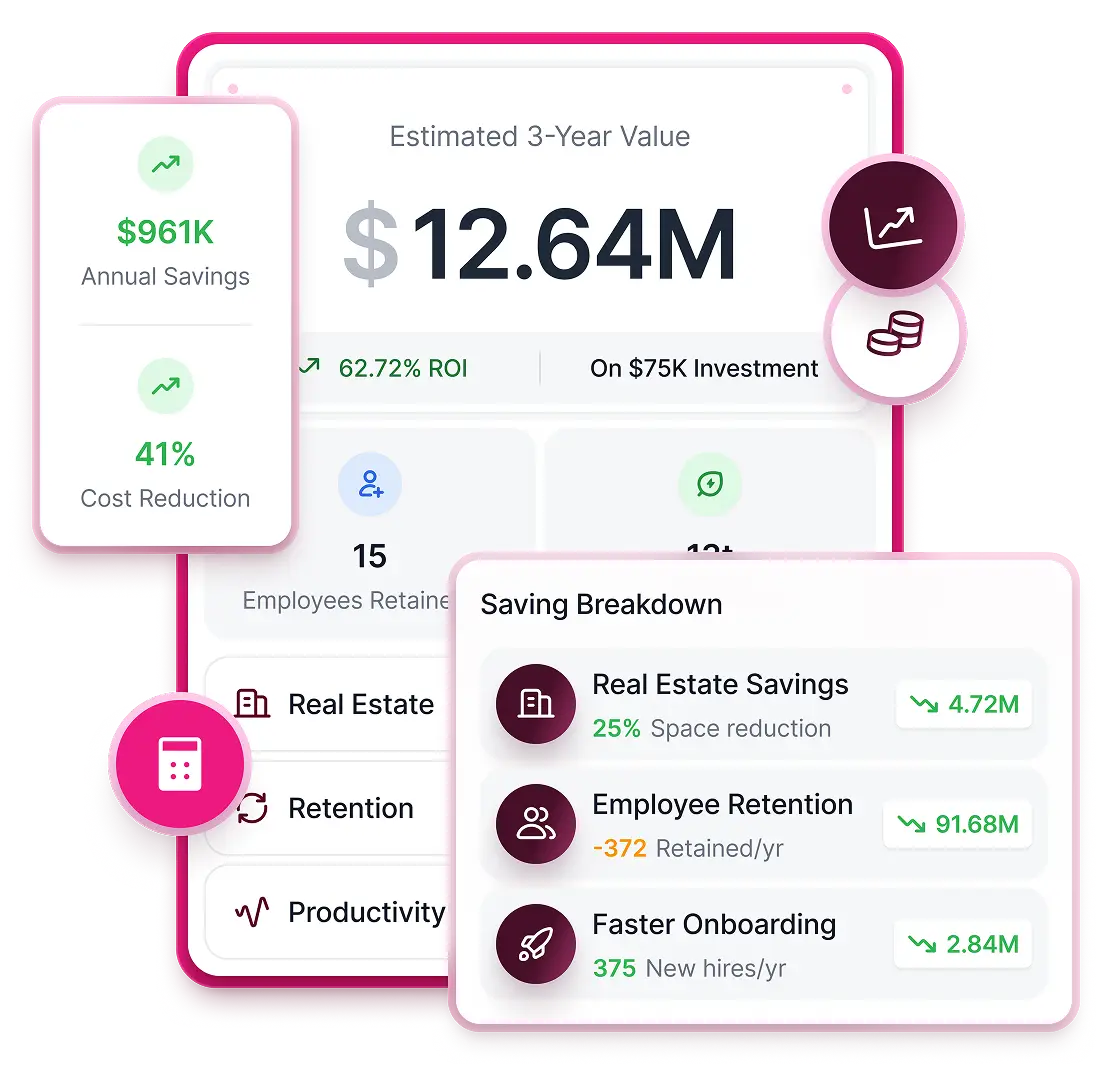
Calculate the ROI of Your Workplace Operations
Our brand-new ROI Calculator is here to help you visualize your success in seconds.

The Real Challenge Is Operational, Not Technical
Another point Brian and I aligned on is that the technology itself is often the easiest part. The harder challenge is everything around it. Do you have reliable enough data to support good decisions? Do you know what space you have, how it is being used, what contracts are in play, and how different parts of the portfolio are performing?
That is where many organizations still struggle. Workplace data is often fragmented across systems, vendors, and regions. Seat counts live in one place, contracts in another, attendance signals somewhere else, and growth forecasts somewhere else again. AI can help bring that picture together, but it cannot compensate for weak inputs or unclear operating discipline.
We also touched on something just as important: access to tools is not the same as transformation. The companies seeing real gains are redesigning workflows, creating local champions, and helping teams adopt new habits that improve decisions in practice.
The same is true in workplace operations. Visibility matters, but visibility alone is not enough. A dashboard can tell you what happened. A utilization report can show part of the picture. Neither one helps you test different futures before making an expensive decision.
Workplace Leaders Are Planning For Constant Change
This is where the role of the workplace leader has changed so dramatically. It is no longer just about managing desks, chairs, and leases. Workplace leaders are now expected to help the business navigate uncertainty. They are balancing employee experience, portfolio efficiency, hybrid coordination, and executive pressure all at once.
And they are doing it in an environment where one-size-fits-all strategy breaks down quickly. Some teams are in the office almost every day. Others are rarely there. Some need close adjacencies to work well. Others need far more flexibility. A static model smooths over those differences when it should be surfacing them.
This is why so many workplace leaders feel caught between long-term commitments and short-term volatility. Lease decisions still need to be made. Space still has to be allocated. Moves still have to happen. But the assumptions underneath those decisions no longer hold steady for very long.
Why Static Planning Breaks Down
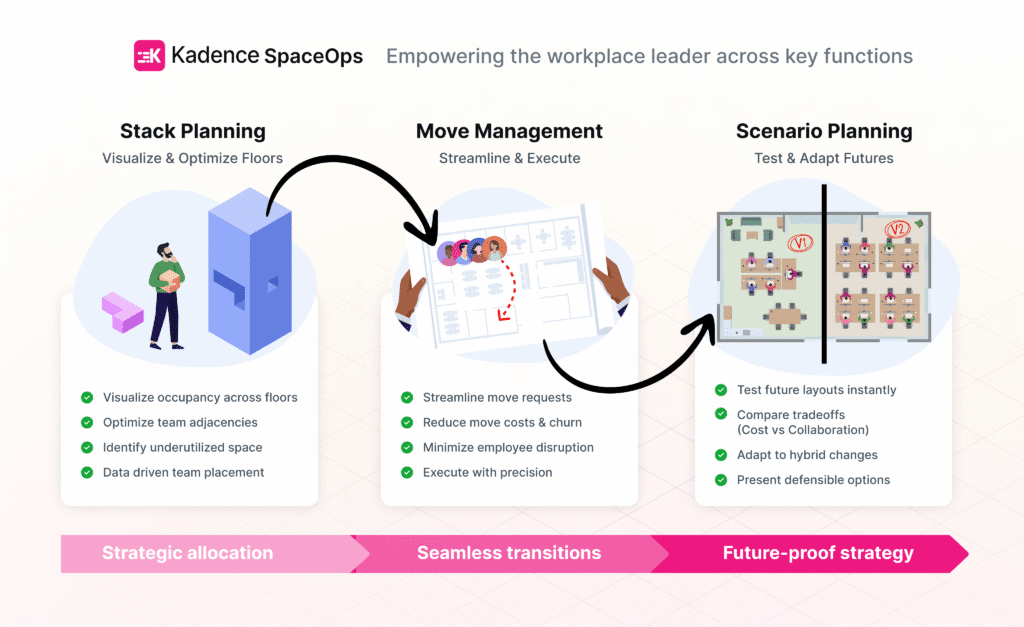
Static planning breaks down because it cannot keep pace with changing conditions. A portfolio plan based on average attendance may miss where demand actually peaks. A headcount forecast may ignore the fact that different business units use space in completely different ways. A space allocation model may overlook the adjacencies one team needs or the flexibility another can tolerate. When that happens, companies either overspend on space they do not need or create constraints that hurt performance and employee experience.
That was really the shared conclusion from the conversation. Workplace leaders are being asked to operate at the speed of business while managing assets that move far more slowly. AI is only increasing that pressure by raising expectations for speed, flexibility, and precision across the organization. If the business is becoming more dynamic, workplace AI strategy has to become more dynamic too.
The leaders handling this well are the ones who can compare different paths before committing to one. They can model growth against policy, understand capacity against actual usage, and show where space can be consolidated, reconfigured, or expanded with confidence.
How SpaceOps Helps Leaders Plan With Confidence
That is exactly why we built SpaceOps.
At IFMA, I shared examples that brought this to life. One customer was preparing to open a new floor and believed it needed 100 additional desks. Once we modeled team adjacencies, likely peak demand, and overcapacity risk, the real answer was two. Another customer needed to find 15 desks on a floor in Sydney and used Kadence to identify where that capacity could actually come from.
That is the shift. Static planning gives you a snapshot. Scenario planning shows you consequences.
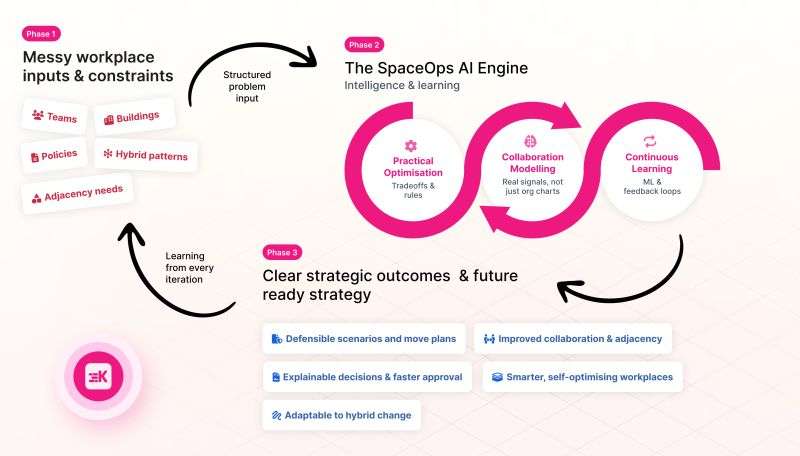
SpaceOps is built to help workplace leaders model growth, capacity, adjacencies, policies, and moves before they turn into expensive mistakes. When leaders need to answer how much space they really need, where teams should sit, or what happens under different policy or growth scenarios, they need more than a spreadsheet and a utilization report. They need a planning capability that reflects how dynamic the workplace has become.
That, more than anything, was the point Brian and I kept returning to. AI is not making workplace strategy less important. It is making static workplace strategy impossible to defend. The teams that succeed will be the ones that can pressure-test assumptions, model multiple futures, and give the business a clear path forward based on evidence rather than instinct.
Book a demo with our workplace operations experts to see how SpaceOps can help you plan with confidence, and calculate your ROI to understand what smarter scenario planning could save across your portfolio.