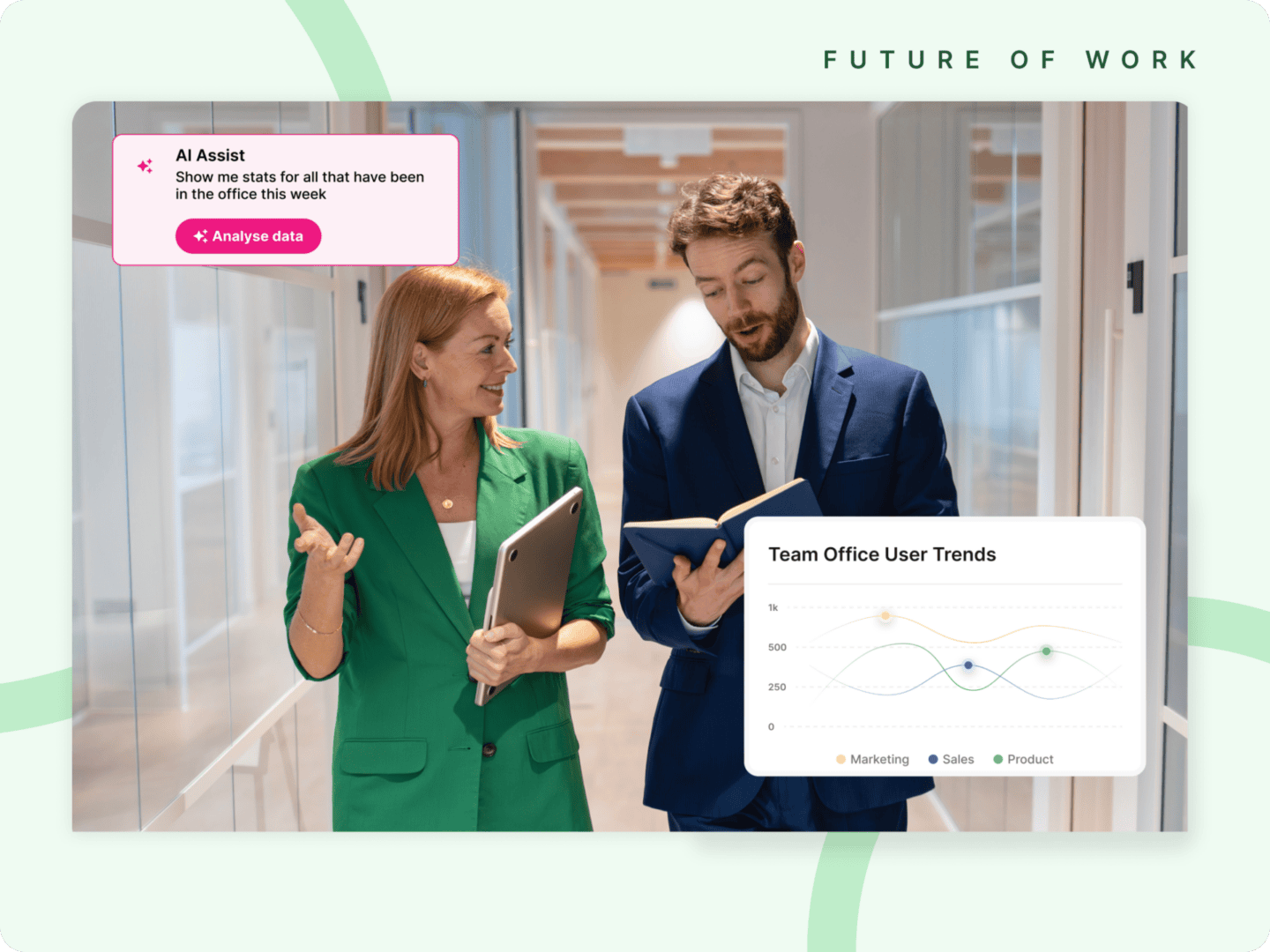
Workplace operations has become one of the most important functions inside modern organizations. Companies are under pressure to make better use of their offices, support changing employee expectations, and make real estate decisions with more confidence. That pressure has also created new language for describing how the workplace is managed, measured, and improved. At Kadence, we think about optimizing your workplace through WorkOps and SpaceOps.
When we talk about workplace operations, one question comes up again and again: what is the difference between WorkOps and SpaceOps?
What’s the Difference Between WorkOps and SpaceOps?
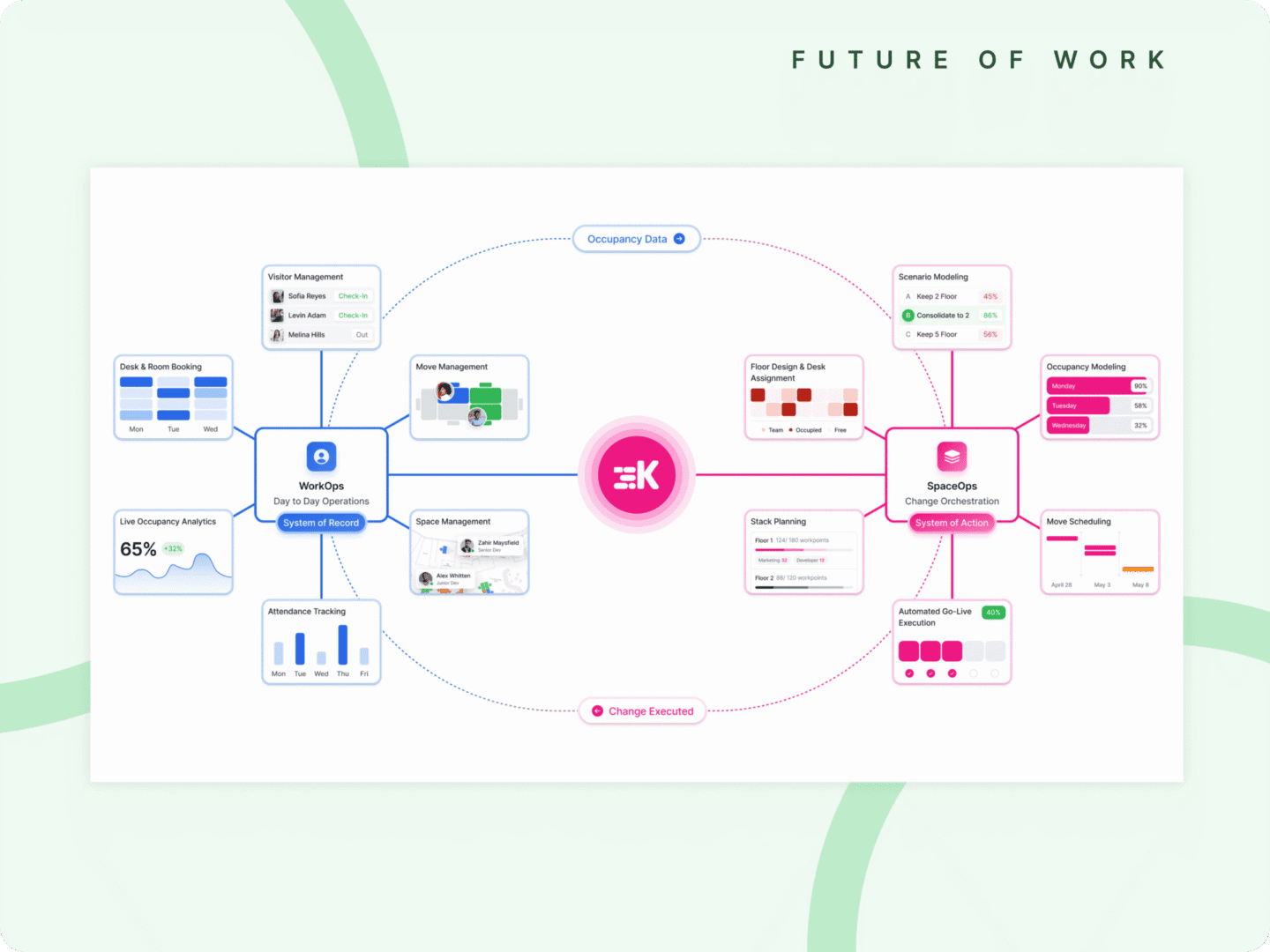
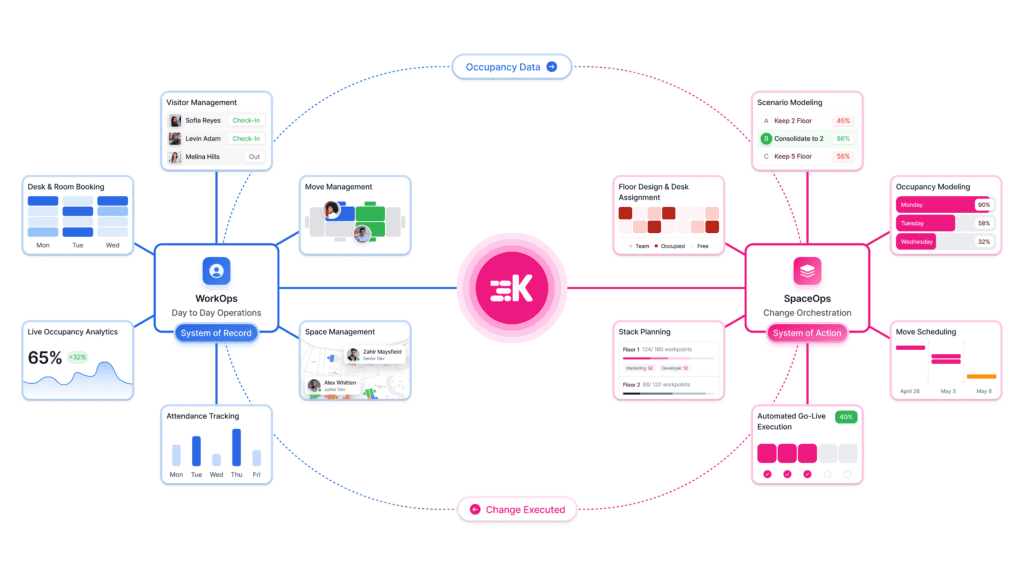
WorkOps is the operational layer that helps companies run the workplace day to day. SpaceOps is the strategic layer that helps companies plan, model, and change their workplace over time.
On the surface, they can sound like two ways of describing the same thing. Both are about the workplace. Both are about helping companies make better decisions. Both sit inside the broader challenge of making offices work better for the people and teams using them.
What we have learned is that the distinction matters because WorkOps and SpaceOps solve different layers of the same problem. One is about how the workplace runs day to day. The other is about how the workplace changes over time. The real value appears when those two layers are connected.
That is the idea behind blending WorkOps and SpaceOps: not just helping companies operate the workplace more smoothly, but giving them a way to connect daily workplace experience with higher-stakes strategic change.
The Problem Most Companies Still Have
Every company has an office, and most are spending serious money on it. But many still do not have a reliable way to tell whether that space is actually working.
That gap shows up everywhere. Decisions get made on instinct. Teams rely on spreadsheets built months or years ago. Assumptions become strategy, even when the reality on the ground has already shifted. What is missing is not always more data. More often, it is a clearer picture of what is really happening in the workplace and across workplace operations.
Workplace teams need to understand how space is actually being used, how attendance behaves over time, where demand is concentrated, and how employees experience the office day to day. Then, when something changes, whether that is headcount, policy, growth, or a move, they need a way to act on that picture with confidence.
WorkOps Runs the Workplace Day to Day
The easiest way to explain WorkOps is to start with the employee experience.
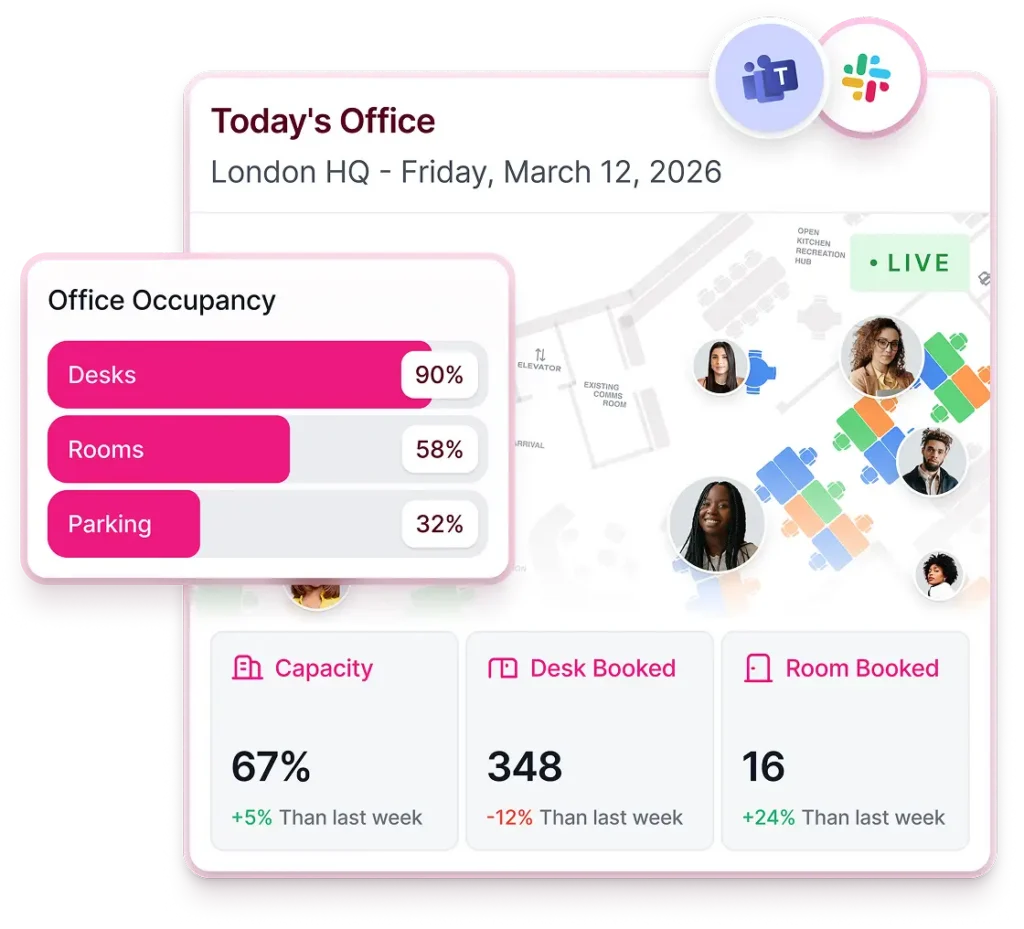
This is the operational layer employees interact with every day: booking a desk, finding a meeting room, checking in a visitor, understanding where to go, and navigating the office without friction. It is what makes the workplace usable instead of fragmented.
But that is only part of its value. For workplace teams, WorkOps is also the mechanism that captures the signals traditional systems miss. Occupancy data. Attendance patterns. Behavioral trends. The actual usage patterns that show how a workplace functions in practice, not just how it was intended to function on paper.
That matters because many workplace strategies have historically been built on weaker foundations than leaders would like to admit. A spreadsheet gives you a snapshot. A policy tells you what leadership wanted to happen. A survey gives you a point of view. None of those automatically tells you what is actually happening in the building.
WorkOps starts to close that gap.
SpaceOps Starts When the Workplace Needs to Change
If WorkOps is about running the workplace, SpaceOps is about changing it.
That change might be driven by growth, cost pressure, a new hybrid strategy, a portfolio consolidation, or a redesign of how teams sit together. Whatever the trigger, the challenge is the same: how do you make a strategic workplace change based on reality rather than assumptions?
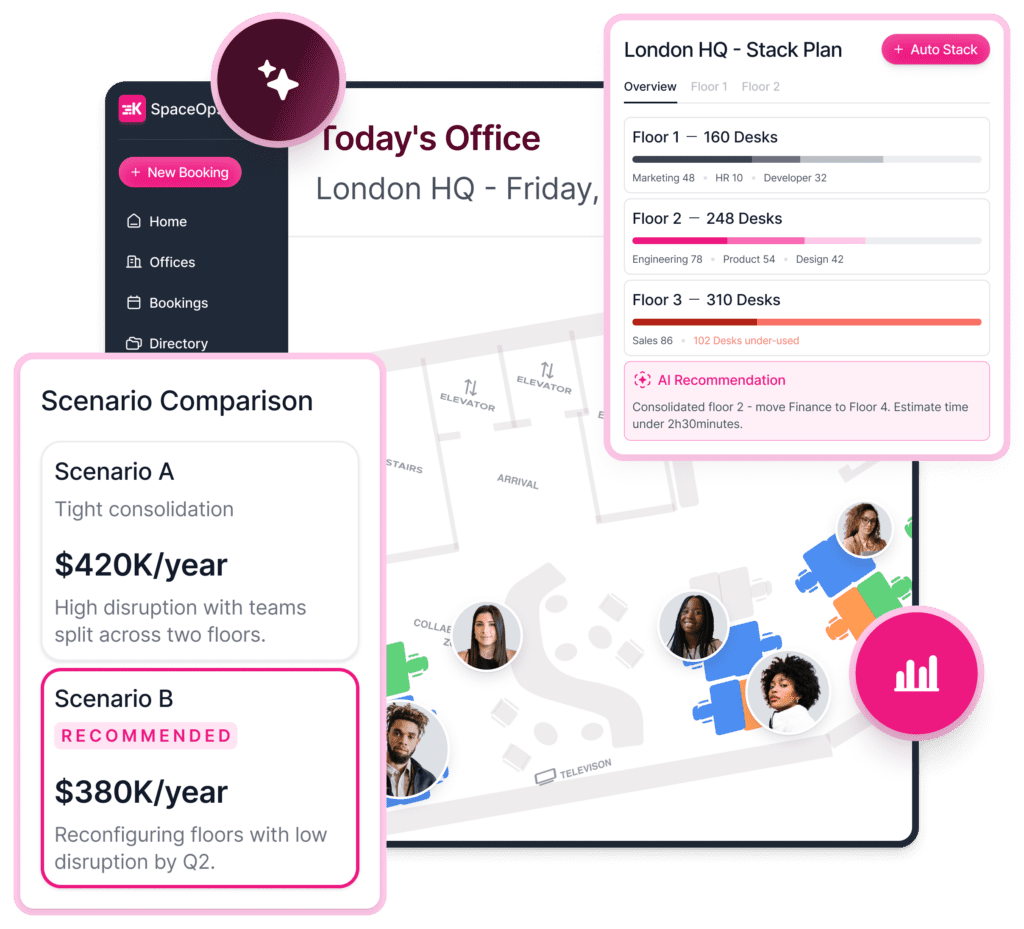
That is where SpaceOps comes in. It takes the signals generated through day-to-day workplace operations and turns them into something more strategic. It helps teams model change before committing to it. It gives them a way to test scenarios, understand trade-offs, and work through what those choices mean in practice, from planning and stack decisions through to floor plans and operational rollout.
This is the part many organizations still underestimate. Strategic workplace planning is often treated as a periodic exercise: a one-off restack, a spreadsheet-led move plan, or a point-in-time portfolio review. But space is not static, and workplace behavior is not static either. Plans built on historical assumptions can become outdated faster than teams expect.
That is why SpaceOps has to be grounded in live operational reality. Otherwise, it becomes just another planning exercise detached from how people actually work.
How WorkOps and SpaceOps Work Together
Seen separately, WorkOps and SpaceOps are both useful. Connected, they become much more powerful.
WorkOps creates the day-to-day system of record for how the workplace is functioning. It captures the signals most companies have historically lacked: how space is really being used, how attendance behaves over time, and what employees are actually doing in the office rather than what policy says they should be doing.
SpaceOps builds on that foundation. When a workplace needs to change, whether because of growth, consolidation, policy shifts, or a redesign, it gives teams a way to model those decisions using real operational data instead of static assumptions. That means strategy is based on actual behavior, real occupancy, and the reality of how the workspace is being used, not an idea, a spreadsheet, or a snapshot frozen in time.
That connection is the point. Without WorkOps, SpaceOps risks becoming theoretical. Without SpaceOps, WorkOps risks staying purely operational. Together, they connect daily workplace experience with the strategic decisions that shape what happens next.
What This Means for Workplace Leaders
For workplace leaders, this is really about confidence.
The challenge is rarely a total lack of data. It is that the data sits in too many places, comes from too many systems, and is difficult for non-technical teams to unify into something they can act on. Workplace teams are often being asked to make decisions about space, policy, and people without dedicated data scientists or engineers to support them.
That is why this category matters. The value is not just in helping employees book desks or find rooms, and it is not just in producing a better dashboard. It is in giving workplace teams a connected way to understand how the office is performing today and model how it should change tomorrow.
That is how workplace strategy becomes more defensible. Not because judgment disappears, but because judgment is grounded in a clearer picture of what is actually happening. In a workplace environment shaped by hybrid work, changing expectations, and growing pressure on real estate decisions, that connection between operations and strategy is no longer a nice-to-have. It is becoming essential.
How Kadence Supports Evolving Workplaces With SpaceOps
Kadence helps workplace teams connect daily workplace operations with longer-term space planning. By bringing together data, visibility, and operational alignment, Kadence gives organizations a clearer way to understand how the office is performing today and make more confident decisions about how it should evolve next.
If you want to see how Kadence connects day-to-day workplace operations with strategic space planning, book a demo with our workplace operations experts.
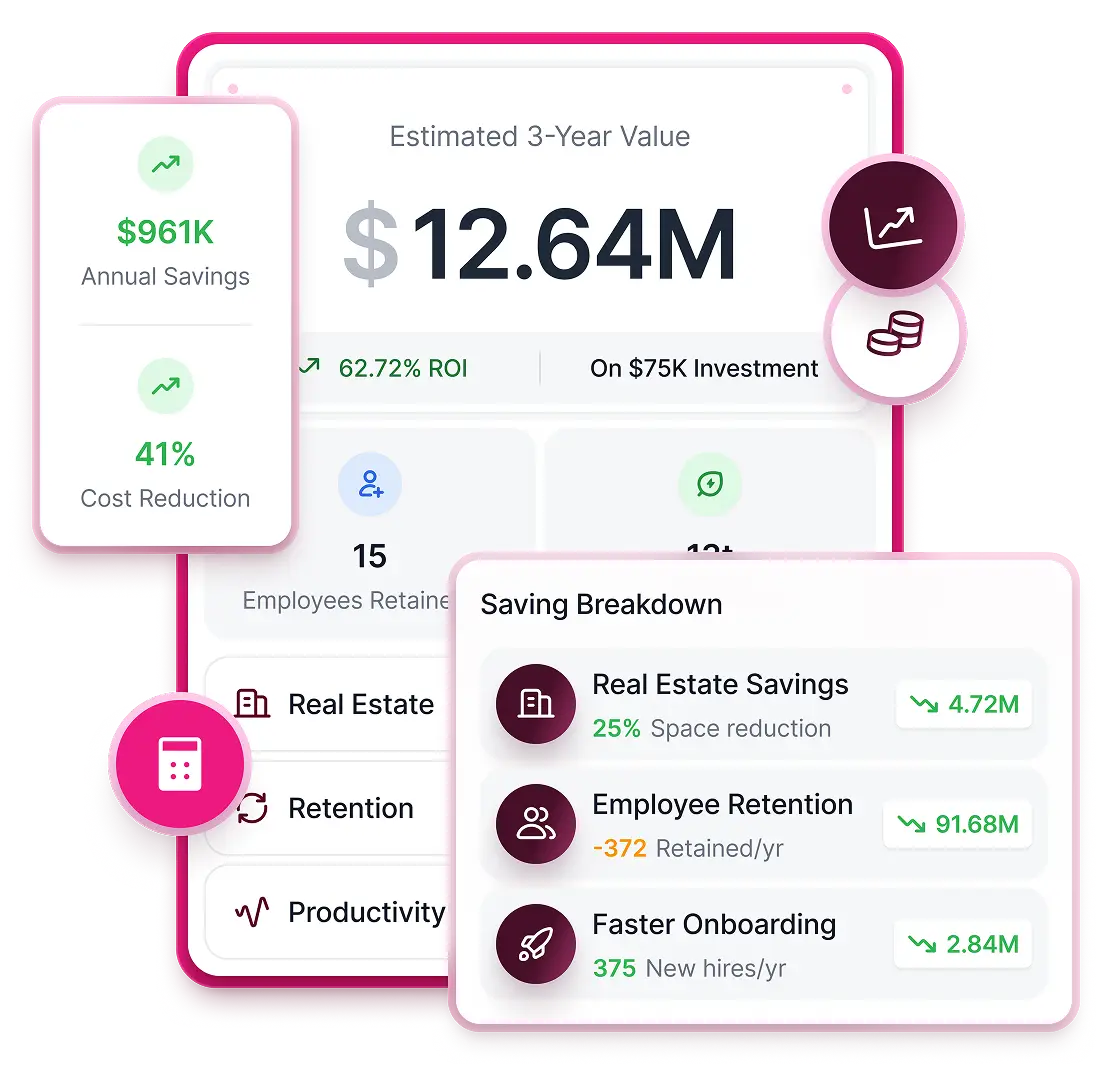
And if you are building the business case for change, calculate your ROI to understand the impact better workplace operations can have across your portfolio.
Calculate the ROI of Your Workplace Operations
Our brand-new ROI Calculator is here to help you visualize your success in seconds.

FAQ
What Is SpaceOps in Workplace Management?
SpaceOps is the practice of using workplace data and planning tools to improve how office space is designed, allocated, and changed over time.
What Is the Difference Between SpaceOps and WorkOps?
WorkOps helps companies run the workplace day to day. SpaceOps helps companies plan and change the workplace based on how it is actually being used.
How Does SpaceOps Improve Workplace Operations and Planning?
SpaceOps helps teams model space changes, understand trade-offs, and make planning decisions using real workplace data instead of static assumptions.
When Should Organizations Use SpaceOps Instead of Traditional Planning Tools?
Organizations should use SpaceOps when workplace planning depends on changing attendance, occupancy, headcount, team needs, or portfolio strategy.
How Do WorkOps and SpaceOps Work Together in Modern Workplaces?
WorkOps captures the day-to-day signals of how the workplace is used. SpaceOps uses those signals to guide smarter planning, redesign, and optimization decisions.