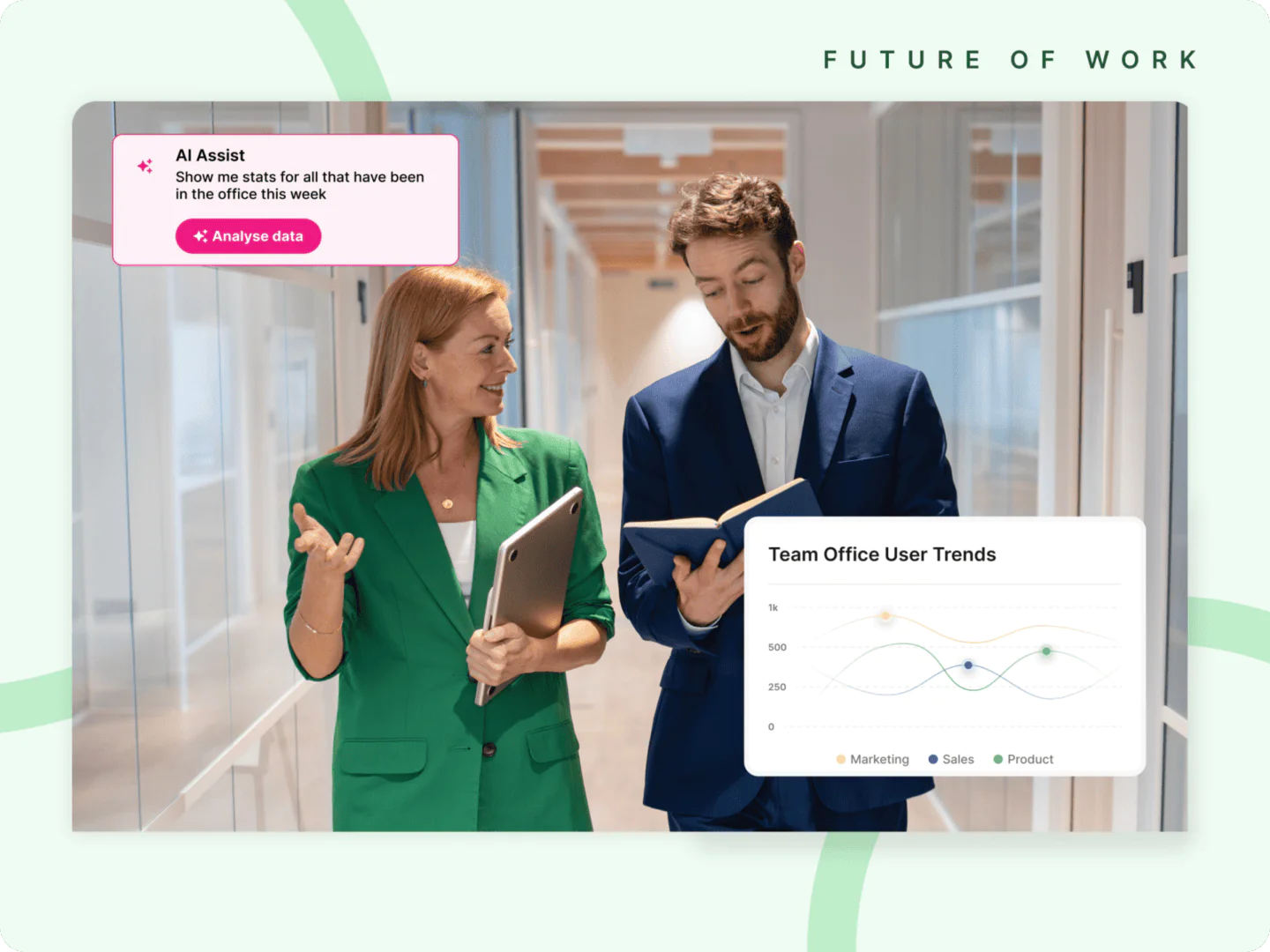
Something Rory from our Product Engineering Team said recently has stayed with me. Most workspace tools, he explained, are good at telling you what happened. What floor engineering used last Wednesday. How many desks were occupied in Q3. Which neighborhoods ran at capacity and which sat empty.
What they are not built to do is tell you what to do about it.
That gap is the one SpaceOps was designed to close. But as we have built it, we have learned something important: the distance between a space planning decision and an outcome is much larger than most workspace tools acknowledge. Closing it requires more than better data, and more than a smarter algorithm. It requires rethinking the entire space planning workflow from the moment a decision is made to the moment a team is sitting somewhere new.
The Problem with Descriptive Data
Most organizations are sitting on more workspace data than they have ever had. Badge access logs, booking records, sensor readings, HR headcount figures. The problem is rarely that the data does not exist. The problem is that the systems designed to interpret it were built to look backward.
A utilization report can tell you that floors four and five averaged 34% occupancy last quarter. What it cannot tell you is what to do about it. Whether closing those floors makes sense depends on how teams overlap, how headcount is expected to grow, what the lease implications are, and which moves would create the most disruption. None of that lives inside a utilization dashboard.
The result is that the data stops being useful at precisely the moment the real space planning work begins.
The Spreadsheet Trap
When utilization data runs out, most organizations fall back to spreadsheets. It is easy to understand why. Spreadsheets are flexible, familiar, and free. But they are also where space planning decisions go to slow down and lose their integrity.
The pattern is predictable. A planning file gets shared across teams. Multiple people start working from different versions. Booking data does not make it in because nobody thought to connect it. One team ends up with better outcomes because they were more vocal in the process, not because the data supported it. Decisions that should take days take weeks. And when something changes, the whole process starts over.
What the spreadsheet trap really costs is not time, though it costs plenty of that. It is the quality of the space planning decision itself. Plans built in spreadsheets tend to reflect the loudest voices in the room rather than the best reading of the available data. And because the reasoning is buried across cells and email threads, it is nearly impossible to audit or defend later. When a CFO asks why the organization is paying for three floors in a market where actual attendance sits below 40%, a spreadsheet does not give you a good answer.
From Descriptive to Prescriptive Space Planning, and Beyond
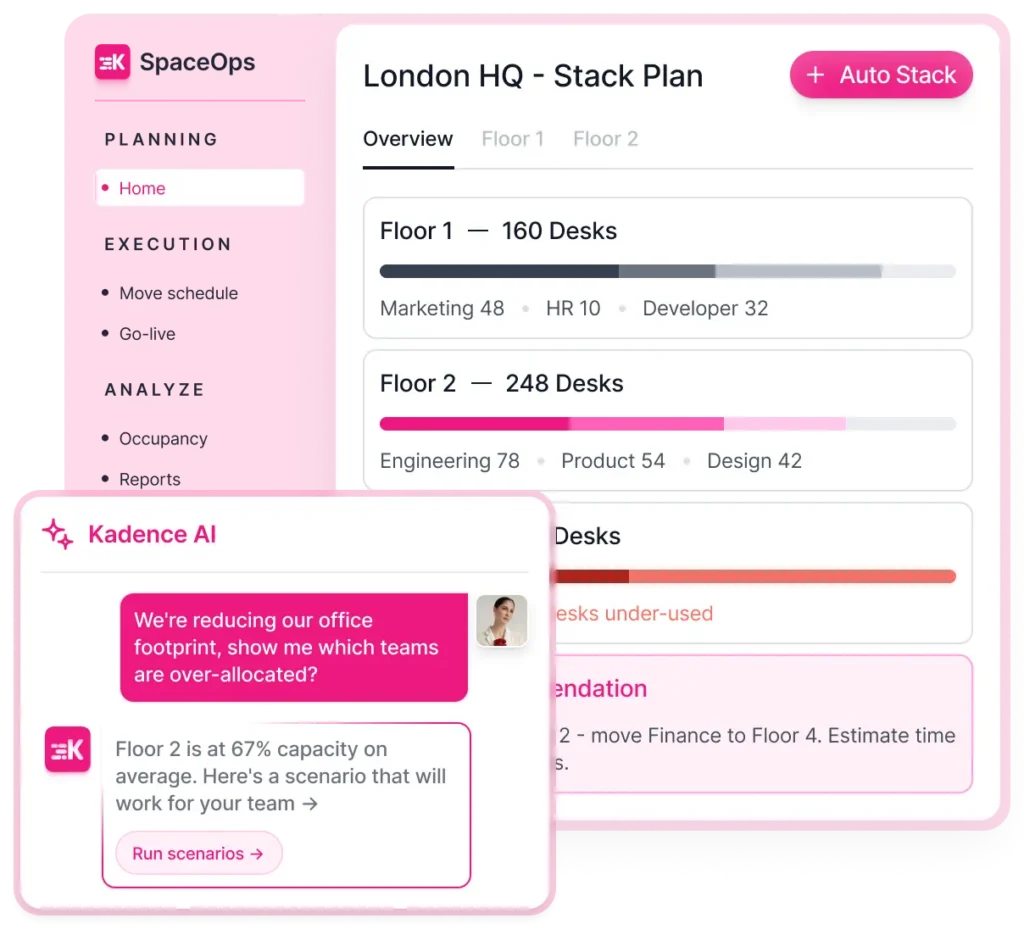
SpaceOps was built to be prescriptive. That means it does not just show you what is happening in your portfolio. It helps you model what should happen next. If engineering grows by 20%, here is how it ripples across the floor. If you consolidate two floors, here are three scenario planning options, ranked by disruption, cost efficiency, and team adjacency. Tell it what you need in plain language and it builds from there, using your actual occupancy data from Kadence WorkOps rather than assumptions or portfolio averages.
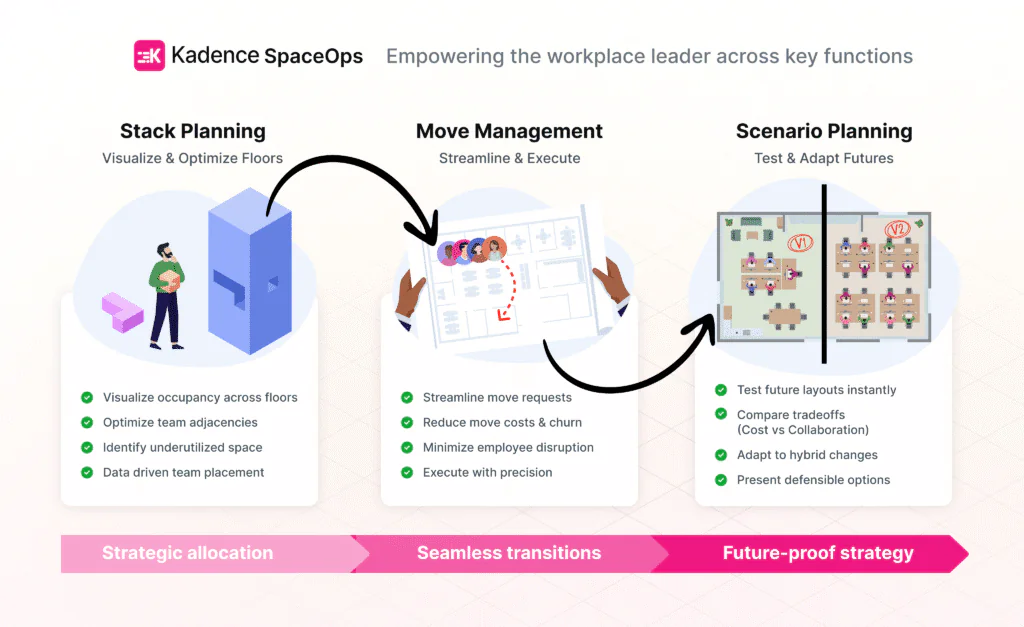
But prescriptive space planning is only useful if you can act on it. What we found, building and testing SpaceOps with real enterprise portfolios, is that the planning stage is only part of what leaders need. The harder part is execution: getting from a scenario on screen to 47 desks moved, three rooms rebooked, and four teams sitting somewhere new without something going wrong.
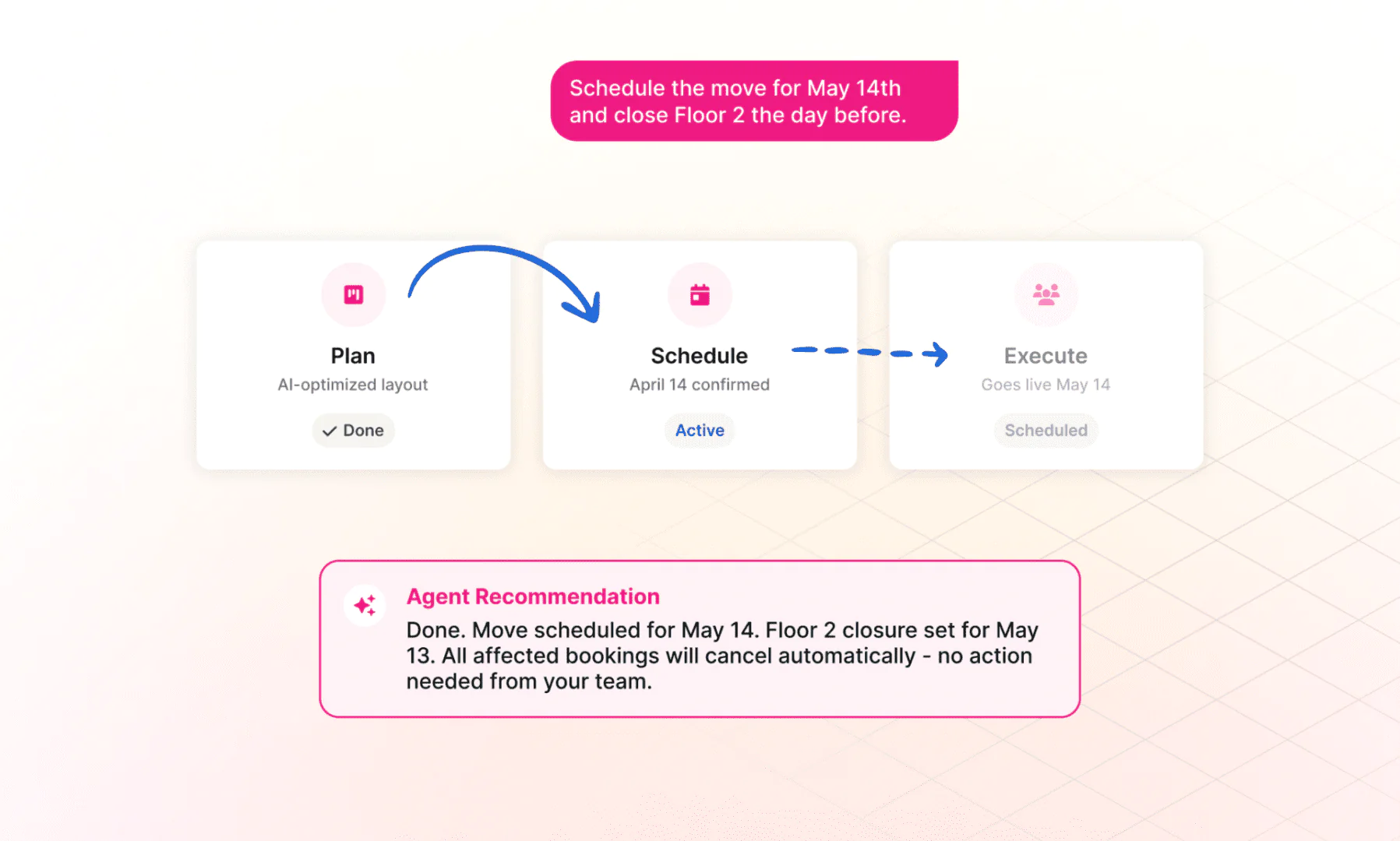
That is why SpaceOps connects space planning directly to scheduling and execution. Once a scenario is approved, the system builds the move sequence, detects conflicts with existing bookings, identifies the lowest-disruption window, and generates move sheets for every team involved. The plan does not end when the decision is made. It follows through to the floor.
What used to require an eight to twelve week consultant engagement, or a complex legacy IWMS implementation that takes months to configure and needs a specialist to operate, can now happen in days. That is not a marginal improvement in space planning. It changes the economics of how organizations respond to change.
The Defensibility Question
Something we did not fully anticipate when building SpaceOps was how much the ability to explain a space planning decision would matter to the people using it.
Space decisions are organizational decisions. They affect trust. They reshape how teams interact. They send signals about who the organization values and how it thinks about its people. When a leader moves a team to a new floor, they need to be able to say why, and that reason needs to hold up in a leadership meeting, not just make sense in the moment.
SpaceOps makes space planning auditable in a way that most tools do not. Once a plan is built, you can interrogate it. Ask why engineering was placed on floor one. See the reasoning, whether that is collaboration patterns, amenity proximity, or attendance data. If the logic does not hold, adjust it. The decision remains with the person accountable for it, but they have something to stand behind when the questions come.
This shift from implicit to explicit reasoning is one of the things we are most proud of in how SpaceOps has taken shape. If you want to understand more about how we got here, this earlier piece covers the thinking behind some of the key design choices.
Intelligence That Knows Its Limits
One of the most deliberate choices we made with SpaceOps is keeping humans firmly in the loop. The system models scenarios, sequences moves, and surfaces trade-offs. But it does not make space planning decisions.
That might seem like a limitation. It is not. Fully automated space decisions introduce a kind of risk that is difficult to unwind. A model optimizing for cost efficiency can make technically correct recommendations that are organizationally damaging. Putting a high-growth team next to a recently restructured one might look fine on a floor plan. It is not always fine in practice.
What SpaceOps does instead is make the trade-offs visible. Leaders can see what they are giving up when they optimize for cost over collaboration, or speed over stability. They can choose the plan that is not necessarily the most efficient, but the most defensible given everything they know about their organization. That is not a failure of intelligence. It is what good space planning judgment looks like when it is properly supported.
What Planning at This Speed Actually Changes
For teams using SpaceOps today, the experience is different from any workspace tool they have used before. Space planning scenarios that previously required weeks of back-and-forth planning, consultant briefings, and manual data gathering can be modeled and compared in minutes. When conditions change, as they do, plans can be rebuilt just as quickly. There is no new engagement, no new fee, no waiting for an external team to ramp up again.
That speed changes the quality of the decisions being made. When space planning is expensive and slow, organizations tend to make fewer, larger moves and hold on to real estate longer than they should. When it is fast and low-friction, leaders can test ideas before committing, explore options they would previously have dismissed as too complex to model, and act at the pace the business actually requires.
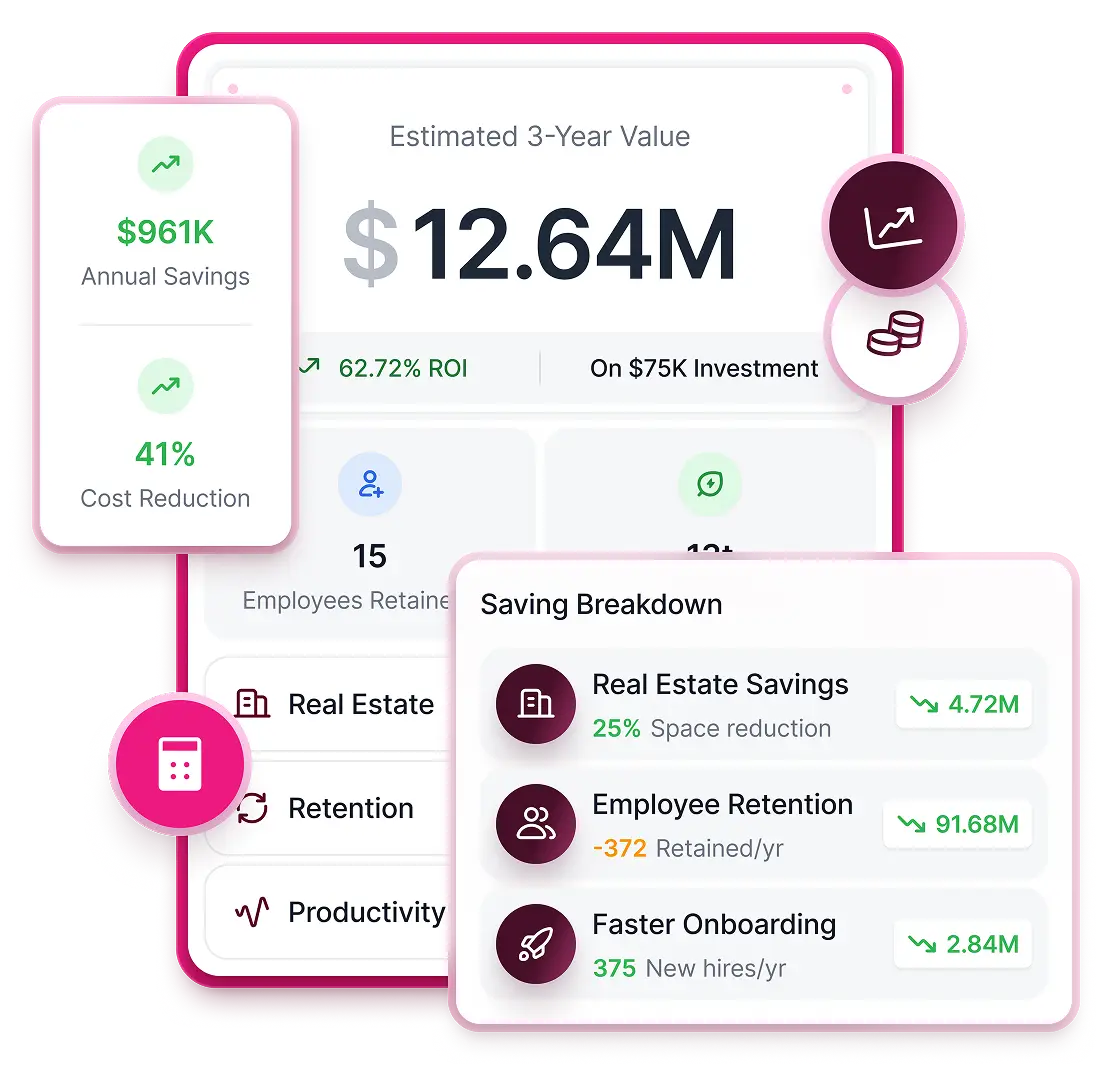
Calculate the ROI of Your Workplace Operations
Our brand-new ROI Calculator is here to help you visualize your success in seconds.

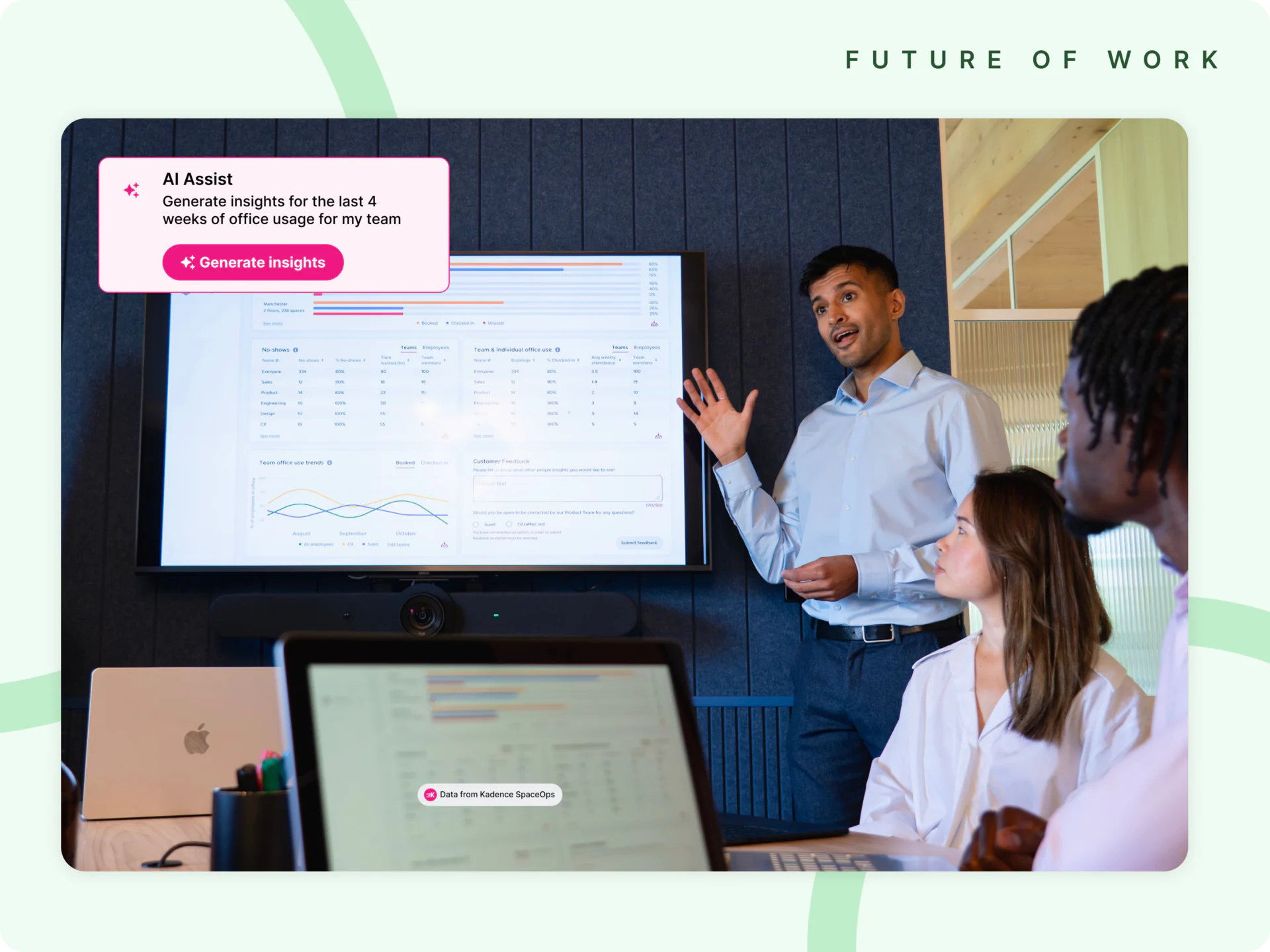
Rory walks through how prescriptive space planning works in practice in the video above, including why the spreadsheet trap is harder to escape than it looks, and what it means to plan with data that is actually connected to how your office is being used. It is the clearest demonstration of what prescriptive space planning looks like when it is connected end to end.
If you are working through questions around consolidation, growth, or complex moves, book a demo with our workplace operations experts to see SpaceOps in action with your own portfolio data.
Not ready for a demo yet? Use our ROI Calculator to see the value SpaceOps could unlock for your portfolio in seconds.