
I’ve been thinking a lot about what equals work.
Ask a carpenter to break down their job, and they’ll talk about specific tools, assembly processes, and tangible results. There’s a clear relationship between input, process, and output. But ask someone in knowledge work, and you’ll get: “I type on a keyboard, I sit in calls, I sit in rooms with other people.”
That’s it. For most white-collar workers, that’s the entirety of work.
And if you dig deeper into time allocation, the vast majority is spent in meetings and talking about work rather than doing work. Which raises a fundamental question as AI takes over more of the typing: what are human beings actually going to do?
The Real Work Is Human Work
During my time at LinkedIn, there were years when the company was spending as much as $150 million on off-sites, at a time when everyone was in the office all of the time. These gatherings were often intended for teams to connect outside the office, to focus on culture, initiatives, and strategic pursuits. Ultimately, they were often more about blowing off steam and having fun as a team.
But post-pandemic, I started to ask whether we should flip the script. To give our office spaces a purpose again and use them for highly intentional on-site experiences, designed to come together in the office rather than to get away from it.
If people don’t want to come in for heads-down individual work, and AI can handle most of the routine typing and processing, then the real value of bringing people together is for the work that only humans can do. Strategic thinking. Creative problem-solving. Relationship building. Alignment around mission and vision.
The companies getting this right treat gatherings as designed hospitality experiences with deliberate programming. They’re not thrown-together agendas in conference rooms. They’re intentional experiences that amplify human potential.
The data supports this shift. Companies are now spending heavily on corporate retreats, with the offsite market expected to grow to $500 billion by 2030. But most companies don’t have a plan. They leave it to individual business units to figure out. Some treat it like a requirement: “I don’t make you come to the office, so you’re doing these five straight days, and you’ll love it because you owe us.” Others realize the real opportunity and design experiences that people actually want to be part of.
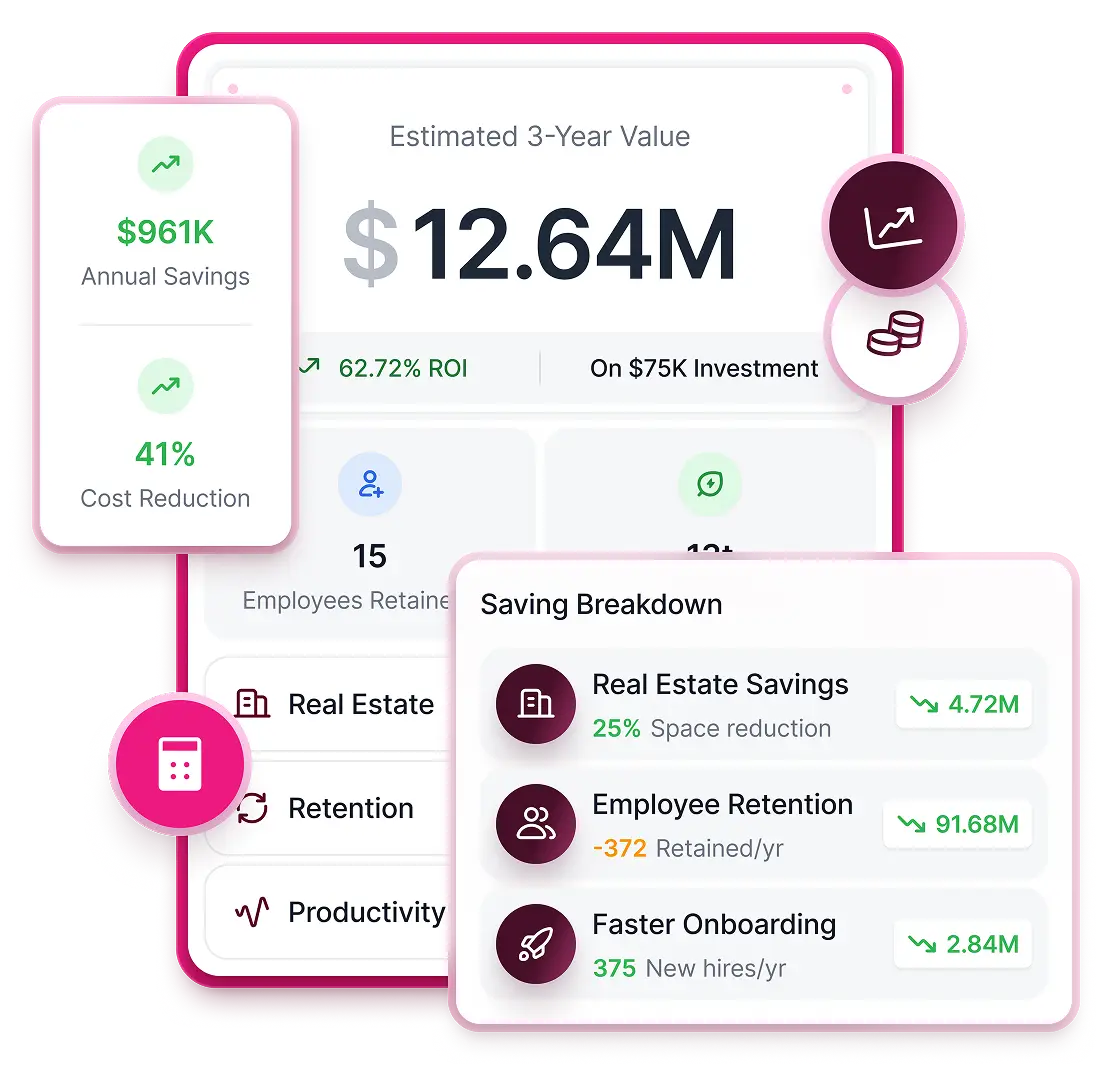
Calculate the ROI of Your Workplace Operations
Our brand-new ROI Calculator is here to help you visualize your success in seconds.

The Hybrid Meeting Crisis
Before we talk about getting together intentionally, we need to address the elephant in the room: hybrid meetings have become the default way distributed teams collaborate, and they’re arguably the worst meeting format we’ve ever invented.
Some companies I work with report that 90 percent of their meetings are now hybrid. Think about what that means. Even if four people plan to be in the office today, something happens, and one can’t make it. Suddenly, everyone defaults to hybrid mode — some people in the room focused on each other, others calling in and multitasking.
The result? The age of extreme multitasking during meetings. People hear their name and ask you to repeat the last sentence, revealing they haven’t been listening to any of it. Remote participants speak 60 to 70 percent less than in-room counterparts, not because they have less to contribute, but because the format never creates the opening.
This isn’t about meeting equity anymore. It’s about the fact that you’re paying someone to be involved in this conversation, and if they’re not actually engaged, you’re wasting everyone’s time.
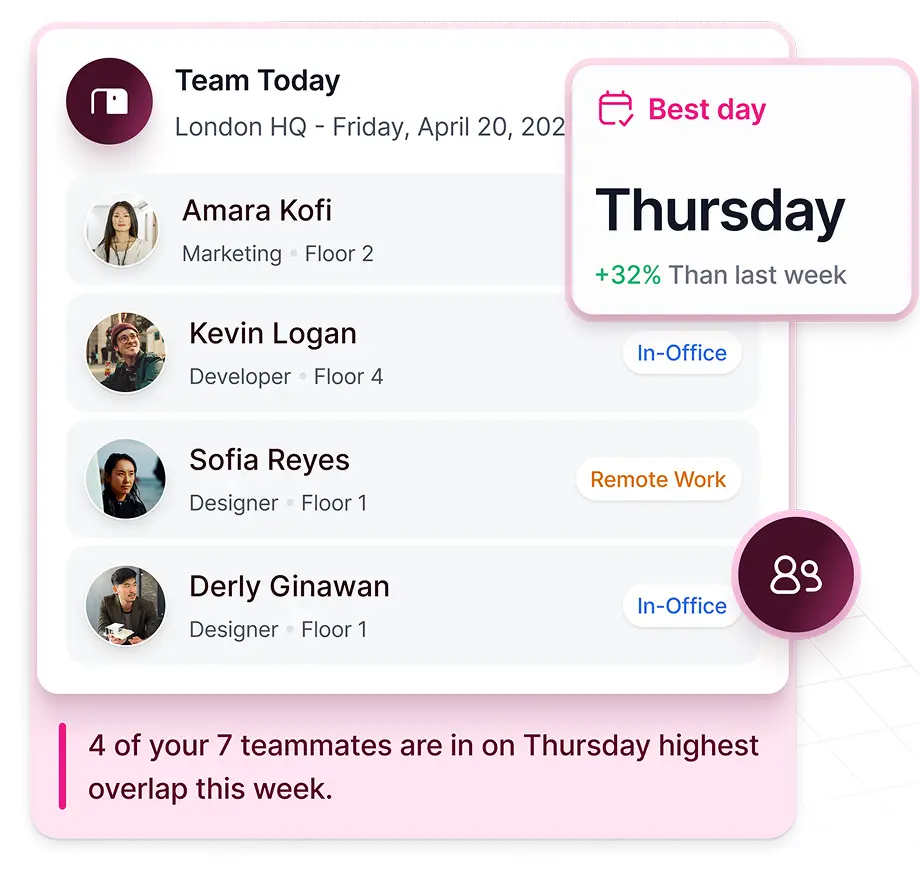
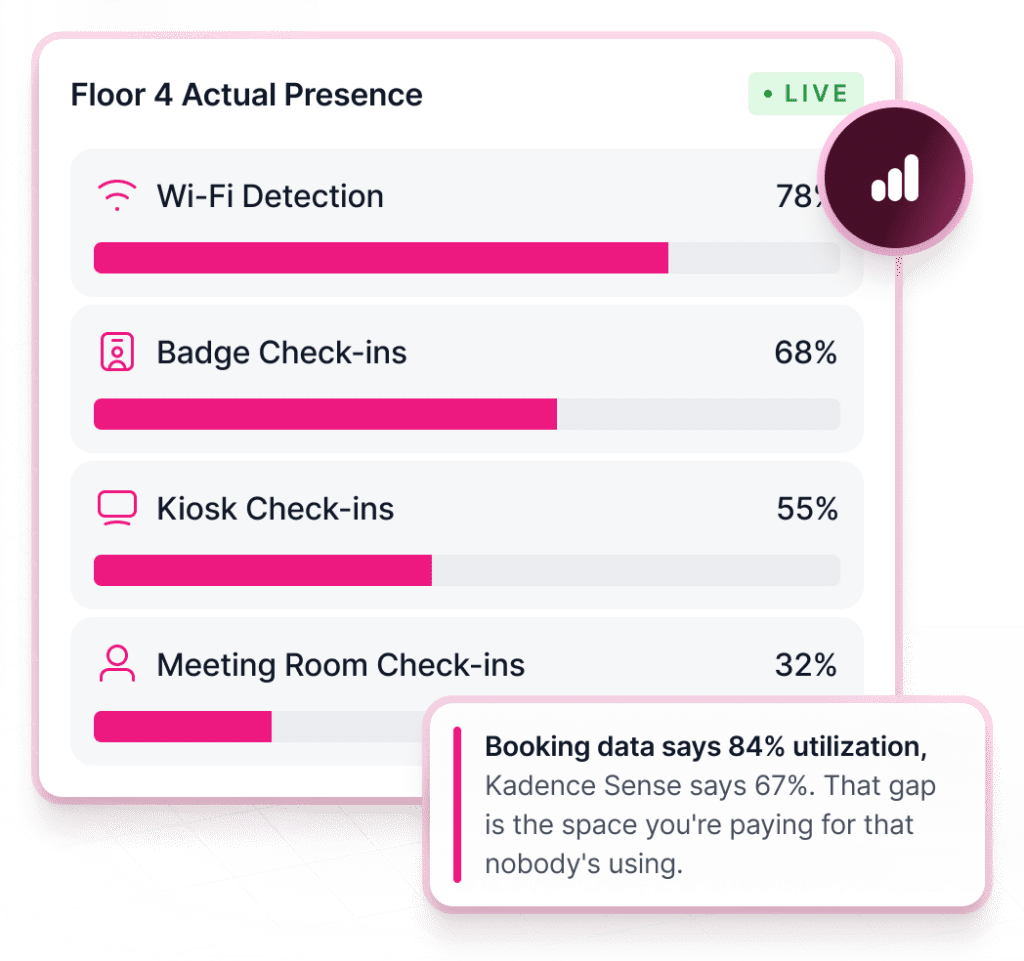
The organizations fixing this understand which meeting formats are actually driving outcomes — cross-referencing attendance patterns, space utilization, and team presence data to see where collaboration is producing results and where it isn’t.
Redesigning What Meetings Are For
I’ve worked with companies that want to redesign what a meeting is and why we have them. Period. Full stop. The conversation usually starts with: “Everyone’s overworked and overwhelmed, but when we look at actual workloads, they’re not.”
The real problem is a culture of bringing everyone along. Fear of silos leads to inviting everyone who might care about what you’re doing to every meeting. People feel obligated to attend because they were invited. Soon everyone’s invited to four meetings in the same 30-minute slot.
The solution isn’t better cameras or microphones. It’s rules of engagement. When can you schedule a meeting, and when can’t you? What requires an agenda versus what can be asynchronous? How do we ensure that when people do come together, virtually or physically, it’s actually meaningful?
One Fortune 100 client I’m working with has implemented what they call “meeting intent frameworks.” Every meeting request must specify whether it’s for information sharing, decision making, creative collaboration, or relationship building. Different intents require different formats, different spaces, and different technology setups.
The Three Principles of Intentional Gathering
Based on my experience at LinkedIn and current work with companies like HubSpot, here are the three principles that separate effective gathering from expensive socializing.
1. Amplify Human Potential with Technology
As AI handles more routine tasks, the time humans spend together becomes more valuable, not less. But we need to redesign how that time gets used. What are people actually doing when they’re not typing? How do we create environments where human creativity, strategic thinking, and relationship building can thrive?
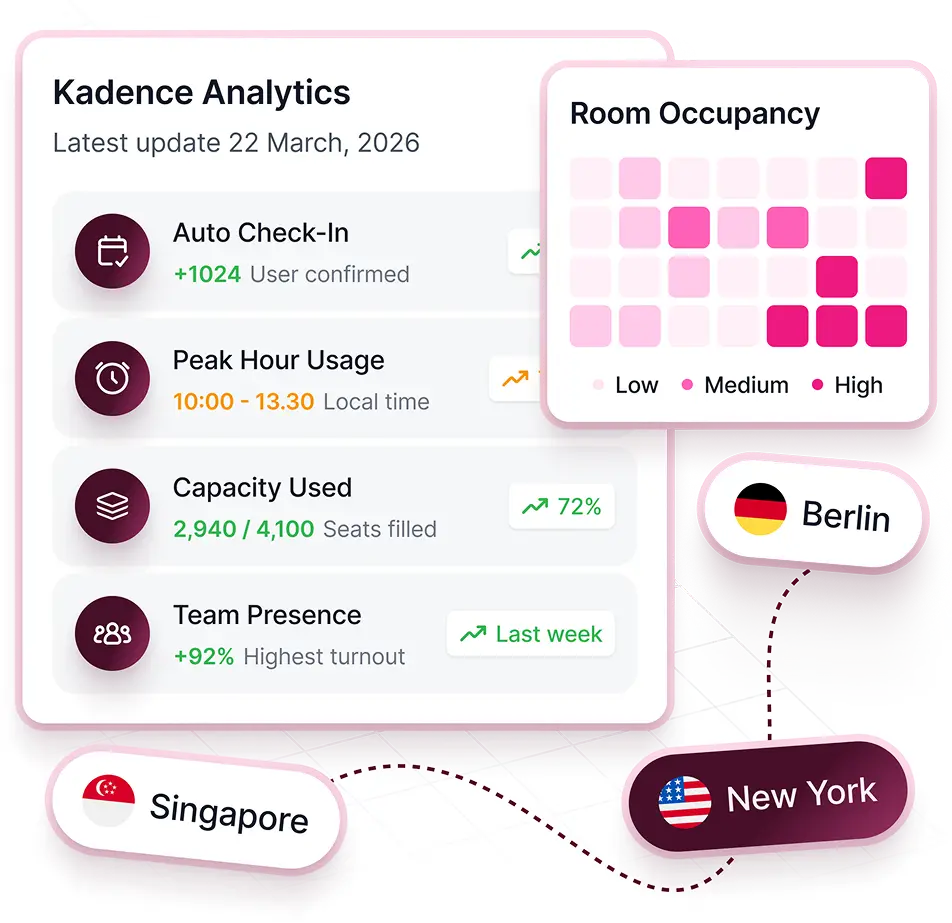
The answer lies in understanding which environments are actually producing the outcomes you want. Organizations need to see exactly which spaces drive human collaboration outcomes — which room types, which configurations, and which days produce the dwell time and interaction patterns that signal real connection rather than performed presence.
2. Be Intentional About When, Why, and How People Come Together
Whether it’s one day a year or five days a week, align your gathering strategy with your mission, vision, and culture. Most companies are just doing whatever the executive leader feels is right based on gut instinct. There’s no intentionality around what coming together should accomplish.
Research shows that companies should expect to spend around $750 per person per night for high-quality retreat experiences. But the ROI comes from intentional programming and deliberate planning, not expensive venues.
3. Design for Presence, Not Efficiency
Most people are so concerned with efficiency that they don’t stop to be in the moment. The goal should be getting every ounce of value out of time spent together. Shut everything else off. Full presence for what you’re doing together.
This requires both physical and digital infrastructure: the right spaces, the right technology, and the organizational clarity about what each type of gathering is actually for.
The Super Athlete Company Vision
Here’s where this leads: imagine organizations that are small but mighty, accomplishing huge things that used to take 10,000 people. The super athlete companies of the future.
These organizations won’t track how many hours you work in a week. They’ll focus on outcomes and impact. There will be times when you’re talking to someone’s AI representative, and times when you’re talking to them directly. The ability to be strategic about when you use each approach will be the competitive advantage.
For the highest performers, work becomes about maximum impact rather than maximum hours. If you’re smart about amplifying human potential through AI and being intentional about when people gather, you can stretch out the week. Longer sessions when together, deeper conversations, more flexibility when apart.
We’re very close to the point where you could get hired by a company as a human being working remotely, and all of your co-workers that you see on the screen are not actual humans. Until you spend time standing in front of them and next to them, your brain doesn’t believe they’re real, no matter what you think you know.
The Both/And Future
For twenty years, I’ve been trying to make work suck less. But I want to go further. I want to make work something people look forward to and are excited about.
There’s an existential challenge coming. As AI handles more tasks, what are humans going to do? I’m not worried about AI taking over the world. I’m concerned about purpose. If your purpose is wrapped up in what you do, and what you do changes dramatically, how do you maintain meaning?
The answer isn’t to resist AI. It’s to design organizations that are human-first. Teams where work feels like being part of something meaningful with people you care about, working toward a common mission.
The organizations that figure this out, that make time together worth the trip, will be the ones that attract and retain the best people. They’ll be the super athlete companies that accomplish extraordinary things with small, mighty teams.
There’ll be places where work is something you look forward to.
If you want to understand how your spaces are performing and whether your team gatherings are producing the outcomes that matter, book a demo with the Kadence team.