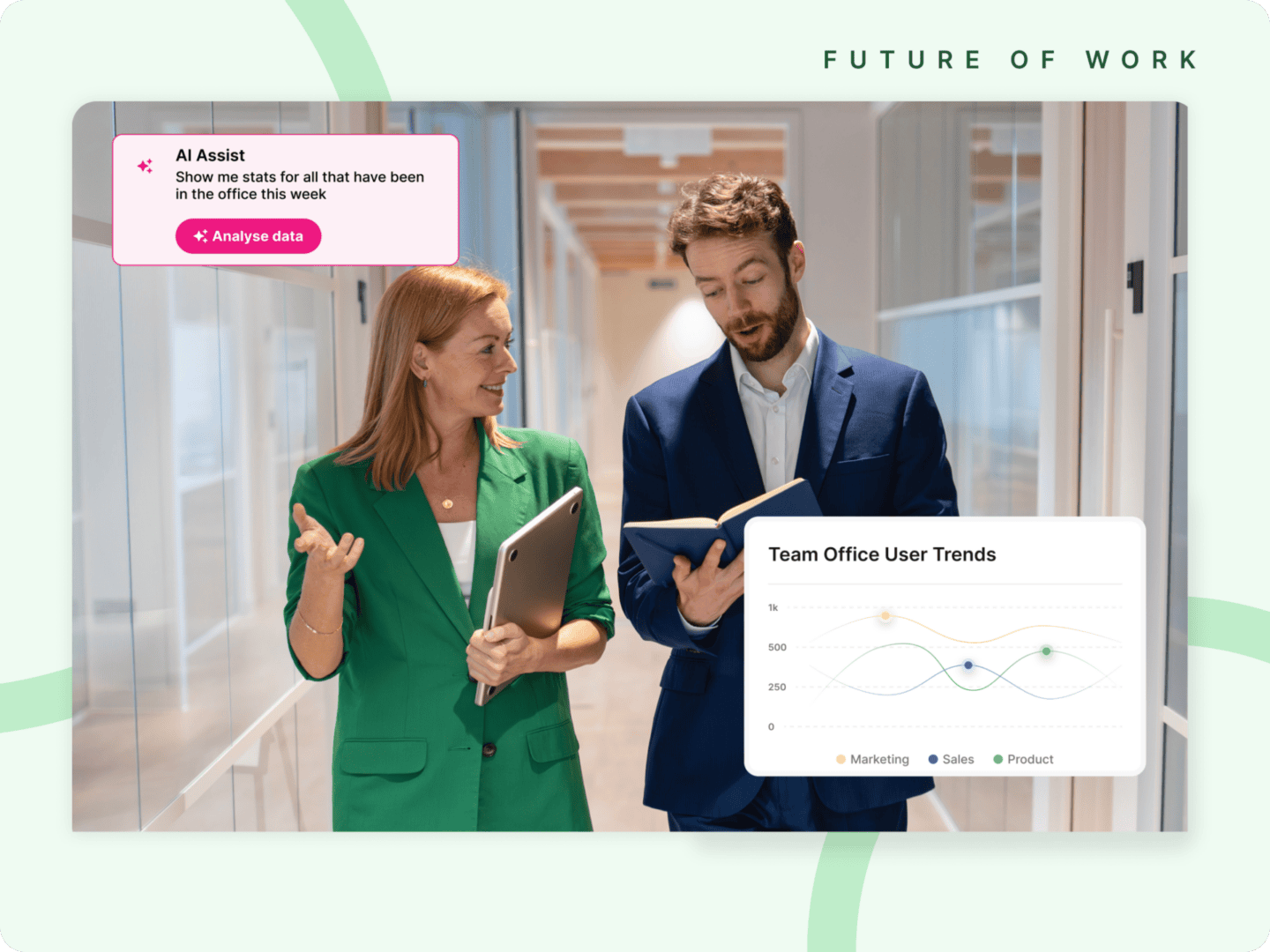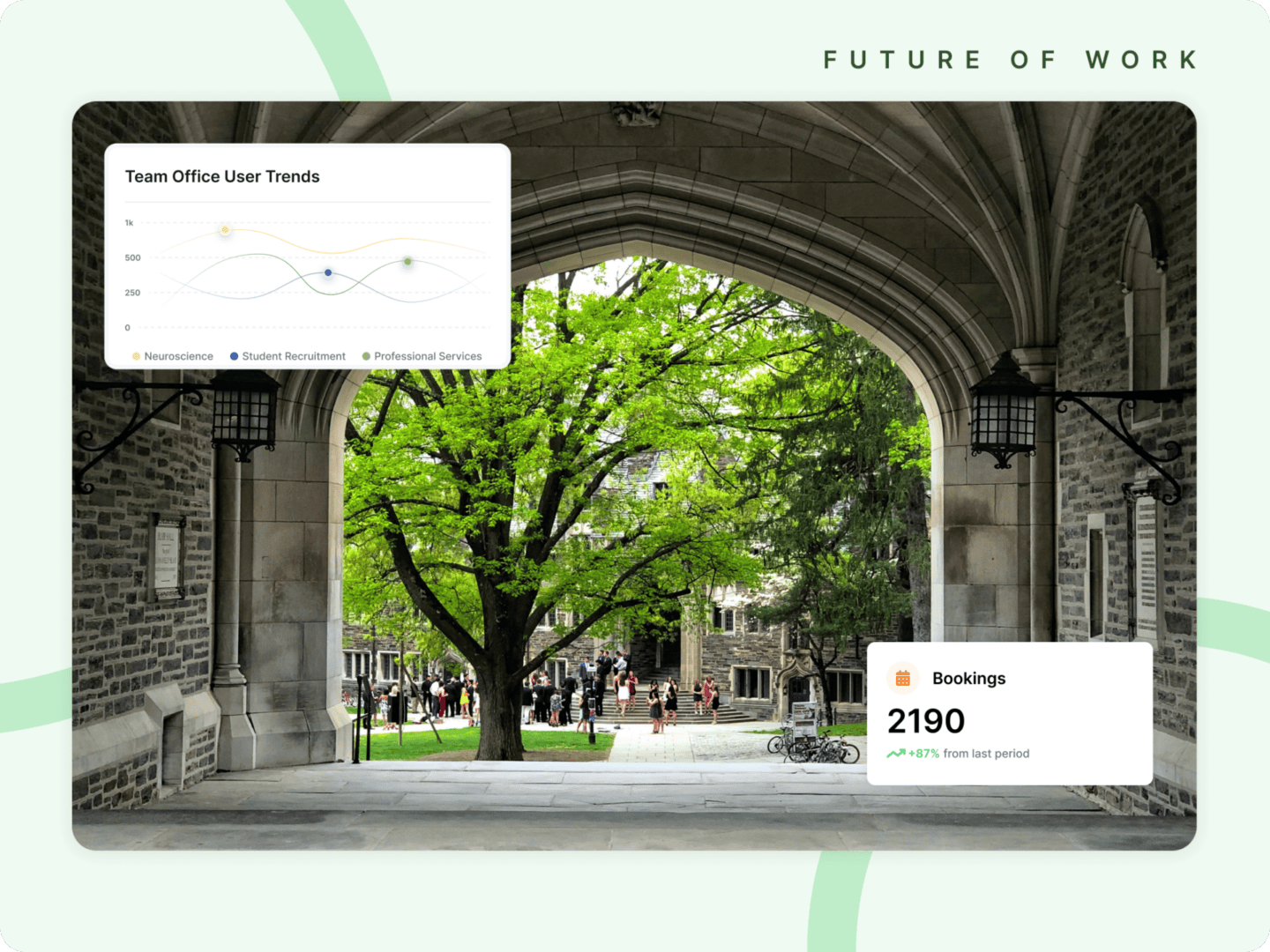
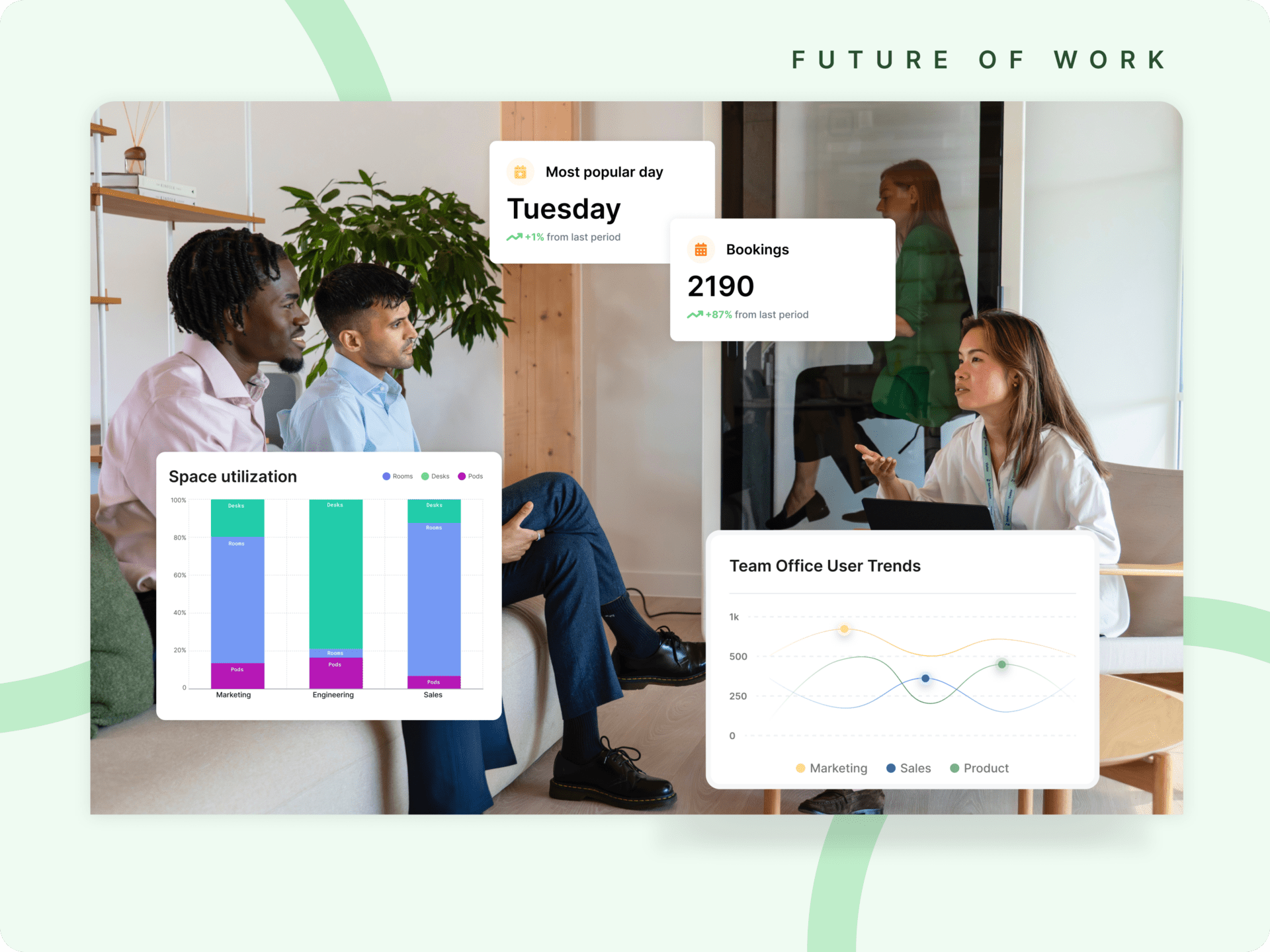
Enterprise workplaces have become significantly more complex over the last several years. Managing multiple locations, enforcing hybrid policies at scale, and controlling rising real estate costs has made it harder for organizations to make confident operational decisions without reliable data and systems to support them.
Enterprise organizations use workplace management systems to centralize data across real estate, facilities, space, and people, giving different functions across the business a shared view of how the workplace is performing.
Usage varies considerably by function. Real estate teams rely on enterprise workplace management software to manage leases and model portfolio decisions. Workplace and operations teams use it to coordinate space and track utilization. HR teams draw on the data to understand how hybrid policies are playing out in practice. Leadership uses the insights to align workplace strategy with broader organizational goals. This article breaks down how enterprise organizations apply these systems across each of those areas.
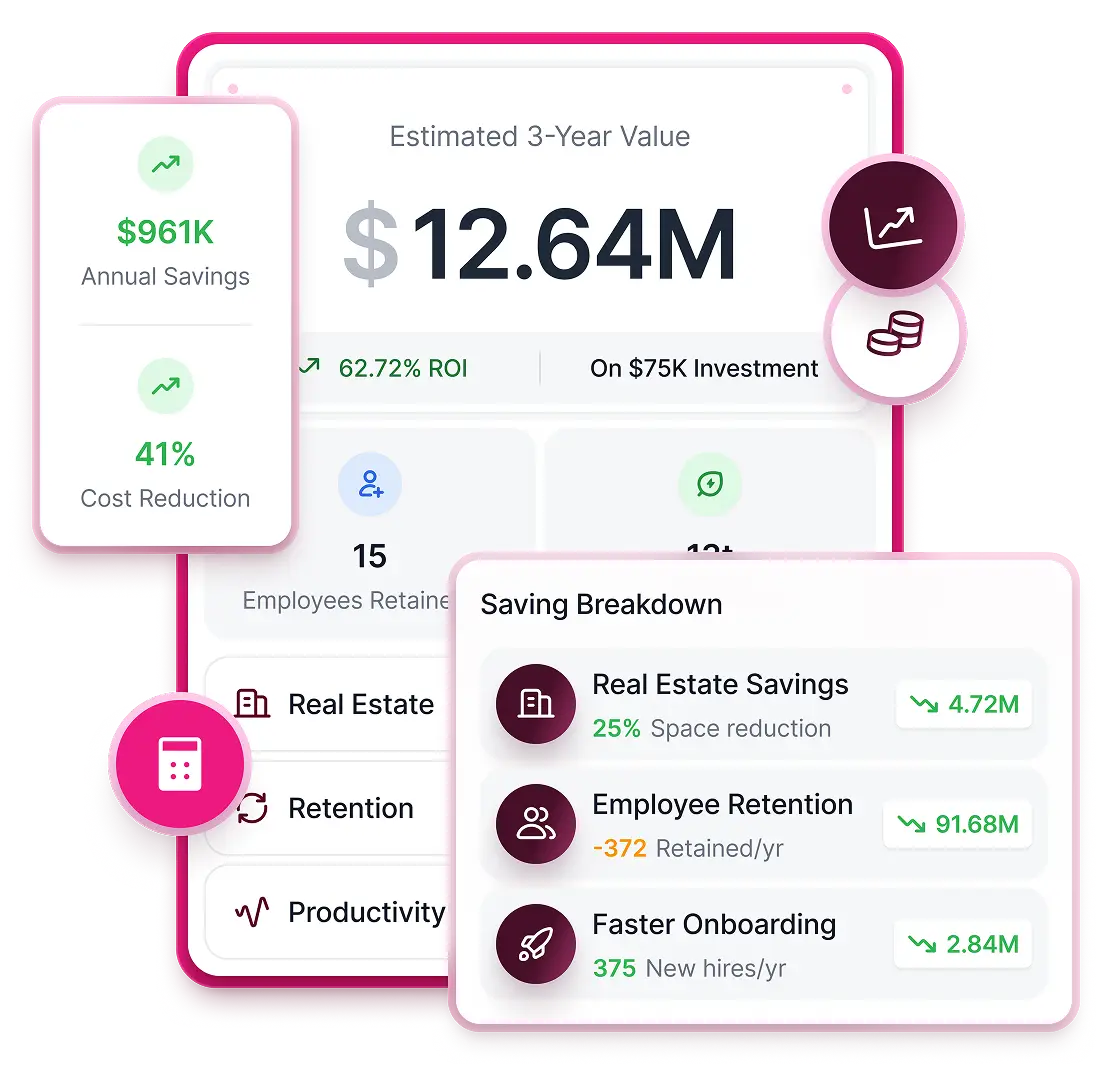
Calculate the ROI of Your Workplace Operations
Our brand-new ROI Calculator is here to help you visualize your success in seconds.

Common Workplace Challenges for Enterprise Organizations
Large organizations typically face a consistent set of operational challenges that standalone tools struggle to resolve.
Data sits in separate systems across departments, making it difficult to get a unified view of how space is being used. Office space is often underutilized, but without reliable occupancy data, it is hard to make confident decisions about what to reduce. Hybrid work has added further complexity, making it difficult to coordinate team presence, manage space demand, and understand how attendance patterns are actually evolving. The result is that significant decisions about space and real estate are frequently made on incomplete information.
What Are the Core Features of Enterprise Grade Workplace Management Systems?
Enterprise grade workplace management systems are platforms that integrate space, facilities, real estate, and people data into a single operational environment, giving large organizations the visibility and control they need to manage complex, multi-location workplaces efficiently.
For enterprises, the key requirement beyond basic functionality is scalability. These systems need to handle large datasets, support multiple locations and business units, and integrate with existing tools including HR systems, calendars, and access control. The features that matter most are those that directly support the decisions enterprises need to make most often: where to allocate space, how to coordinate teams, and how to justify real estate investment.
How Enterprises Optimize Real Estate and Space Utilization
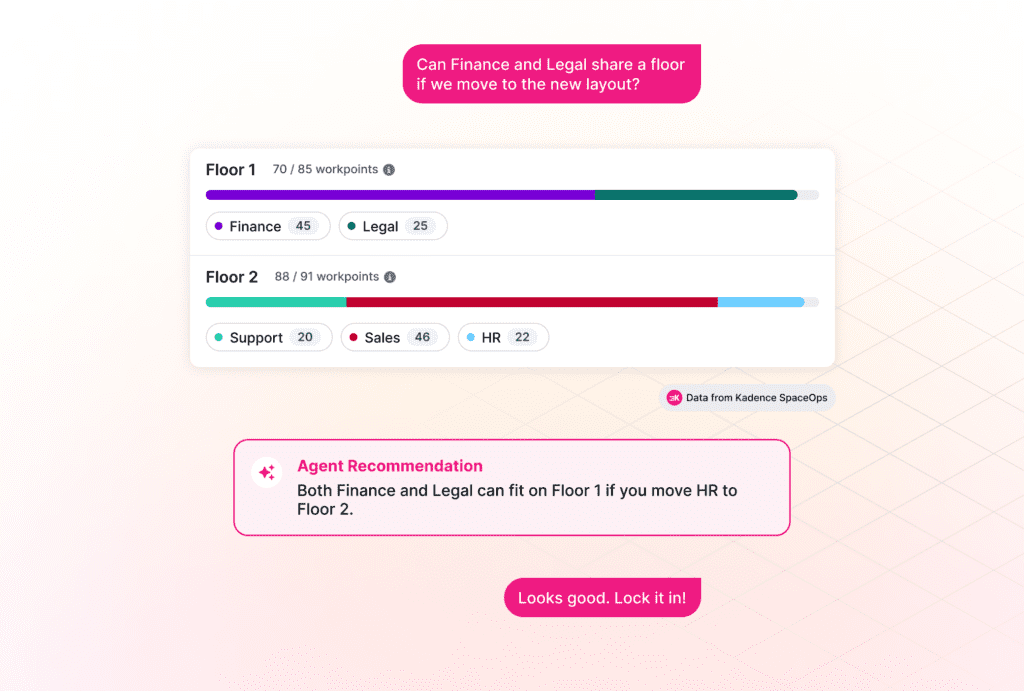
Enterprises optimize real estate and space utilization by using workplace management systems to track how space is actually being used across their portfolio, providing the data needed to make confident decisions about capacity, consolidation, and lease planning.
Many large organizations are carrying more space than they actually need. The problem is not that leaders do not suspect this. It is that they lack the reliable, consistent data to act on it confidently. Enterprise workplace management software provides visibility into occupancy patterns, peak demand periods, and usage trends across locations. With this data, real estate and operations teams can identify floors or buildings that are persistently underutilized and begin modeling what consolidation or restacking would look like in practice.
This matters financially. Reducing unused space lowers the cost per employee, improves portfolio efficiency, and frees up capital that would otherwise be tied to facilities that are not earning their footprint. Long-term lease decisions become less risky when they are grounded in consistent behavioral data rather than periodic headcounts or assumptions about how attendance will evolve.
How Enterprises Coordinate Hybrid Work at Scale
Enterprise organizations use workplace management systems to coordinate hybrid work at scale by aligning team schedules, space availability, and presence patterns without relying on manual processes or disconnected tools.
Hybrid work introduces coordination complexity that grows with headcount. When thousands of employees across multiple locations are making independent decisions about when to come into the office, the result is often unpredictable demand, crowded midweek peaks, and underused space on quieter days. Without a system to bring visibility to these patterns, operations teams are left reacting rather than planning.
Enterprise workplace management systems help by connecting scheduling, booking, and attendance data into a single view. Teams can see when colleagues plan to be in, coordinate around shared space, and align presence with collaboration needs rather than habit. Planning for large meetings, cross-functional workshops, and events becomes more reliable when space availability and team schedules are visible in one place. The downstream effect on employee experience is meaningful: when office days feel intentional and well-organized, employees are more likely to find value in them.
How Organizations Use Workplace Data to Drive Better Decisions
Organizations use workplace data from enterprise workplace management systems to move from reactive reporting to proactive planning, turning occupancy signals, booking behavior, and attendance patterns into decisions about space, policy, and investment.
Many enterprises still rely on incomplete or outdated data when making workplace decisions. Utilization reports are produced periodically rather than continuously. Space audits reflect a moment in time rather than ongoing behavior. The result is that leaders are often making significant decisions about real estate and policy on information that does not fully represent how the workplace is actually being used.
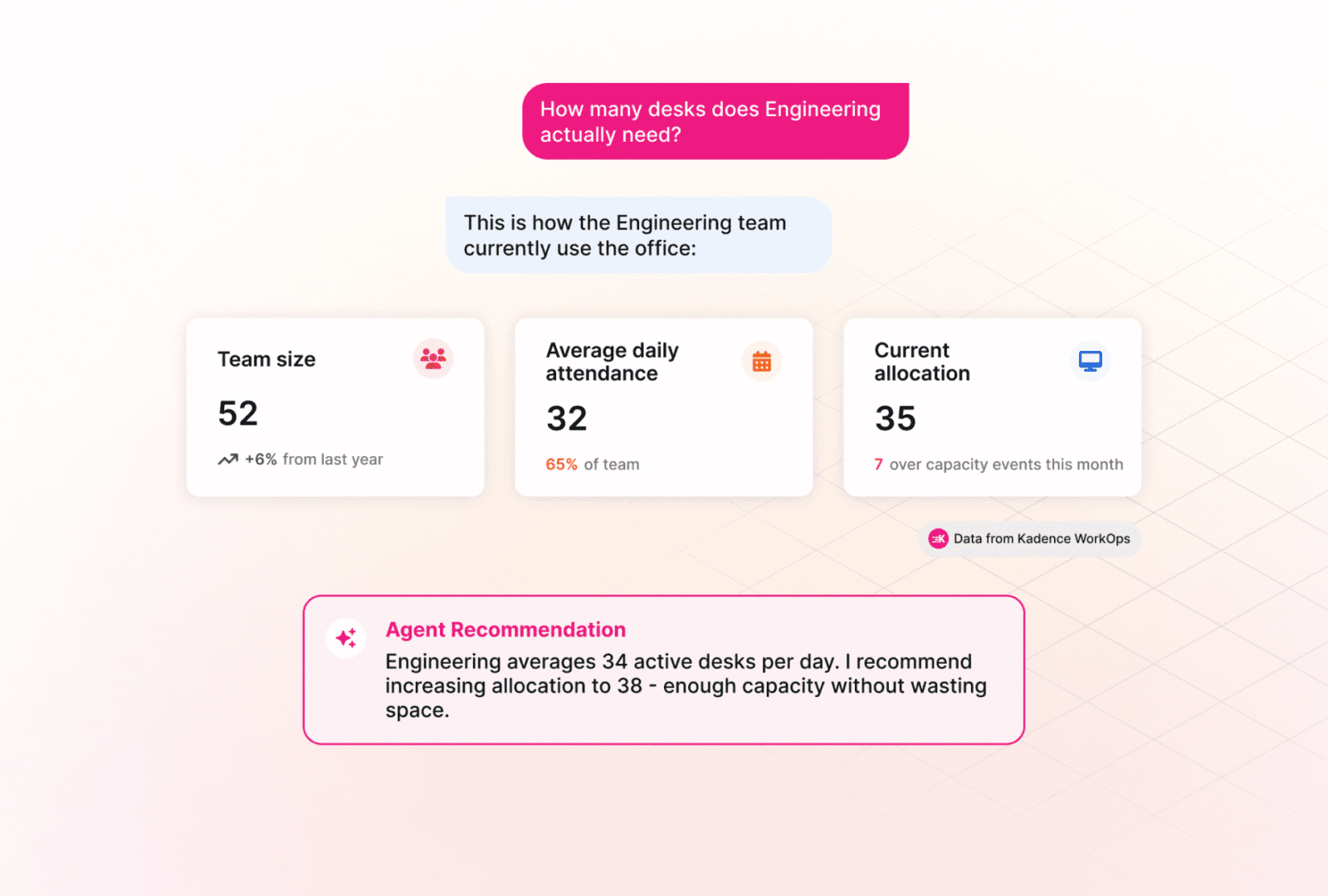
Enterprise workplace management software addresses this by unifying data across space, people, and usage patterns into a continuous operational picture. Leaders can identify trends as they emerge, forecast demand across locations, and model different workplace scenarios before committing to them. The data serves decisions at multiple levels: operations teams use it to manage day-to-day capacity, workplace leaders use it to refine policies and layouts, and executives use it to inform real estate investment and portfolio strategy. Data, in this context, is not just for reporting. It is the foundation for every significant workplace decision the organization needs to make.
What Are the Benefits and ROI of Workplace Management Systems for Enterprises?
The primary benefits of enterprise workplace management systems are cost reduction, improved space efficiency, and better long-term planning, with ROI driven by the ability to align real estate supply with actual workforce demand.
Enterprise leaders are expected to justify workplace investments with clear financial and operational outcomes. A workplace management system delivers that justification by making the relationship between space, cost, and usage visible. Reducing unused space and lowering real estate costs is the most direct financial benefit, but it is not the only one. Improving utilization across locations, reducing the operational overhead of manual coordination, and enabling better forecasting all contribute to measurable efficiency gains over time.
ROI is not purely about cost-cutting. Organizations that align their space more closely with how people actually work tend to see improvements in employee experience alongside operational efficiency. When the office feels well-organized, appropriately sized, and designed around actual collaboration needs rather than legacy assumptions, engagement improves too. Measurable outcomes that enterprise organizations track include cost per employee, occupancy rates across the portfolio, and reductions in underperforming or persistently empty space.
How Enterprises Align Workplace Operations With Business Strategy
Workplace decisions in enterprise organizations no longer sit in isolation. Decisions about space, headcount, and office design have direct implications for finance, HR, operations, and long-term organizational planning, making workplace management a strategic function rather than a facilities one.
Enterprise workplace management systems connect these functions by providing a shared data layer. Finance can see the real cost implications of current space allocation. HR can track how hybrid policies are affecting attendance and team cohesion. Operations can monitor efficiency across locations. Leadership can model how different scenarios affect cost, performance, and employee experience before committing to a direction.
This alignment helps organizations shift from reactive workplace decisions to intentional strategy. Rather than responding to problems after they surface, teams with access to unified workplace data can anticipate where friction will emerge and address it earlier. Over time, this supports broader organizational goals including cost control, scalability, and the ability to adapt the workplace as the business evolves. Workplace operations, when connected to the right data, becomes a lever for organizational performance rather than a back-office function.
How Kadence Helps Enterprises Optimize Workplace Strategy, Space, and Performance
Enterprise organizations are using workplace management systems to optimize space, improve coordination, and make better decisions across their portfolios. Kadence supports these outcomes by providing the data, visibility, and operational alignment that enterprise teams need to move from reactive management to confident, evidence-based strategy.
For a broader overview of what workplace management systems are and how they work, read our guide: What Is a Workplace Management System?
Book a demo with our workplace operations experts to see how Kadence can help your organization optimize space and improve operational efficiency. Not ready to speak with the team yet? Use our ROI Calculator to estimate the cost savings available across your portfolio.
Enterprise Workplace Management Systems FAQs
How do enterprise organizations use workplace management systems?
Enterprise organizations use workplace management systems to centralize data across real estate, facilities, and people, enabling better decisions about space allocation, hybrid coordination, and long-term portfolio strategy.
What are the benefits of workplace management systems for large organizations?
The primary benefits are reduced real estate costs, improved space utilization, and better operational decision-making through unified data across locations and functions.
How do workplace management systems improve operational efficiency?
They replace fragmented, manual processes with integrated data and automation, reducing coordination overhead and giving operations teams a continuous view of how the workplace is performing.
How do enterprises use workplace data to make decisions?
Workplace data is used to track utilization trends, forecast space demand, model consolidation or restacking scenarios, and align real estate decisions with actual workforce behavior.
How do workplace management systems support enterprise strategy and growth?
By connecting workplace data across finance, HR, and operations, these systems enable organizations to make proactive, evidence-based decisions that align space and cost with long-term business objectives.