The market has already repriced your real estate. It did not ask whether you wanted to participate. Values have corrected, leases are getting shorter and smaller, and new supply has effectively stopped. What has not changed, in most enterprises, is how the lease decision itself gets made. That is the gap I want to close in this piece, because the next three years of lease events are going to reward the companies that treat each one as a portfolio decision and punish the ones that treat it as a renewal formality.
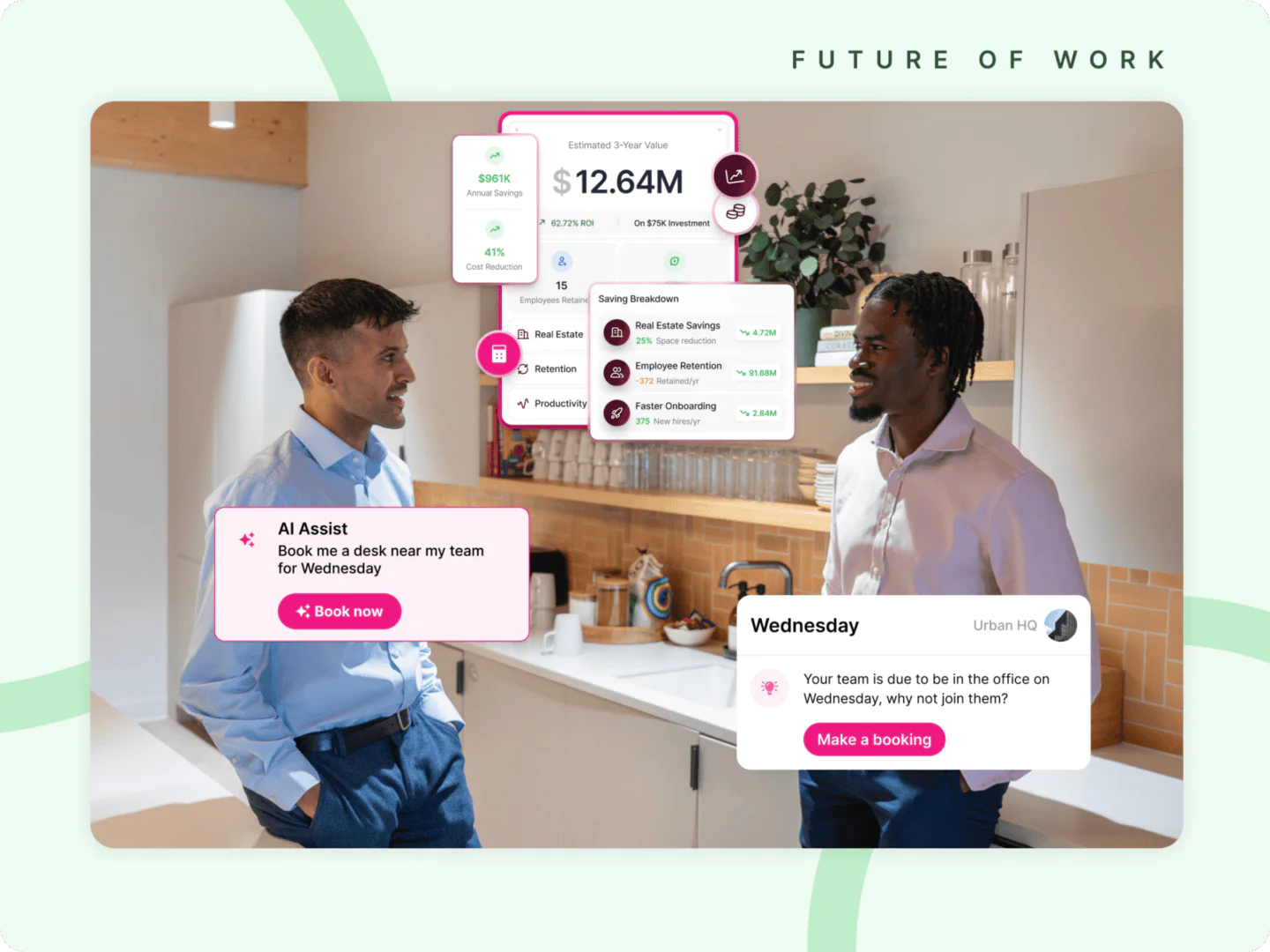
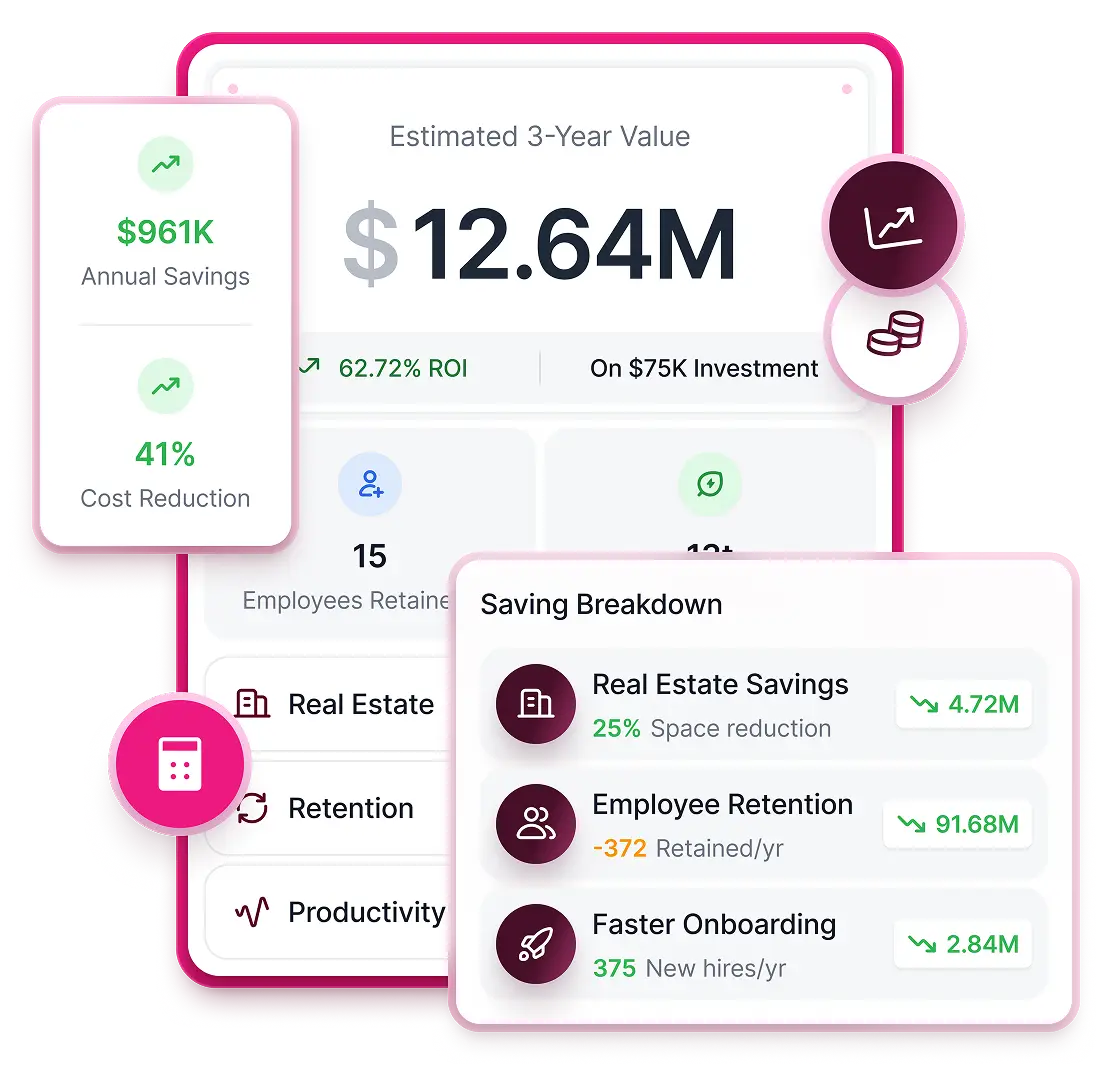
Calculate the ROI of Your Workplace Operations
Our brand-new ROI Calculator is here to help you visualize your success in seconds.

The Market Repriced Your Real Estate Whether You Participated or Not
Start with the numbers, because they set the stakes.
The PwC and ULI outlook for 2026 describes an office market still working through the correction. Net absorption has been flat or negative for fourteen straight quarters. The most severe price corrections may be behind us, but distress continues, in part because 49% of office leases in place in March 2020 at ten thousand square feet and above have yet to roll over. On the supply side, just over 27 million square feet is under construction, matching the lowest levels of new supply since the Great Financial Crisis. Average lease sizes have come down meaningfully from where they sat before the pandemic.
Read together, that is not a temporary dip. It is a structural reset. Space costs less than it did, tenants hold more leverage than they did, and roughly half the pre-pandemic lease stock has not even come up for its decision yet. The repricing is real, and most of it is still in front of us rather than behind us.
The Report’s Lesson for Investors Is a Lesson for Occupiers
Here is the part of the report that I think occupiers are underreading.
Its central message for this cycle is that broad market bets no longer work. The outlook argues that outperformance now comes from asset selection and operational excellence, from underwriting demand at a granular level, down to the submarket, the microlocation, even block-level analysis. The era of buying a market and riding the tide is over. You win by understanding the specific, local depth of demand for a specific asset.
That advice is aimed at investors. It applies just as forcefully to the people signing leases. If the winning move on the capital side is granular, demand-led analysis instead of broad benchmarks, then the winning move on the occupier side is exactly the same. Stop making footprint decisions off market averages. Start making them off your own demand, measured at the level of the floor, the team, and the day.
The difference is that an investor has to go and acquire that granular demand data. An occupier already generates it. It is sitting in the organization right now, mostly uncaptured.
Broker Benchmarks Tell You the Market. Your Data Tells You Yourself.
When a lease comes up, most CRE teams reach for a benchmark. Peers in your sector use this many square feet per head. Comparable buildings trade at this rate. Your utilization looks roughly in line with the market. Benchmarks feel safe because they are external and defensible.
The problem is that a benchmark is a market average, and you are not the average. A benchmark can tell you what companies like yours tend to do. It cannot tell you that your teams peak at 60% occupancy on Wednesdays and never break 40% on any other day, or that two of your five floors are effectively carrying the cost of a handful of Tuesday meetings. That is not benchmark data. That is your demand signal, and it is the only thing that actually tells you what to sign.
In a stable market you could get away with the benchmark, because the cost of being slightly wrong was low. In a repriced market, where every square foot is a live cost decision and the leverage has shifted to you, the gap between the market average and your actual demand is exactly where the money is. Signing to a benchmark in this market is leaving that money on the table.
What a Data-Driven Lease Decision Actually Looks Like
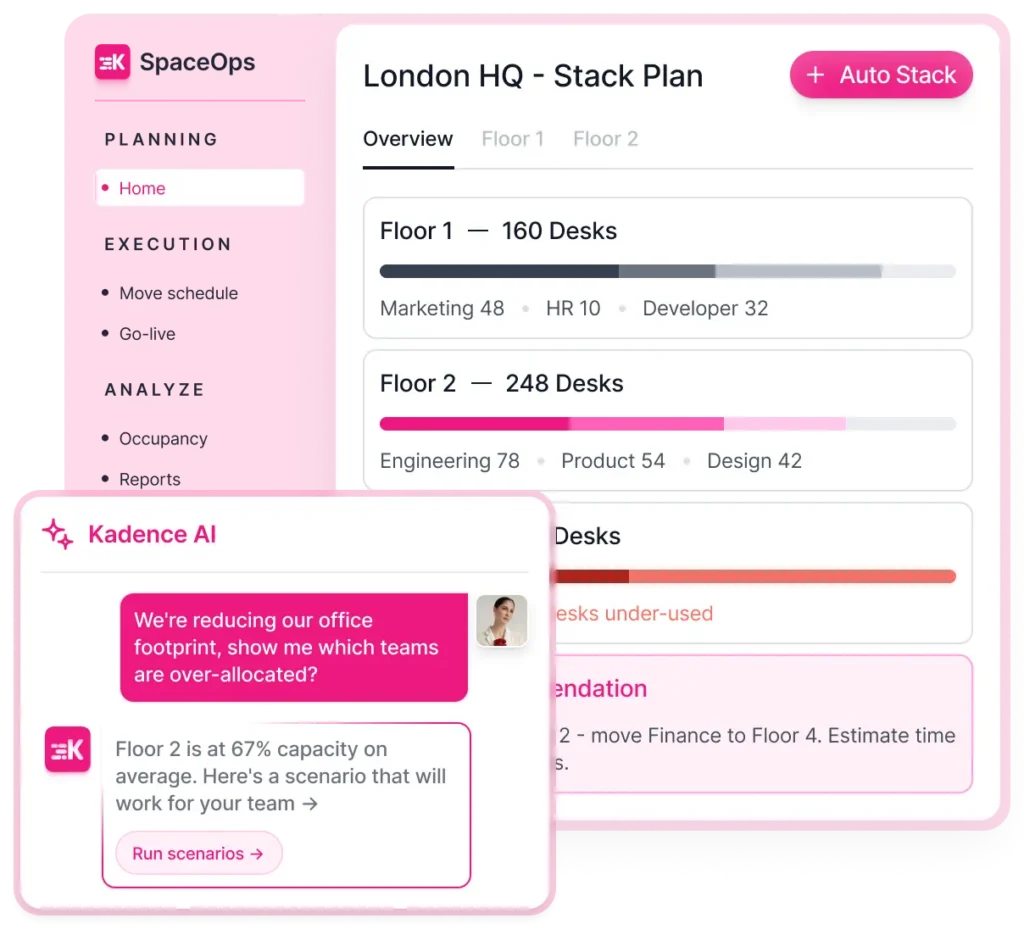
Make it concrete. Picture an enterprise with three floors in one building, on a lease coming up for renewal, currently configured the way it was configured in 2019.
The default path is a rubber stamp. The renewal lands on someone’s desk, and it gets signed for a similar footprint, maybe trimmed by 10% because that feels prudent, because that is what we have always had. Meanwhile the attendance data three tabs over shows the third floor has not broken 40% occupancy in a year.
The data-driven path starts from the demand signal instead of the footprint. First, establish real peak demand, not the headcount, but how many people are actually in on the busiest day, by team. Then model the options against that peak. Renew all three floors. Consolidate into two and hand one back. Consolidate into two but redraw the neighborhoods so the teams that need to overlap actually can. Each of those scenarios carries a cost, a capacity headroom, and a disruption cost, and you can put them side by side before you commit to anything. You pick the configuration that holds your real peak with sensible margin, and you stop paying for the floors that only ever held a rounding error of attendance.
That is the whole difference. The default path optimizes for looking reasonable. The data-driven path optimizes for what the organization actually needs, and in a repriced market it is usually a materially smaller and cheaper answer.
Every Lease Event for the Next Three Years Is a Portfolio Decision
The reason this matters now rather than eventually is that 49% figure. Roughly half of the pre-pandemic lease stock has not rolled yet, which means the decisions are coming, in a wave, over the next three years. Every one of them is a portfolio decision made under uncertainty, and every one of them is a chance to either compound an advantage or lock in a mistake for the length of a new term.
The companies that come out of this cycle ahead will not be the ones with the best broker relationships. They will be the ones who walked into each renewal already knowing what their own demand required, and who could defend the decision with data rather than instinct. That capability is not something you assemble the week the lease expires. It is something you build now, so the demand signal is already captured and already modeled when the decision arrives.
The Engine Built for This Decision
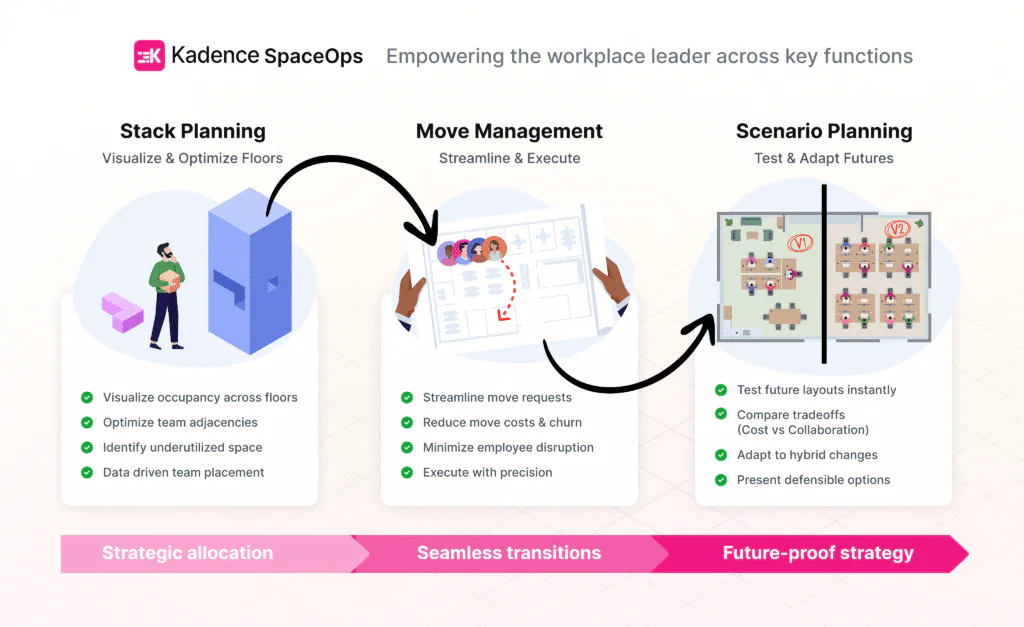
This is precisely what SpaceOps exists to do. It takes your own demand signal, captured in the flow of employees coordinating their week and measured through Kadence Sense rather than a survey, and turns it into portfolio scenarios you can compare and defend before a single lease is signed. Consolidation, team adjacency, hand-back, renewal, each modeled against your actual peak demand, with the cost and capacity trade-offs made visible. It runs on constraint-based optimization, not a generic language model guessing at your floor plan, which is what lets you take the output into a boardroom and stand behind it.
The market repriced your real estate for you. The one thing it cannot do is make the lease decision for you. If you want to see what right-sizing to your true demand is worth across your portfolio, run the numbers through the Kadence ROI calculator, and when you are staring down a renewal and want to see the scenarios before you sign, book a demo with our workplace operations team.