Ask a university what its space utilization is and you will usually get a single figure. Ask what that figure is made of and the answer becomes much less stable, because in a university more than in almost any other kind of organization, a utilization number is an average taken across spaces that behave in completely different ways, measured by systems built for different purposes, at a point in the year that changes everything.
This is not a data quality problem in the ordinary sense. It is a consequence of how universities are structured, and it is why estates teams so often find that a number they trust internally falls apart the moment a faculty disputes it.
Four Things That Make A University Estate Different
Space Is Held By Departments, Not Centrally
In most organizations the property function controls the estate. In a university, faculties and departments hold space, defend it, and treat it as an asset attached to their standing. An estates team has influence, a space charging model if it is lucky, and very little direct authority. That changes what data is for. It is there to make an argument a head of department will accept, rather than to support a decision estates can take on its own.
Academic Space Is Already Governed By A Separate System
Timetabling software owns teaching space and has done for years. That system knows what was scheduled, which is genuinely useful, but scheduled is not the same as attended. A 200-seat lecture theater booked for a module with 60 enrolled students and 35 typically present is fully utilized in the timetable and two thirds empty in reality. Most universities have no continuous record of the difference, and that gap is where most of the recoverable space sits.
Term Dates Dominate Everything
A figure from week four of term and a figure from week two of the vacation describe the same buildings and have almost nothing in common. Add exam periods, reading weeks, graduation and clearing, and annual variation swamps the differences between buildings that a space plan is trying to identify. Any utilization figure without a date attached to it is close to meaningless, and a figure averaged across the whole year is worse, because it hides both the peak the estate has to be sized for and the troughs where capacity is genuinely idle.
The Estate Is Not One Estate
Teaching space, research space and professional services space have different economics, different users and different measurement requirements. A wet lab that appears lightly occupied may be running experiments that make the space unavailable regardless of headcount, while a professional services floor that appears lightly occupied is a different matter entirely. Averaging across the three produces a number that describes nothing in particular.

What To Measure Instead
The practical answer is to stop asking what the utilization figure is and start asking three narrower questions: how often is this space occupied, by whom, and on which days. That requires continuous presence data rather than periodic survey data, measured at a level granular enough to separate teams and buildings, and held long enough to cover a full academic cycle so that any comparison is like for like.
It also requires separating what was booked from what was attended, because the difference between the two is the finding rather than an error to be cleaned up. Done properly, this produces something more useful than a portfolio-level number. It gives an estates team a picture of where demand genuinely concentrates, which is the basis for both consolidation arguments and growth arguments, and it is the point at which workplace occupancy data starts supporting capital decisions rather than describing them after the fact.
What This Looks Like In Practice
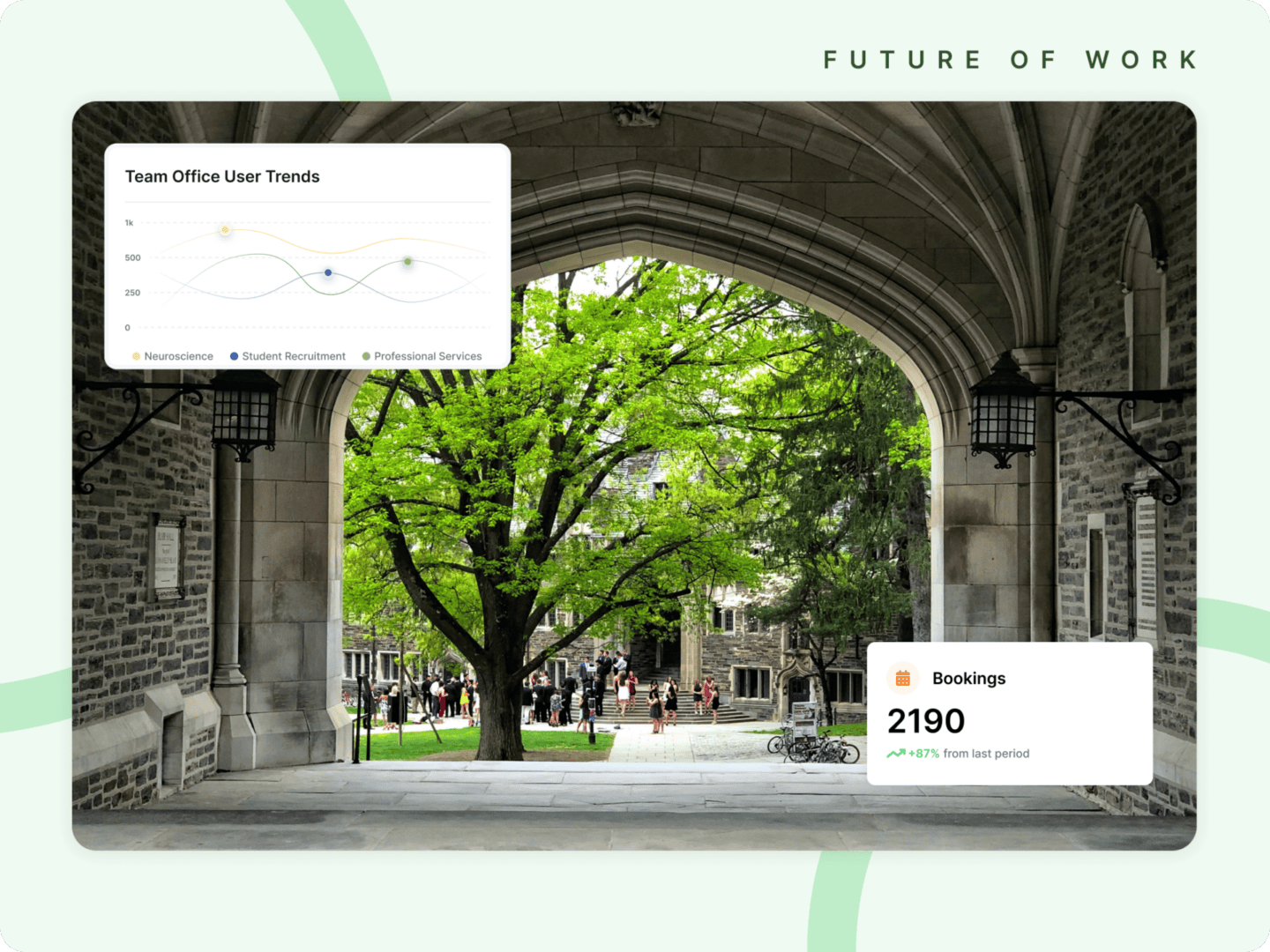
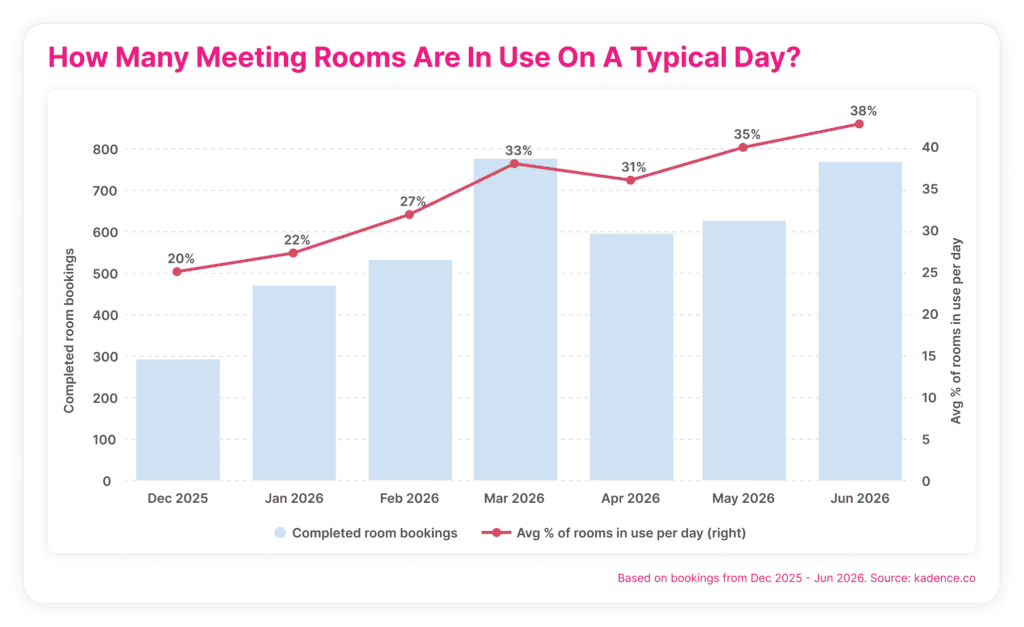
The University of Exeter now runs continuous occupancy data across 14 buildings on its Exeter and Cornwall sites, covering more than 400 staff. The figures that came out of it are worth looking at less for their size than for what kind of figures they are. Collaborative team days rose from 418 to 1,900 per month, and average meeting room use nearly doubled from 20% to 38% per day.
Neither of those is a space reduction. Both describe the same estate being used more intensively, which is the outcome most universities actually need, since very few are in a position to dispose of buildings and most are under pressure to accommodate growth without capital spend. The clearest example was a 120-person computer lab created out of space the university already held, identified because the data showed where space was sitting idle and where teams were colliding with each other rather than because anyone set out to find a lab.
That is the departmental ownership problem being solved by evidence rather than by escalation. The same data supported smaller operational changes that matter more than they appear to. Private offices that sat empty for parts of the week were made available as meeting rooms, and teams were separated across different anchor days so that Monday and Tuesday attendance did not collide with Wednesday and Thursday attendance in the same space. Neither decision requires capital, and neither is possible without knowing what happens day by day.
The Argument This Changes
Most university space conversations stall in the same place. Estates believes a department is holding more space than it uses, the department believes estates does not understand how that space is used, and neither side has evidence the other accepts. Timetable data does not settle it, because the department can reasonably say the timetable does not capture research activity or informal use. Survey data does not settle it either, because the department can reasonably ask why a fortnight in November should determine anything.
Continuous presence data settles it, or at least moves the conversation onto ground where a decision is possible. That is the real value of it in a sector where the estates function has to persuade rather than instruct. If your institution is planning a space review, a new building business case, or a consolidation of professional services accommodation, the question worth asking first is not what the utilization figure is. It is whether the data behind it would survive being shown to the department it affects.
To see how that evidence is built across a university estate, book a demo with our workplace operations experts.