Managing a modern workplace has become significantly more complex. Organizations are operating across multiple locations with hybrid teams, rising real estate costs, and pressure to make better decisions about how space is used. A workplace management system is the operational infrastructure that makes that possible.
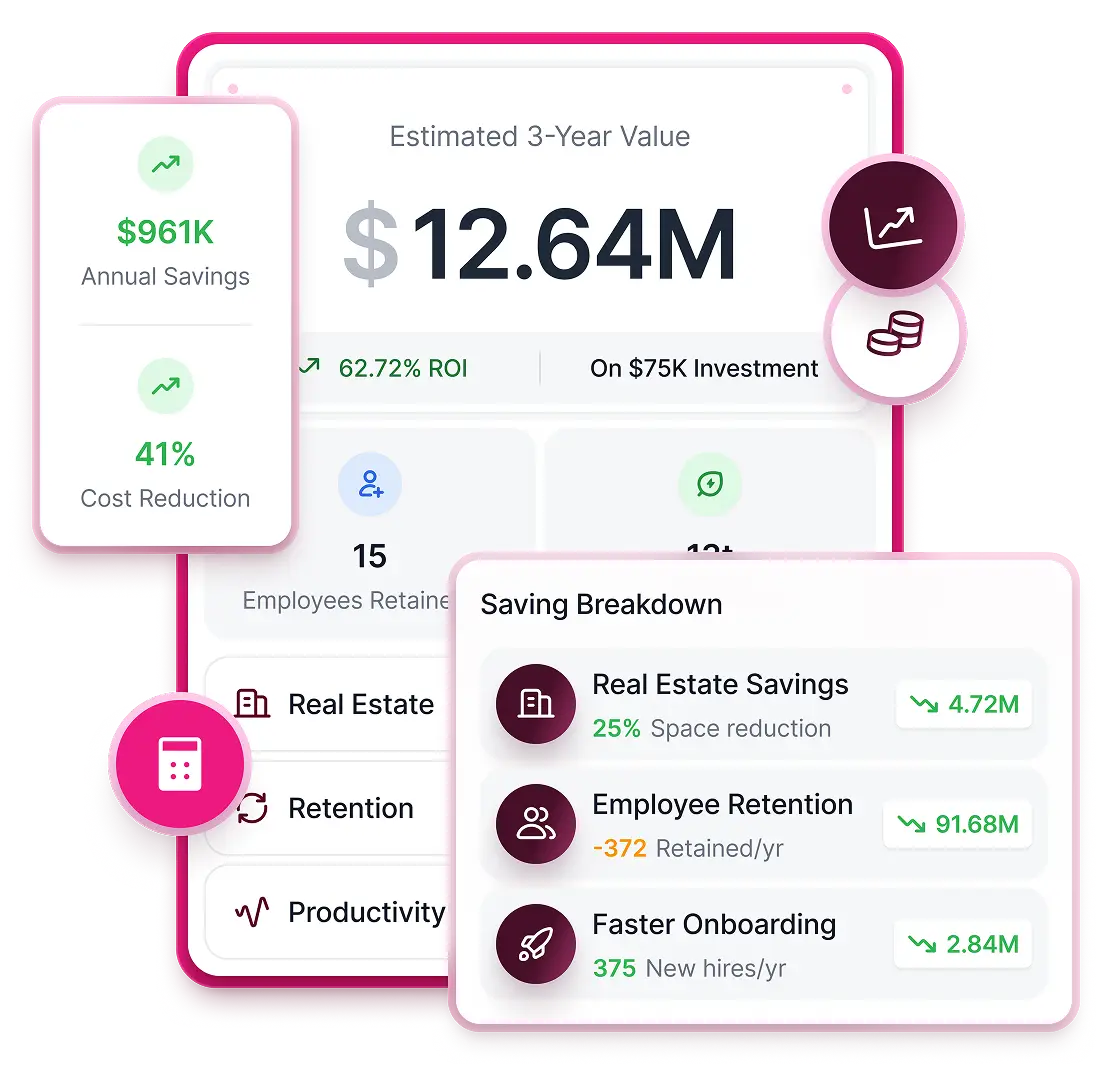
Calculate the ROI of Your Workplace Operations
Our brand-new ROI Calculator is here to help you visualize your success in seconds.

What Are the Challenges of Managing Modern Workplaces?
The most common challenge organizations face is a gap between how office space is planned and how it is actually used. According to JLL’s 2026 Global Occupancy Planning Benchmark Report, global office utilization sits at 56% against an organizational target of 74%, a persistent gap that reflects how difficult it is to align space supply with actual workforce demand without reliable data.
Fragmented tools across departments compound the problem. When facilities, HR, IT, and finance are each working from different systems, there is no shared view of how the workplace is performing. Decisions get made on outdated information or incomplete data, and the cost of getting it wrong compounds over time in underused floors, over-committed leases, and employees who find the office harder to navigate than it should be. A workplace management system addresses this by connecting those functions into a single operational picture.
What Is a Workplace Management System?
A workplace management system is a software platform that centralizes the management of physical space, facilities, and employee activity, giving organizations a unified view of how their workplace is performing.
Modern workplace management systems go beyond basic scheduling and booking. They give real estate, operations, HR, and leadership teams shared visibility into how space is being used, who is coming into the office and when, and where there is alignment or friction between supply and demand. For organizations managing hybrid workforces across multiple locations, a workplace management system is the foundational tool for making decisions that are grounded in data rather than assumption.
What's the Difference Between Traditional Workplace Management Systems and IWMS?
Traditional workplace management systems handle individual functions in isolation, such as desk booking or maintenance tracking, while an Integrated Workplace Management System (IWMS) connects multiple functions including real estate, facilities, space planning, and operations into a single platform that shares data across all of them.
Traditional systems are simpler to deploy and sufficient for organizations with straightforward needs. An IWMS requires more upfront configuration but provides a more connected view of the workplace, which becomes increasingly valuable as organizational complexity grows. For organizations managing large portfolios or making significant real estate decisions, the integrated approach tends to produce better outcomes. For a deeper look at how the two compare, read IWMS vs Traditional Workplace Management Systems.
What Are the Benefits and ROI of Workplace Management Systems?
The primary benefits of a workplace management system are reduced real estate costs, better space utilization, and more informed decision-making across the organization. These outcomes are directly connected: better data leads to more efficient space, and more efficient space leads to lower costs.
Reducing Real Estate and Operational Costs
A workplace management system provides the occupancy data organizations need to identify underutilized space and reduce it with confidence. Research shows that more than a quarter of companies currently report their office space is underutilized, yet many lack the consistent data to act on it. Aligning real estate supply with actual demand lowers cost per employee and frees up capital tied to space that is not earning its footprint.
Improving Space Utilization
By tracking how desks, meeting rooms, and collaborative areas are actually being used, a workspace management solution gives facilities teams the insight they need to configure space around real behavior rather than legacy assumptions. This reduces waste and improves the quality of the office environment.
Enhancing Employee Experience
When employees can reliably find space, coordinate with colleagues, and trust that the office is organized around their actual needs, the experience improves. A space management system removes the friction that makes hybrid office days feel disorganized or unpredictable.
Better Team Coordination
Workplace management systems help teams align schedules, share visibility into who is coming in and when, and plan around shared space needs. This reduces the coordination overhead that makes hybrid work feel chaotic at scale.
Supporting ESG Goals
Better space utilization means lower energy consumption, reduced carbon footprint, and more efficient use of physical resources. Organizations that right-size their portfolios using office space management software often see measurable improvements in sustainability metrics alongside financial ones.
How Enterprise Organizations Use Workplace Management Systems
Enterprise organizations use workplace management systems to centralize data across real estate, facilities, and people, enabling different functions to make better decisions from a shared operational picture.
Real estate teams rely on occupancy data to model consolidation and lease decisions. Operations teams use it to coordinate space and manage demand. HR draws on attendance patterns to understand how hybrid policies are working in practice. Leadership uses the aggregate view to align workplace strategy with broader organizational goals. For a deeper look at how enterprise organizations apply these systems across each function, read How Enterprise Organizations Use Workplace Management Systems.
What Are the Key Capabilities of a Modern Workplace Management System?
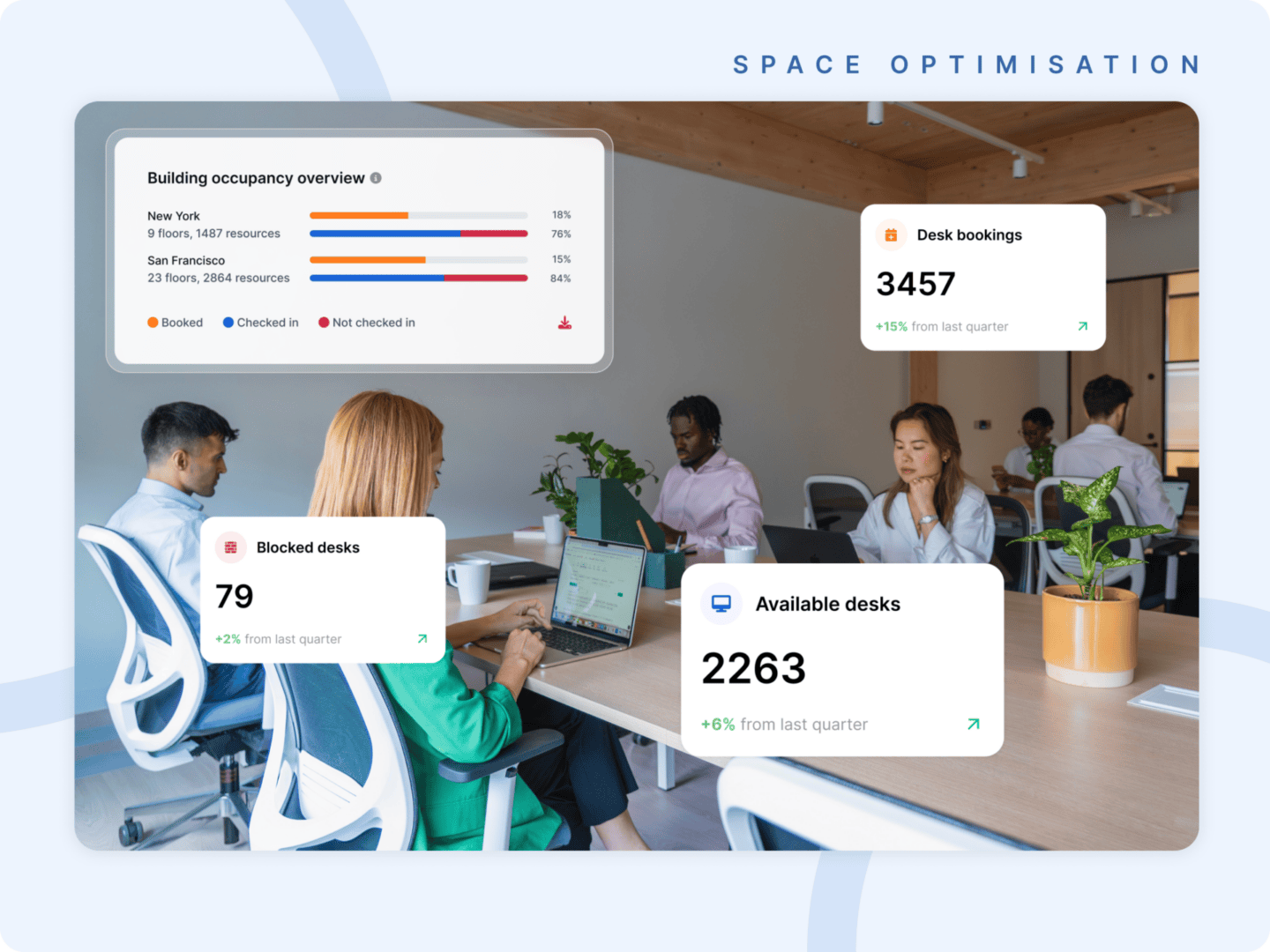
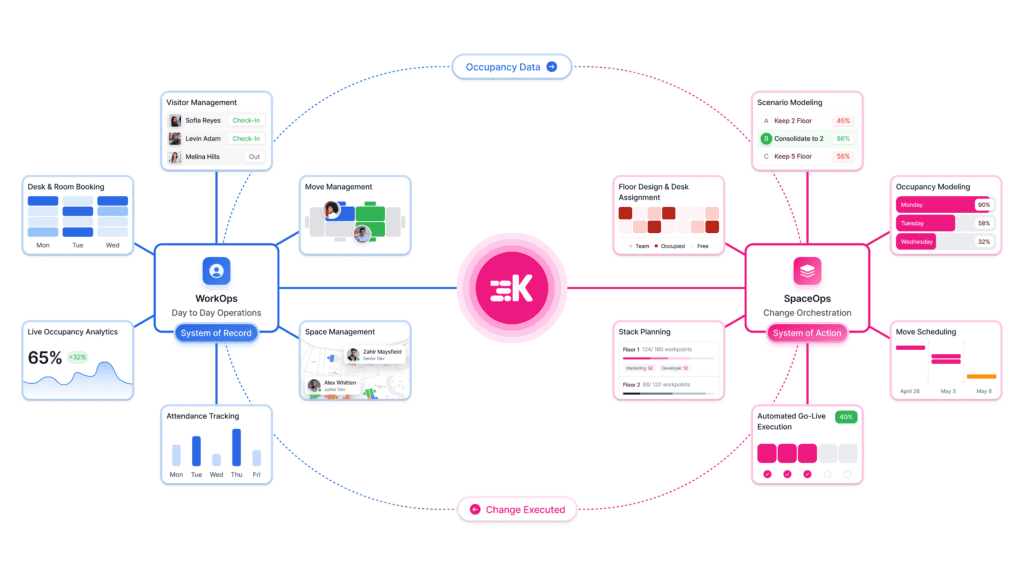
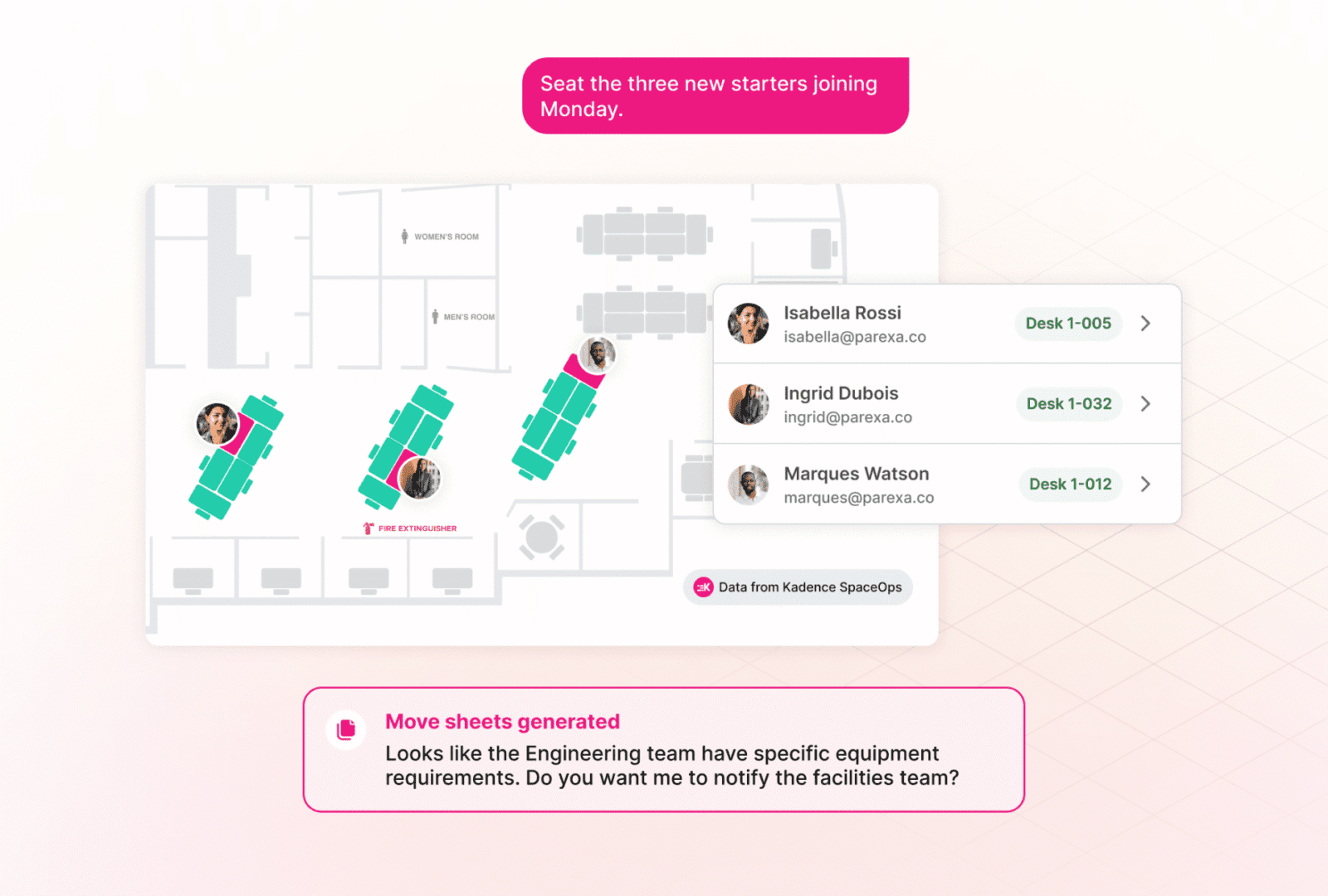
A modern workplace management system typically includes tools for space reservation, occupancy monitoring, visitor management, and analytics, all connected within a single platform to give organizations a complete view of how their workplace is performing.
Desk Booking Software
Desk booking software allows employees to reserve individual workspaces in advance or on the day, giving organizations real-time visibility into how desks across their portfolio are being used.
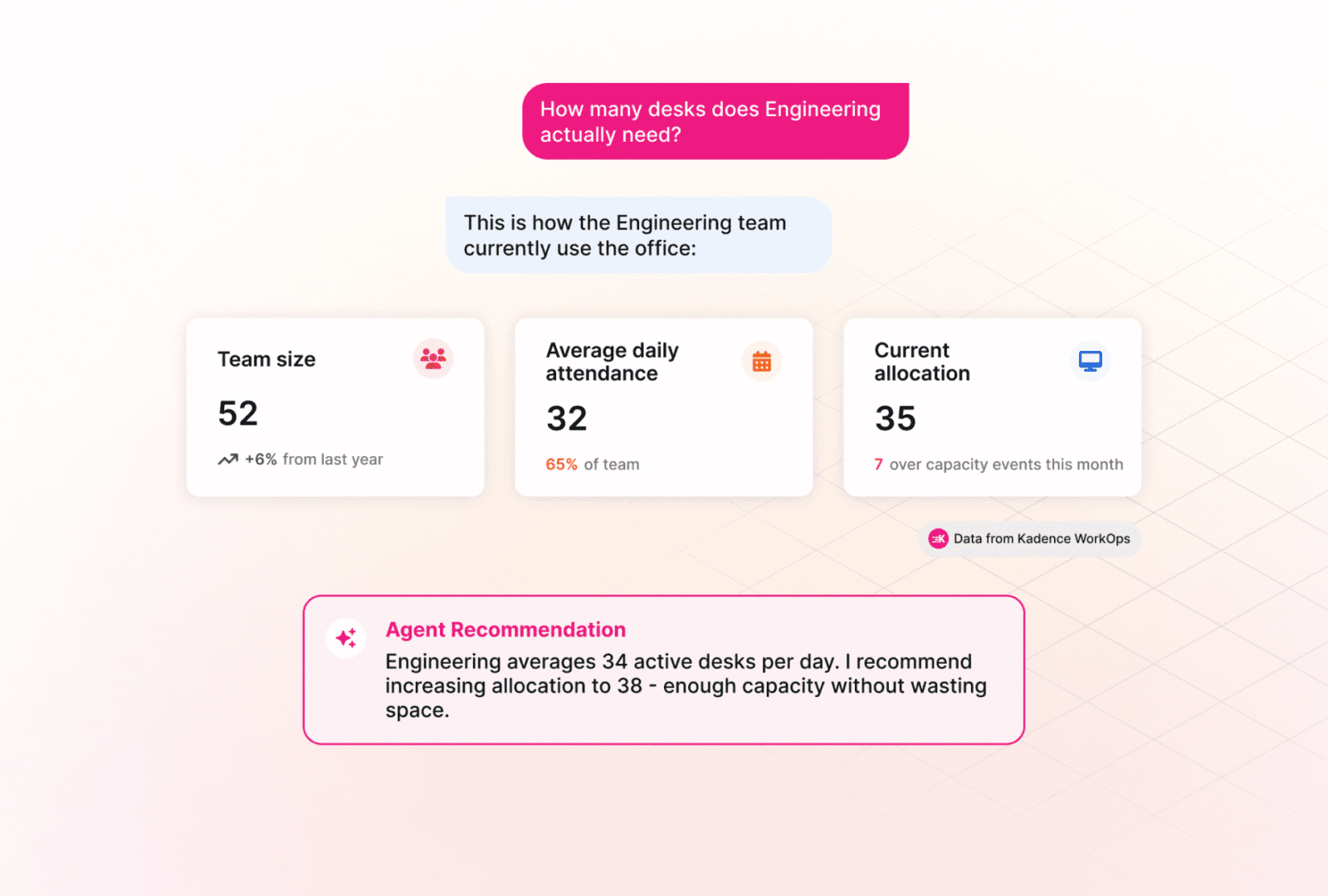
It is not simply a reservation tool. The data generated by desk booking activity is a primary input for space utilization analysis and longer-term capacity planning, helping organizations understand demand patterns and configure their space accordingly.
Room Booking Software
Room booking software manages the scheduling of meeting rooms and collaborative spaces, preventing double booking and capturing data on how rooms are used relative to their stated capacity.
Organizations use this data to identify consistently underperforming rooms and make decisions about reconfiguration or repurposing. In hybrid environments where demand for meeting space fluctuates throughout the week, this visibility is particularly important.
Visitor Management
A visitor management system handles the registration, check-in, and access management of guests and contractors, providing visibility into building traffic beyond the organization’s own employee base.
This data supports both security and capacity planning, and contributes to a more complete picture of total building occupancy across the portfolio.
Workplace Analytics and Data
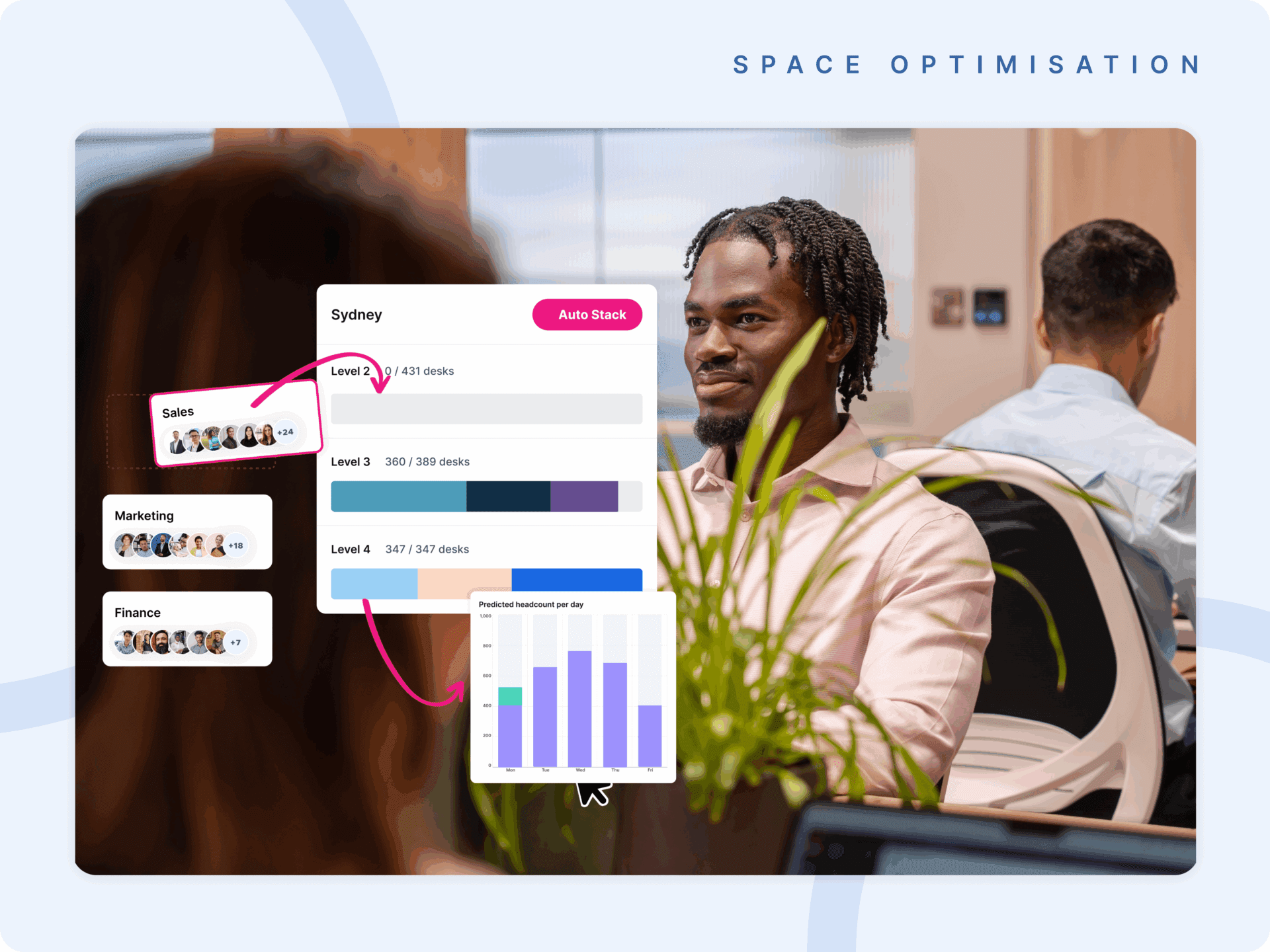
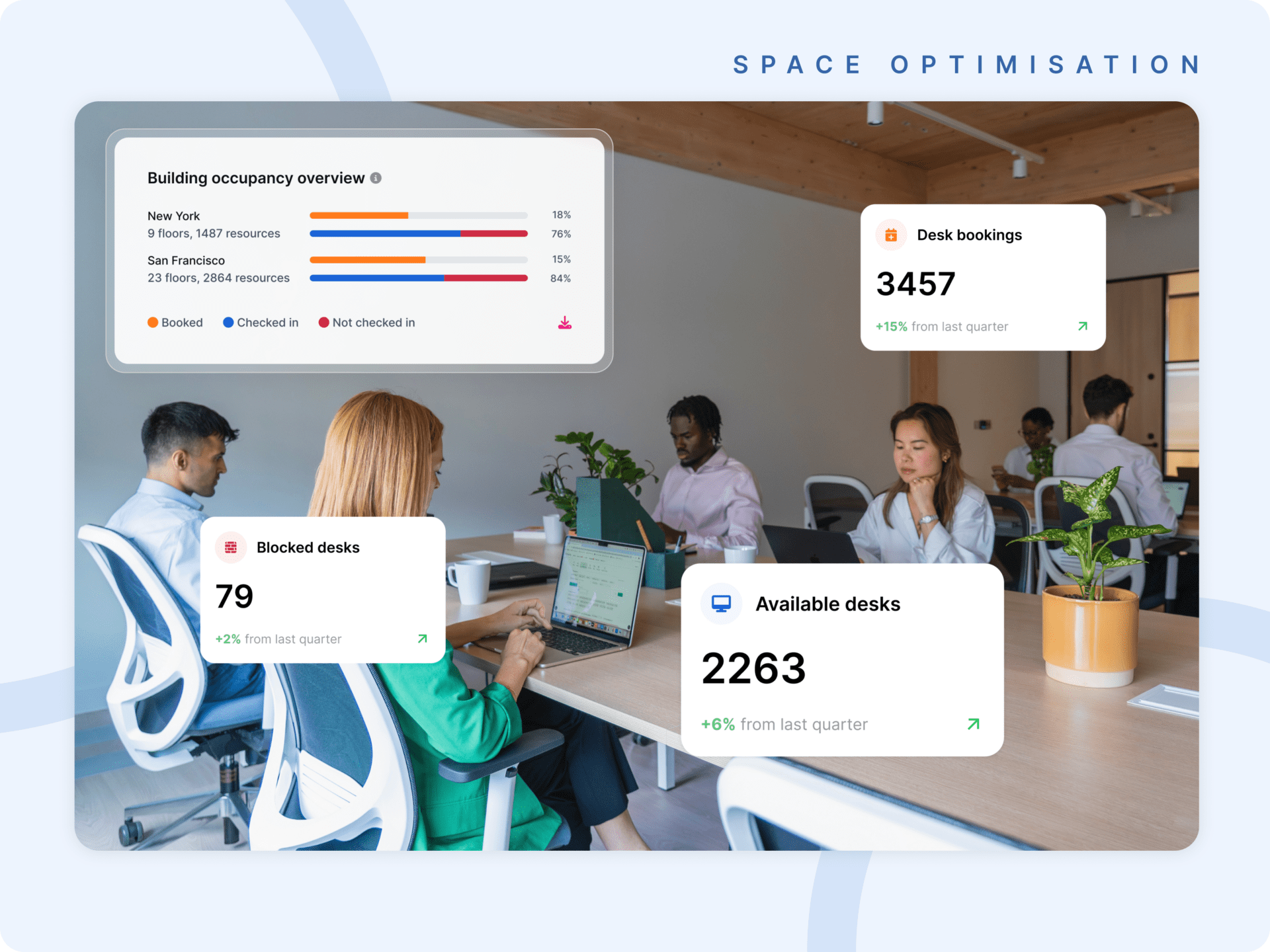
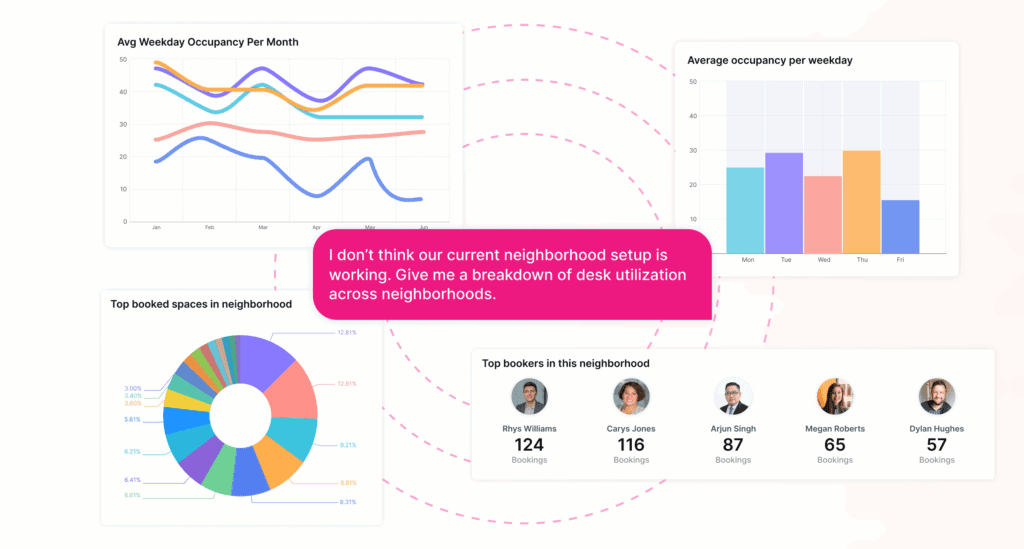
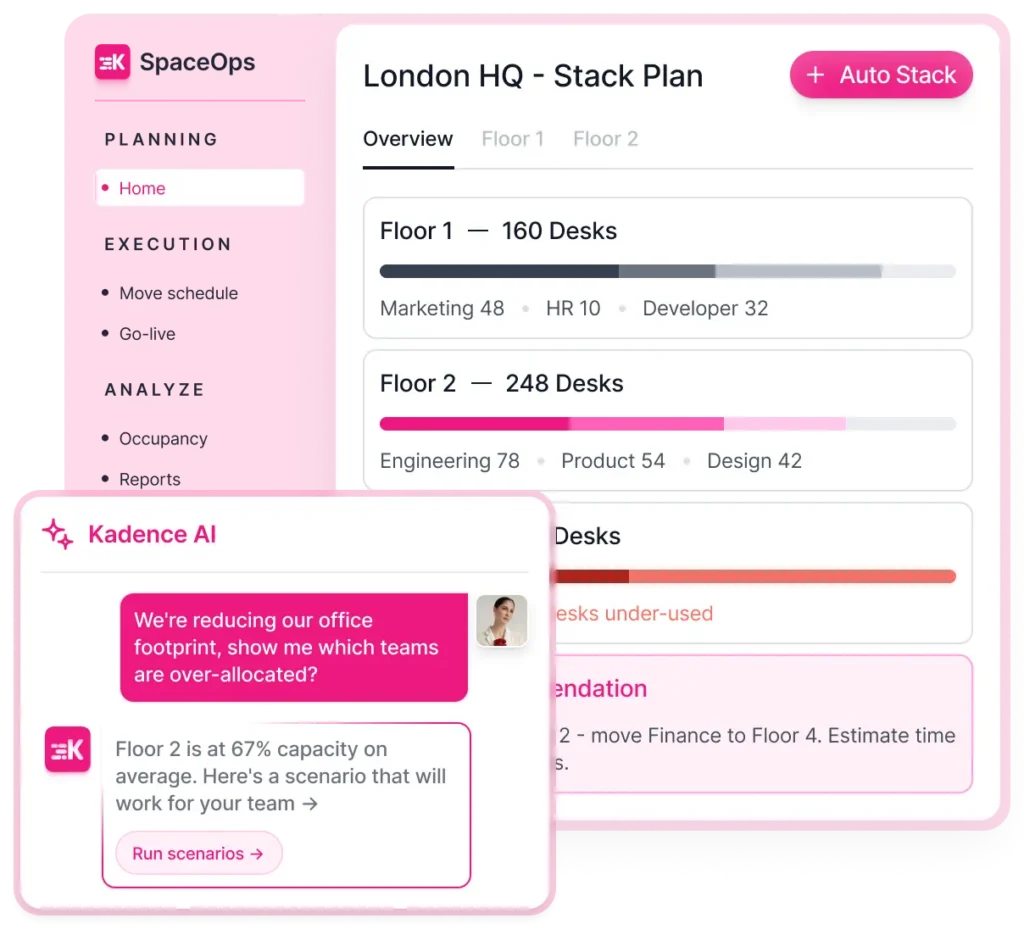
Workplace analytics aggregate data from booking, attendance, and occupancy systems into a centralized view that leaders can use to track utilization trends, evaluate hybrid policy compliance, forecast demand, and model different space scenarios.
The distinction between useful and actionable analytics is important. The most effective workplace management systems surface data in a way that directly supports decisions, rather than simply reporting what has already happened.
How to Choose a Workplace Management System
Choosing the right workplace management system means evaluating platforms against the specific outcomes the organization needs, not a generic feature checklist. Key considerations include scalability across locations, integration with existing HR and IT infrastructure, data quality and actionability, and ease of adoption across different user groups.
For organizations managing significant real estate investments or complex hybrid policies, the ability to model scenarios and forecast demand is particularly important. For a full guide to the evaluation process, read How to Choose the Right Workplace Management System.
How to Implement a Workplace Management System
Successful workplace management implementation depends on clear objectives defined before rollout begins, a phased deployment that allows for testing and iteration, and genuine investment in adoption across all the teams that will use the system. Poor data quality and stakeholder misalignment are the most common reasons implementations underperform.
For a step-by-step guide covering data migration, integration planning, and change management, read How to Implement a Workplace Management System.
The Future of Workplace Management: What's Changing in 2026 and Beyond
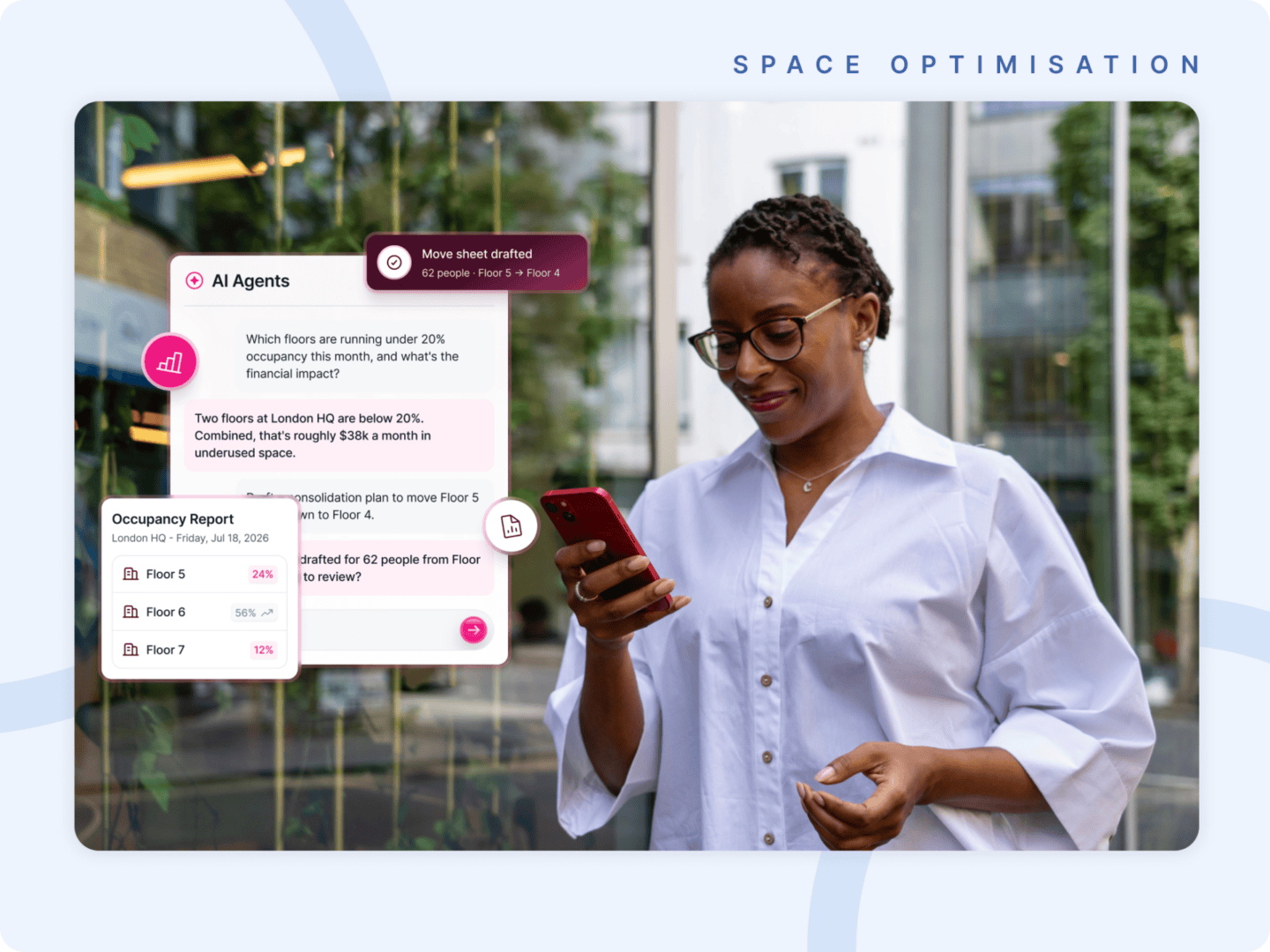
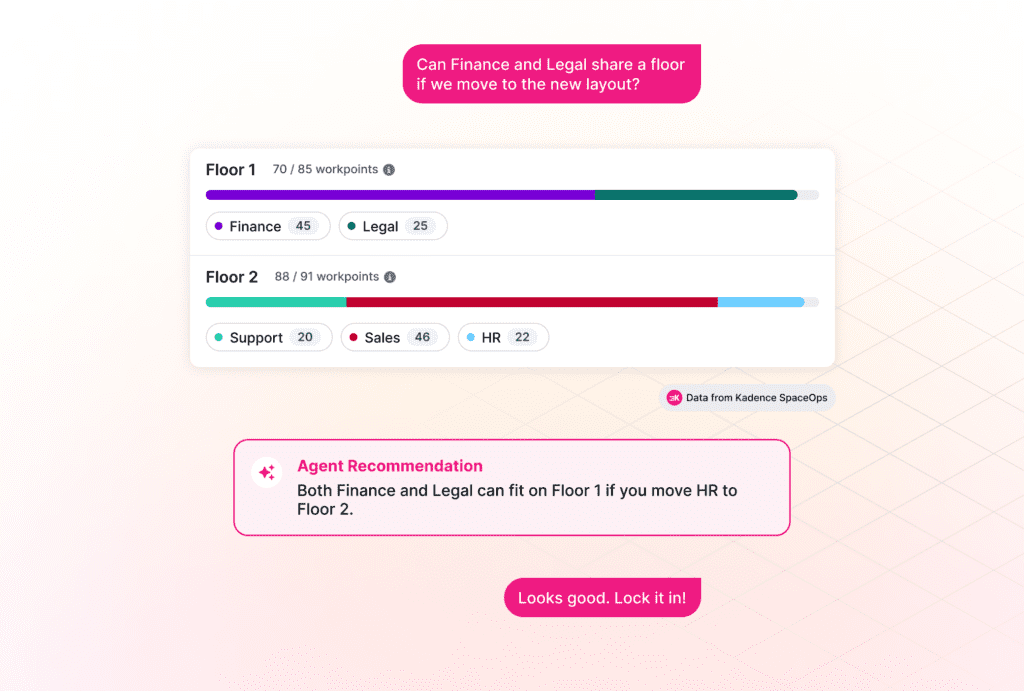
The most significant shift in workplace management in 2026 is the move from periodic reporting to continuous operational intelligence. Organizations are no longer reviewing utilization data quarterly. They are using it in real time to make decisions about space, headcount, and real estate that previously took months to resolve.
AI-driven scenario planning, predictive occupancy forecasting, and portfolio-level optimization are moving from early adoption to standard practice among enterprise organizations. The workplace is increasingly being treated as an operational discipline rather than a facilities function, and the tools that support it are evolving to match that ambition. For a forward-looking perspective on how enterprises are approaching workplace strategy, read The Enterprise Workplace Playbook for 2026.
How Kadence Supports Modern Workplace Management
Kadence is a Workplace Operating System built for enterprise organizations that need to move beyond basic scheduling and into portfolio-level intelligence. From desk booking and room booking through to workplace analytics and scenario planning, Kadence connects the operational data organizations need to make confident decisions about space, people, and real estate.
Book a demo with our workplace operations experts to see how Kadence can support your organization’s workplace strategy. Not ready to speak with the team yet? Use our ROI Calculator to model the financial impact of better workplace management across your portfolio.
FAQs
What does a workplace management system do? A workplace management system centralizes the management of physical space, facilities, and employee activity into a single platform, giving organizations the data they need to optimize space, coordinate people, and make better decisions about real estate.
What is the difference between a workplace management system and office management software? Office management software typically handles administrative tasks for a single location, while a workplace management system provides operational data and coordination tools across an organization’s full portfolio of spaces.
How do workplace management systems improve efficiency? By replacing fragmented, manual processes with integrated data and automation, they reduce coordination overhead, surface underutilized space, and give teams a shared view of how the workplace is performing.
What features should a workplace management system include? Core features include desk and room booking, visitor management, occupancy monitoring, and workplace analytics. The most important factor is whether those features produce actionable data that supports real decisions.
How do you know when your organization needs a workplace management system? If your organization is managing multiple locations, operating a hybrid workforce, or making significant real estate decisions without reliable occupancy data, a workplace management system is likely overdue.