
An IWMS, or Integrated Workplace Management System, is software that brings real estate, facilities, space, assets and workplace operations into a single platform. Instead of separate tools that each hold part of the picture, an IWMS connects people, space, assets and processes so the data flows between them and gives one source of truth for the workplace.
A traditional workplace management system does something narrower. It handles one or two functions, such as desk booking or maintenance requests, on their own. The difference matters most for organizations with several locations, hybrid policies or significant real estate costs, where decisions depend on seeing the whole portfolio at once.
What is an IWMS?
An IWMS is software that centralizes the management of real estate, facilities, space, assets and workplace operations in one system. It connects people, space, assets and processes so leaders can see how the workplace performs as a whole. In a hybrid workplace it also supports employee experience, collaboration and data-driven decisions, not only facilities tasks.
The glossary has a short definition of an integrated workplace management system. The rest of this page compares an IWMS with traditional tools and explains when each fits.
What are the core functions of an IWMS?
An IWMS lets an organization manage several parts of workplace operations from one platform. Rather than separate tools for facilities, real estate, space planning and maintenance, it brings them together so data does not sit in silos. That gives workplace and operations leaders a complete picture and makes it easier to act on what the data shows.
Key functions include:
- Space and occupancy management: track which desks, meeting rooms and collaboration areas are used most and least.
- Real estate and lease management: manage leases, costs and long-term planning across locations.
- Maintenance and facilities tracking: monitor ongoing maintenance and make sure facilities run efficiently.
- Asset management: keep track of equipment and technology, and optimize its lifecycle and use.
- Sustainability reporting: track energy consumption and environmental impact.
With data across these areas, managers can track key measures such as space utilization, employee engagement and collaboration patterns, and turn raw data into decisions.
What are the benefits of an IWMS?
An IWMS helps organizations reduce operational costs, use space more efficiently and make better decisions, because it centralizes data on real estate, facilities and people in a single system. The benefits grow with scale: the more locations an organization runs, the more a shared view of space and cost is worth.
For enterprise organizations, a company managing dozens of locations can use an IWMS to:
- Identify underutilized floors across its portfolio.
- Model consolidation scenarios before committing to lease decisions.
- Keep maintenance and compliance standards consistent across every site.
HR and operations teams gain shared visibility into how space is actually used, which reduces the guesswork behind costly over-provisioning. Smaller organizations benefit too. They can use the same data foundation to plan as they grow, without rebuilding their systems later.
How has IWMS evolved?
IWMS began in the 1990s as software for real estate and facilities management. Early systems tracked leases, maintenance and space assignments, often in isolation from wider workplace strategy. They provided valuable data but were often slow, siloed and reactive. Hybrid work exposed those limits and pushed platforms toward real-time, people-centered data.
IBM and Archibus were among the pioneers of these early systems. As workplaces became more flexible, hybrid and data-driven, companies needed systems that could provide real-time insights, integrate multiple data sources and support the human side of work. Modern platforms such as Kadence grew out of that need, blending operational efficiency with employee experience.
What is the difference between an IWMS and a traditional workplace management system?
A traditional workplace management system handles individual functions, such as desk booking or maintenance requests, in isolation. An IWMS integrates those functions into one platform that shares data across real estate, facilities, space and operations. The first is simpler to deploy; the second gives a connected view of how the workplace performs.
| Traditional workplace management system | IWMS | |
|---|---|---|
| Scope | One or two functions, such as desk booking or maintenance | Real estate, facilities, space, assets and operations together |
| Data | Separate tools create data silos | Data is shared across functions |
| Deployment | Simpler to deploy | More upfront investment in configuration and change management |
| Best fit | Organizations with straightforward needs | Multiple locations, hybrid policies or significant real estate costs |
Traditional systems are often adequate for straightforward needs, but their data silos limit strategic decisions as an organization grows. An IWMS takes more upfront work, and the payoff is a connected view. For organizations with multiple locations, hybrid policies or significant real estate costs, that view tends to be worth the trade-off: decisions about space, headcount and cost are easier to justify when they rest on unified data rather than fragmented reports. For a broader overview, read what a workplace management system is.
Why does an IWMS matter for the modern workplace?
An IWMS matters because modern workplaces create more operational complexity than traditional tools were built to handle. Getting it wrong is expensive: wasted space, poor coordination and uninformed real estate decisions. An IWMS gives leaders the visibility to plan deliberately instead of reacting after the fact.
Hybrid work has changed how offices are used. Demand is uneven, attendance is harder to predict, and at most organizations the gap between how space is planned and how it is used has widened. By tracking space utilization and occupancy trends, collaboration patterns, hybrid attendance and engagement signals, organizations can see which floors are underused or which team needs more collaborative space, and act with confidence.
For enterprises with large or distributed portfolios, that shift from intuition to evidence is where an IWMS delivers its operational value. It leads to better decisions about office design, capacity and investment.
Where are workplace management systems heading?
The most effective workplace platforms combine operational data with real-time intelligence, so teams make decisions before problems appear. As of May 2026, three trends were shaping IWMS: AI-driven analytics for proactive planning, real estate consolidation guided by behavioral data, and hybrid strategy built directly into how space is designed and managed.
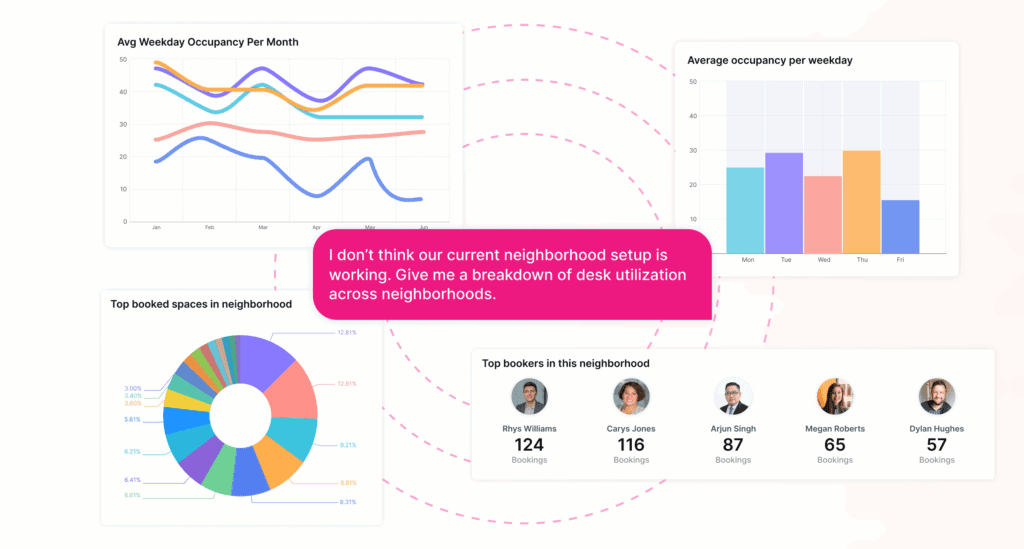
Kadence AI adds a layer of intelligence that helps managers anticipate space and policy problems. Rather than waiting for utilization reports to confirm what already feels broken, organizations can optimize office layouts from actual usage patterns, support hybrid strategies without losing productivity, and monitor engagement and employee experience continuously. Planning work, including scenarios and moves, sits in Kadence SpaceOps.
IWMS is no longer only about facilities management. It is a strategic tool that connects space, people and processes, and the platforms that last will be the ones that turn everyday workplace activity into better decisions. To estimate the financial effect of better workplace operations, try the ROI calculator.
Frequently asked questions
What is an IWMS?
An IWMS, or Integrated Workplace Management System, is software that centralizes the management of real estate, facilities, space, assets and workplace operations in a single platform.
What is the difference between IWMS and workplace management systems?
Traditional workplace management systems typically handle one or two functions in isolation. An IWMS integrates multiple functions, so data is shared across real estate, facilities, space planning and operations.
Are workplace management systems the same as IWMS platforms?
No. Workplace management systems often focus on a specific function, such as desk booking or maintenance tracking. An IWMS is designed to connect and manage all of these functions together.
When should an organization use an IWMS instead of a workplace management system?
Organizations with complex or multi-location portfolios, significant real estate costs, or a need for data shared across functions will typically benefit more from an IWMS than from standalone workplace management tools.
What are the limitations of traditional workplace management platforms?
They tend to create data silos, because each tool operates independently. That makes it harder to see how the workplace is performing as a whole and limits the quality of strategic decisions.