Paul Allsopp’s article on the desk-sharing economy reads beautifully. It captures something real about the emotional experience of modern office life: the fear that as assigned desks disappear, employees are becoming “corporate nomads,” moving through the workplace like temporary visitors rather than people with a place to belong.
But workplace culture has not become nomadic because employees no longer own a desk. It has become harder to hold together because too many organizations removed the old symbols of stability before building the operating model needed to replace them.
The argument is wrong in the place it matters most. It treats the loss of the assigned desk as the loss of belonging. It suggests that the office became less human when it stopped giving people a permanent chair, a drawer, a familiar neighbor, and a small physical claim on the organization.
That version of the office is real in memory. It was never quite real in the data.
Assigned Desks Were Hiding A Bigger Workplace Problem
For decades, the fixed desk gave organizations a comforting illusion of stability. People had a place. Teams had a territory. Leaders could walk the floor and feel that the company had a physical shape.
But a floor full of assigned desks was never the same thing as a workplace that was being used well.
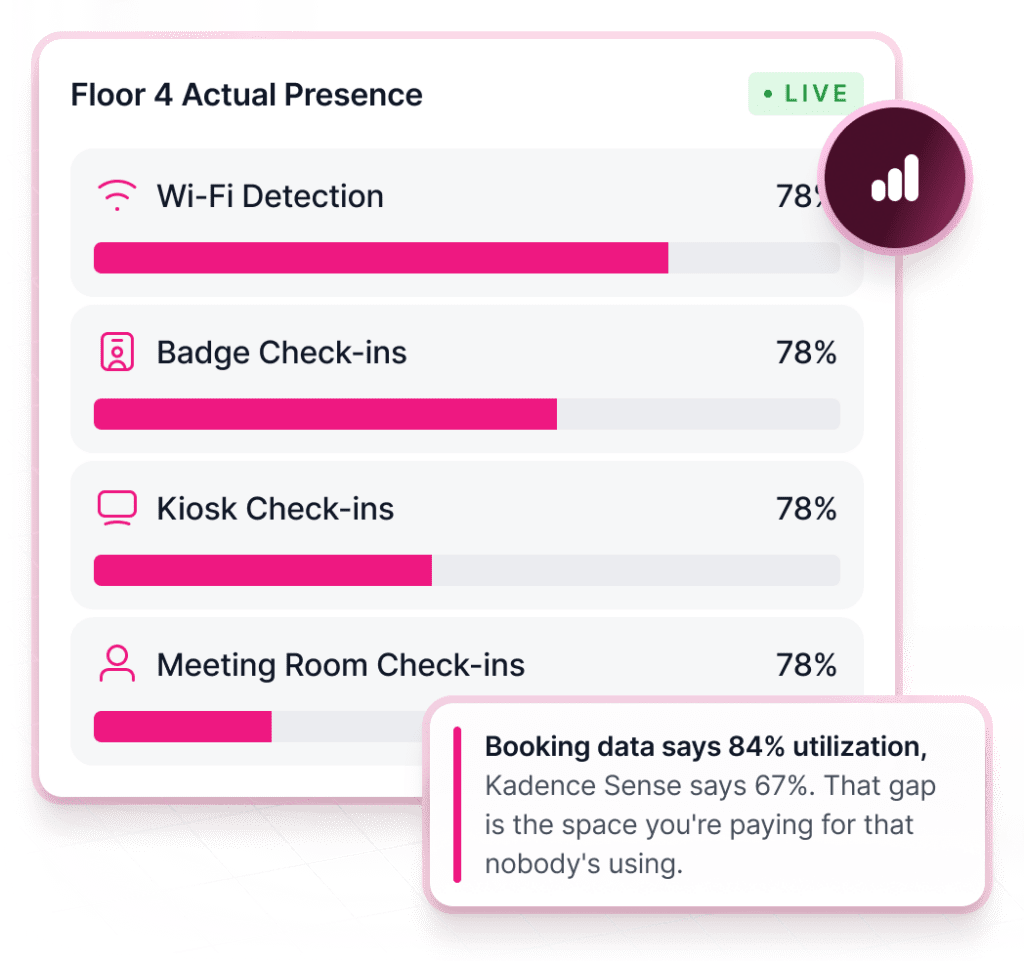
The average corporate desk in the pre-pandemic world was occupied roughly 40% of the time. Even in the most disciplined sectors, peak Tuesday occupancy rarely cleared 65%. Companies were paying $80 to $200 per square foot annually for chairs that sat empty more often than not. The drawer full of family photos was sitting inside a very expensive footprint that few organizations had ever measured honestly.
Those numbers may vary by market, industry, and building, but the underlying point is difficult to dispute. The office looked efficient because the model was familiar. It looked culturally settled because nobody was questioning the cost of permanence. Once the gap became impossible to ignore, the assigned desk stopped looking like a symbol of culture and started looking like an operating cost.
The assigned desk did not become indefensible because employees stopped caring about the office. It became indefensible because organizations could finally see the difference between space they needed, space they used, and space they were simply used to paying for.
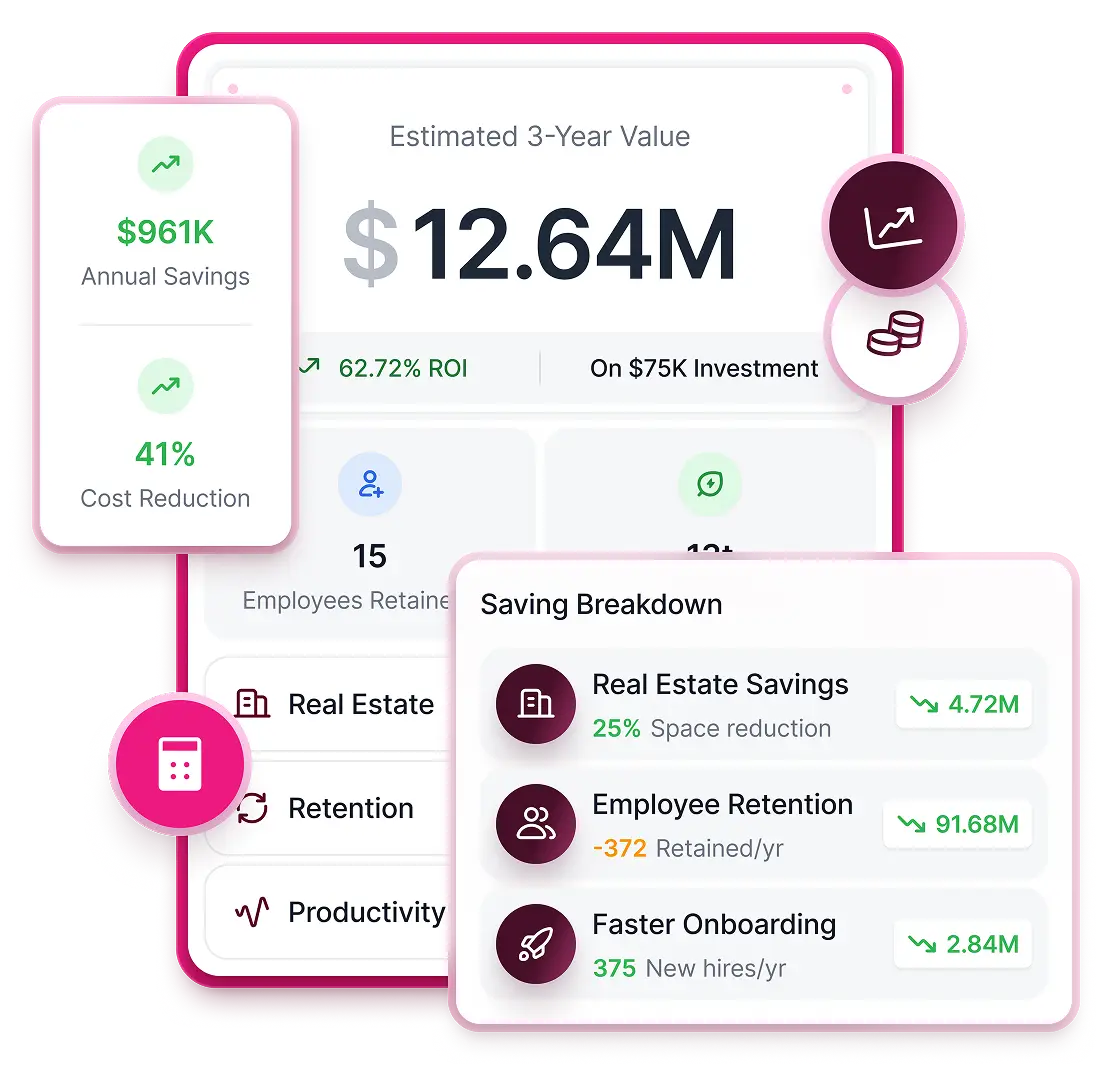
Calculate the ROI of Your Workplace Operations
Our brand-new ROI Calculator is here to help you visualize your success in seconds.

Belonging Is Not Furniture
The strongest part of Paul’s argument is the emotional one. People do need continuity at work. They need familiar relationships, predictable rhythms, team proximity, and a sense that the office has been designed around their needs rather than imposed on them as a cost-saving exercise.
Actually a desk was never the source of that belonging. Belonging came from the manager who was present enough to notice when someone was struggling. It came from the team that built routines together. It came from the new joiner shadowing a senior colleague. It came from the lunch table, the project room, the recurring standup, the informal debrief, and the moments of proximity that made people feel part of something larger than their individual workload.
None of that requires an assigned seat, but all of it requires intent.
That is where many organizations have gone wrong. They removed permanence before they designed a new operating model. They reduced space before they redesigned how teams gather. They introduced booking systems before they clarified why people should come in, who they should come in with, and what kind of work the office should support.
Desk sharing did not cause that failure. It exposed it. The fixed desk had been doing quiet emotional labor for the organization, giving people the feeling that the workplace had structure even when the real sources of culture were leadership, ritual, trust, and shared purpose. Once the desk disappeared, the absence of those deeper structures became much harder to hide.
The Friction Is Real, But The Diagnosis Is Wrong
Poorly managed desk sharing creates exactly the frustrations Paul describes. People waste time finding space. Booking systems become unreliable. Meeting rooms show as available when they are already occupied. Teams arrive on the same day and end up scattered across different floors. New joiners struggle to understand the unwritten rules of the office. Quiet areas become contested. Preferred neighborhoods are quietly reclaimed, because people naturally seek familiarity even when the policy says the space is flexible.
Those are not trivial irritations. They are workplace operations failures.
The mistake is to treat those failures as proof that flexible space cannot work. More often, they are proof that organizations are still trying to run a modern workplace with outdated management habits.
The modern office is no longer a passive container for work. It is a live operating environment where people, space, time, technology, cost, and culture have to be coordinated deliberately. That coordination used to happen through habit. Teams sat together because the seating chart said they did. Leaders knew where people were because people were expected to be in the same place. Space planning happened slowly because the organization itself moved slowly.
That world has changed. The workplace now has to respond to shifting demand, different team rhythms, changing headcount, new policies, real estate pressure, and employee expectations that are far less uniform than they once were.
This is where many organizations are stuck. They have removed the old certainty without replacing it with a better one. Employees do not know who will be in. Leaders do not know whether workplace policies are working. Workplace teams do not have enough visibility into demand. Real estate decisions are still being made from stale assumptions. Facilities teams are reacting to complaints rather than seeing patterns before they become problems.
That is not a desk problem. It is an operating problem.
The Future Office Needs Rootedness Without Waste
The next era of workplace strategy will not be won by recreating the 2016 floor plan. It will also not be won by forcing employees into half-finished hot-desking experiments and calling that flexibility.
The future office has to offer something more mature. Employees may not need to own the same desk every day, but they do need confidence in the experience. They need to know when their team is coming in. They need to find the right kind of space for the work they are doing. They need meeting rooms that are available when they say they are available. They need quiet space, collaboration space, social space, and enough visibility to make the office feel worth the journey.
That is what rootedness looks like in a modern workplace. Not permanence for its own sake, but reliability, visibility, and trust.
The office can be flexible and still feel human, provided flexibility is designed as an experience rather than treated as a space-saving policy. When employees feel like guests in their own workplace, the strategy has failed. When leaders celebrate utilization while employees absorb the friction, the strategy has failed. When the office becomes leaner but harder to use, the business has not modernized the workplace. It has simply made it smaller.
Enterprise leaders, hold on to this distinction: the goal is not to preserve every old symbol of office life. The goal is to preserve the human outcomes those symbols were supposed to support: connection, continuity, trust, mentorship, focus, and belonging.
Assigned desks were one way to create the appearance of those outcomes. It was never the only way, and it was often an expensive substitute for doing the harder work. The desk was never the answer. It was the alibi.
The Workplace Now Has To Be Operated
The lesson from the desk-sharing debate is not that companies should abandon flexible space. It is that flexibility without workplace operations becomes uncertainty.
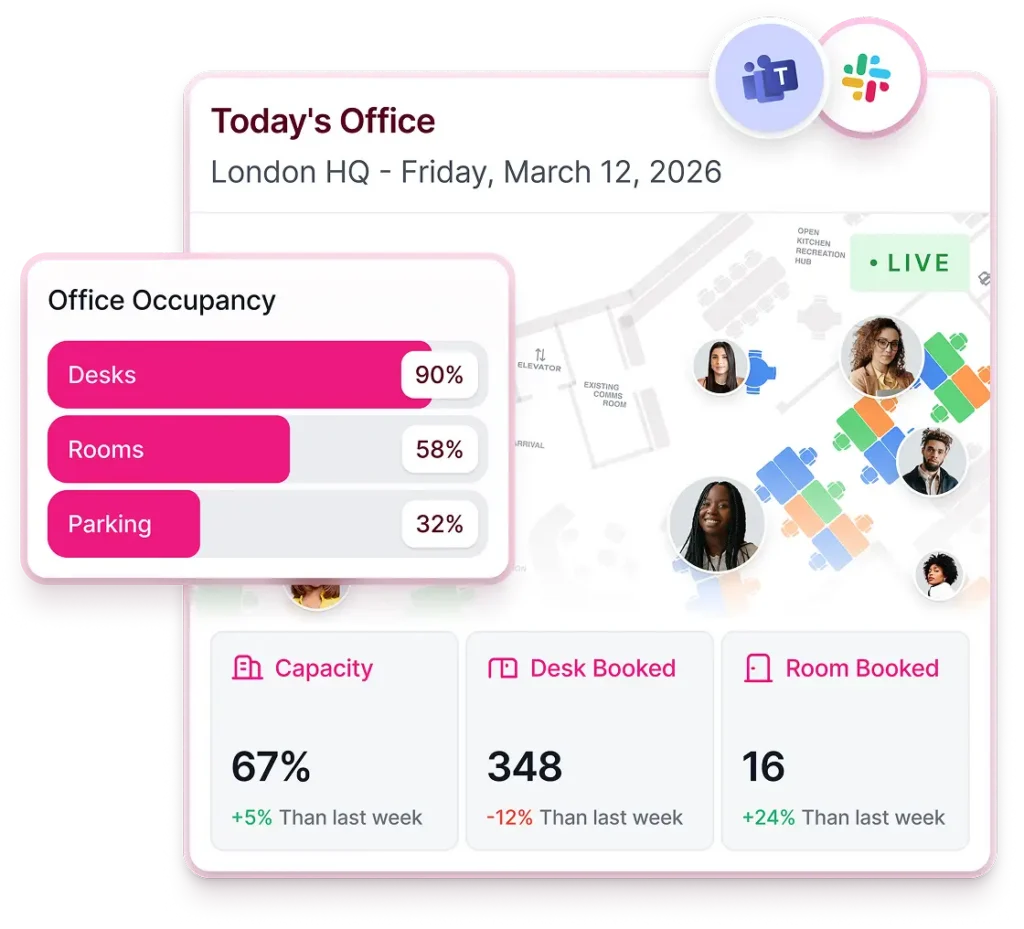
Organizations need a clearer way to understand how their workplace is actually being used. They need to know which teams are coming in, when demand peaks, where friction appears, which spaces are under pressure, and which parts of the office are quietly failing employees. They need to connect everyday workplace behavior with decisions about space, policy, planning, and experience.
That is where Kadence comes in.
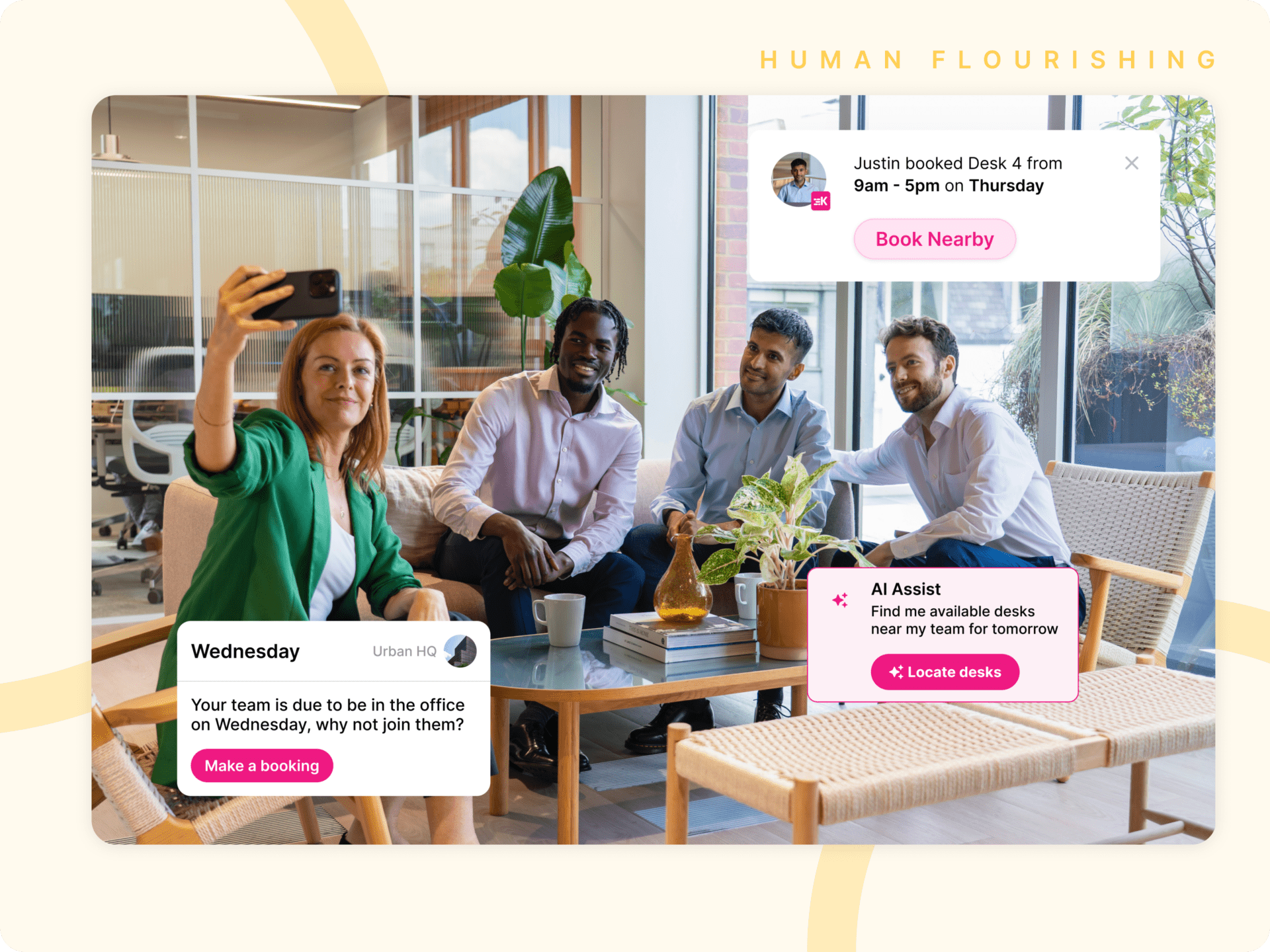
Kadence helps enterprises coordinate people, space, and operations in one intelligent workplace operating system. It gives employees the clarity to plan their day, find their teams, book the right spaces, and move through the office with less friction. It gives workplace and real estate leaders the visibility to understand demand, improve the employee experience, and make better decisions about how space should evolve.
Assigned desks made the old office feel permanent. But permanence was never the point. The point was belonging. The point was trust. The point was making the workplace feel like a place where people could do their best work together.
Those outcomes still matter. They just have to be designed now.
Calculate your return on investment with Kadence or book a demo with our workplace operations experts to see how Kadence helps enterprises build smarter, more human workplaces.