Choosing the right workplace management software is a strategic decision that affects how an organization allocates space, coordinates people, and manages real estate costs for years to come. It is not simply a software purchase. It is an operational commitment that shapes how teams work, how space is used, and how leaders make decisions about the workplace.
The right workplace management system enables better coordination, more accurate forecasting, and more confident decisions about space. Getting this decision right requires clarity on what the organization actually needs, not just which features are available.
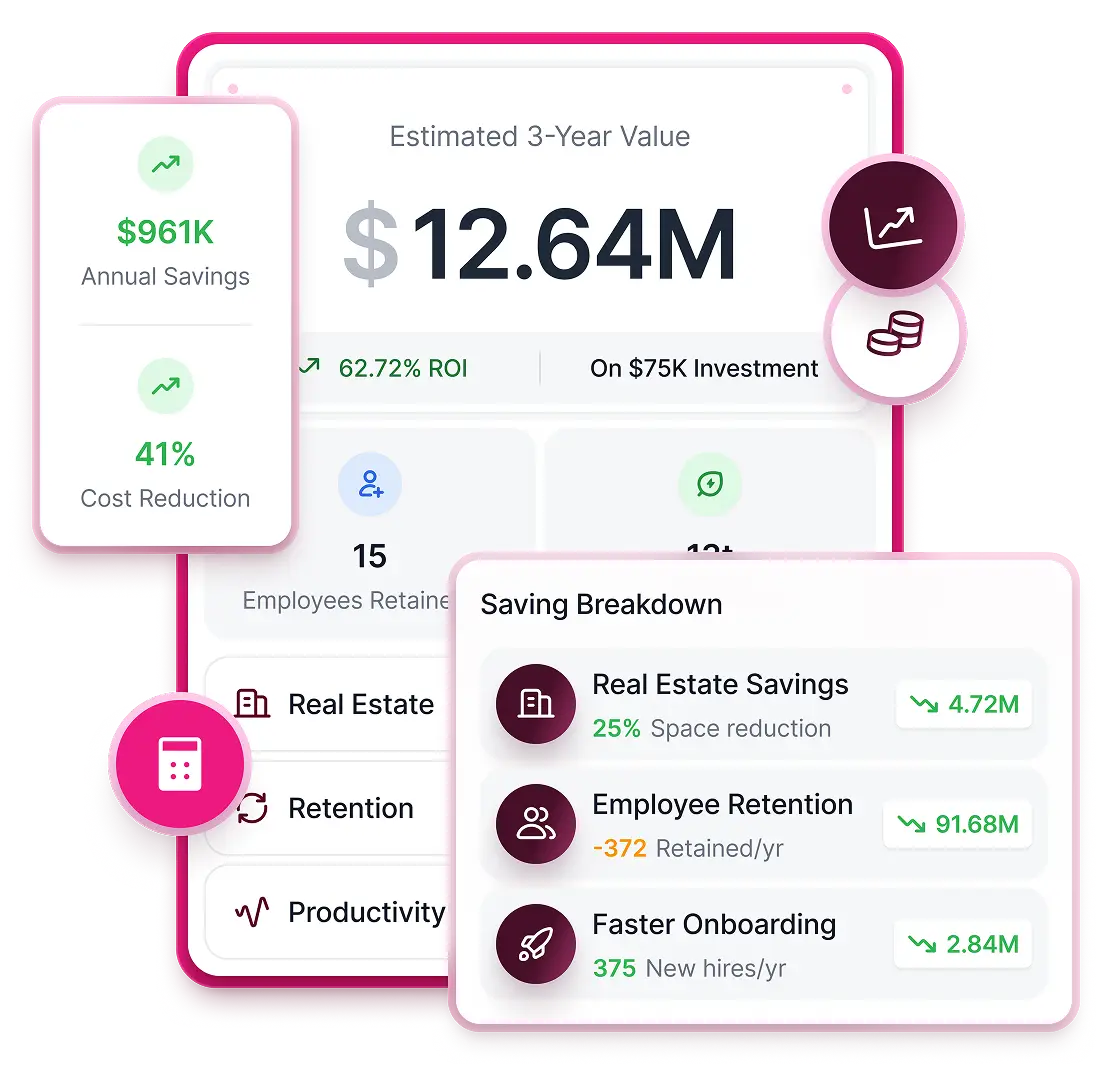
Calculate the ROI of Your Workplace Operations
Our brand-new ROI Calculator is here to help you visualize your success in seconds.

Why Choosing the Right Workplace Management System Matters
The decision to invest in workplace management software has real financial and operational consequences. Real estate is typically one of the largest cost lines in an enterprise budget, and per-employee office costs can vary dramatically depending on how space is managed — organizations with poor visibility into utilization consistently spend more than those making data-led decisions.
Organizations operating with hybrid policies face additional pressure. Attendance is harder to predict, collaboration patterns have shifted, and the gap between planned and actual space usage has widened at most organizations. A workplace management solution that cannot account for this complexity becomes a liability rather than an asset.
The right system provides the visibility needed to justify real estate investment, respond to changing workforce needs, and build a workplace strategy that holds up over time. Getting this right matters because the cost of getting it wrong compounds quickly, in wasted space, poor adoption, and decisions made on unreliable data.
What Are Common Challenges When Selecting a Workplace Management System?
Organizations often run into predictable problems during the selection process that lead to poor outcomes after implementation.
One of the most common is evaluating features rather than outcomes. It is easy to be drawn to a long feature list without assessing whether those features solve the specific problems the organization faces. A platform that looks comprehensive in a demo may not map well to how the business actually operates day to day.
Underestimating implementation complexity is another recurring issue. According to Gartner, over 70% of enterprise software implementations fail to meet their original business goals, with poor user adoption and stakeholder misalignment cited as the leading causes. These platforms typically need to integrate with existing HR systems, calendars, and access control infrastructure, and organizations that do not account for this often face delays and resistance after launch. Misalignment between stakeholders, particularly between IT, workplace, and finance teams, can also derail a selection process before it reaches a decision. Understanding these challenges in advance helps organizations structure their evaluation more effectively and avoid costly course corrections later.
What Key Features Do Successful Organizations Look for in Workplace Management Software?
When evaluating workplace management software, the most effective organizations shift their focus from what the platform includes to what it enables. The features that matter most are those that directly support the decisions the organization needs to make and the outcomes it is trying to achieve.
Desk Booking and Space Reservation Capabilities
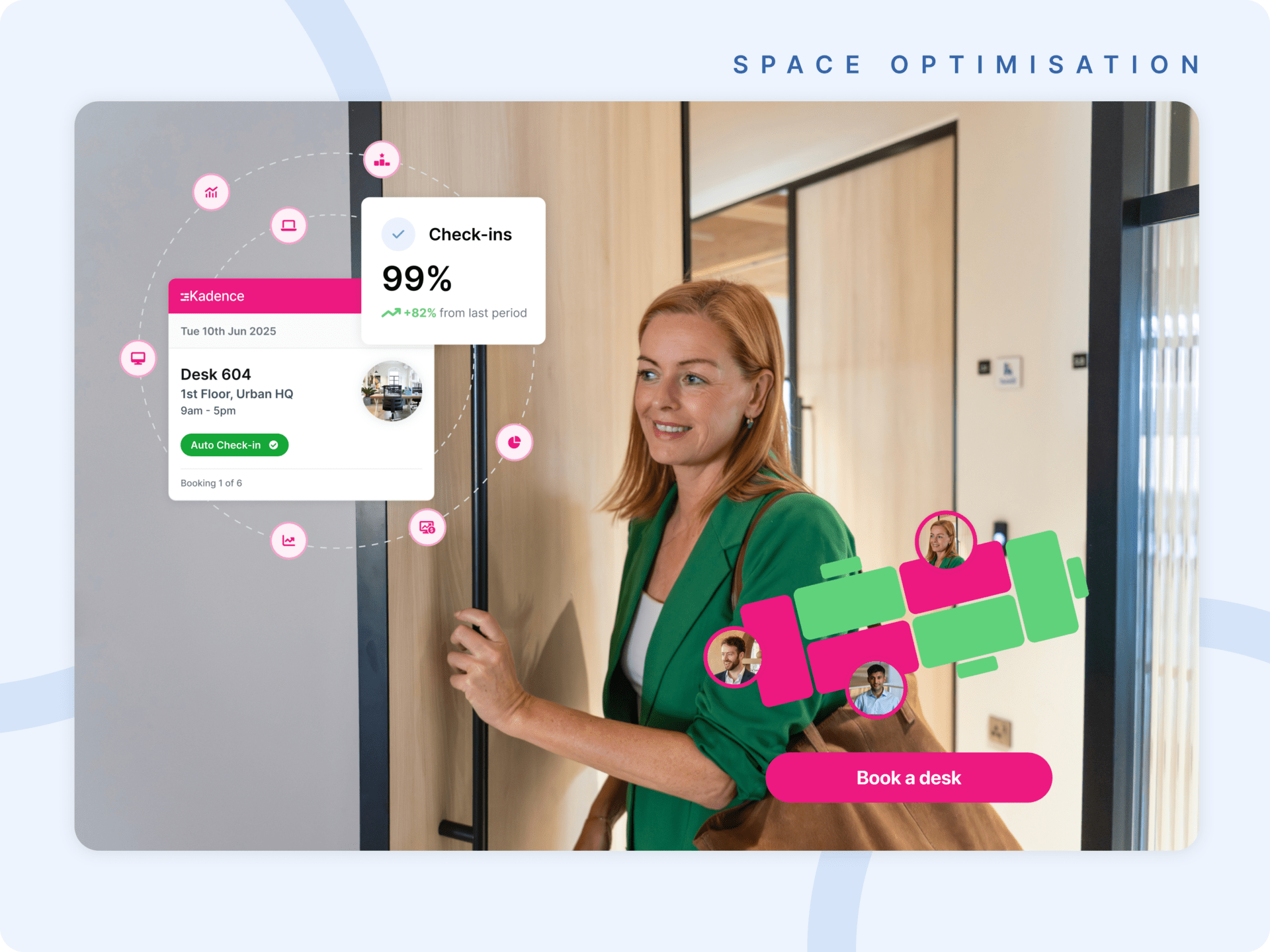
The core requirement here is flexibility combined with ease of use. A desk booking system that employees find difficult or unintuitive will not be adopted, and low adoption undermines the data quality the organization relies on for space decisions. Desk booking software provides real-time visibility into desk availability and supports different booking models including hot desking and assigned spaces, making it straightforward for employees to find and reserve the space they need. The system should also capture utilization data that informs longer-term decisions about how desks are configured and allocated across the portfolio.
Meeting Room and Conference Space Management
Meeting room management is a significant operational challenge in most hybrid environments. Organizations need a system that prevents double booking, integrates with the calendar tools employees already use, and provides accurate data on how rooms are actually being used. Rooms that are booked but consistently empty are a common source of waste that goes unaddressed when visibility is limited. Room booking software surfaces this data clearly, allowing facilities teams to reconfigure or repurpose space that is not earning its footprint. For larger organizations with multiple locations, managing room availability across sites from a single interface is a practical necessity.
Visitor Management and Workplace Access
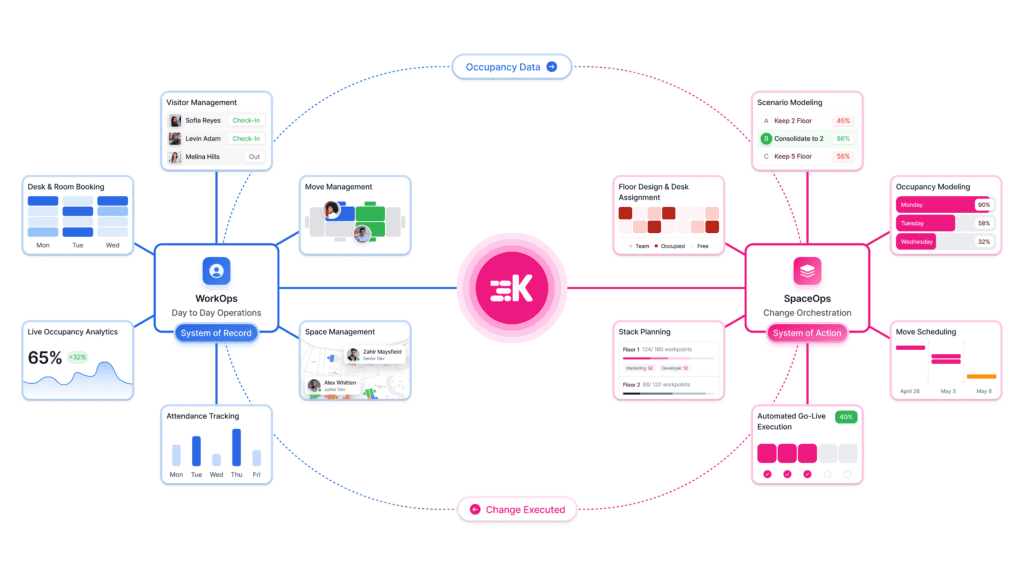
Visitor management is increasingly relevant to enterprise organizations managing security, compliance, and front-of-house experience at scale. The right workplace management software handles visitor registration, check-in, and access permissions within the same system used to manage space, rather than through a disconnected tool that creates gaps in the operational picture. Visitor management system provides a more complete view of who is in the building and when, which matters for both security and capacity planning. It also improves the experience for visitors and the employees responsible for managing on-site meetings and events.
Workplace Analytics and Utilization Data
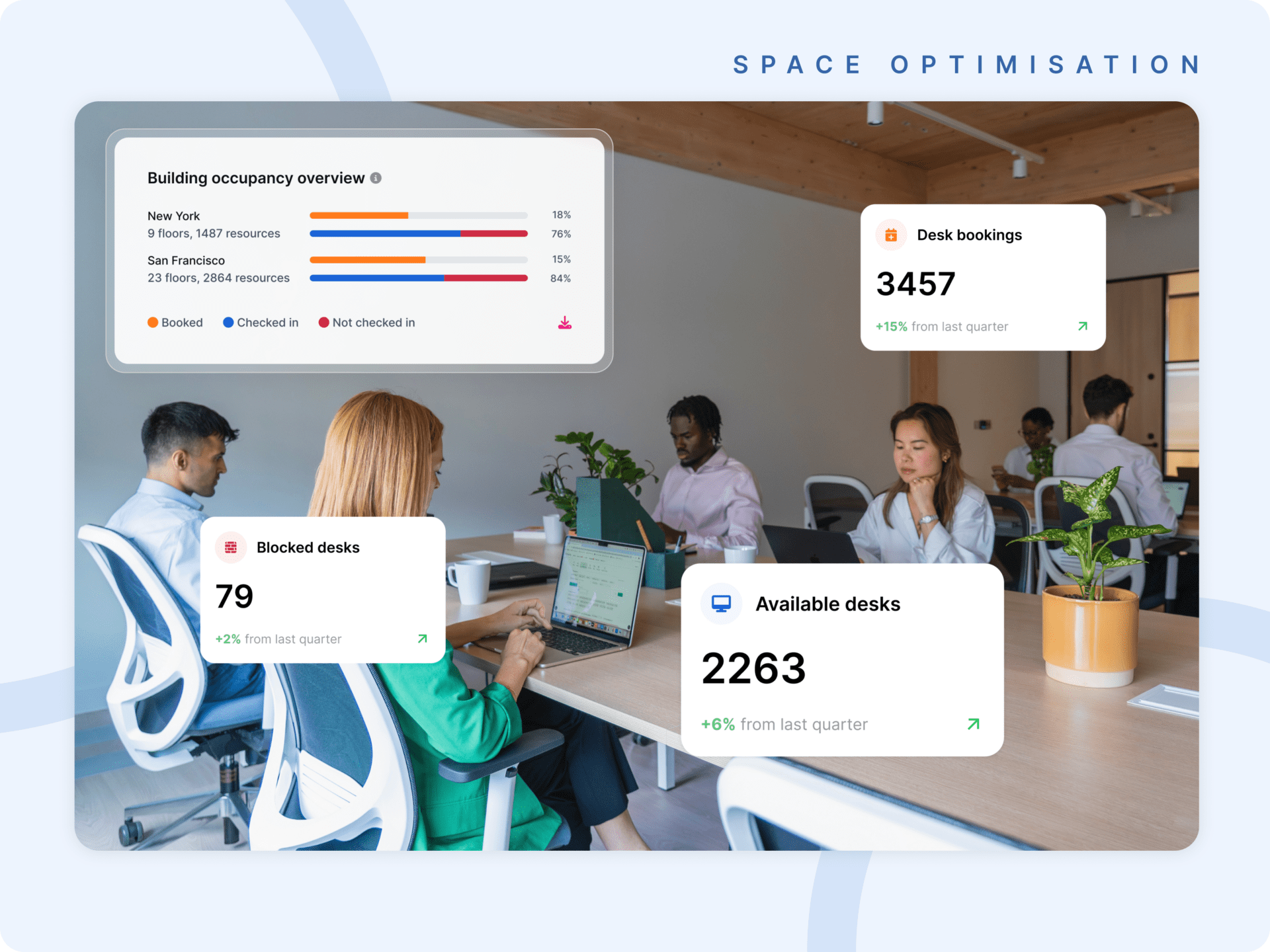
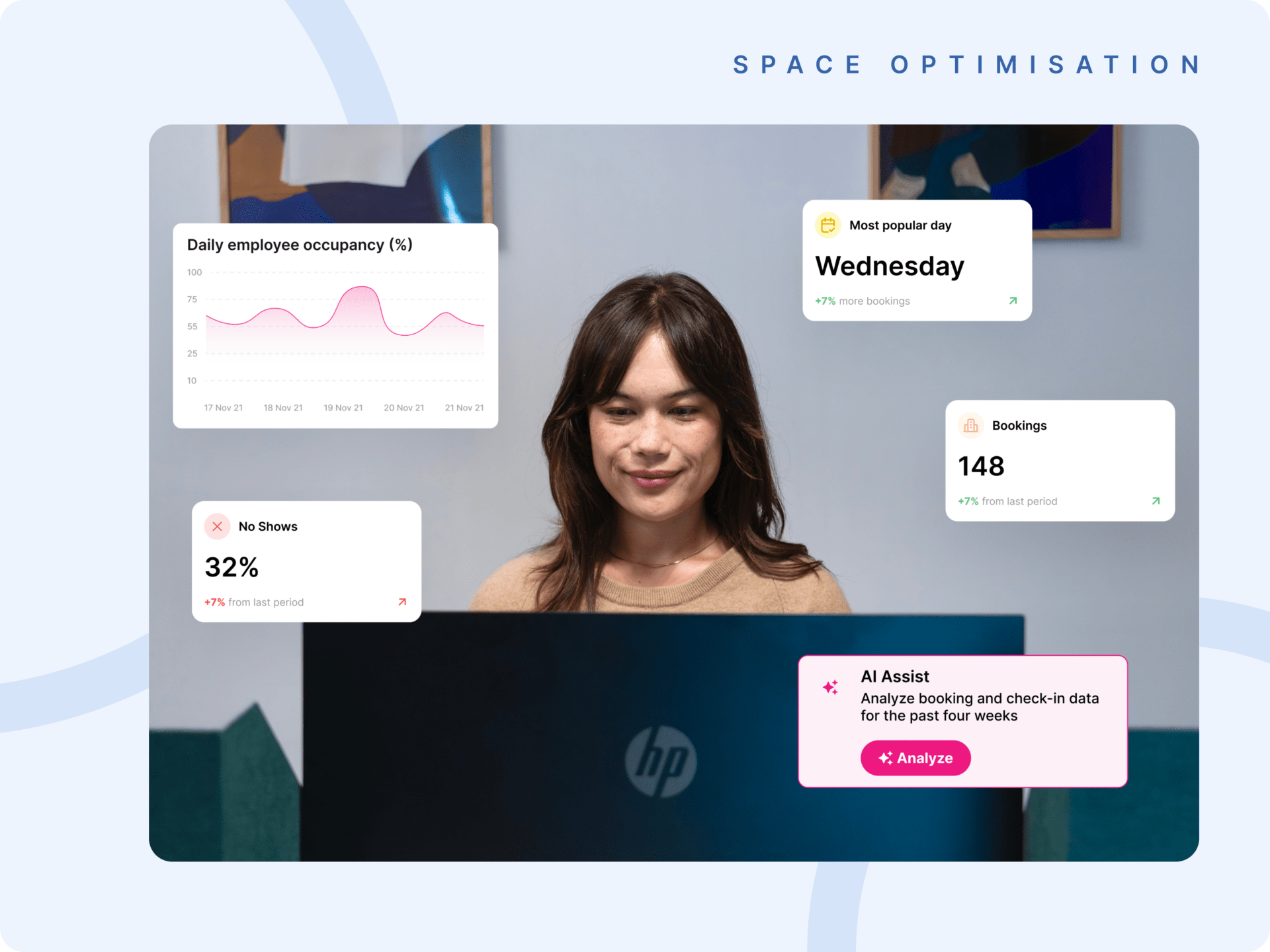
Analytics capability is often the most significant differentiator between workplace management solutions. The question to ask is not whether the platform provides data, but whether that data is actionable. Organizations should evaluate whether utilization reports reflect real behavior or just booking activity, whether the system can identify trends over time rather than just reporting snapshots, and whether the data can support scenario modeling before decisions are made. Workplace analytics connect space usage, team attendance, and real estate costs in a single view, which is particularly valuable for leaders making portfolio-level decisions.
How to Evaluate Workplace Management Systems for Enterprise Needs
Evaluating workplace management software for enterprise use requires a framework that goes beyond feature comparison. The starting point is aligning the system with the organization’s specific goals, whether that is reducing real estate costs, improving hybrid coordination, or gaining better visibility across a multi-location portfolio.
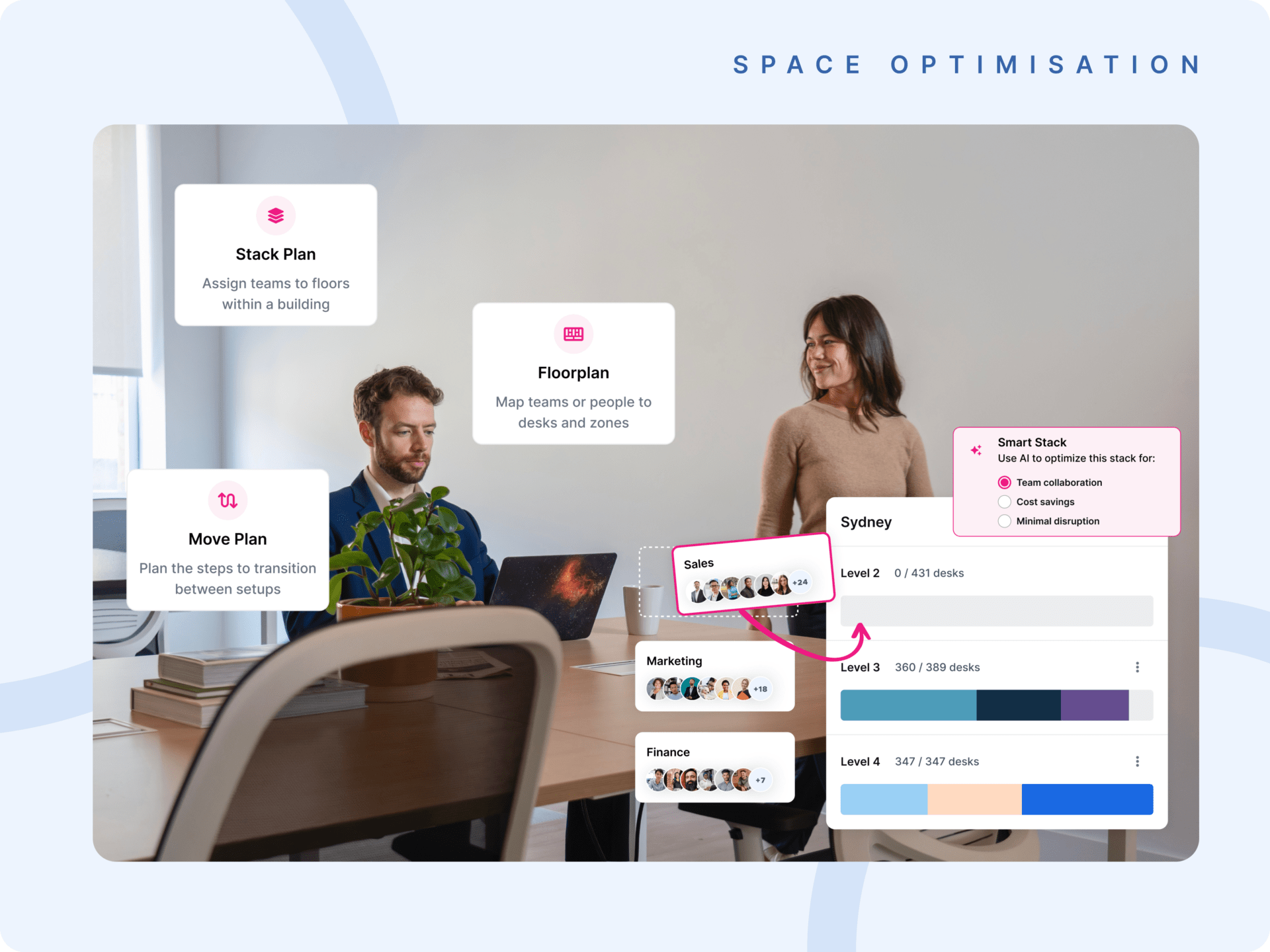
From there, organizations should assess vendor capabilities in terms of scalability, integration depth, and long-term product development. According to JLL’s 2026 Global Occupancy Planning Benchmark Report, global office utilization sits at 56% against an organizational target of 74%. This means any workplace management solution being evaluated needs to be able to handle variable demand patterns rather than fixed occupancy assumptions. Total cost of ownership, including implementation, configuration, and ongoing support, should be evaluated alongside expected ROI. For organizations that need to model different space scenarios before committing to decisions, scenario planning software provides the analytical depth that enterprise real estate decisions require.
What Are the Security, Compliance, and Data Considerations Organizations Should Consider?
Security and data governance are non-negotiable requirements for enterprise workplace management software, particularly for organizations handling employee presence data, visitor records, and real estate information across multiple jurisdictions.
Organizations should expect any serious workplace management solution to provide clear data privacy controls, role-based access permissions, and compliance documentation relevant to their industry and geography. This includes understanding where data is stored, how it is processed, and what audit trails are available. For regulated industries such as financial services, legal, or healthcare, alignment with internal standards and external regulatory requirements should be verified before a platform is selected. System reliability and uptime guarantees also belong in this evaluation. A platform that experiences downtime during peak office days creates operational disruption that erodes trust and reduces adoption across the organization.
Questions to Ask When Comparing Workplace Management Solutions
Before selecting a workplace management solution, organizations benefit from working through a structured set of internal questions that go beyond a vendor’s sales narrative.
- Does this system provide actionable data, or does it only report on what has already happened?
- How well does it integrate with the tools already in use across HR, IT, and facilities?
- Can it scale as the organization’s headcount, locations, or hybrid policies evolve?
- Will employees across different roles and levels of technical ability actually use it consistently?
- What does a typical implementation look like, and what support is available during and after rollout?
These questions help separate platforms that perform well in demonstrations from those that deliver sustained value in practice. The answers also reveal whether a vendor genuinely understands the operational realities of enterprise workplaces.
How Kadence Supports Workplace Management for Enterprise Organizations
Choosing the right workplace management software comes down to finding a platform that provides the data, scalability, and operational alignment your organization needs to make confident decisions about space, people, and real estate.
Kadence supports enterprise organizations across each of these requirements, from desk and room booking through to portfolio-level analytics and scenario planning.
For a broader overview of what workplace management systems are and how they work, read our guide: What Is a Workplace Management System?
Book a demo with our workplace operations experts to explore how Kadence can improve operational efficiency across your portfolio. Not ready to speak with the team yet? Use our ROI Calculator to model the financial impact of better workplace management for your organization.
Workplace Management FAQs
How do you choose the right workplace management system?
Start by defining the outcomes your organization needs, then evaluate platforms based on how well they support those outcomes, how easily they integrate with existing systems, and whether they can scale with your organization over time.
What features should a workplace management system include?
Core features include desk and room booking, visitor management, workplace analytics, and integrations with HR and calendar systems. The most important factor is whether those features produce actionable data that supports real decisions.
What should organizations consider when evaluating workplace management software?
Key considerations include scalability, integration capability, total cost of ownership, data security and compliance, and ease of adoption across different user groups.
How do you compare workplace management solutions effectively?
Focus on outcomes rather than features. Define what success looks like for your organization, ask vendors to demonstrate how their platform supports those specific goals, and verify integration and scalability claims before committing.
What questions should you ask vendors before selecting a workplace management system?
Ask how the system handles data quality and accuracy, what the implementation process typically involves, how it integrates with existing tools, and what support is available after deployment.