Workplace planning is overdue for a reset.
For most companies, the office is the second largest cost after people. Yet the decisions that shape that investment are still too often made with spreadsheets, static floor plans, exported PDFs, and planning processes that break the moment the business changes. Teams are expected to answer high-value questions about cost, capacity, team adjacencies, and future growth with tools that were never designed for modern workplace strategy and planning.
That gap has become impossible to ignore. Workplace leaders are being asked to do more than manage space. They are being asked to help the business make better decisions about how space supports performance, collaboration, and growth. To do that well, they need more than visibility into utilization. They need a way to move from planning to execution without losing weeks to manual work, disconnected systems, and handoffs between teams.
That is why we built SpaceOps.
Why Traditional Workplace Planning Falls Short
Most workplace planning processes still rely on a fragmented workflow. Data sits in one place. Scenario planning happens somewhere else. Recommendations are turned into decks or PDFs for leadership. Then, once a decision is approved, operations teams are left to manually translate that plan into real changes across the workplace.
That might mean reassigning neighborhoods, freezing spaces, canceling outdated bookings, or trying to make sure the environment employees walk into actually reflects the plan leadership signed off on. Every stage introduces friction. Every manual step slows the process down. Every delay makes it harder to respond when headcount shifts, teams restructure, or attendance patterns change.
This is the real weakness of traditional workplace planning. It treats planning as a static exercise when the workplace is anything but static. Strategy and execution are separated, which means even a good recommendation can lose momentum before it has any operational impact.
How SpaceOps Changes Traditional Workplace Planning
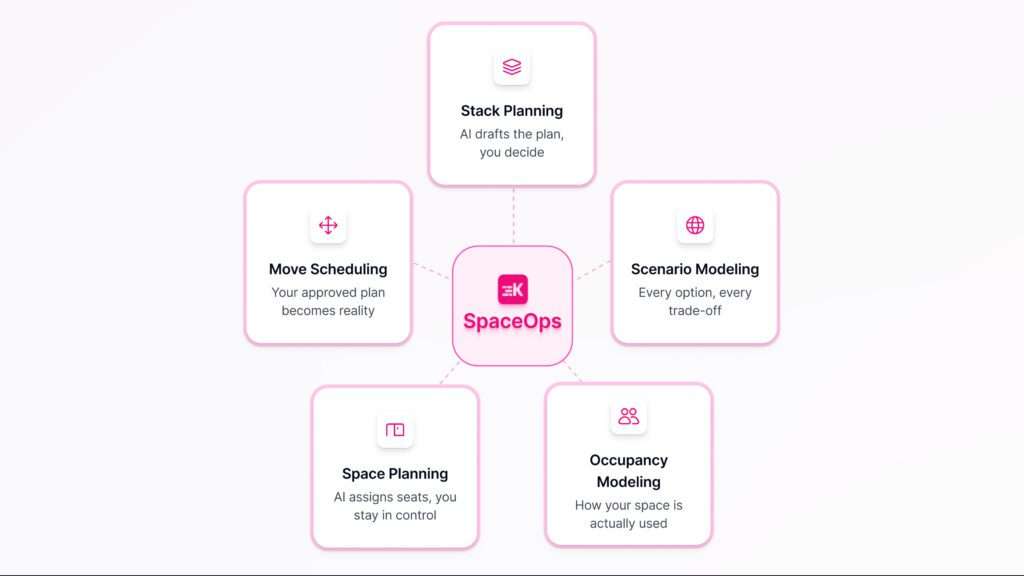
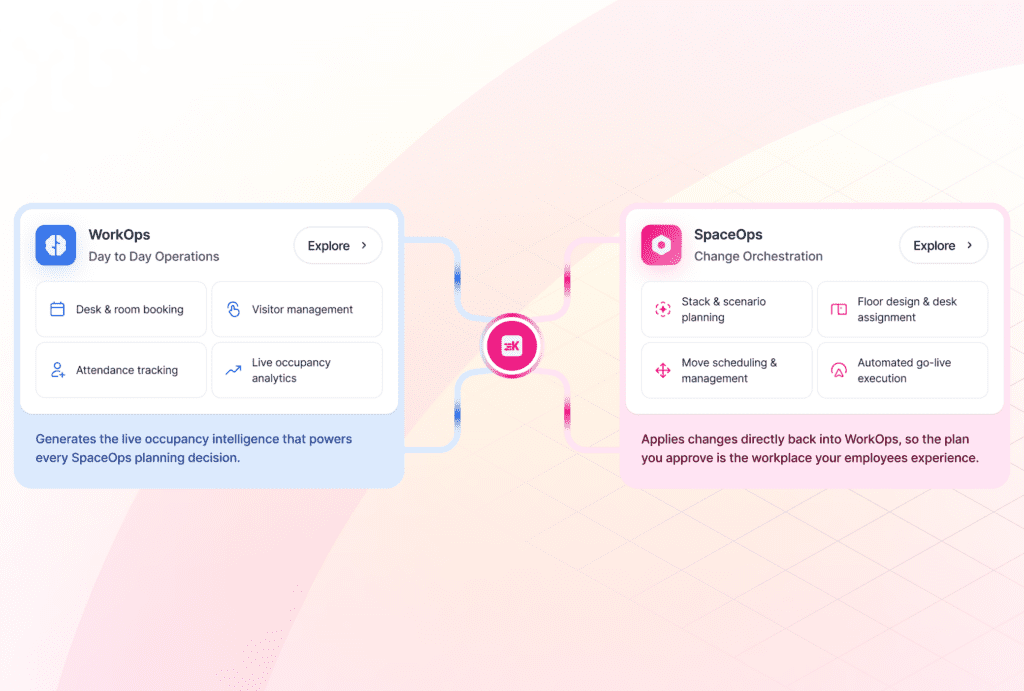
SpaceOps connects workplace planning and workplace execution in one platform. Instead of stopping at analysis or producing a recommendation that then has to be manually implemented later, it is built to carry a decision all the way through from the first scenario to automated go-live. That means workplace leaders can model options, refine the outcome, export a board-ready plan, and then activate that plan inside the same system their people already use every day.
That changes workplace planning from an advisory process into an operational capability. It gives teams a way to move from a planning question to a live outcome without relying on consultants, long implementation cycles, specialist tools, or a trail of spreadsheets.
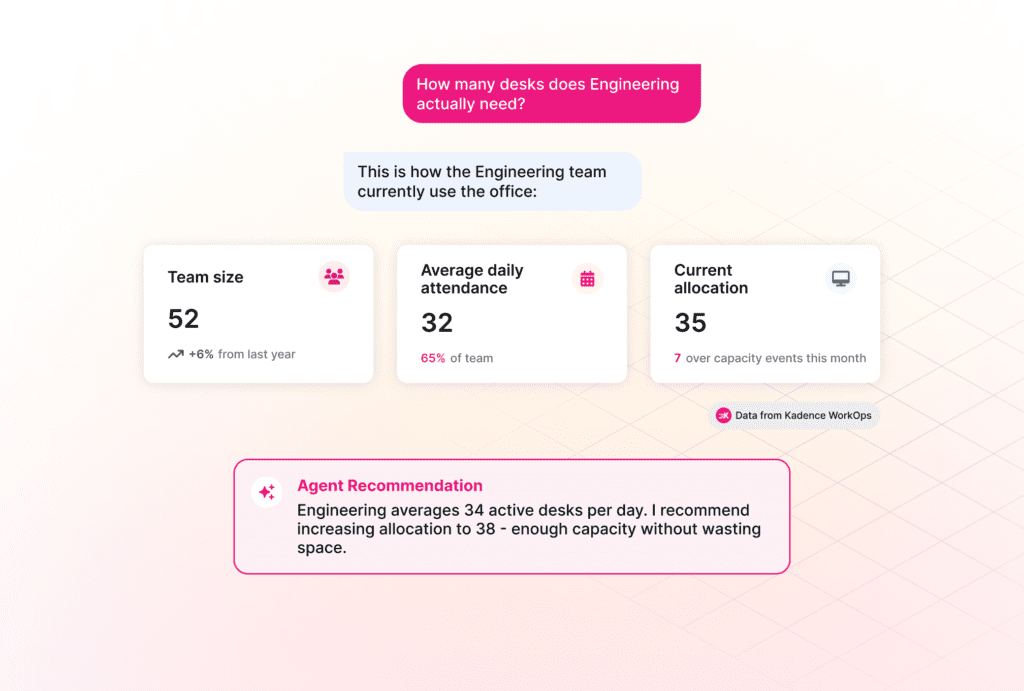
A workplace leader should be able to ask practical questions like these: Can we consolidate two floors? How do we keep engineering next to product? What happens if headcount grows next year? How do we preserve the right adjacencies without overcommitting space? SpaceOps is designed to help answer those questions quickly, show the reasoning behind the recommendation, and make it easier to adapt as new constraints emerge.
This is where workplace planning becomes more strategic. It is not just about understanding how space is being used today. It is about making better decisions about the future of the workplace and having the tools to execute those decisions with confidence.
SpaceOps: Built on AI for Workplace Strategy
There is no shortage of software companies talking about AI right now. But workplace leaders do not need a generic chatbot added to another dashboard. They need technology that understands the realities of workplace planning.
SpaceOps is built on Kadence AI with that specific purpose in mind. The intelligence behind it is designed around real workplace behavior and the decisions workplace teams actually have to make. That matters because workplace planning is not a generic analytics challenge. It sits at the intersection of occupancy, team relationships, operational constraints, business change, and cost. A useful system needs to understand those tradeoffs in context, not just surface data points.
The value of AI here is not novelty. It is speed, clarity, and better decision-making. It helps workplace leaders move faster through scenario planning, understand the likely impact of a decision, and spend less time buried in manual analysis. In practice, that means less time building static plans and more time shaping a workplace strategy that can keep up with the business.
From Scenario to Go-Live
This is where SpaceOps becomes genuinely different. Most planning tools can help you produce a recommendation. Far fewer can help you operationalize it. In practice, that is where workplace teams lose the most time. Once a plan is approved, someone still has to make it real. The old configuration has to be wound down. The affected spaces have to be updated. New assignments have to be activated. The execution has to reflect the plan.
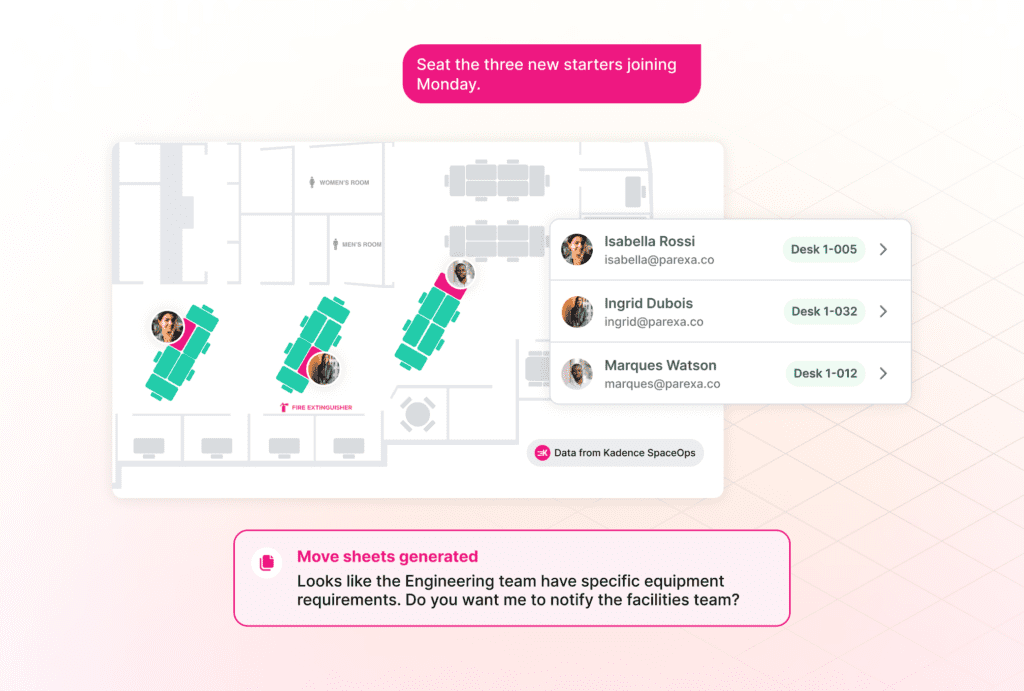
SpaceOps is designed to close that gap. It can generate a static plan in minutes, support re-optimization if the situation changes mid-process, export a plan for leadership review, and then help put the approved configuration into effect by canceling outdated bookings, freezing affected spaces, and activating the new setup. The plan that gets approved becomes the plan that goes live.
That is what workplace teams have been missing for years: not more reporting, and not another disconnected planning layer, but a direct path from workplace strategy to action. When planning and execution live in the same system, workplace leaders can move faster, adapt more easily, and spend less time managing the gaps between tools.
Why This Matters Now
The pressure on workplace leaders is only growing. They are being asked to optimize real estate costs without damaging the employee experience. They are being asked to support changing patterns of attendance while making sure the office still works for collaboration. They are being asked to justify space decisions with evidence, move faster, and operate with more confidence.
That is not possible with a planning process built for a different era. The future of workplace planning will belong to teams that can interpret the signals already in their workplace data, model the right response, and execute without delay. That is the shift SpaceOps is built to support. It gives workplace leaders a way to move beyond spreadsheets and static plans toward a system that is adaptive, intelligent, and connected to the real operation of the workplace.
How Kadence Modernizes Workplace Planning
Kadence helps organizations modernize workplace planning by connecting data, visibility, and operational execution in one place. With SpaceOps, workplace leaders can move beyond static recommendations and make faster, smarter space decisions that are easier to implement and adapt over time.
Workplace planning should not end with a recommendation. It should end with a better workplace running live.
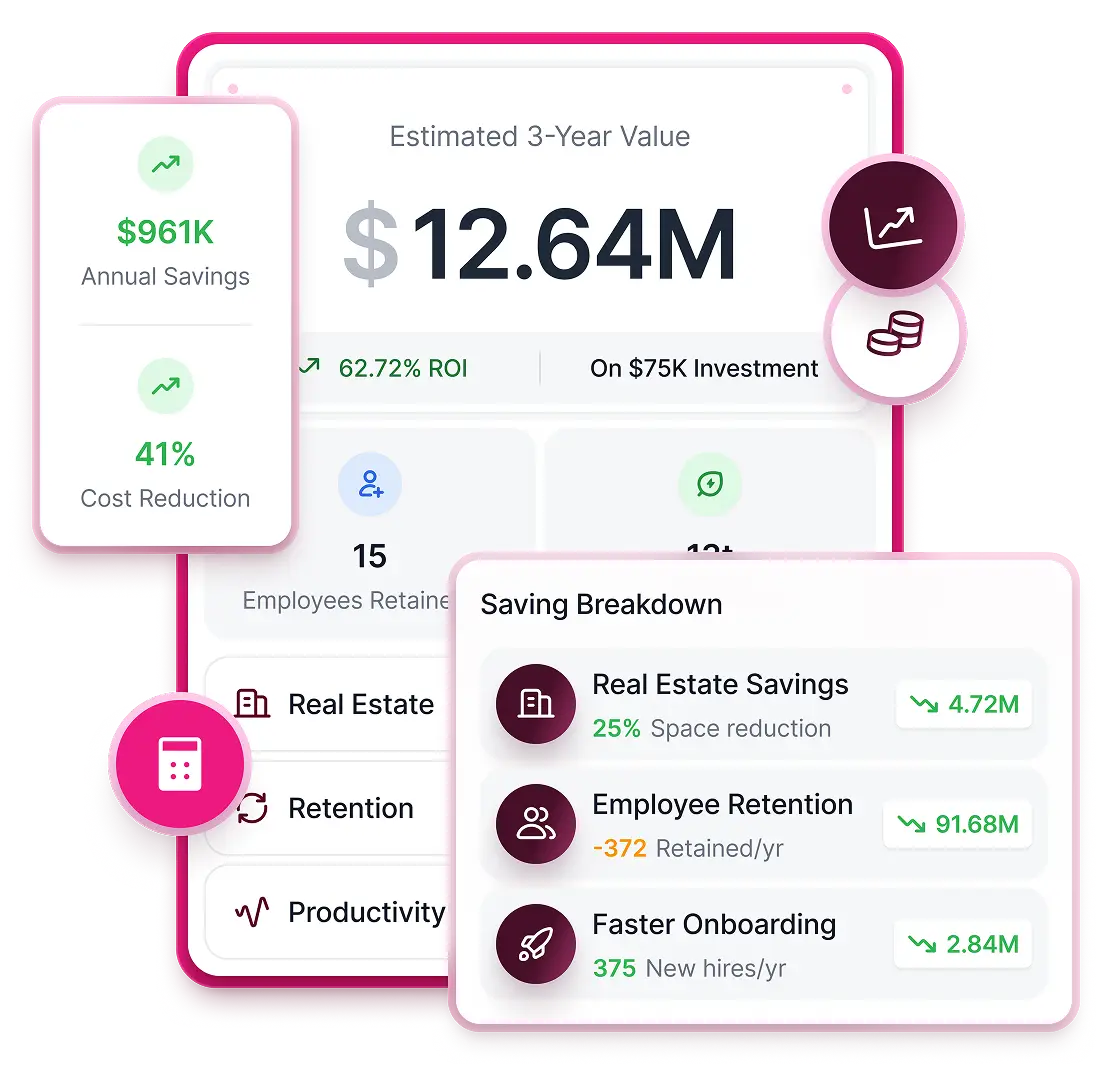
Book a demo with our workplace operations experts to see SpaceOps in action, or calculate your ROI to explore the business impact of smarter workplace planning.
Calculate the ROI of Your Workplace Operations
Our brand-new ROI Calculator is here to help you visualize your success in seconds.

FAQs
What is SpaceOps in workplace planning?
SpaceOps is a workplace planning platform that connects strategy and execution in one system, helping teams model space decisions and then put approved plans live.
How does SpaceOps improve workplace planning and execution?
It helps workplace leaders move from scenario planning to go-live faster by reducing manual handoffs, supporting re-optimization, and activating approved workplace changes in the same platform.
Why is traditional workplace planning no longer effective?
Traditional workplace planning is often fragmented and static, which makes it harder to adapt when headcount, team structures, or attendance patterns change.
How does SpaceOps support workplace strategy decisions?
SpaceOps helps leaders evaluate options, understand tradeoffs, and make evidence-based decisions about space, adjacencies, and future workplace needs.
How do workplace leaders use SpaceOps to plan and adapt office space?
They can use it to test scenarios, refine plans, export leadership-ready outputs, and implement approved changes without relying on disconnected tools or manual execution.