When desk booking adoption stalls, the advice I keep seeing circulate goes something like this: label your desks. Number them to match the floor plan. Make sure employees can reconcile what they booked on screen with what they find when they arrive.
It is practical advice. It is also blaming the space for what is really a software problem. And more importantly, it misses what is actually stopping employees from using the system in the first place.
Our customer success team work with Kadence customers every single day. They are the people inside our accounts who see, up close, exactly where adoption breaks down and what fixes it. What they tell me is consistent: the problem is rarely the desk number.
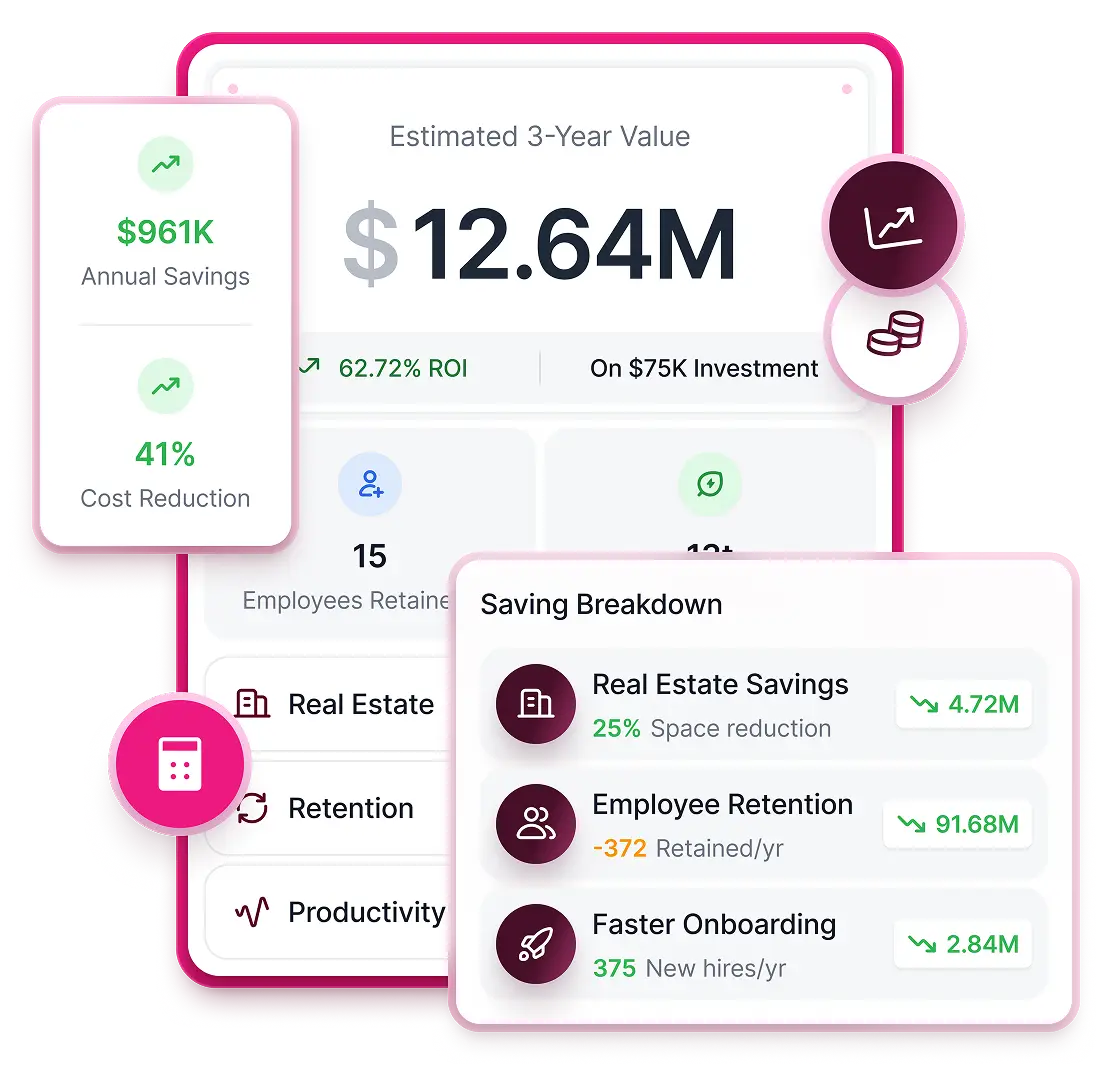
Calculate the ROI of Your Workplace Operations
Our brand-new ROI Calculator is here to help you visualize your success in seconds.

The Real Adoption Problem Is Perception, Not Navigation
In my view, most organisations trying to solve desk booking adoption are solving the wrong thing. They are focused on the physical experience at the point of arrival, when the failure is happening much earlier, in the employee’s mind before they even open the app.
Employees are not refusing to engage with a booking system because they couldn’t find desk 36. They are disengaging because they suspect the system is there to monitor them. Kelly hears this more than almost anything else in her conversations with Kadence customers:
That is a trust problem. No sticker resolves it.
Employees Navigate Their Workplace Emotionally, Not Logistically
Even when trust is established, the friction that kills adoption is not directional. It is emotional. Most employees do not navigate their office by coordinates. They navigate by feel: where their team sits, where they feel comfortable, where they know the coffee machine is. A numbering system grafted onto that emotional map creates resistance not because the numbers are hard to follow, but because the system now feels like something imposed on them rather than built for them.
Gina works with our enterprise accounts and puts this directly:
The answer is not to make the numbers clearer. The answer is to reduce the number of decisions the employee has to make before they sit down.
That Said, Identifiers Do Matter
I want to be precise here, because I am not arguing that physical desk identification is irrelevant. Gowdy works with some of our largest enterprise deployments and is right to point out that there is genuine comfort in being able to confirm you are in the right spot. It is not unlike checking your row and seat number at a cinema even after booking online.
But labelling is not the only path, and it is rarely the most important one. Our Utah office runs with no physical desk numbers at all. With Kadence and a clear floor plan reference on arrival, employees find their desks without difficulty. What Gowdy finds consistently across his customer base is that the highest long-term value does not come from wayfinding at all. It comes from live visibility: employees being able to see, at a glance, which spaces are available and where their colleagues are sitting, every time they come in.
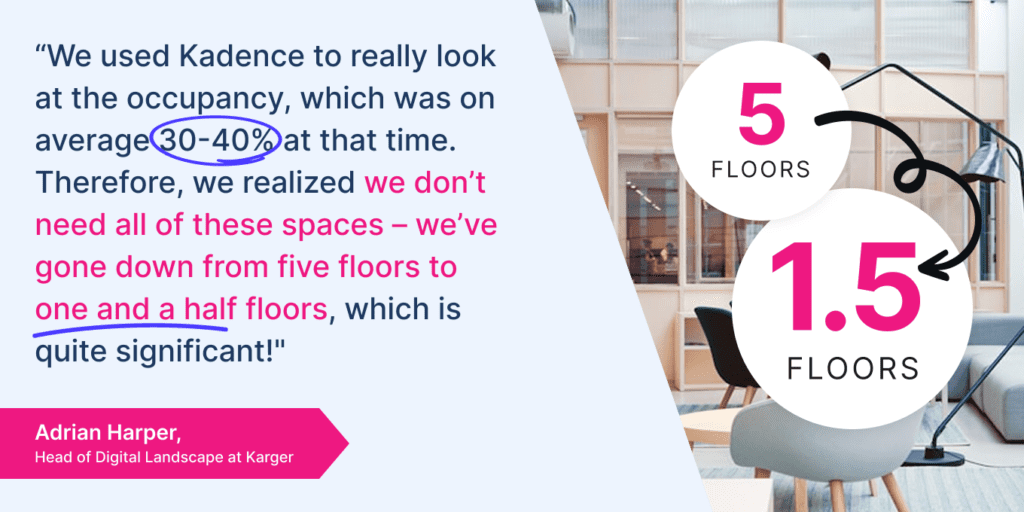
When supply matches real demand, the friction that desk labels are trying to solve doesn’t accumulate in the first place. Organizations like Karger have used this approach to reduce their real estate footprint by 80% without compromising how people work.
The Spatial Hierarchy That Removes the Problem
The deeper fix, in my view, is to configure the space so that the navigation problem barely exists in the first place. Kevin focuses on day-to-day platform setup with our customers and frames this well: what employees actually need is a clear identifier at every level, building, floor, neighborhood, desk. When that hierarchy is built properly, the desk-level question becomes a small one.
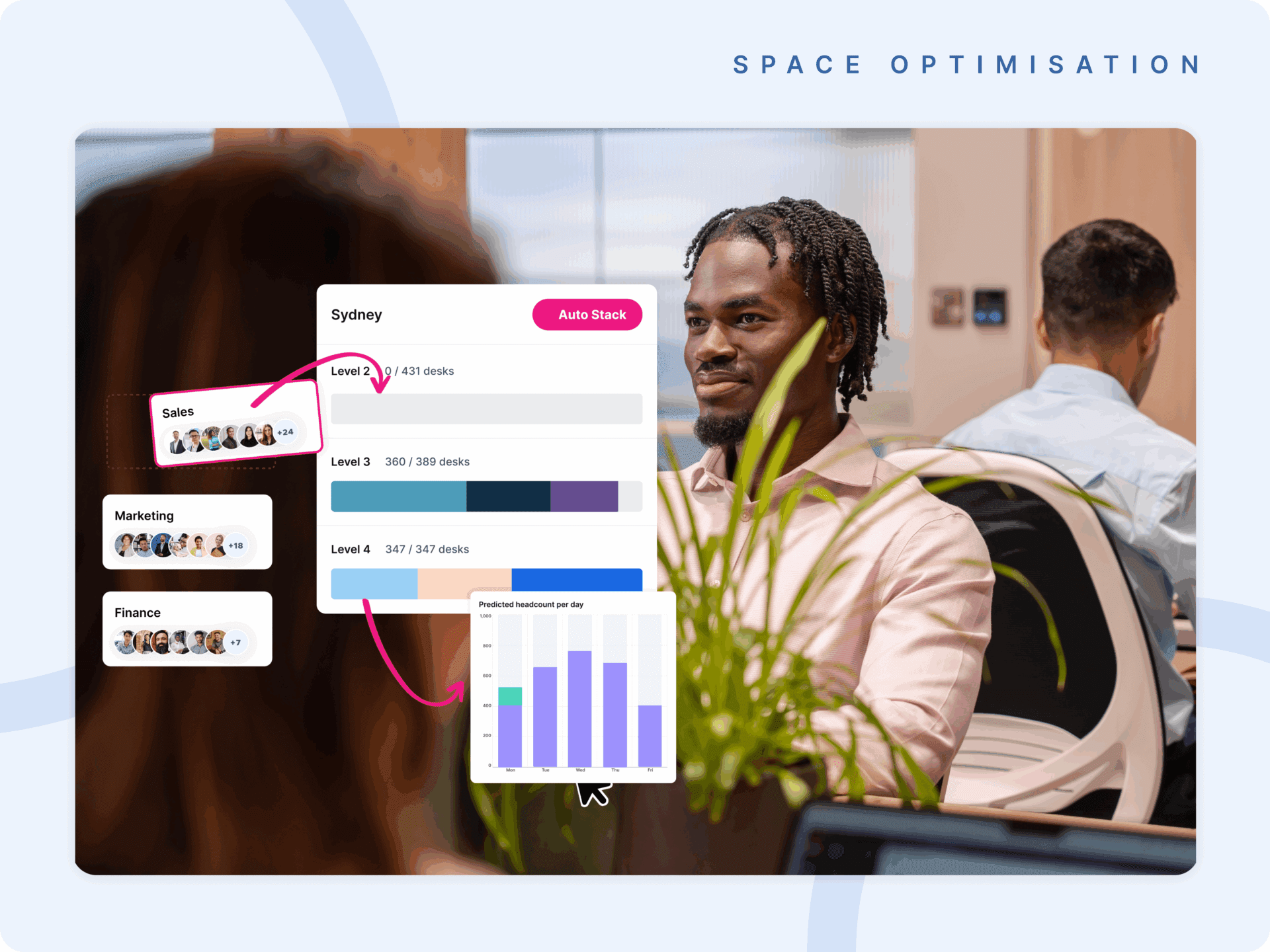
Office neighborhoods are central to this. When teams are assigned consistent zones within the floor, employees are not navigating 200 anonymous desks. They are going to their team’s area, which is already visible in the app before they leave home. Our interactive floor plan shows live availability and teammate locations in real time, with color-coded neighborhoods so the spatial logic is immediately legible. For employees who book on the fly, a QR code per desk allows them to claim a space in seconds on arrival without needing a confirmation number at all.
From her conversations with customers, Elsa makes a point here that connects back to how employees navigate emotionally. In larger offices where identification genuinely matters, she finds that memorable area names outperform numbers. An employee who has booked into an area called “Sunshine” feels connected to that space before they arrive. Someone navigating to desk 36 in zone C does not. The same logic applies to landmarks on the floor plan: it is easier to remember that you are sitting next to the large plant by the stairs than to hold a number in your head on the way up in the lift.
When the hierarchy is built into the platform, the physical label becomes a reassurance, not a dependency.
The Interface Should Carry the Wayfinding Burden
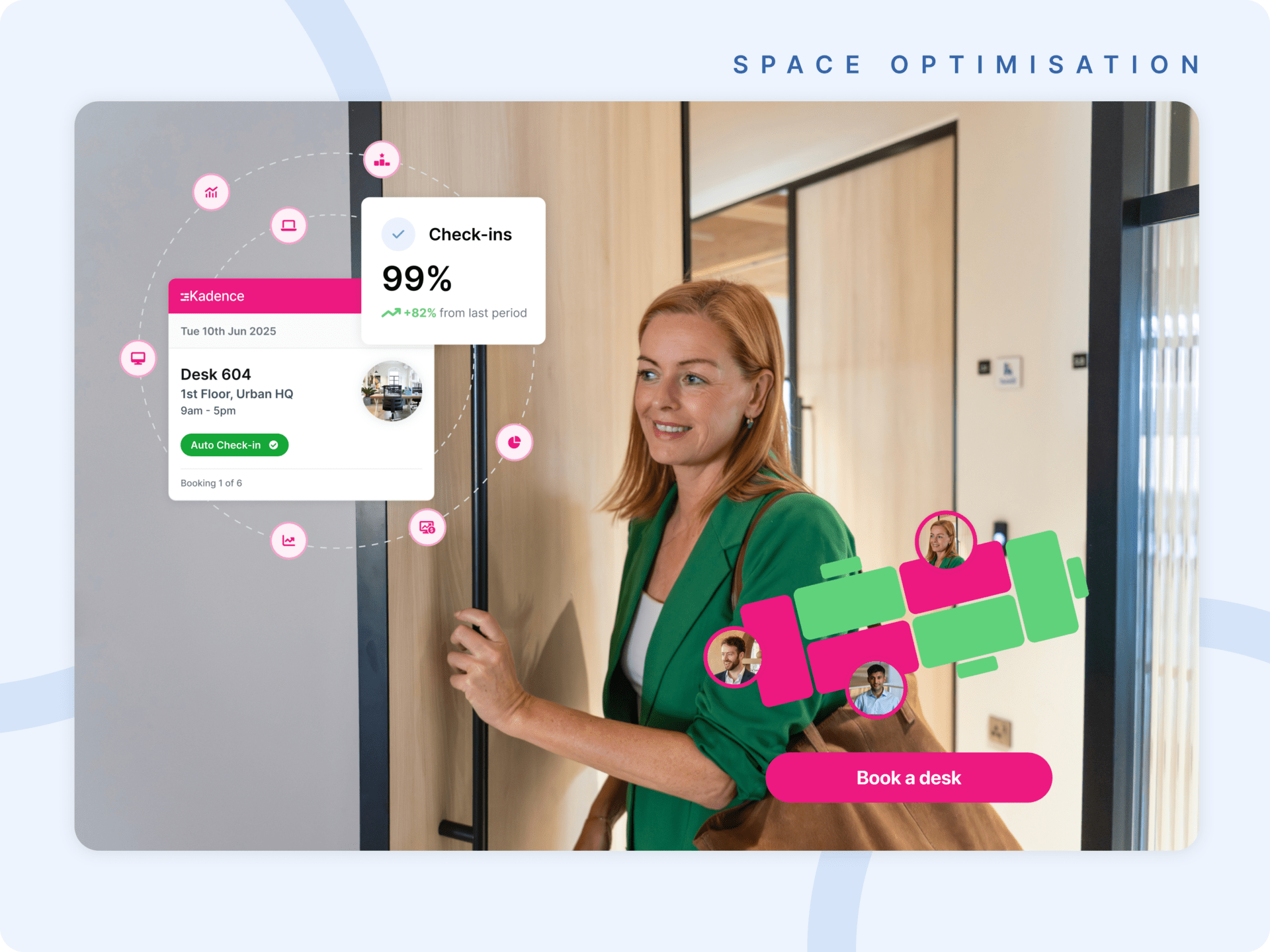
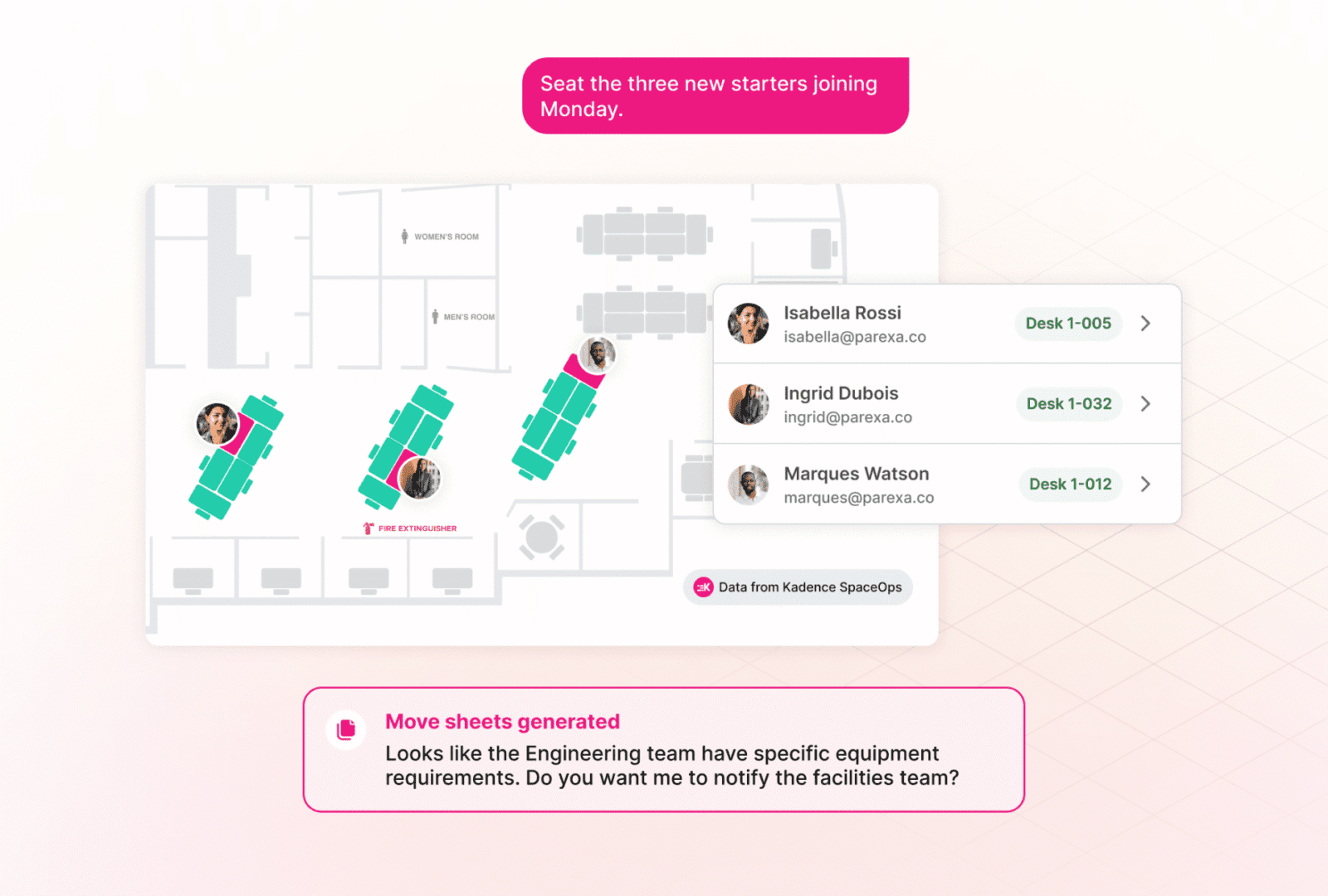
This is where Kadence AI changes the equation. Rather than handing an employee a desk number and leaving them to find it, the platform surfaces smart suggestions based on who else is coming in that day, so the decision of where to sit is largely made before the employee arrives. They walk in knowing where their team is. The floor plan confirms it. The stress Gina describes does not accumulate because the system has already done the navigational work.
The live office floor map shows color-coded desk availability and real-time visibility of where teammates are already sitting. Smart booking suggestions surface desks near the people an employee is coming in to work with. By the time someone walks onto the floor, they already know where they are headed and who will be around them. There is no number to decode, no floor plan to orient from scratch, and no wrong desk to accidentally end up at.
Right-Sizing the Space So the System Has a Fair Chance
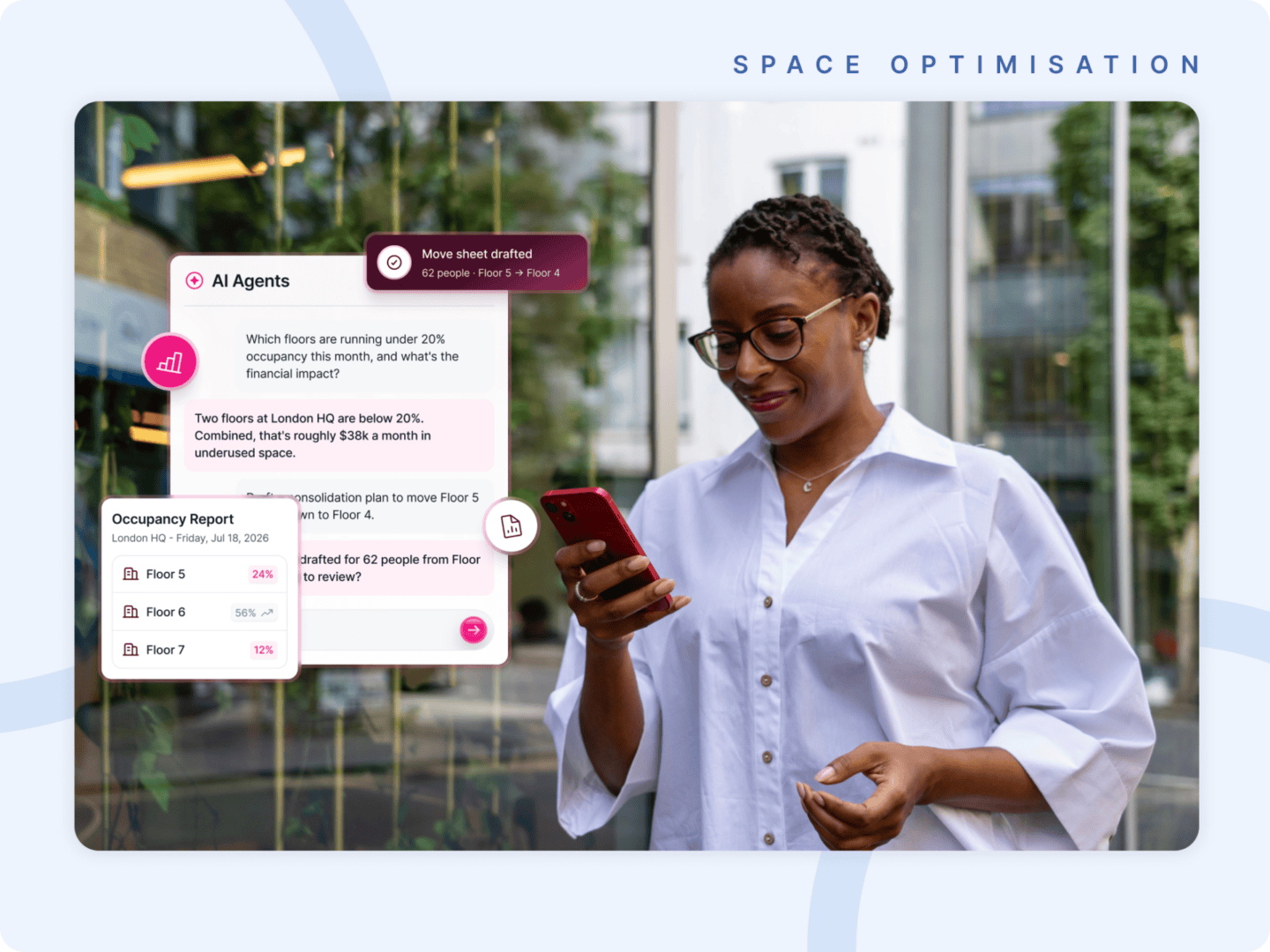
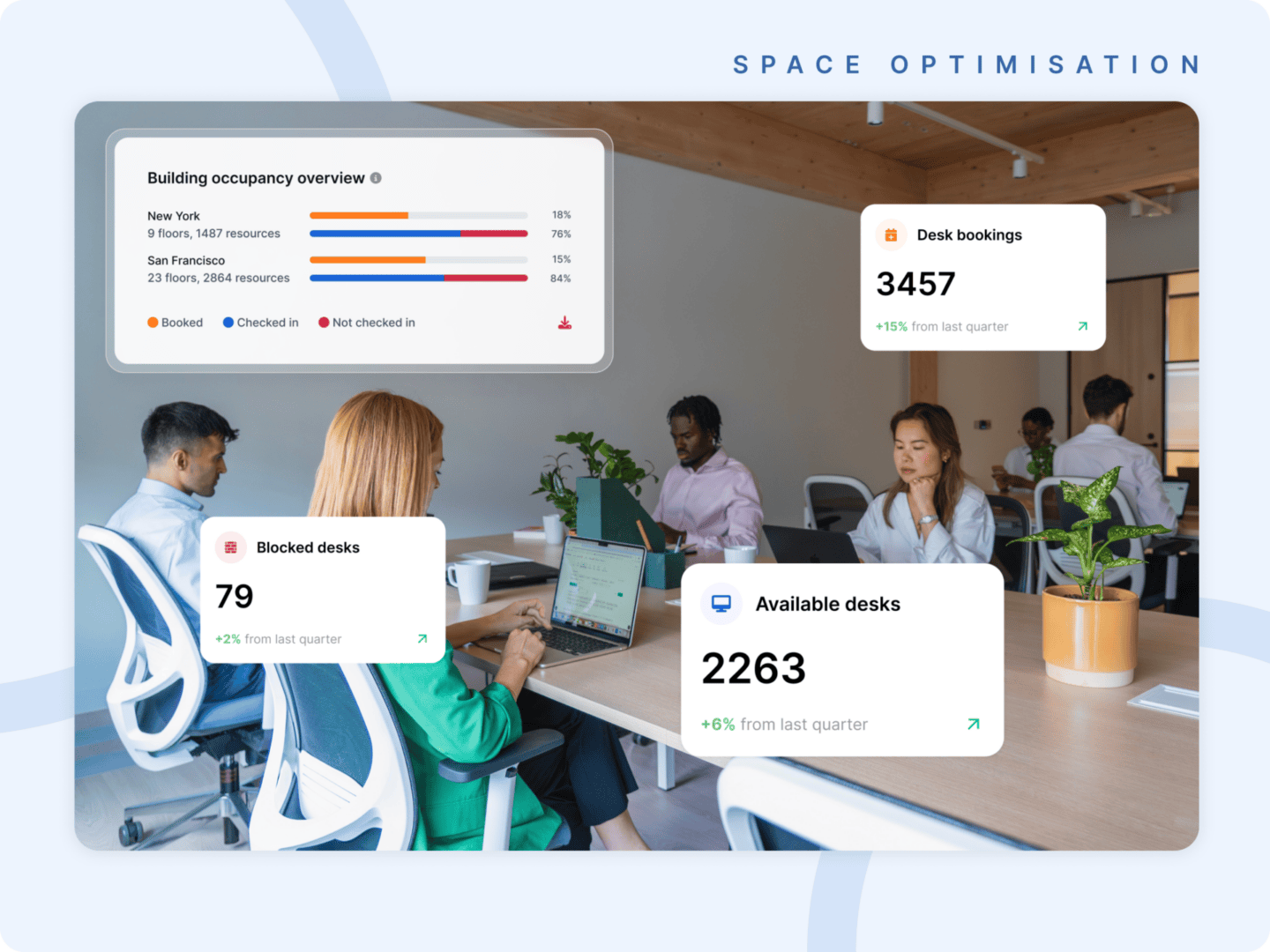
None of the above is enough if the underlying space has not been calibrated against how people actually show up. When peak-day demand outstrips available desks, employees stop trusting the booking system regardless of how well it guides them. Scenario planning lets workplace leaders work from real occupancy data to model configurations before committing, bringing supply and demand into genuine alignment.
Right-sizing means understanding which floors are consistently underused, which space types are actually in demand, and what desk-to-employee ratios genuinely reflect attendance patterns rather than inherited assumptions. It means reconfiguring before the coordination problem gets acute, rather than bolting a booking system onto a floor plate that was never designed for the way people work now. SpaceOps turns those decisions into executable plans across the platform. When the space fits how people actually work, the booking system is not fighting against the building every peak morning.
The Bottom Line
Desk labels solve a small, late-stage navigational problem. What our team sees underneath stalled adoption, over and over, is something that labels do not touch: employees who do not trust why they are being asked to book, a system that adds cognitive load rather than removing it, and a space that was never configured around how people actually move through it.
Get the trust, the interface, the neighborhoods, and the space configuration right, and the desk labels become irrelevant. That is the standard a workplace operations platform should be held to.
See how much your current space is actually costing you with the Kadence ROI Calculator. Or book a demo with our workplace operations experts to see how we approach adoption from the ground up.