













Future Of Work

The Intelligence Behind SpaceOps

Jamie Addis
SpaceOps
Get Started With Kadence

See Kadence in action and book a customized demo.

Book Demo

Over the past few years, the conversations we’ve been having with workplace, real estate, and operations leaders have started to sound very similar. They’re being asked to make space decisions with incomplete information and still stand behind them.

  • Should we consolidate floors?
  • Can we support a new in-office strategy without expanding?
  • Which teams genuinely need to sit together and which ones just think they do?

These aren’t abstract planning questions. They’re operational decisions with financial, cultural, and human consequences. Once they’re made, they’re expensive, disruptive, and difficult to reverse.

That’s the problem SpaceOps exists to solve. Not by promising a single “perfect” answer, but by giving teams something they rarely have today: clear options, visible trade-offs, and the confidence to make decisions before anything moves.

Behind SpaceOps is an intelligence engine being built by Rory, our Machine Learning Lead, whose role is focused on turning messy, real-world workplace behaviour into systems leaders can actually use. Over the past few months, Rory has been walking customers through SpaceOps live, modelling real portfolios, testing scenarios, and stress-testing decisions in real time. What follows is grounded in that work and in how leaders are responding when they can see the implications of their choices clearly.

This post explains how we’re approaching that challenge and the thinking behind the system we’re building.

Turning Workplace Chaos Into a Solvable Problem

Space planning only sounds straightforward if you’ve never owned it.

Teams change. Headcount forecasts move. Hybrid attendance rarely matches policy. Buildings come with quirks, constraints, and years of legacy decisions baked in. And every adjustment creates knock-on effects somewhere else.

What we’ve learned is that most organisations aren’t short on data. They’re short on structure.

SpaceOps starts by turning a messy, interconnected workplace reality into a structured problem the system can reason about. That means accounting for things like:

  • teams and headcount
  • floors, buildings, and capacity constraints
  • adjacency needs that matter in practice, not just on paper
  • real hybrid attendance patterns
  • future growth scenarios

Instead of forcing teams to commit to a single plan early, the system evaluates thousands of possible configurations and surfaces a small set of viable options.

From an operational standpoint, this shift is critical. You’re no longer defending one fragile plan. You’re comparing defensible alternatives.

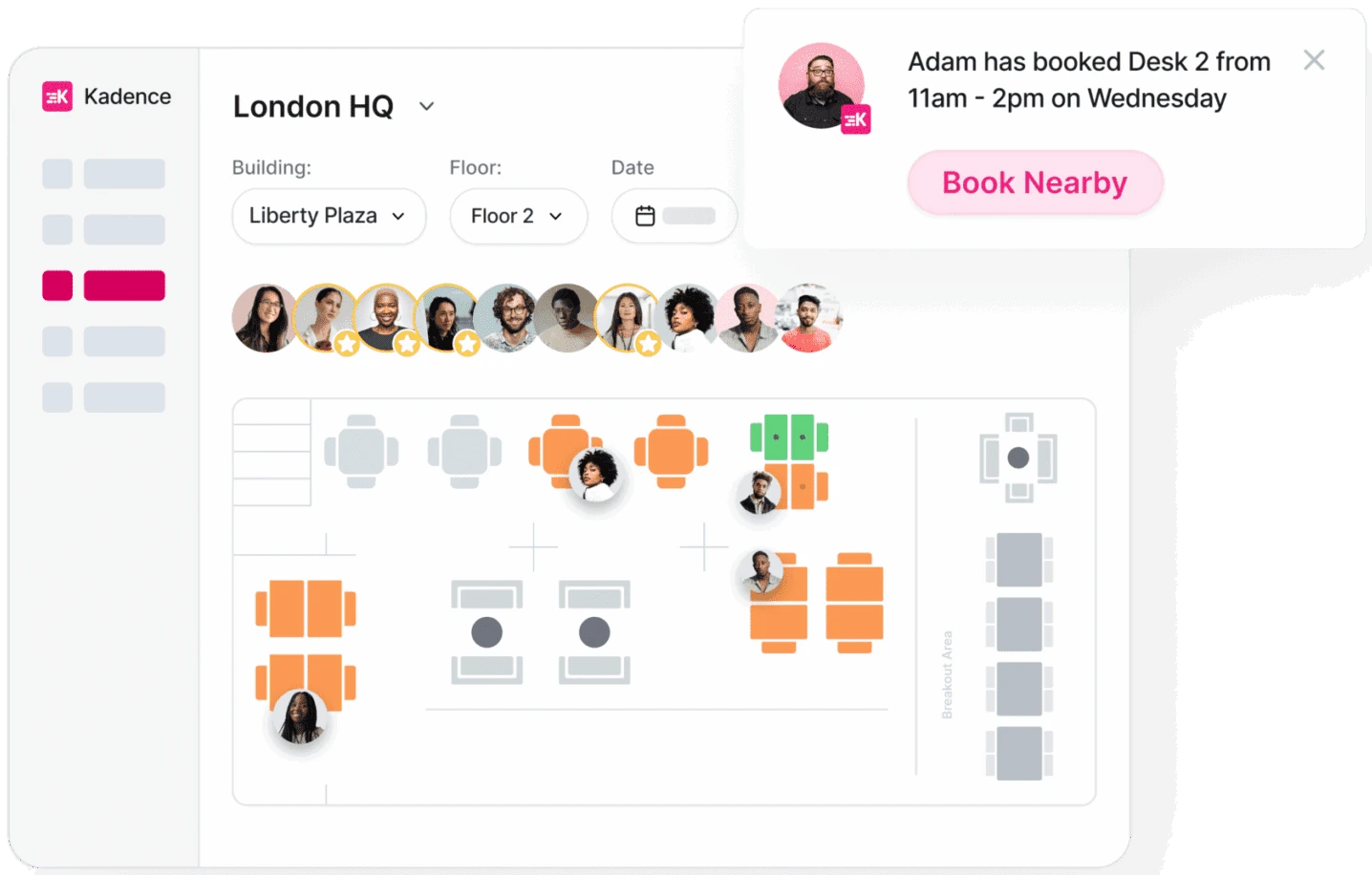
A stylized design of Kadence's AI-powered Scenario Planning feature.
Optimisation Grounded in Reality

A lot of optimisation software fails because it assumes a clean world.

Real workplaces aren’t clean. Data is incomplete. Attendance fluctuates. Teams evolve mid-quarter. Constraints conflict. And no one wants a mathematically “optimal” plan that creates chaos on the ground.

The optimisation engine behind SpaceOps borrows from the same families of techniques used in logistics and network planning, but it’s deliberately constrained by real-world rules.

It balances trade-offs such as:

  • reducing move cost
  • improving collaboration adjacency
  • consolidating underused space
  • respecting capacity and safety limits
  • minimising disruption during execution

One of the moments where this tends to land for customers is when Rory walks through timing decisions live and shows how preparing earlier can materially reduce disruption later.

If you move them from the baseline to what we showed you, you’re saving over 90 percent of the movement. Doing the move now prepares you for growth instead of reacting later.
Rory
Machine Learning Lead, Kadence

The goal isn’t to find the fastest answer. It’s to converge on realistic answers that workplace teams can actually implement.

In practice, that means accepting a simple truth: there is no perfect plan. There are only better-informed ones.

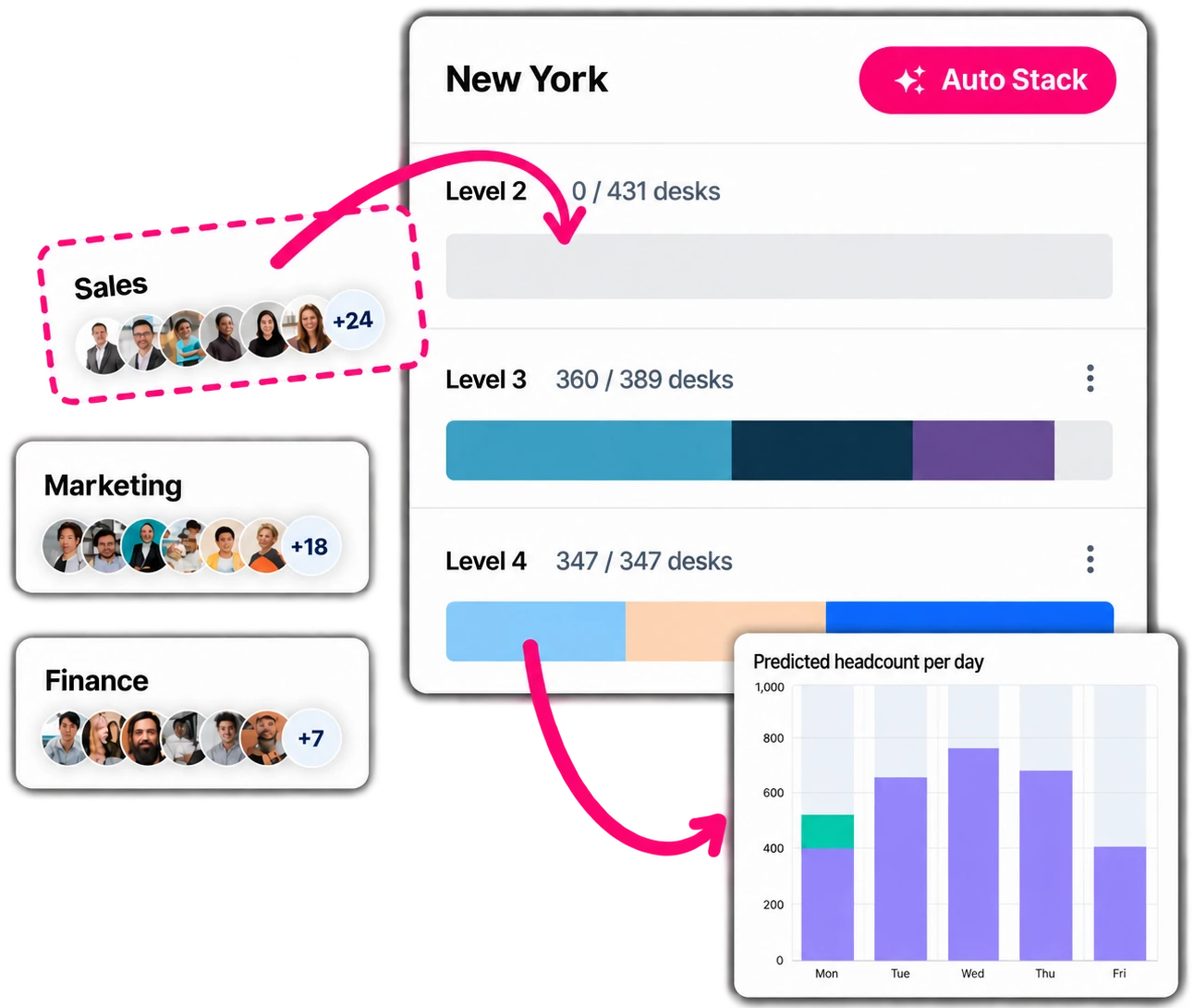
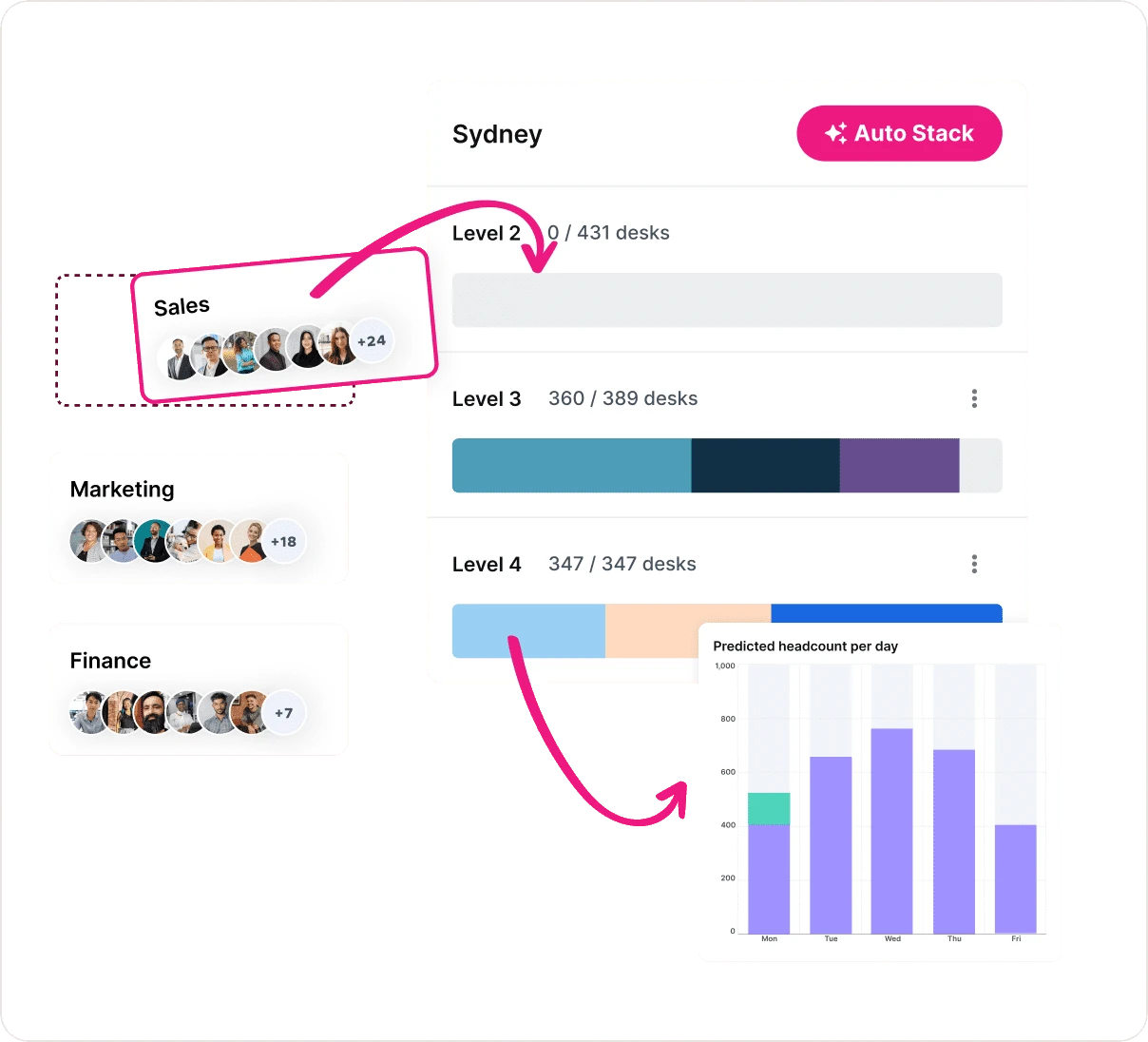
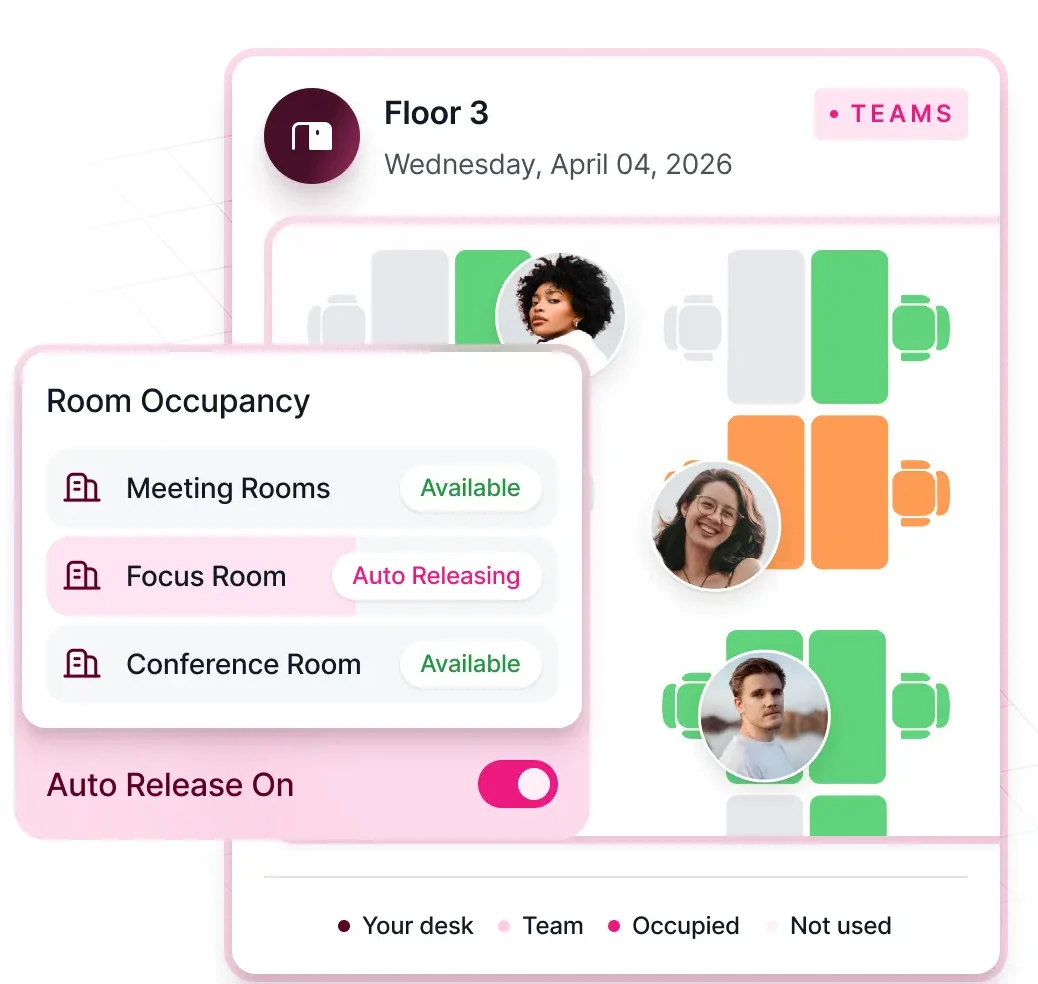
A stylized design of Kadence's AI-generated stack planning feature.
Designed for Imperfect Data

One of the earliest decisions we made was to stop waiting for “perfect” inputs.

Most organisations don’t have pristine attendance data. Booking behaviour is partial. Org charts lag reality. Adjacency requirements are often vague, political, or both. If SpaceOps depended on clean data, it would fail the teams it’s meant to support.

So the system is designed to work with what’s available and improve over time.

It can operate with:

  • inconsistent attendance signals
  • partial booking data
  • evolving team structures
  • building-specific constraints

This is less about statistical purity and more about behavioural realism. The goal isn’t to model an ideal workplace. It’s to reflect how work actually happens.

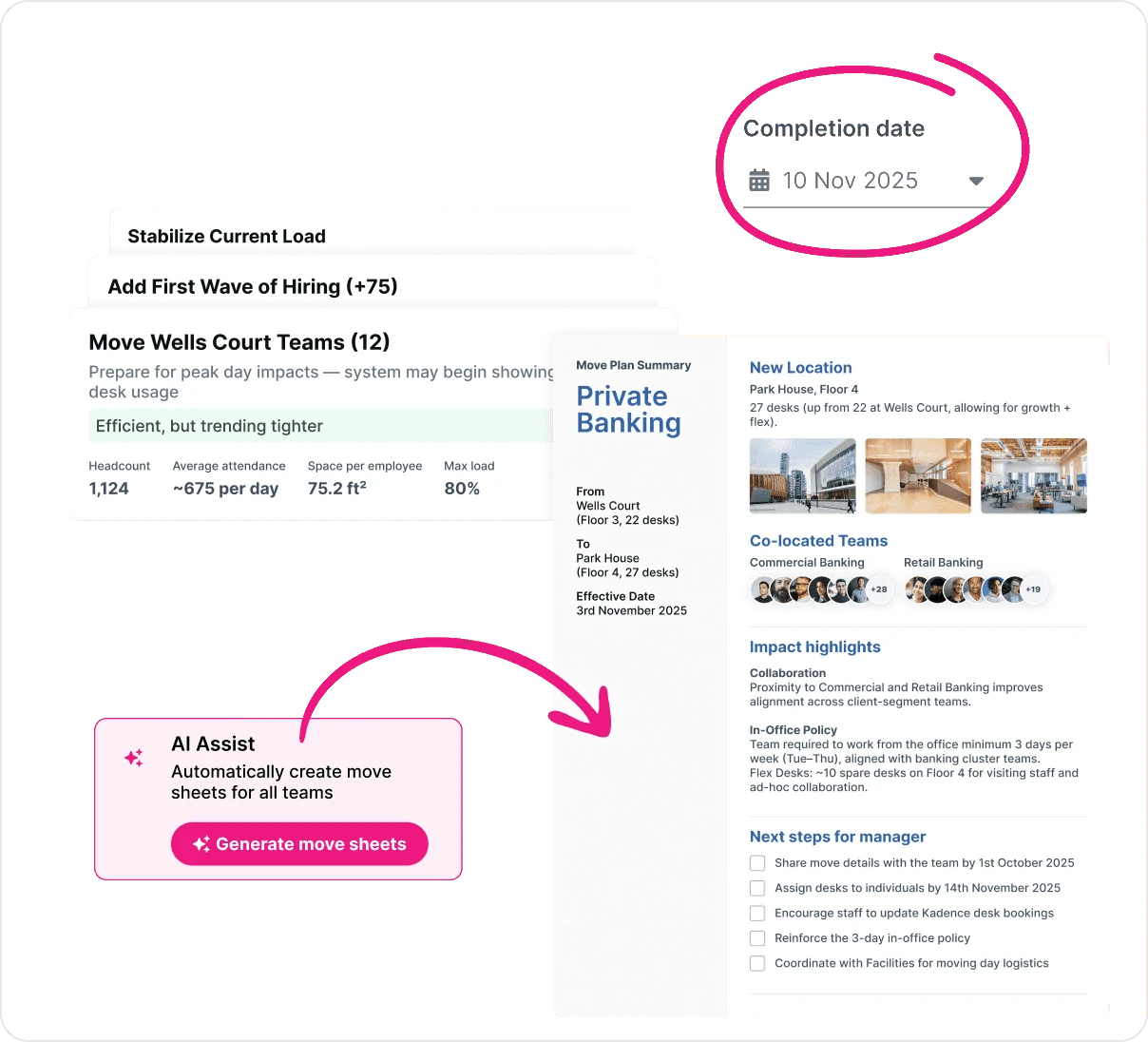
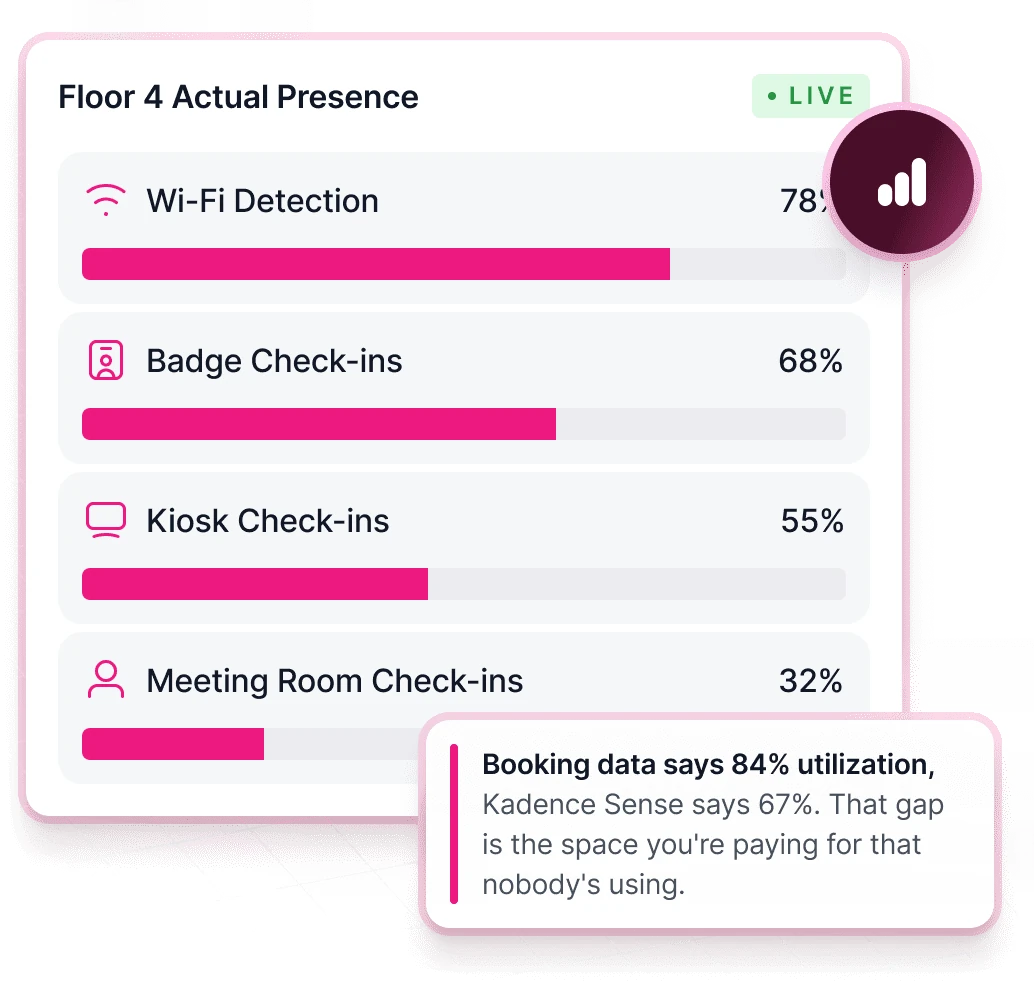
A stylized design of Kadence's Move-Management feature.
Collaboration Is Not an Org Chart

One of the biggest gaps we see in traditional workplace tools is how collaboration is defined.

Org charts are tidy. Work isn’t.

SpaceOps models collaboration using a broader set of signals, including:

  • calendar and meeting patterns
  • booking behaviour
  • proximity trends
  • historical seating decisions
  • natural clustering over time

This helps the system understand which teams genuinely benefit from proximity and which ones don’t. From an operational perspective, this matters because forced adjacency is one of the fastest ways to create friction, disruption, and churn.

By treating collaboration as behaviour rather than hierarchy, SpaceOps produces layouts that feel more intuitive to the people using them.

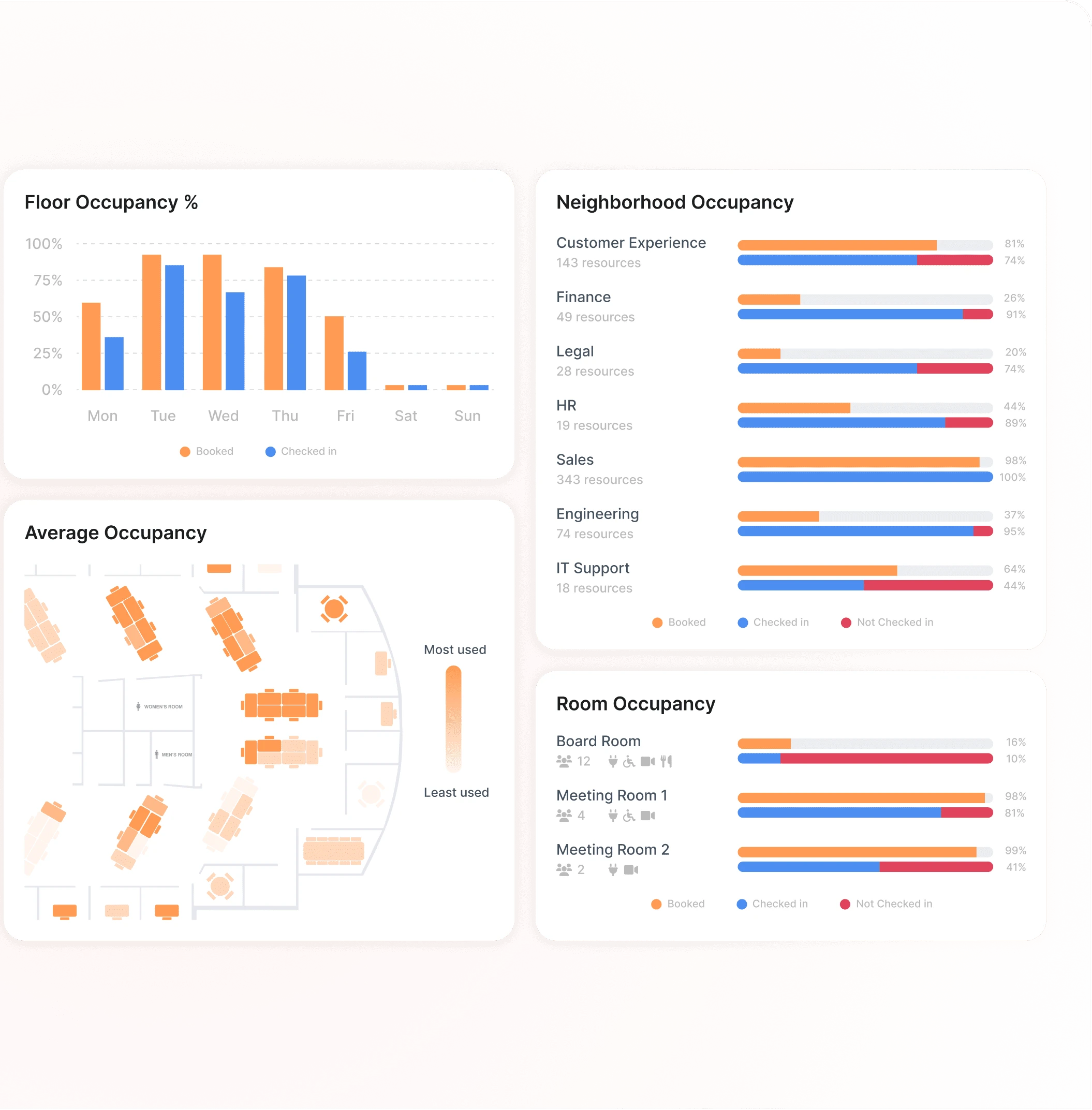
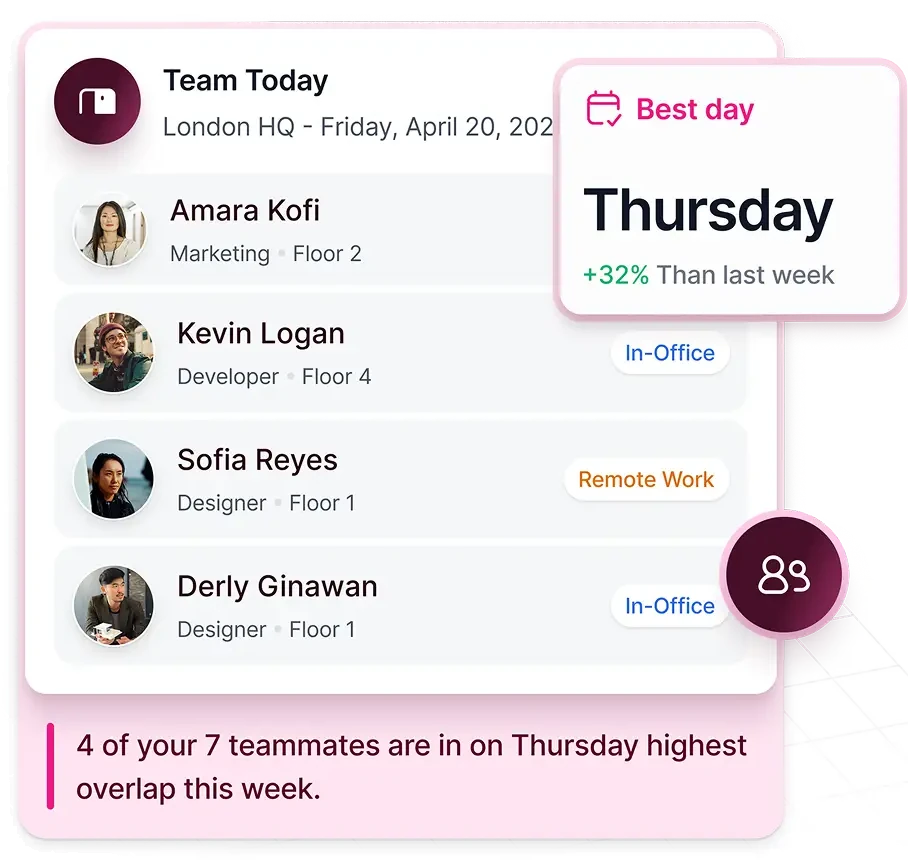
A stylised design of Kadence AI booking recomendations.
Learning Through Use

Another principle we’re building around is learning through repetition.

Every scenario generated, every plan approved, every move executed feeds back into the system. Over time, this helps SpaceOps understand:

  • which adjacency patterns stick
  • which moves create the most disruption
  • how teams respond to change
  • how hybrid behaviour evolves

This feedback loop is a deliberate design choice from Rory’s team, reflecting the reality that workplace systems only get better when they learn from how people actually use them.

This isn’t about automation for its own sake. It’s about reducing repeated friction for workplace teams who are constantly asked to redo the same work under slightly different conditions.

Making Intelligence Explainable

Even the smartest recommendation is useless if it can’t be explained.

SpaceOps is designed to show its reasoning:

  • why certain teams were placed together
  • what trade-offs were made
  • how much space or cost was saved
  • how disruption was reduced
  • how hybrid attendance shaped the outcome
The modelling helps guide decisions. It’s not just about planning, it’s about understanding what those decisions actually unlock.
Workplace Strategy Leader

This explainability turns a plan into a decision leaders can stand behind. It also creates a shared language across Finance, HR, Real Estate, and Workplace teams, so conversations are grounded in the same facts.

Once we’ve reviewed the scenarios, we can reflect that decision directly in Kadence. If a team moves floors, we can model it immediately and see the impact.
Real Estate Leader
The Foundation We’re Building On

What we’re building with SpaceOps is not a feature or a workflow. It’s an operating model for making workplace decisions in environments that are rarely stable, clean, or predictable.

The aim isn’t to automate judgment away. It’s to give workplace, real estate, and operations teams the ability to see their options clearly, understand the consequences, and move forward with confidence instead of guesswork.

If you’re grappling with questions around consolidation, growth, hybrid strategies, or complex moves and want to see how this kind of intelligence applies to your portfolio, we’d love to show you.

You can book a demo with our workplace operations experts to see how teams are using real occupancy data and scenario planning to make better space decisions, faster.


Related Articles
Gen Z Office
Future Of Work
Gen Z Is Choosing The Office. Is Your Workplace Ready?
AI Workspace
Future Of Work
AI Is Reshaping Work. The Workplace Must Catch Up.
SpaceOps Learning
Future Of Work
What We’re Learning as SpaceOps Takes Shape