Every organization is planning for a future that refuses to sit still. Policies change. Attendance fluctuates. Costs rise. Markets move faster than ever. Headcount plans shift, lease decisions loom, and hybrid work patterns continue to change how office space is used. For workplace and real estate leaders, the pressure to make confident decisions in uncertain times has never been higher. That’s why scenario planning matters.
Scenario planning gives organizations a way to see around corners. It helps leaders test multiple futures, anticipate change before it arrives, and act with confidence rather than guesswork.
In the workplace, that means modeling how headcount growth, shifting attendance, and capacity constraints will play out across a real estate portfolio before committing to a lease renewal, a consolidation, or a restack. Applied this way, scenario planning turns space, cost, and workforce decisions into a single evidence-based strategy rather than a series of separate bets.
What Is Workplace Scenario Planning?
Workplace scenario planning is the structured process of modeling several plausible futures for how an organization will use its space, then building a defensible plan for each. It identifies the critical uncertainties facing a workplace, such as attendance patterns, headcount growth, and lease timing, and tests how different decisions play out before any capital is committed.
It shares a name with financial scenario planning but answers a different question. Financial models forecast revenue, cost, and cash under varying assumptions. Workplace scenario planning models how real estate, people, and behavior interact, which is something a pure finance model cannot capture. A spreadsheet can tell you what a floor costs. It cannot tell you whether that floor will hold your teams at peak attendance once a new hybrid policy takes effect. That intersection of cost, capacity, and human behavior is what makes workplace scenario planning a distinct strategic discipline.
What Scenario Planning Really Means
Scenario planning is a structured method of exploring different possible futures. It involves identifying critical uncertainties, modeling multiple outcomes, and designing strategies to respond to each. Unlike forecasting, which assumes a single likely future, scenario planning accepts that the world is unpredictable and prepares organizations to stay ahead of it.
The concept first gained prominence in the 1970s when strategists at Royal Dutch Shell began using scenario analysis to prepare for potential oil crises. When disruption arrived, Shell was one of the few energy companies ready to act.
Half a century later, the principle remains the same but the scale is far greater. Today’s workplace leaders manage more complex systems than ever before, from hybrid work patterns to dynamic lease portfolios and globally distributed teams.

Why Workplace Leaders Need Scenario Planning Today
Workplace leaders can no longer rely on static plans. Kadence Pulse data shows that office utilization still averages between 20 and 40 percent across industries, with wide fluctuations between sectors and cities. Real estate remains one of the top three controllable costs, meaning that underused space translates directly into lost capital.
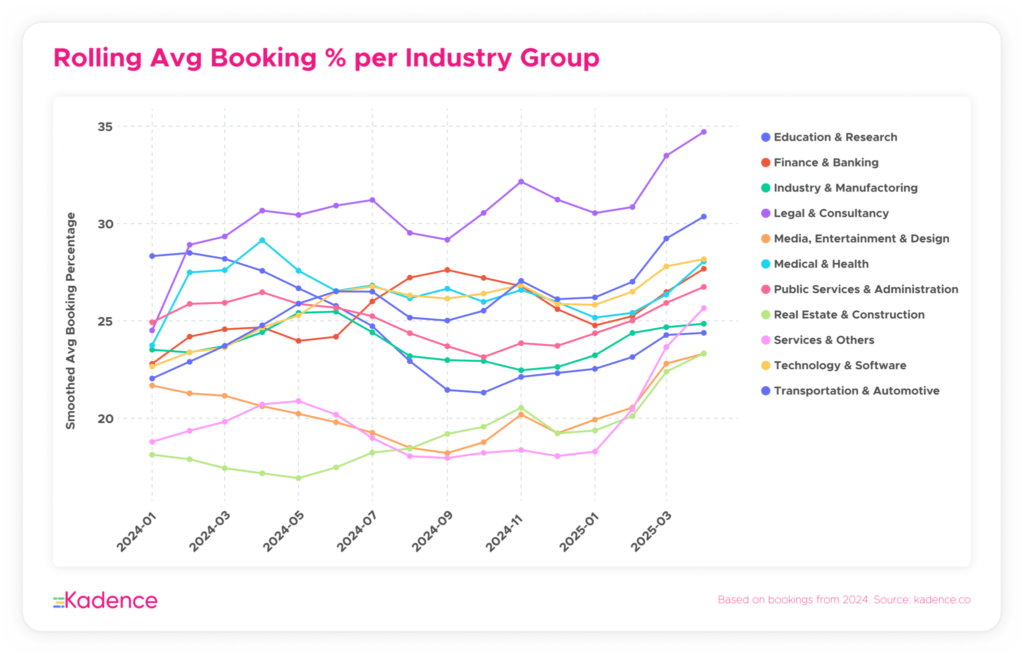
Workplace strategies leveraged traditional tools that were built for stability. Spreadsheets, CAD drawings, and IWMS systems capture what has happened, not what might happen next. They lack the ability to simulate outcomes, evaluate cost-risk trade-offs, or connect planning with execution.
Workplace scenario planning changes that. It gives leaders a framework to prepare for multiple possible futures instead of reacting to one. It replaces static reporting with predictive modeling and enables organizations to:
- Anticipate changes in demand and workforce patterns.
- Identify risks before they become financial liabilities.
- Evaluate trade-offs between cost, collaboration, and culture.
- Align leadership around data rather than opinion.
These decisions are exactly where scenario planning earns its place, because each one commits the organization to a fixed cost against a moving target. A lease renewal locks in space and spend for years on the basis of attendance that may look different by the time the ink dries. An office consolidation can reduce cost or simply push overcrowding onto another floor, depending on how peak demand is modeled beforehand. Restacks rearrange teams and adjacencies that are expensive to undo once people have moved. And RTO policy shifts change the busiest day of the week overnight, straining capacity that looked sufficient on paper. In every case, the choice is too costly to make on assumption, and scenario planning is what replaces the assumption with evidence.
How Do Organizations Build a Workplace Scenario Planning Process
Organizations build a workplace scenario planning process by defining the decision at hand, establishing a baseline from real attendance and utilization data, modeling several distinct futures against it, and aligning stakeholders before committing to any of them. The process works when it is repeatable, defensible, and ongoing rather than a one-time exercise, revisited on a set cadence as conditions change.
Although each organization applies it differently, the process generally follows these steps:
- Identify key drivers of change. These might include policy shifts, headcount growth, lease expirations, or evolving hybrid work patterns.
- Define critical uncertainties. What factors could significantly impact space, cost, or team dynamics?
- Develop plausible scenarios. Model several futures such as growth, downsizing, or consolidation to test potential outcomes.
- Quantify the impact. Assess how each scenario influences budgets, utilization, and employee experience.
- Design responses. For each model, outline actionable plans the business could implement if that scenario became reality.
- Revisit regularly. Workplace scenario planning is not a one-off activity but a living process that evolves as new data emerges.
Workplace scenario planning does not eliminate uncertainty, but it gives leaders a structured way to manage it and execute successful workplace strategies.
In workplace terms, that means grounding the baseline in real attendance and utilization data, setting decision criteria around cost, capacity, and collaboration, modeling scenarios against peak rather than average demand, and aligning real estate, finance, and people leaders before any plan moves to execution.

What Scenarios Do Workplace Leaders Need to Model?
Workplace leaders need to model the scenarios tied to a decision that is actually on the table, with a timeline and a cost attached. Not every possible future is worth the effort, and modeling for its own sake produces noise rather than direction. Four scenarios come up repeatedly because each one commits real budget against a moving target.
Right-Sizing and Office Consolidation Scenarios
This is the highest-volume entry point heading into 2026, driven by broad, finance-led pressure to shed underused space. Modeling answers the questions leadership actually asks: how much space can we release, where does peak demand strain us if we do, and what does consolidation look like across a multi-site portfolio. It shows whether an office downsizing move genuinely reduces spend or simply pushes overcrowding onto another floor. Done well, it turns a blunt cost-cutting mandate into a targeted plan.
Hiring Surges and Growth Scenarios
When headcount is outpacing available space, or when growth itself is uncertain, modeling shows when a site will hit its ceiling. It lets leaders compare growth, consolidation, and status-quo paths side by side, using projected demand rather than a headcount figure pulled from an org chart. That comparison makes the trade-offs explicit before capacity becomes a constraint, and it sets up the headcount question the next section addresses.
Hybrid Policy and RTO Scenarios
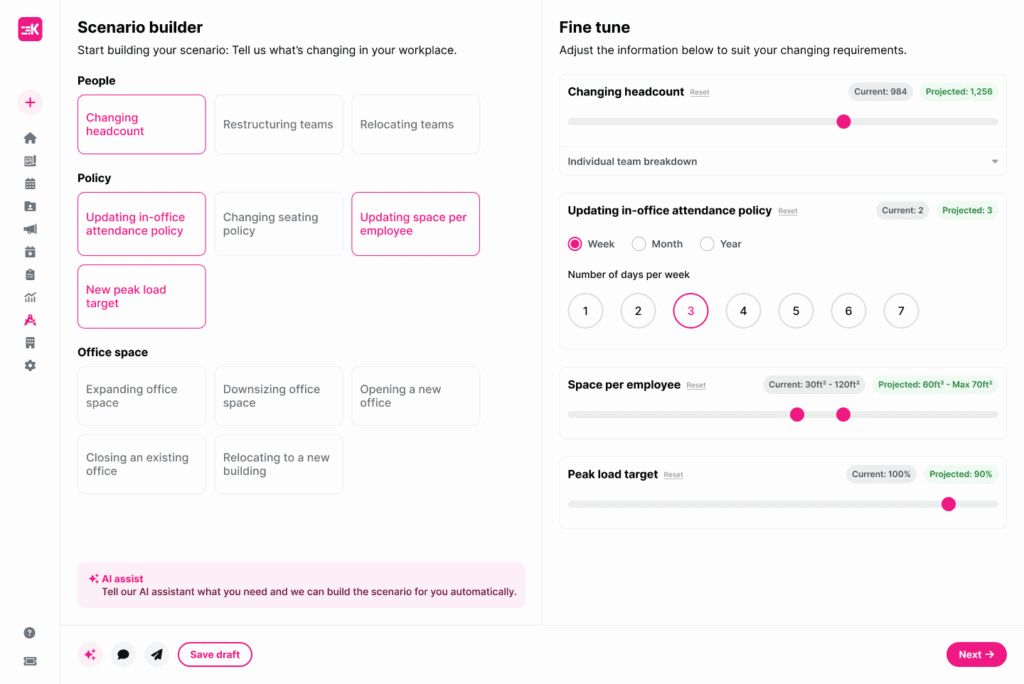
When a policy shift changes attendance, the spatial implications are rarely obvious. Modeling answers what a move from three to four in-office days does to peak load, and whether existing space can absorb it. The point is less the policy itself than what it does to the busiest day of the week, which is where capacity actually breaks.
Lease Renewal and Restack Scenarios
When a real estate commitment needs justification, scenario planning supplies the defensibility. It compares renewing, downsizing, restacking, and relocating, with the data behind each path made explicit rather than assumed. For finance and corporate real estate leaders, this is where a modeled plan becomes something that holds up in front of the board.
How Does Headcount Planning Connect to Workplace Strategy
Headcount planning connects to workplace strategy because the number of people an organization employs is the single largest input into how much space it needs, yet the two are usually planned in separate systems. When headcount planning stays inside HR and finance, space decisions inherit assumptions that were never meant to describe a building. Closing that gap is what turns a workforce plan into a workplace strategy, and it starts with a shared definition.
What Is Headcount Planning?
Headcount planning is the process of forecasting how many people an organization will employ, in which roles, over a defined period, and at what cost. In its traditional form it is an HR and finance exercise built around the org chart and the budget.
That org-chart view breaks down as soon as it meets a hybrid workplace. A team of 100 does not need 100 desks when attendance runs at 60 percent on the busiest day and lower the rest of the week. Planning space against nominal headcount overbuilds capacity and inflates cost, because it counts seats no one occupies. The figure that matters for workplace decisions is demand, not seat assignments.
Credible headcount planning for space therefore draws on different inputs: actual attendance patterns, how teams behave rather than how they are structured, demand at the neighborhood level, and the gap between peak and average occupancy. Modeled that way, headcount becomes a reliable basis for space decisions instead of a source of expensive error.
Scenario Planning In The Workplace
Workplace and real estate leaders are under increasing pressure to make faster, smarter, and more defensible decisions. Every adjustment to policy, headcount, or space allocation creates a ripple effect. Workplace scenario planning helps teams test these outcomes before they commit to change.
Consider a global enterprise deciding whether to close an underused office. With scenario planning, leaders can develop new workplace strategies, model attendance patterns, team distribution, and cost impact to see whether consolidation will truly reduce spend or simply create overcrowding elsewhere.
Or take a technology firm evaluating a shift from two to three in-office days per week. By forecasting demand, leaders can see whether existing capacity can handle the increase or whether additional space will be needed. These exercises move decisions from assumption to evidence.
Data shows that companies with consistent and predictable attendance patterns operate 45 percent more efficiently than those with irregular usage. Meanwhile, volatile attendance leads to as much as 25 percent of space being wasted weekly. Workplace scenario planning helps close that gap by turning variability into a managed system.
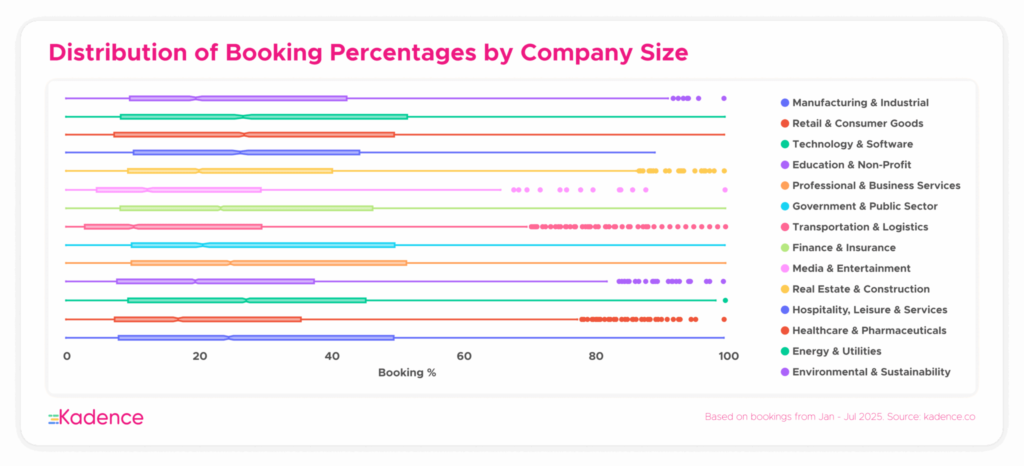
Modeled well, scenario planning stops being an isolated exercise and becomes the input that drives broader workplace strategy, informing how space, cost, and operational decisions are made across the portfolio.
What Are the Most Common Workplace Scenario Planning Mistakes?
The most common workplace scenario planning mistakes share one root cause: treating the exercise as a document to be completed rather than a discipline to be maintained. The result is a plan that looks rigorous but cannot survive contact with a changing workplace.
A few pitfalls recur often enough to be worth naming. The first is planning around a single scenario, which removes the what-if that gives the work its value. The second is using static headcount instead of behavioral demand data, which builds overcapacity in from the start. Others include modeling once and treating the output as final, ignoring the variance between peak and average attendance that hides where capacity actually breaks, and confusing operational reporting with strategic decision intelligence. Perhaps the most costly is failing to align stakeholders early, so a sound plan dies in approval. Each of these is avoidable, and most of your peers are still making them.
Connecting Workplace Scenario Planning to Broader Workplace Strategy
The value of scenario planning depends on data that reflects reality. Many organizations build workplace strategies on models of what might happen but cannot connect those models to live operational data. They end up with theoretical exercises rather than executable strategies.
True workplace scenario planning requires integration between the people using the space and the systems tracking it. That means understanding occupancy, booking behavior, and team patterns as they change each week. Only when those inputs are connected can leaders run models that respond to real-world dynamics rather than assumptions.
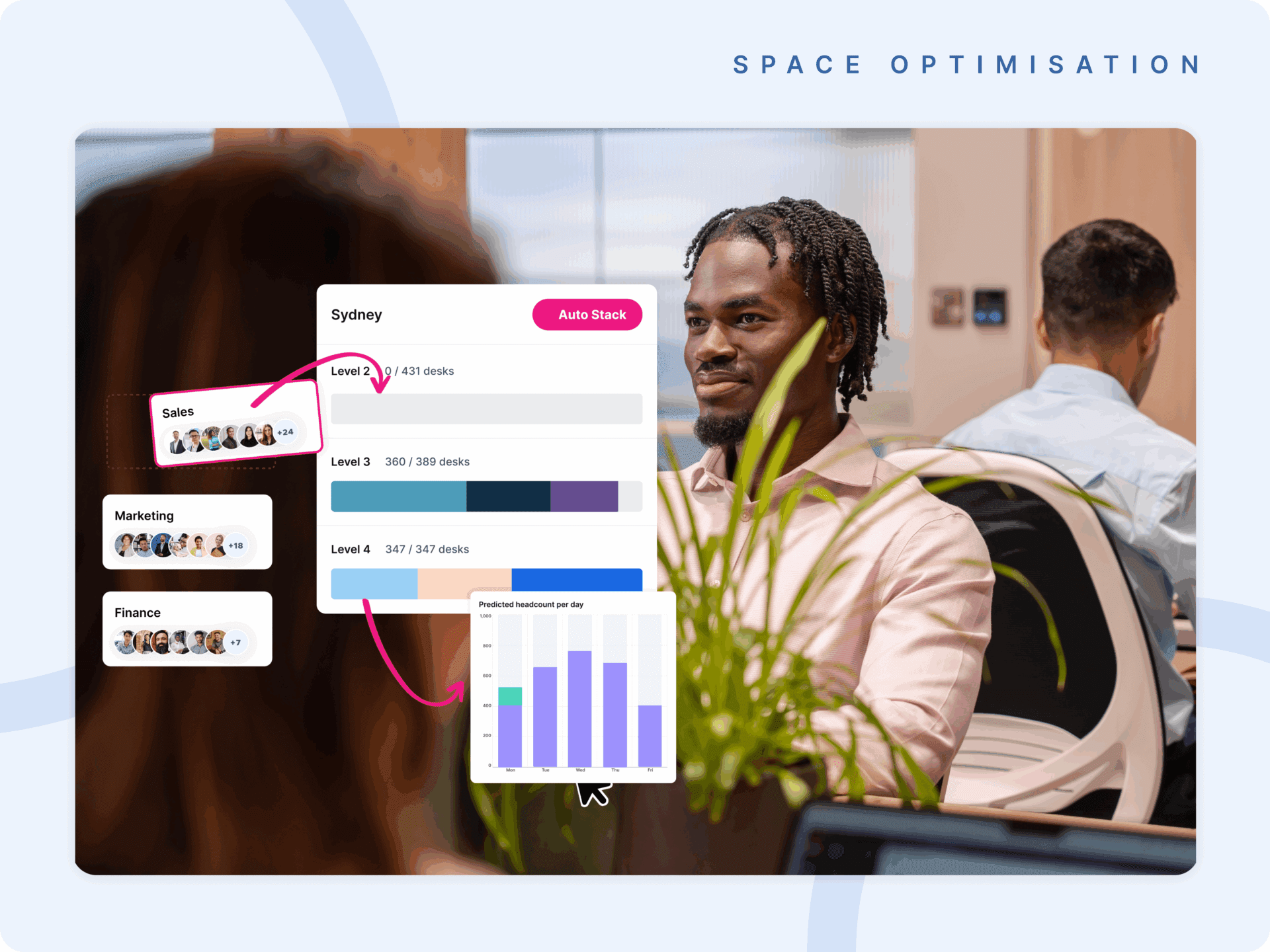
Scenario planning does not sit on its own. Its outputs become the inputs for nearly every downstream decision in office space planning. The scenarios a team validates provide the evidence behind lease renewal and consolidation choices, replacing a gut call on whether to renew, downsize, or relocate with a defensible one. They set the direction for occupancy analysis and floor plan design, translating a chosen future into a specific allocation of space. From there they feed stack planning and move management execution, sequencing restacks and relocations in a way that limits disruption to teams. And they connect upward into workplace operations, giving day-to-day decisions a consistent logic rather than leaving each one to be argued from scratch. For finance and corporate real estate leaders, this is the difference between a portfolio managed by reaction and one managed by design.
Why Scenario Planning Creates Competitive Advantage
Data shows a clear pattern. Organizations with consistent and predictable attendance achieve higher space efficiency than those with irregular usage, while volatile patterns correlate with significant weekly waste. Scenario planning helps leaders close this gap by simulating policy, attendance, and team changes before they happen, then aligning capacity and costs with real demand.
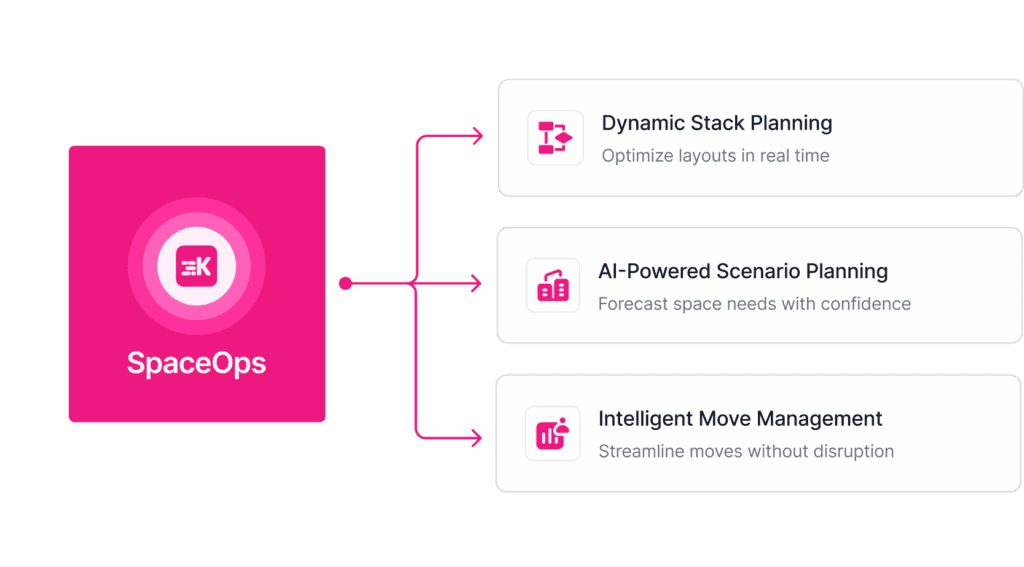
By using SpaceOps to model multiple futures and evaluate their impacts on space, cost, and collaboration, leadership teams can make decisions that are evidence based and financially defensible. Because SpaceOps links modeling with execution, chosen scenarios can be implemented with move management and stack planning, which helps keep employees productive and reduces disruption in practice.
Scenario planning is not an annual workshop. It is a continuous operating rhythm that supports smarter investment, stronger performance, and greater resilience across portfolios.
How Kadence SpaceOps Supports Workplace Scenario Planning
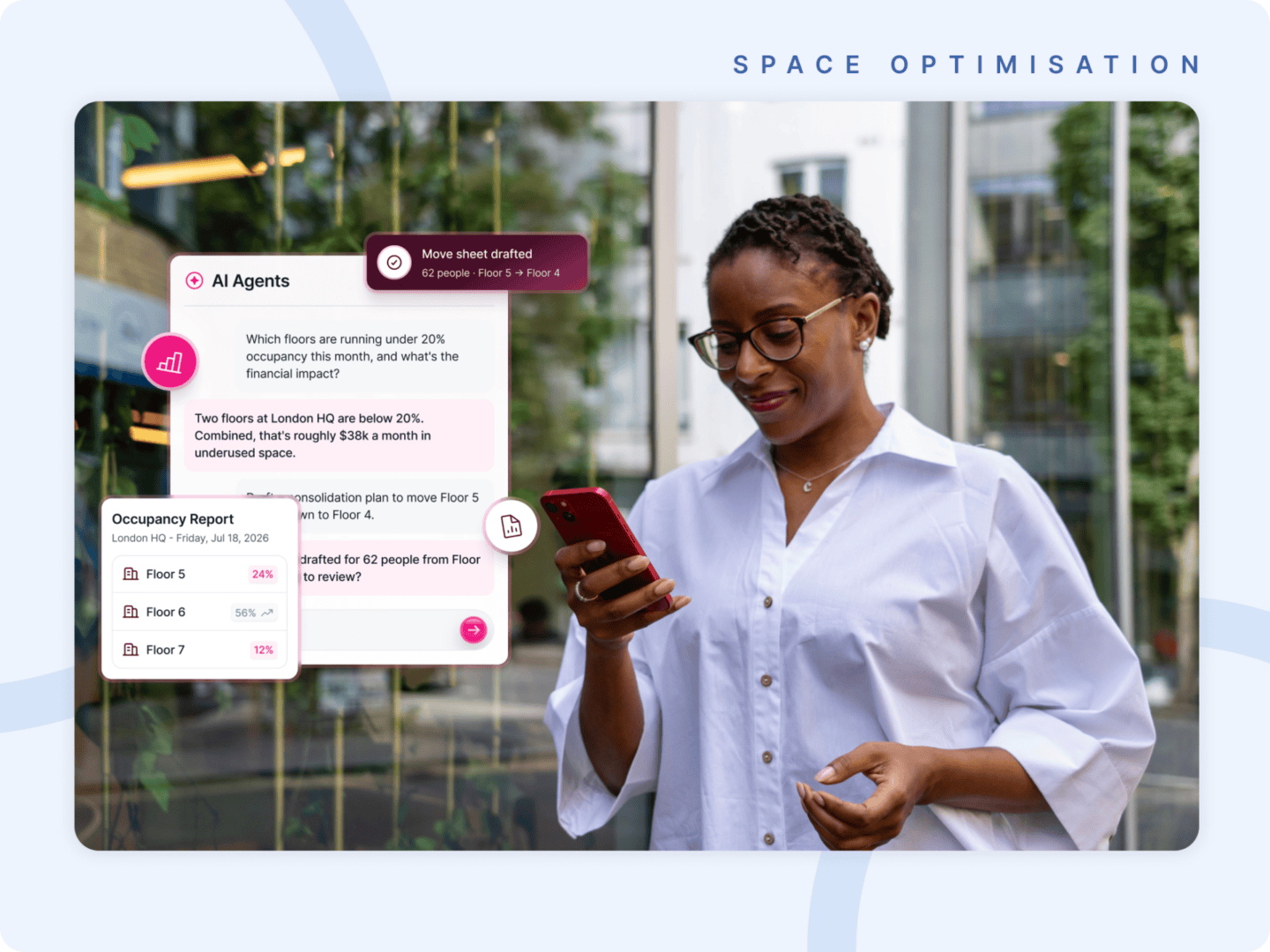
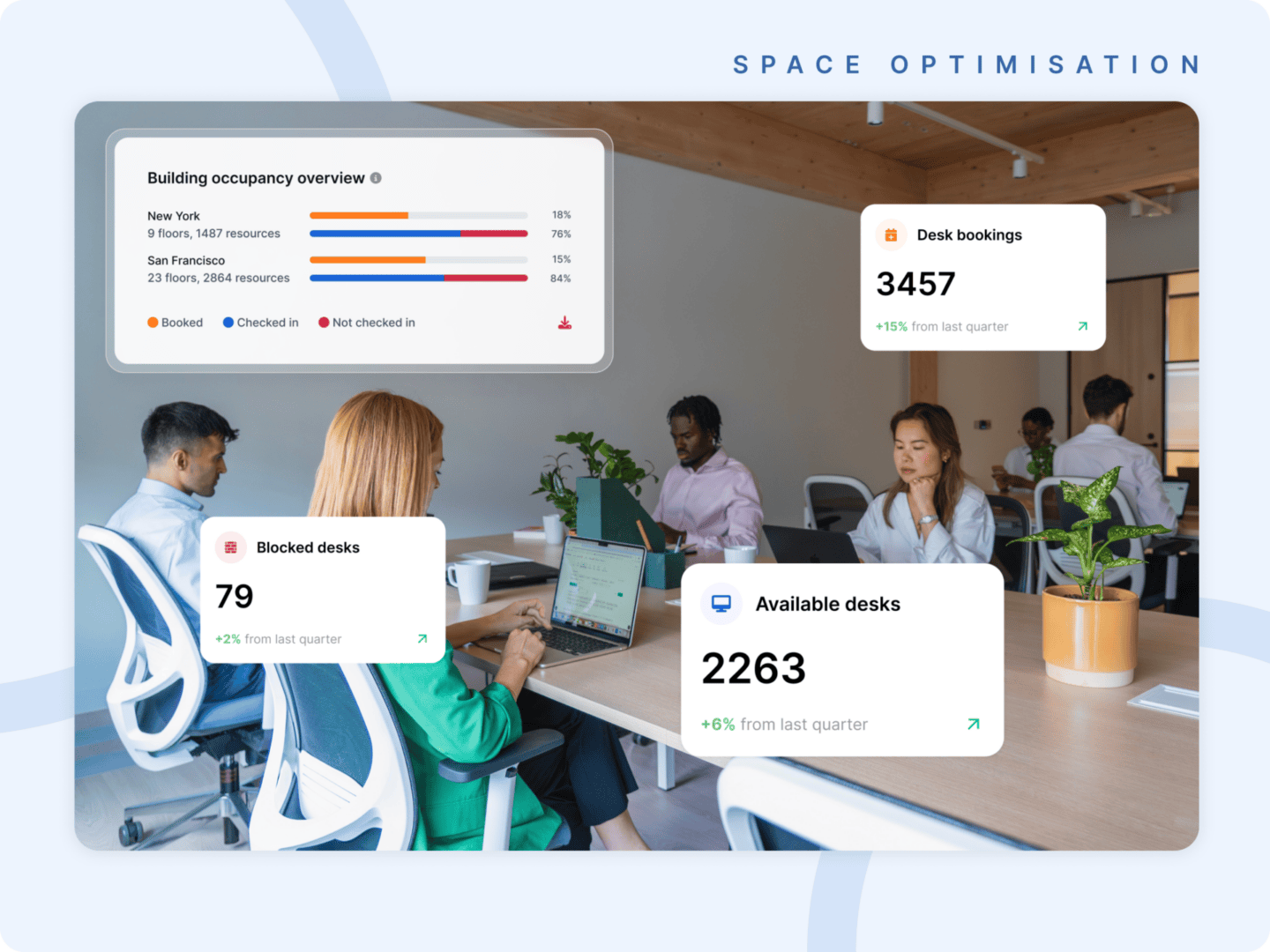
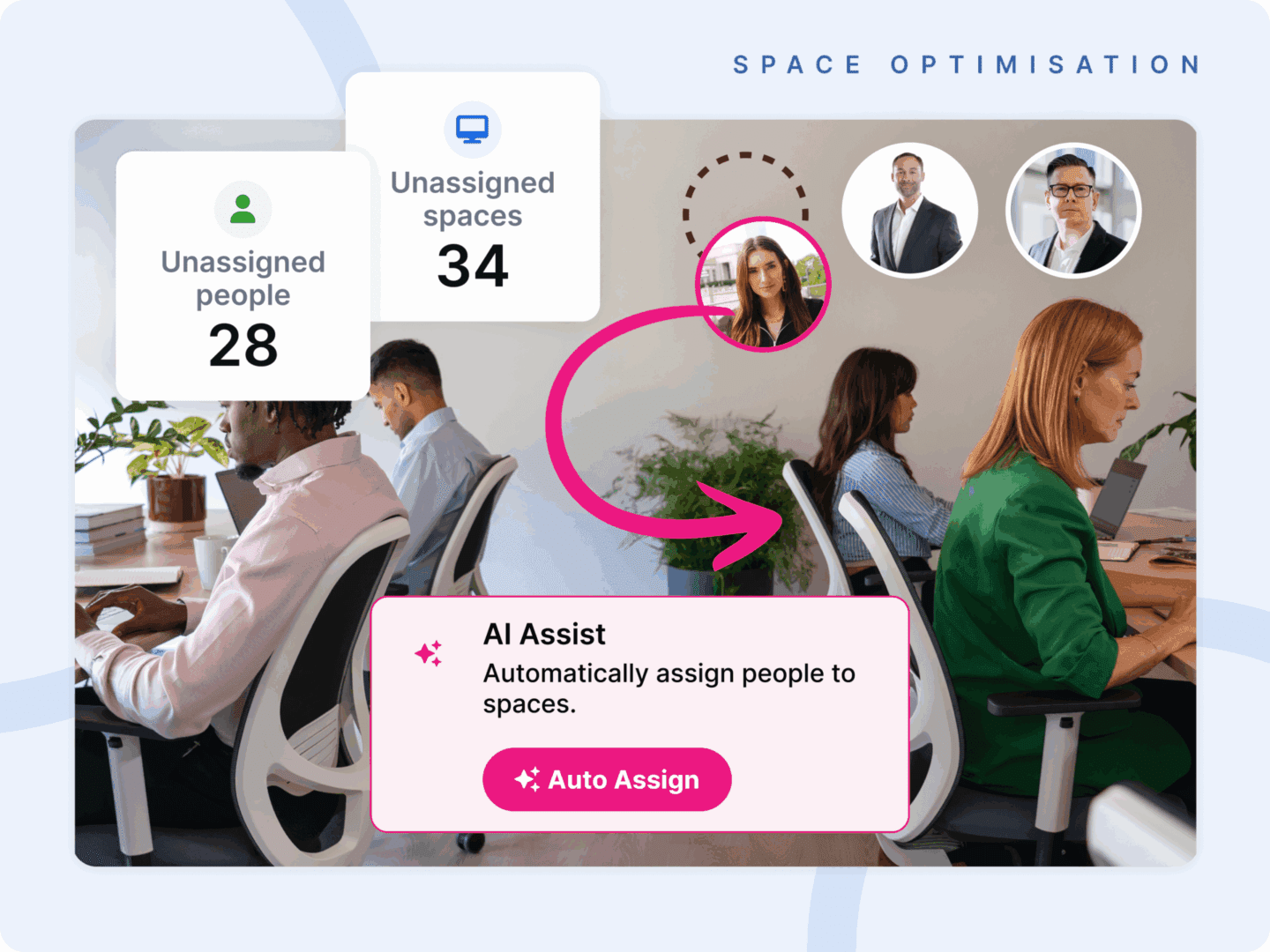
Kadence SpaceOps turns scenario planning from a strategic exercise into an operational capability. It enables leaders to model, test, and execute scenarios in one connected platform, linking live occupancy data with AI forecasting to simulate the real impact of change.
With SpaceOps, workplace teams can:
- Instantly generate multiple “what-if” models using live space utilization data drawn from bookings and attendance patterns.
- Forecast seat demand and capacity under new hybrid policies or organizational shifts.
- Compare how different layouts, team structures, or headcount projections influence cost, collaboration, and performance.
- Translate validated scenarios into action with built-in move management and stack planning tools that keep teams productive during change.
By combining modeling with execution, SpaceOps removes the gap between strategy and delivery. A CFO can present a financially tested plan to the board. Facilities leaders can coordinate moves in hours instead of weeks. HR teams can align workplace design with how people actually collaborate.
Kadence SpaceOps makes this possible by helping organizations model multiple futures, test outcomes, and turn strategy into measurable actions grounded in live workplace data.
Book a demo with our workplace operations experts today to see SpaceOps in action. If you are still building the business case, our ROI calculator quantifies what underused space is costing you today.
FAQs about Workplace Scenario Planning
How often should workplace scenarios be re-modeled?
Quarterly at a minimum, and additionally before any lease decision or after a policy change. Static plans lose accuracy as attendance and headcount shift.
What data do you need for workplace scenario planning?
Attendance patterns, current utilization and capacity, headcount forecasts, and lease timelines. Behavioral demand data matters more than nominal seat counts.
How is headcount planning different from workforce planning?
Headcount planning forecasts how many people you will employ and at what cost. Workforce planning is broader, covering skills, roles, and capability. For space decisions, headcount modeled as real demand is the relevant input.
Who is responsible for workplace scenario planning?
It typically spans corporate real estate, finance, and workplace or people teams. The strongest processes give one owner accountability while pulling data and sign-off from all three.