
In February 2025, Starbucks cut 1,100 corporate jobs as part of a wider effort to streamline operations and refocus its business strategy. At the same time, it renewed its focus on in-person work. The announcement showed that even iconic brands are not immune to structural overhauls.
“Our intent is to operate more efficiently, increase accountability, reduce complexity and drive better integration.”
Brian Niccol, CEO, Starbucks
Beneath the headlines was a deeper question: what did the cuts mean for hybrid work at Starbucks, and for other organizations still working out their workplace strategies?
Why did Starbucks cut 1,100 jobs?
Starbucks cut 1,100 corporate jobs in February 2025 to operate more efficiently, increase accountability, reduce complexity and drive better integration, in CEO Brian Niccol’s words. The cuts were part of a broader effort to streamline operations and refocus the business strategy. They came alongside new in-office requirements for senior leaders.
A few months earlier, Kadence looked at how Starbucks’ mandate for employees to return to the office three days a week undermined the flexibility of its hybrid strategy. With the layoffs and leadership changes, Starbucks reached an inflection point: could it keep a strong, flexible workplace culture while restructuring for efficiency?
What did Starbucks change about remote and in-office work?
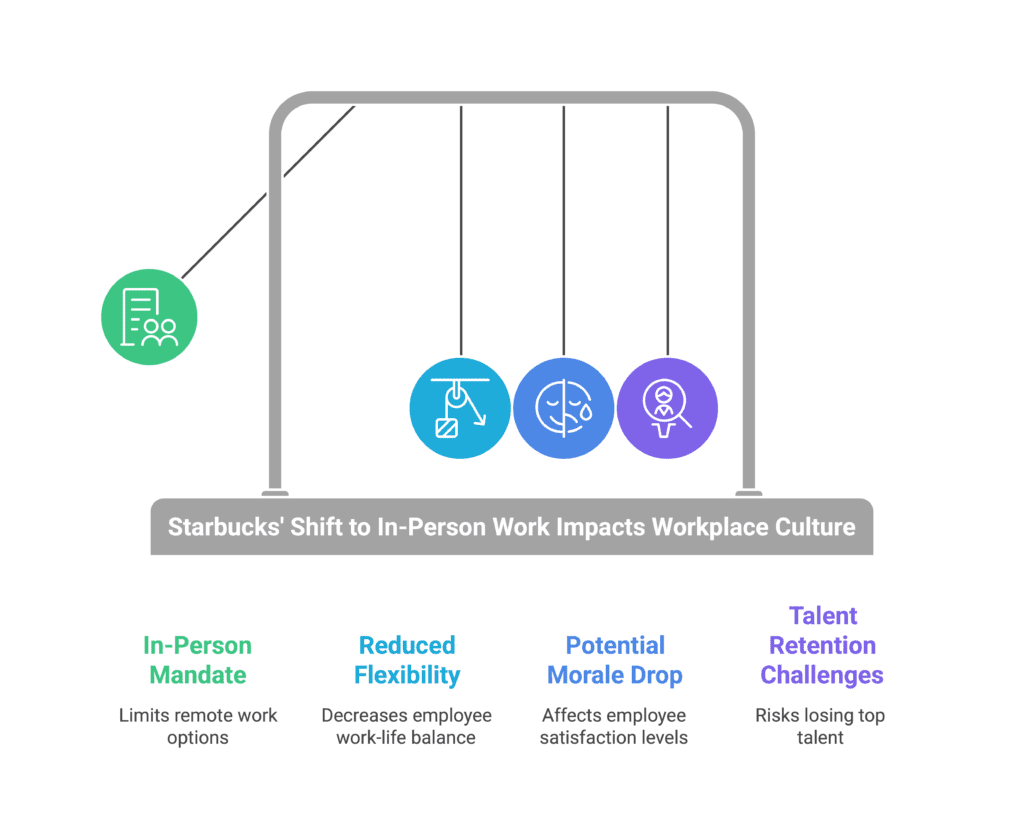
Alongside the cuts, Starbucks discouraged remote work and required all VP+ leaders in North America to work from the office at least three days a week. Future hires will need to be based in Seattle or Toronto, except for enterprise-designated remote roles. Most existing remote employees at director level and below keep their status.
The requirement appears to be another push to carry out the office mandate set the previous August. In a section of his letter about “taking steps to bring together our North America leadership teams,” Niccol said all “VP+ leaders in North America” must work from the office a minimum of three days per week, as part of a renewed focus on in-person collaboration.
He added that “hiring for future roles will require partners to be Seattle or Toronto based, except for enterprise designated remote positions.” This is not an outright reversal, but it signals a shift toward fewer remote roles in the future. Niccol also reassured staff that “Generally, partners working remotely in director and below roles today will keep their remote status.”
Can Starbucks retain talent while driving efficiency?
Layoffs do not just reduce costs. They affect morale, engagement and retention. If hybrid work was a key part of Starbucks’ talent strategy, pulling back on flexibility risked driving away high performers. Research on return-to-office mandates points to higher attrition, especially among the people companies most want to keep.
Companies that force rigid return-to-office (RTO) policies often see higher attrition, particularly among top talent who value autonomy. A study from the University of Pittsburgh found that S&P 500 firms implementing RTO mandates faced “abnormally high” employee turnover, with pronounced losses among women, senior employees and highly skilled workers. For a contrasting case, see how Trip.com approached hybrid work.
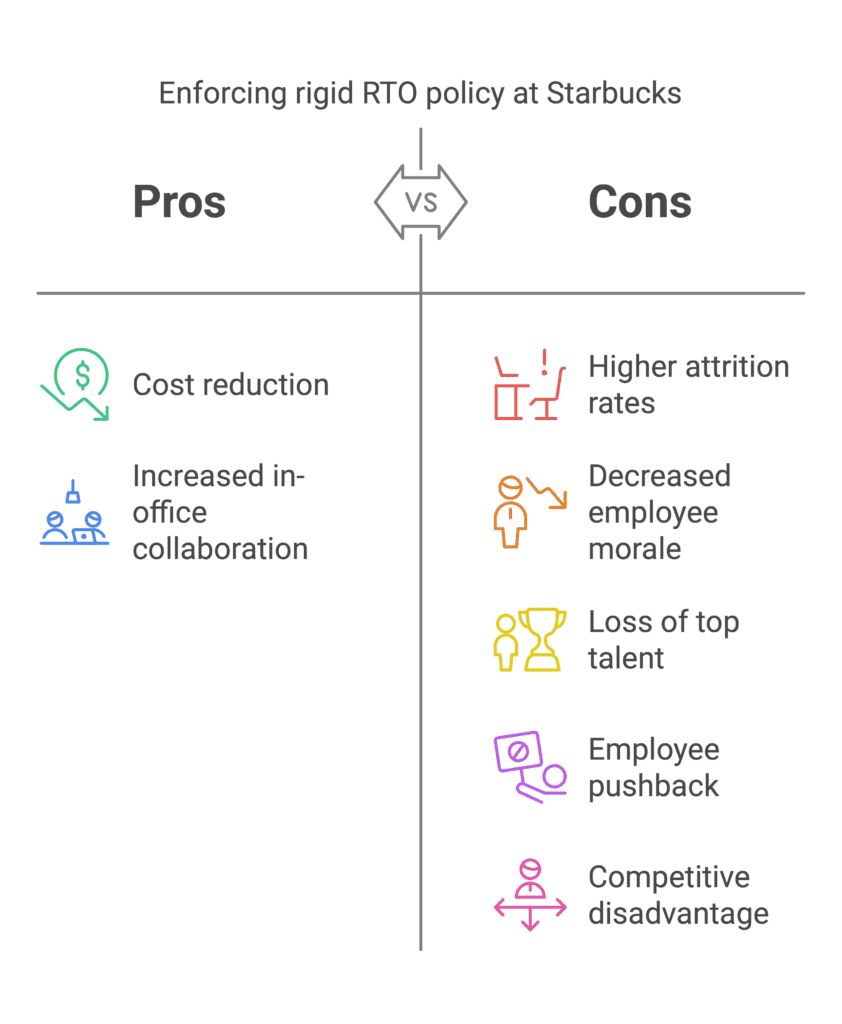
This has played out before. JPMorgan and Amazon tightened their RTO policies and faced pushback from employees. Companies like Apple, Microsoft, and SpaceX saw increased attrition when they imposed stricter in-office mandates.
Workers now expect hybrid flexibility as a baseline, not a perk. A Pew Research study published in January 2025 found that nearly half of employed adults who could work remotely would consider leaving their jobs if forced to return full-time. Without a firm commitment to the hybrid culture it had built, Starbucks risked alienating its best people in a competitive talent market.
What can other organizations learn from Starbucks?
Organizations watching Starbucks can take three lessons. Balance efficiency with flexibility, so cost-cutting does not remove the flexible work environment. Communicate change clearly and in both directions. And base decisions on data about how work models and office space actually perform, rather than on assumptions about office culture.
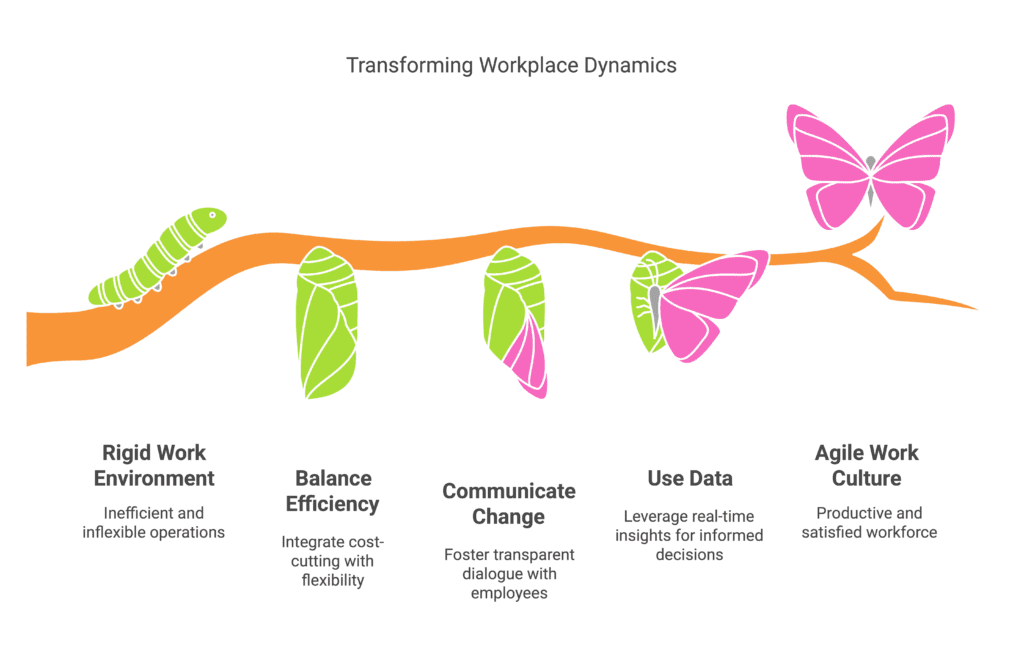
- Balance operational efficiency with workplace flexibility. Cost-cutting should not come at the expense of a flexible work environment. Done right, hybrid work has been shown to increase productivity and employee satisfaction. Prioritize agility over rigidity.
- Communicate change clearly and authentically. Employees worry about job security, and also about how changes affect their day-to-day experience. Clear, transparent, two-way dialogue is critical when hybrid policies change.
- Use data, not assumptions. Track real-time data on how different work models affect performance, engagement and retention. Base decisions on what actually works, not outdated ideas of office culture.
The third lesson applies directly to real estate. Had Starbucks explored its real estate spend through insight into how its offices are actually used? Understanding workspace utilization could help any company make more strategic decisions about office mandates and hybrid policies.
What’s next for Starbucks and hybrid work?
As of February 2025, Starbucks had a chance to reaffirm its commitment to a modern, adaptable workforce. If it leaned into hybrid work rather than pulling back, it could turn the restructuring into a chance to redefine what an adaptive corporate culture looks like. Companies that thrive will evolve with their people, not against them.
Whether an organization is scaling back, expanding or simply optimizing, the key is to be intentional. Kadence’s guide to return to office covers how to build a hybrid strategy that works for both the business and its employees.
Frequently asked questions
How many jobs did Starbucks cut in February 2025?
Starbucks cut 1,100 corporate jobs in February 2025, as part of an effort to streamline operations and refocus its business strategy.
What are Starbucks’ office requirements for leaders?
As of February 2025, all VP+ leaders in North America must work from the office a minimum of three days per week. Future hires must be based in Seattle or Toronto, except for enterprise-designated remote positions.
Did Starbucks end remote work for existing employees?
No. Brian Niccol said that, generally, partners working remotely in director and below roles would keep their remote status.
Do return-to-office mandates increase attrition?
A University of Pittsburgh study found that S&P 500 firms implementing RTO mandates faced abnormally high turnover, with pronounced losses among women, senior employees and highly skilled workers.