
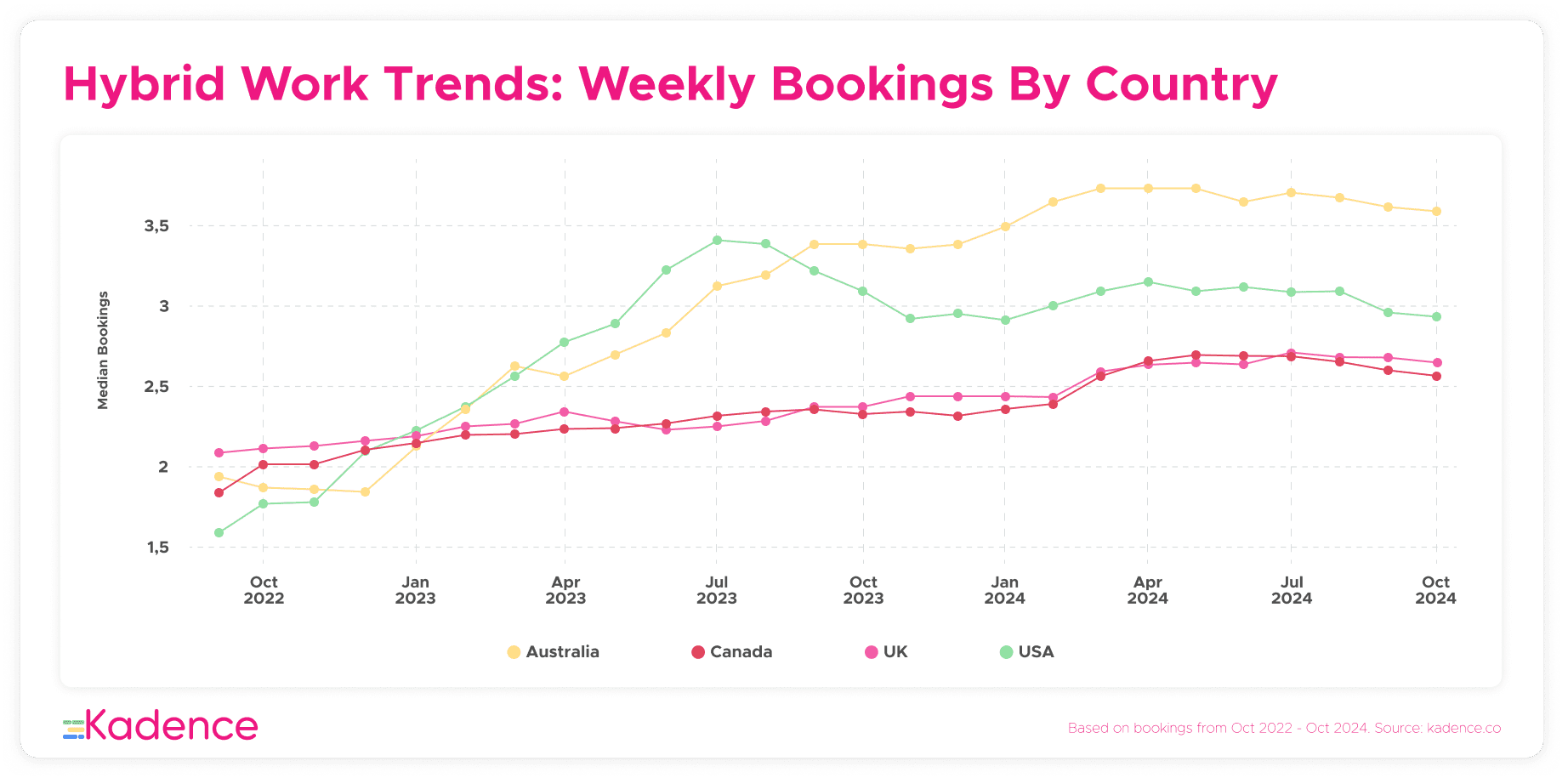
Office attendance varies sharply by country. In November 2024, Kadence analyzed booking data from over 500 companies and found that Australian office workers had the highest in-office engagement, US hybrid work had settled at two office days per week, Canada averaged roughly one in-office day a week, and the UK was the hybrid holdout.
In every region except Australia, Tuesday and Wednesday were the peak in-office days. This first Hybrid Pulse Check sets out what the data showed and what it means for workplace leaders planning space and policy.
How many days a week do people go to the office in each country?
In the November 2024 data, Australian office workers averaged two to three days a week in the office, the highest in-office engagement of the countries measured. US hybrid work had stabilized at two office days per week. Canada took a more relaxed approach, with roughly one in-office day a week. UK attendance stayed largely flat.

The UK saw only a small post-summer bump in 2024, as big companies nudged employees back to their desks.
Office attendance here means the days employees book a workspace in the office, measured from bookings rather than policy.
What should workplace leaders do in each country?
- Australia: With high attendance, create vibrant, engaging office spaces for regulars.
- US and UK: Hybrid is here to stay, so communicate hybrid policies clearly.
- Canada: Keep investing in remote work setups, but do not neglect flexible office space for occasional in-office days.
Where is resistance to return-to-office mandates strongest?
The UK showed the strongest resistance to returning to the office in November 2024. UK employees showed a strong preference for remote working and pushed back against full return-to-office mandates. Canada followed a similar path, with remote work and occasional office visits as the norm. Australia stood out as the opposite case.
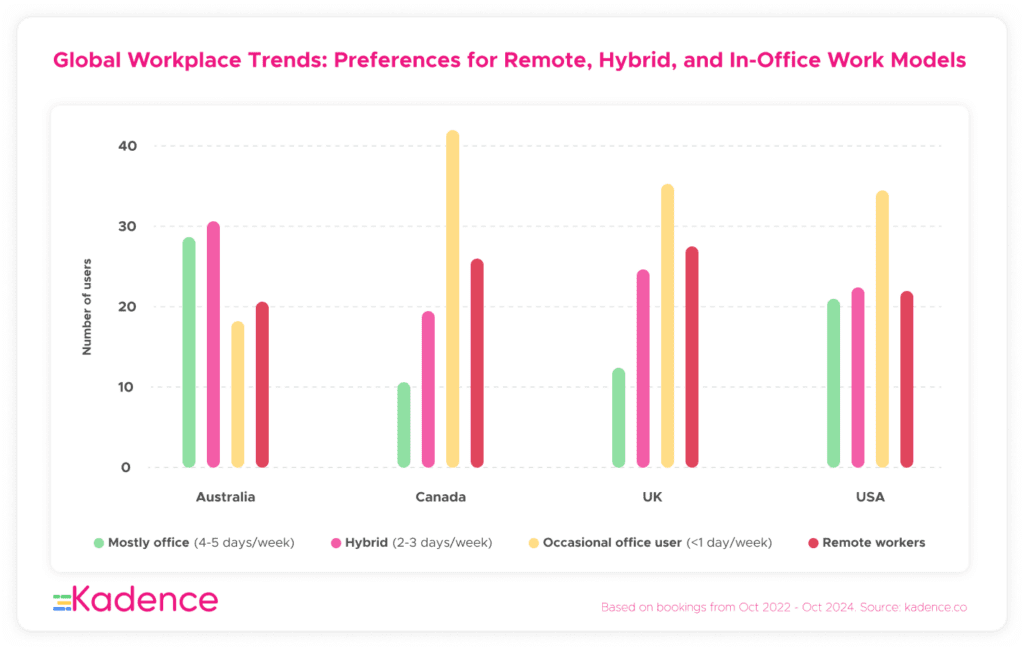
Australia’s two to three office days a week blend remote flexibility with in-person collaboration.
How can organizations adapt?
In Canada and the UK, lean into remote work. Flexible desks, collaborative tools and easy-to-use desk booking software make life easier for everyone. In Australia and the US, focus on getting hybrid schedules right. That means balancing collaboration spaces with quiet zones for heads-down work, and helping teams coordinate which days they come in.
Which days of the week are busiest in the office?
Tuesday and Wednesday were the peak in-office days across most regions in the November 2024 data. Europeans and Americans tended to come in two to three days a week and concentrate them mid-week. Australians were the exception: Monday was their peak office day, and attendance tapered off by Thursday.


How should you plan for peak days?
For the US and Europe, prepare Tuesdays and Wednesdays for peak office traffic, with enough space and resources. For Australia, embrace the early-week activity and plan a more relaxed setup toward Thursday to match lower attendance.
Peak days matter for real estate decisions. A floor sized for an average day can still run short on a Tuesday. Occupancy data by weekday shows where that gap sits. Kadence’s guide to workplace analytics metrics explains which measures to track.
How do you make the office work for everyone?
Hybrid is a mindset shift as much as a work style. The office is where ideas flow, teams bond and culture thrives, not just desks and meeting rooms. To make hybrid work, create spaces people want to use, and use attendance and space-usage data to design workplaces that support collaboration and productivity.
Frequently asked questions
What data did the Hybrid Pulse Check #1 use?
Kadence analyzed booking data from over 500 companies using its platform. The findings were published in November 2024.
How many days a week did US hybrid workers go to the office?
US hybrid work had settled into a rhythm of two office days per week, according to the November 2024 Pulse Check.
What are the most popular days to work in the office?
Tuesday and Wednesday were the peak in-office days in every region except Australia. There, Monday was the peak day and attendance tapered off by Thursday.