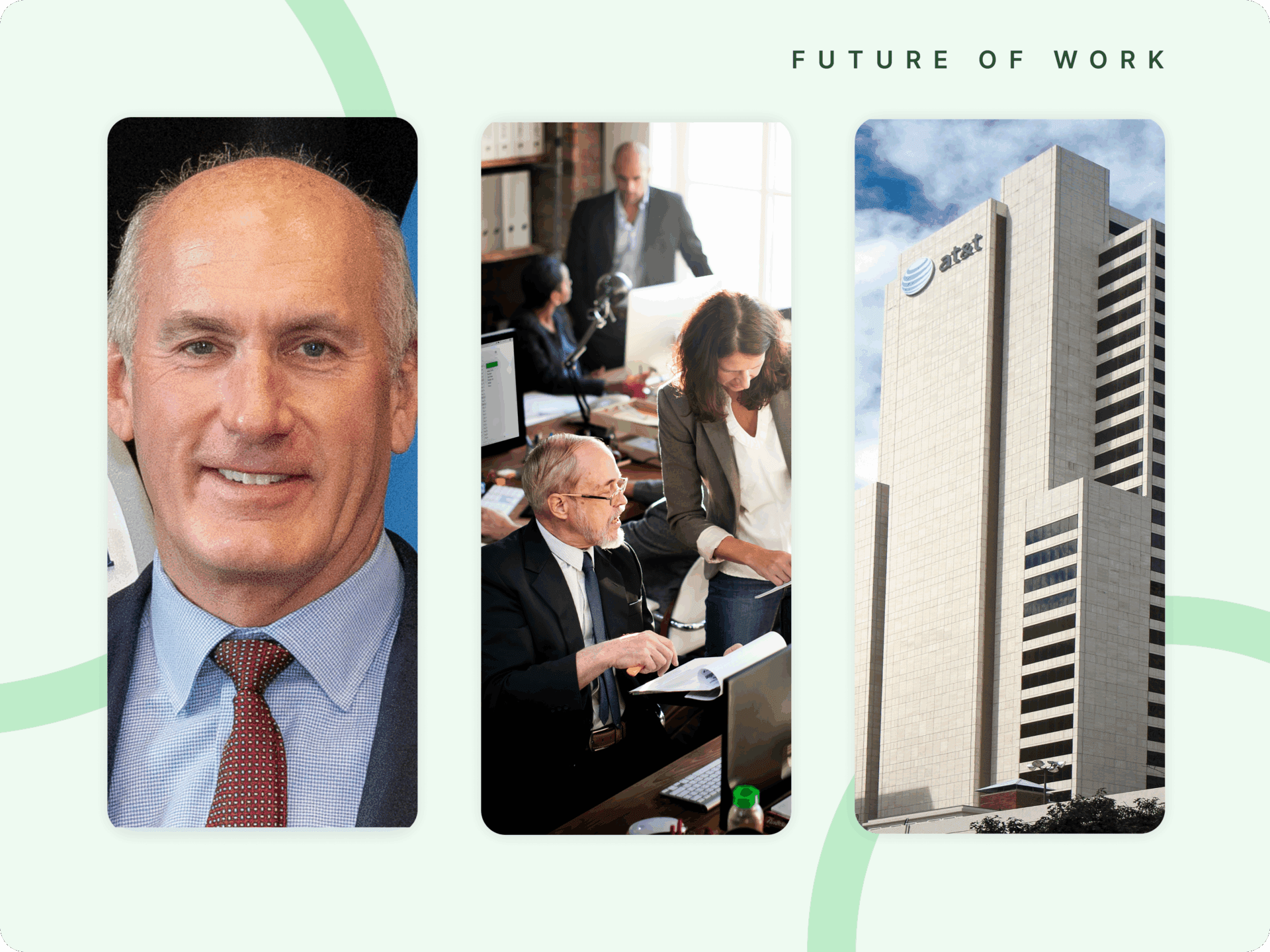
AT&T’s return to office in August 2025 was about culture, not real estate. In an internal memo reported by Business Insider, CEO John Stankey responded to declining employee engagement scores by moving the company from a hybrid work model to an enforced five days in the office, as part of a long-term shift to what he calls a “market-based culture.”
The shift changed what flexibility means at AT&T.
What did AT&T announce about returning to the office?
In August 2025, AT&T set out a move from hybrid work to five days a week in the office. John Stankey’s memo presented in-person presence as a long-term operating model, not a temporary adjustment. It tied office attendance to a new, performance-driven culture and warned that employees who need flexible schedules may not fit.
“There might be a disconnect between you and your current professional choice,” Stankey wrote.
The message was clear. Hybrid work at AT&T was no longer a benefit. It had become a filter: a way to align the workforce with a culture that prioritizes visibility, presence and direct contribution.
Why is AT&T’s return to office a culture strategy, not a space strategy?
Stankey’s memo framed office presence as a long-term operating model for culture. He linked hub locations to better mentorship, collaboration and career visibility, and to deeper expectations about how employees contribute and grow. The office is the tool. The culture is the goal.
“We work in person, together, during common hours,” the memo said.
This is less about desks and more about norms. Stankey wants to move away from what he calls “hierarchy and familial cultural norms” toward an external, performance-driven model, which he presents as necessary for long-term relevance. A market-based culture, in his framing, is that external, performance-driven model.
From a leadership standpoint, the intent is transparent. But the delivery reveals a deeper tension.
What did AT&T’s employee survey results show?
AT&T’s own employee survey showed that 79% of employees felt committed and engaged with their work. But the company fell short of its engagement goal, including its aim to be in the top third of Fortune 100 companies on this metric. The dip followed years of structural change, role consolidation and a broader realignment of how work happens.
Stankey acknowledged the gap: “While this is reassuring, especially considering the amount of change we’ve navigated as a company recently, it wasn’t a surprise to me that we fell short of our engagement goal.”
Instead of asking whether flexibility could support performance and wellbeing, the memo pointed in a different direction:
“If a self-directed, virtual, or hybrid work schedule is essential for you… you will have a difficult time aligning your priorities with those of the company.”
How did the memo balance support and control?
The memo did both. It acknowledged employee challenges, reinforced support for mental health and care benefits, and pointed to recent updates to time-off and leave. At the same time, it drew a firm line around which kinds of flexibility fit AT&T’s future. Some employees may see that as clarity; others as a narrowing of options.

Is there a smarter way to align a workforce than a five-day mandate?
Yes. Wanting stronger cultural cohesion or more in-person collaboration is not wrong, but there is a better way to get there: a hybrid strategy built on data. It shows how teams actually work, identifies when presence matters most and lets leaders design rhythms that suit both the work and the people doing it.
The most effective hybrid strategies start with data. Workplace analytics show which days teams come in and where collaboration happens, so leaders can decide when presence matters instead of mandating it everywhere.
Rigid return-to-office rules may boost short-term alignment. Long-term engagement comes from predictability, autonomy and trust. Culture does not live in a building. It lives in how people show up for each other.
AT&T is building for the company it wants to be. The question is whether it is building in a way that brings employees with it. More analysis from Kadence CEO Dan Bladen covers other companies’ return-to-office decisions.
Frequently asked questions
Is AT&T requiring employees to return to the office five days a week?
Yes. In August 2025, CEO John Stankey’s memo set out a move from a hybrid work model to an enforced five days in the office.
What did AT&T’s employee survey show?
79% of employees said they felt committed and engaged with their work at AT&T. The company still fell short of its engagement goal, including its aim to rank in the top third of Fortune 100 companies on this metric.
Why did AT&T end hybrid work?
Stankey presented the change as part of a long-term shift to a market-based, performance-driven culture. He linked in-person work to mentorship, collaboration and career visibility.