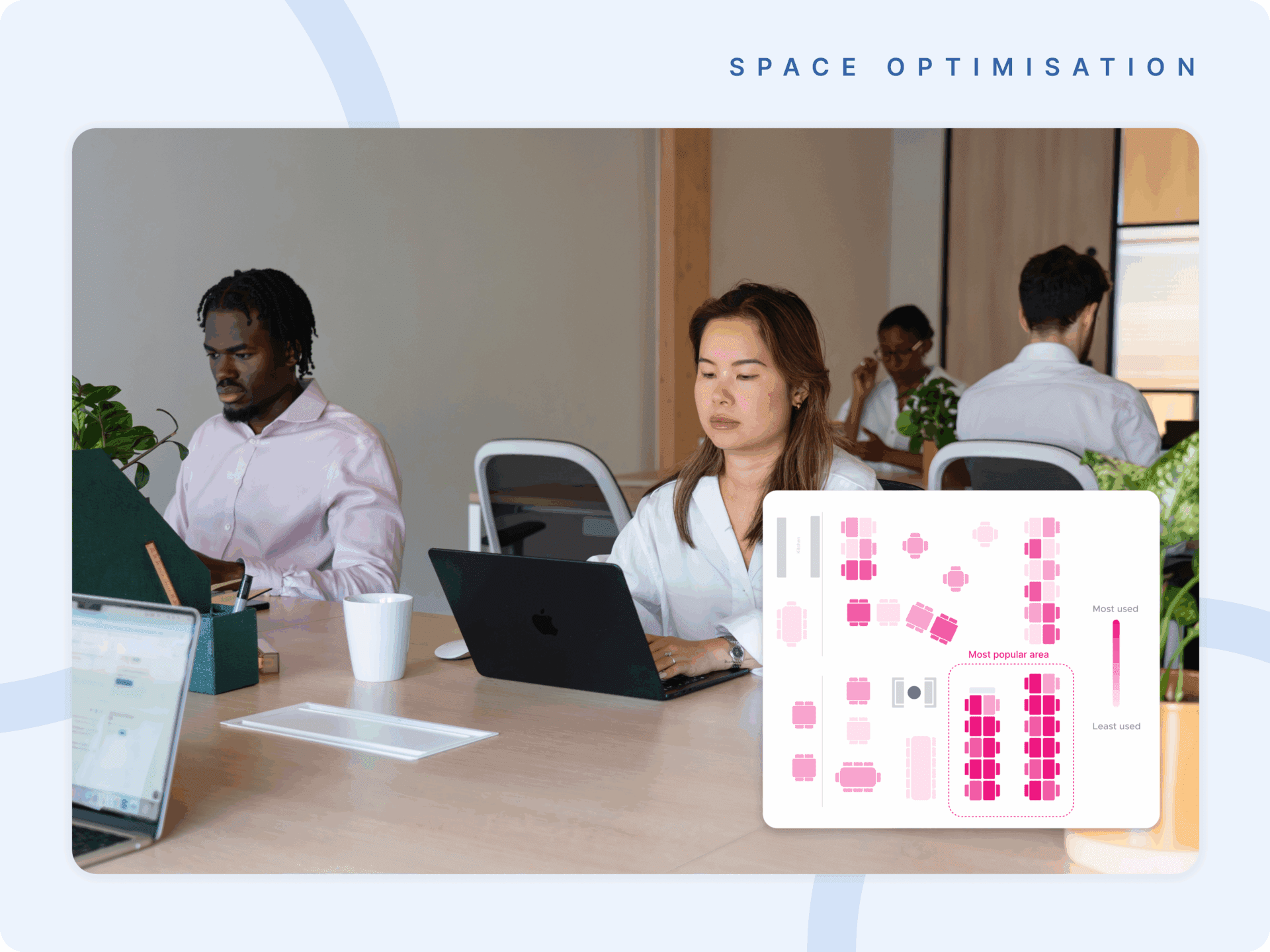
Space management is the process of planning, organizing and optimizing how physical office space is used. At its most basic, it aligns an organization’s real estate footprint with its workforce: which desks, rooms and shared areas exist, who uses them and how the layout should change as needs change.
Traditionally, space management meant floorplans, occupancy limits and making sure desks and rooms were available. By 2025, rising real estate costs, unpredictable attendance and executive demands for ROI had turned it into a strategic discipline. Kadence’s view is that space management is no longer about facilities alone. It is about turning office utilization into performance data that drives better decisions at every level.
What is space management?
Space management is the discipline of making sure workplaces are used efficiently. It covers monitoring how desks, conference rooms and shared areas are occupied, adjusting layouts and capacity to fit the workforce, and meeting compliance and safety requirements. Done well, it tells an organization how much space it needs and how to use it.
In practice, space management covers three activities:
- Monitoring how desks, conference rooms and shared areas are occupied.
- Adjusting layouts and capacity to fit workforce needs.
- Meeting compliance and safety requirements.
Utilization, a related term, is the share of available space that people actually use. Space management turns that measure into decisions.
How did companies manage space before?
Historically, companies relied on CAD drawings and Integrated Workplace Management Systems (IWMS) to track their offices. These tools helped facilities teams understand square footage, allocate desks and produce compliance reports. Their weakness was that they captured space as it was designed, not as it was actually used.
The tools were often rigid, hard to use and disconnected from the day-to-day reality of how people use offices. That was workable when attendance was predictable. It stopped working when it was not. The glossary explains what an IWMS is and how it differs from newer workplace platforms.
Why has space management changed?
Space management changed because attendance became unpredictable. Employees no longer follow fixed schedules: some days offices are busy, and other days they are nearly empty. Without accurate data, companies risk paying for unused real estate or running short of space when demand peaks.
Three forces drove the change:
- Volatile attendance patterns. Traditional planning assumptions no longer hold.
- Rising real estate costs. Property is one of the largest expenses after people, so executives expect evidence of ROI on every square foot.
- Outdated tools. Legacy IWMS systems cannot keep pace with real-time coordination, integrations and the needs of modern enterprises.
Executives want more than floorplans. They want a single source of truth that links people, space and time.
How does space management support workplace decisions?
Space management data answers the questions executives ask about the portfolio: which sites to shrink, grow or repurpose, what happens if attendance changes, and where money is wasted. Kadence treats it as part of workplace operations, the orchestration of people, space and time so every resource supports performance.
Space management data supports four kinds of decision:
- Portfolio optimization: knowing which sites to shrink, grow or repurpose.
- Scenario planning: modeling what happens if attendance doubles or halves.
- Workforce efficiency: aligning space with how employees actually collaborate.
- Cost control: identifying underused areas and eliminating wasted spend.
For CFOs, COOs and CHROs, this data answers pressing questions. Do we need this office? Should we convert unused desks into collaboration space? Are we providing the right environment for productivity?
How does Kadence approach space management?
Kadence approaches space management as a unified system that fuses people, space and time into a single source of truth. As described in September 2025, it blends IWMS-grade planning power with a modern coordination layer, so occupancy, booking and planning data sit together and feed real estate decisions.
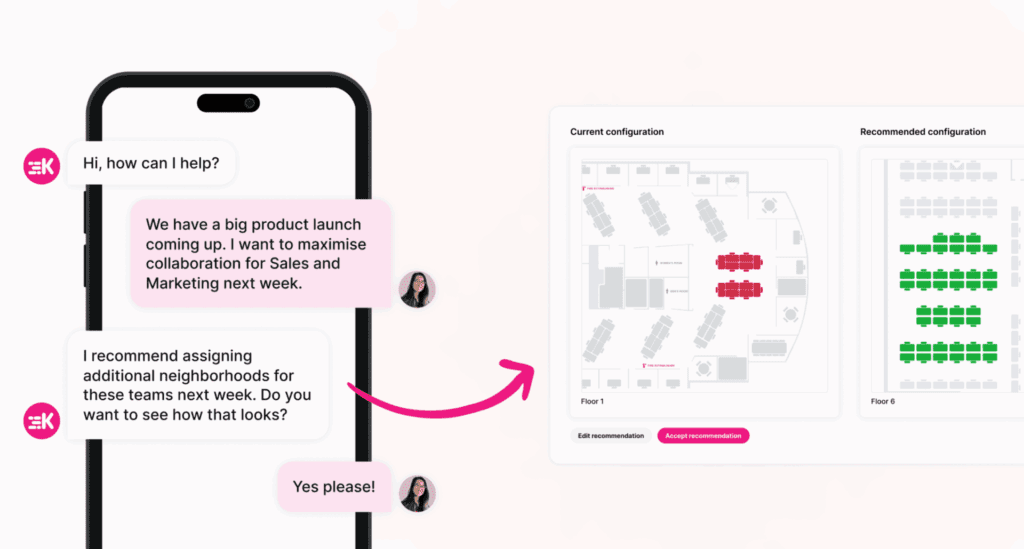
In September 2025, Kadence described these space management capabilities:
- Real-time occupancy and booking data in a unified dashboard.
- Kadence Sense, which captures workplace occupancy data without deploying sensors.
- Automatic release of no-show bookings back into the system to prevent wasted space.
- Custom analytics dashboards with Insights Plus, designed with Kadence’s data science team to inform real estate decisions.
- Neighborhoods that align team schedules to balance attendance and avoid overcrowding.
- Insight into collaboration patterns, team cadences and neighborhood occupancy.
- Tracking of the most-used buildings, floors, desks and rooms, so cleaning or HVAC services can match real demand.
- Interactive floorplans, capacity limits and guest bookings for resource planning.
Planning capabilities now sit in Kadence SpaceOps, the part of the platform built for space planning, scenarios and moves.
Why does space management matter now?
Space management matters now because office use is too variable for static planning. Leaders can no longer rely on assumptions about headcount or averages across the year. They need real-time data to see what is happening today and predictive insight to plan for tomorrow, which is why the topic has moved from facilities to the C-suite.
Combining occupancy data with booking records and visitor flows lets companies align resources with actual demand. That means avoiding unnecessary leases, improving the employee experience and being ready for shifts in how work happens.
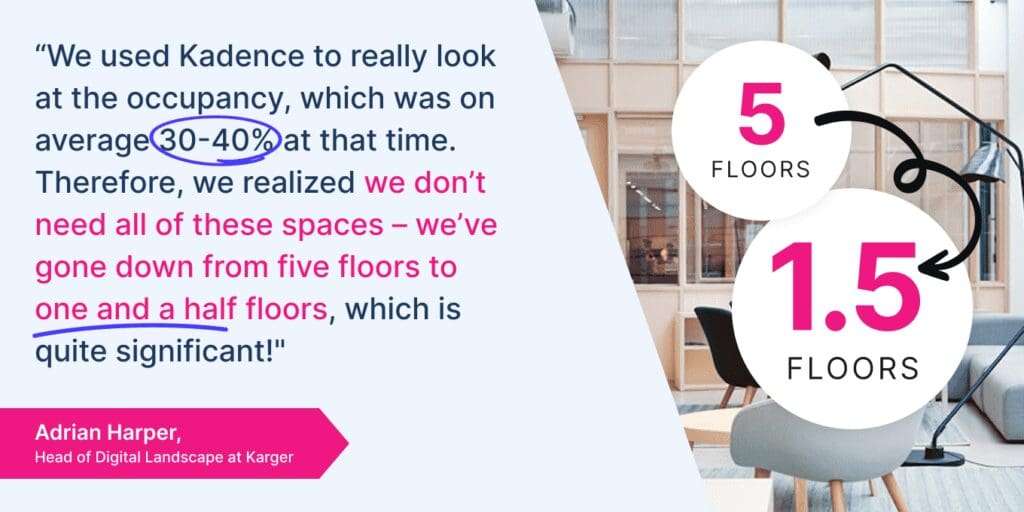
Customers have already shown the impact. Publishing group Karger achieved an 80 percent reduction in its office footprint without compromising productivity, using Kadence to analyze utilization data and right-size its space. Read how Karger reduced its office space.
How do you turn space into strategy?
You turn space into strategy by treating space management as part of workplace operations rather than floorplan administration. Organizations that do this spend less on real estate, match people to the spaces they use and invest in collaboration areas with evidence. Those that do not miss the chance to tie the workplace to measurable business outcomes.
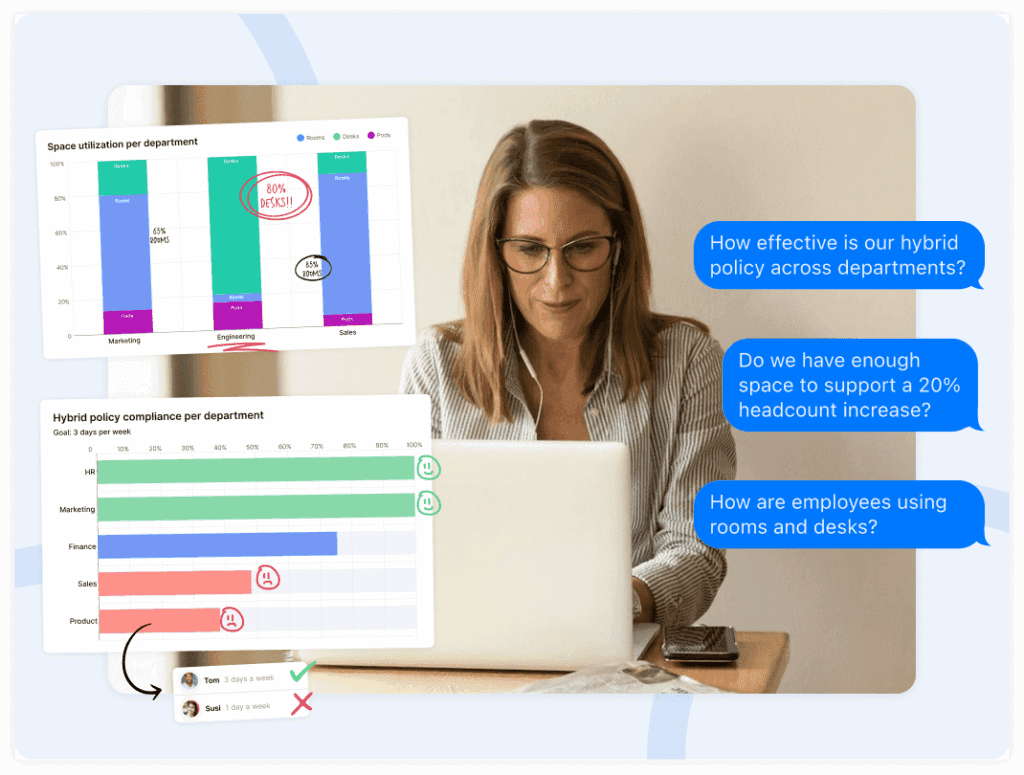
Companies that treat space management as part of workplace operations gain:
- Reduced real estate spend by eliminating waste.
- Better alignment between people and the spaces they use.
- Smarter investment in collaboration areas and amenities.
- Clear visibility for portfolio and scenario planning.
The office space planning guide sets out how to take utilization data into right-sizing and fit-out decisions.
Frequently asked questions
What is the main purpose of space management?
To make sure workplaces are used efficiently and that the real estate footprint matches the workforce. It covers monitoring how spaces are occupied, adjusting layouts and capacity, and meeting compliance and safety requirements.
How is modern space management different from an IWMS?
Traditional IWMS tools and CAD drawings recorded space as it was designed: square footage, desk allocations and compliance reports. Modern space management adds real-time occupancy and booking data, so plans reflect how space is actually used.
Who uses space management data?
Facilities and workplace teams use it day to day. CFOs, COOs and CHROs use it to decide whether to keep an office, whether to convert unused desks into collaboration space and whether employees have the right environment for productivity.
Can space management reduce real estate costs?
Yes, when it is based on actual utilization. Data on underused areas supports decisions to consolidate or repurpose space. Karger, for example, reduced its office footprint by 80 percent after analyzing utilization data with Kadence.